

You've finished cleaning the glass, stepped back, and still can't see the view properly. Instead of a bright, open pane, you're looking at cloudy streaks, smudges, and spots that seem more obvious in the afternoon light. In Flagstaff and Northern Arizona, dust, pollen, mineral-heavy water, and intense sun can make that familiar result even more frustrating.
Crystal clear windows depend on more than a spray bottle and effort. The water quality, applicator, squeegee, screen condition, access equipment, and timing all affect the finish. Professional window cleaning brings those details together while protecting the glass, frames, screens, floors, furniture, and the people doing the work.
The Frustration of Streaky Windows
A homeowner may start with good intentions. They wipe the inside glass, rinse the outside, and use a household cleaner until the pane looks shiny. Once the surface dries, the streaks return. A cloth may move dirt around instead of lifting it, while leftover cleaner creates a thin film that catches light from every angle.

The problem often isn't a lack of effort. Glass cleaning has several separate jobs: loosening soil, removing it without redistributing it, controlling evaporation, and leaving no dissolved minerals behind. Northern Arizona adds its own complications. Fine dust settles on frames and sills, pine pollen clings to screens, and irrigation or hard water can leave deposits that ordinary washing won't remove.
The visual effect matters, too. Clean windows change how a room feels by increasing daylight and making views appear more open. For homeowners preparing a property for sale or improving a living space, this guide to altering space perception with windows offers useful context on why glass clarity influences the character of a room.
What creates the cloudy appearance
Residue is only one possibility. Mineral spots may sit on top of the glass and respond to careful restoration, but some deposits remain as a haze even after washing. Screens can also make a clean pane look dull when they carry dust, pollen, or fine debris.
Practical observation: If the glass looks clean from one angle but streaked from another, the issue is often drying residue or an uneven finish, not simply more dirt.
A professional approaches the pane as part of a system. Screens, frames, seals, tracks, and sills all receive attention, and the cleaning method changes according to the glass condition and the height of the window. That's what separates a temporary shine from a dependable, crystal-clear result.
Professional Preparation Before You Clean
Preparation prevents many problems before a squeegee ever touches the glass. The first step is to remove screens carefully and keep track of where each screen belongs. Screens can look similar, but reinstalling one in the wrong opening may leave an imperfect fit or unsecured hardware.
Professional guidance recommends brushing screens with a soft-bristle or soft-fiber brush, rinsing with low-pressure water or mild soap and water, drying them completely, and reinstalling them with the locking hardware secured. Pine Country Window Cleaning follows that remove, clean, and reinstall process with every service, rather than leaving screen dust in place.
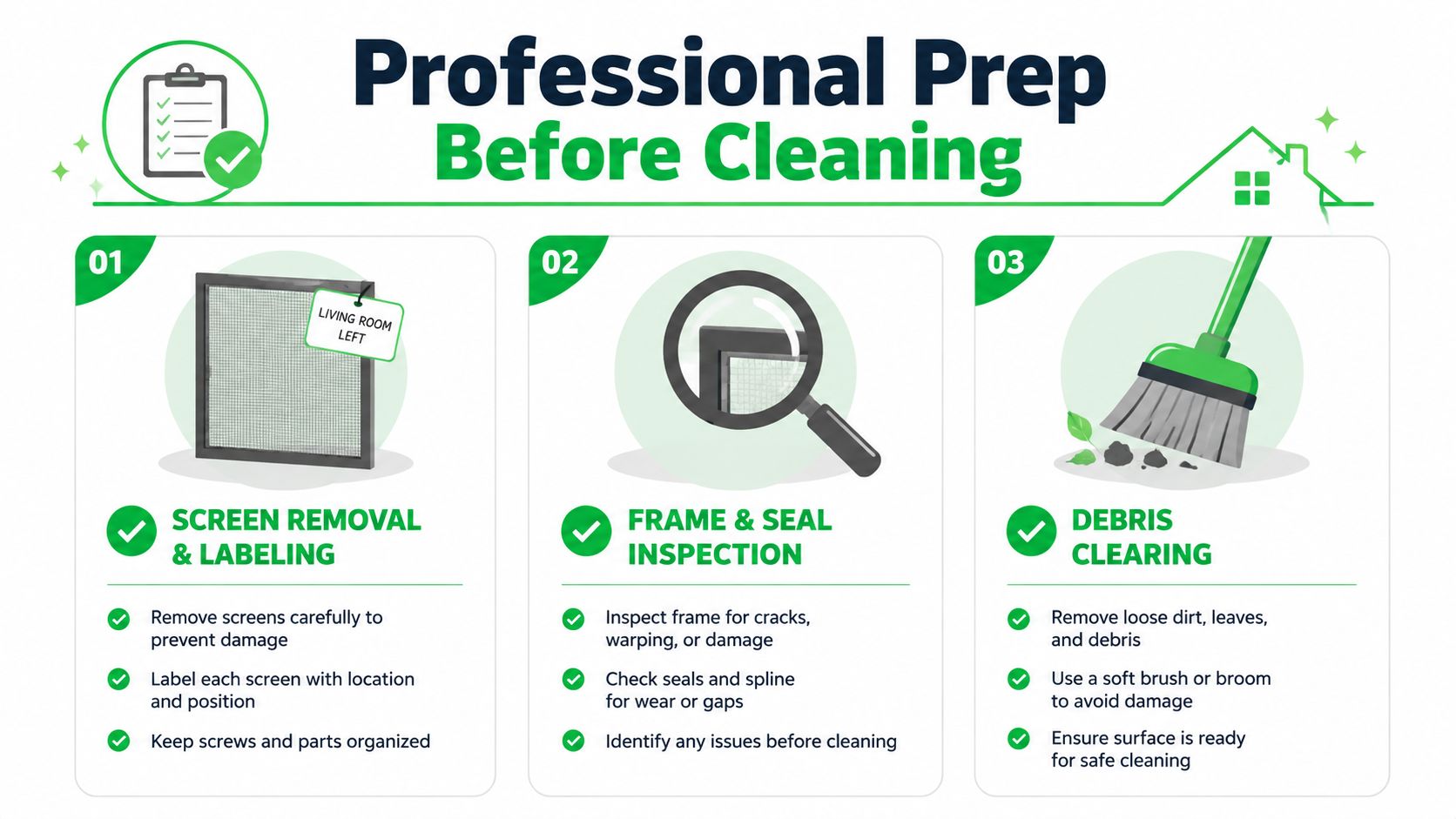
The preparation checklist
- Remove and label screens. Set each screen aside without bending the frame, and note its opening when needed.
- Inspect frames and seals. Look for loose corners, damaged weatherstripping, cracked seals, deteriorated caulking, and debris trapped along the edges.
- Clear loose debris. Brush grit away from tracks, sills, and frame corners before introducing water. Scrubbing dry grit across glass can create avoidable scratches.
- Plan access. Choose a stable ladder position or an extension-pole method before starting. Keep tools organized so nobody has to reach, climb, or carry equipment unnecessarily.
The height issue deserves respect. An OSHA-linked analysis reported by HealthDay identified 88 window-cleaning accidents over 15 years, including 62 fatal incidents. The same source reports that the UK HSE recorded 35 worker deaths from falls from height in Great Britain in 2024/25, with falls from height remaining the leading cause of workplace death in almost every year since 2001/02.
Use the right tool for the access problem, not the other way around. The professional window-cleaning tools used for home service can include squeegees, ladders, extension poles, and pure-water brushes, each selected for the window and surrounding property.
Why DIY Methods Often Fail
Rags, newspaper, and general household sprays can make a pane look better for a short time, but they don't provide the control that professionals need for a consistent finish. Cloth fibers may leave lint, a reused rag can carry grit from one pane to the next, and excess cleaner can dry before it gets removed. Newspaper also isn't a substitute for a purpose-built applicator and squeegee.
Vinegar and water may help with some light surface residue, but it isn't a universal answer for hard-water deposits or heavy exterior soil. If minerals have bonded to or etched the surface, repeated washing won't restore the original finish. A useful explanation of that distinction appears in this guide to removing hard-water stains from windows, especially for properties exposed to irrigation spray or mineral-heavy water.
| Method | Effectiveness | Residue Risk | Longevity |
|---|---|---|---|
| Household spray and cloth | Useful for light touch-ups, but inconsistent on large or heavily soiled panes | Moderate to high when cleaner or dirty water remains | Usually temporary |
| Newspaper or improvised wiping | May spread moisture, but offers limited control over edges and debris | High if ink, lint, or loose soil transfers | Short-lived |
| Vinegar and water | Can address some light deposits, but won't correct etched glass | Moderate, depending on concentration and rinsing | Limited when mineral buildup continues |
| Squeegee with controlled solution | Removes loosened soil efficiently when the rubber is clean and technique is consistent | Lower when edges and channels are maintained | More dependable |
| Pure-water brush system | Well suited to exterior and hard-to-reach glass when water quality is controlled | Low when TDS remains in the preferred range | Strong for routine maintenance |
The professional difference
A squeegee removes solution instead of leaving it to evaporate on the pane. Extension poles improve reach without forcing a technician to lean from a ladder, while pure-water brushes loosen exterior soil and deliver a mineral-free rinse.
Property owners also benefit from treating window cleaning as part of systematic rental property maintenance. Regular attention helps identify failed seals, damaged screens, stubborn deposits, and frame problems before they become larger property-care concerns.
The Professional Cleaning Process
Professional results come from a two-stage process. First, the technician removes bulk soil. Then the glass receives a controlled finish with mineral-free water or a careful touch-up. Skipping the first stage forces the finishing tool to carry too much dirt, while skipping the second can leave dissolved minerals behind.
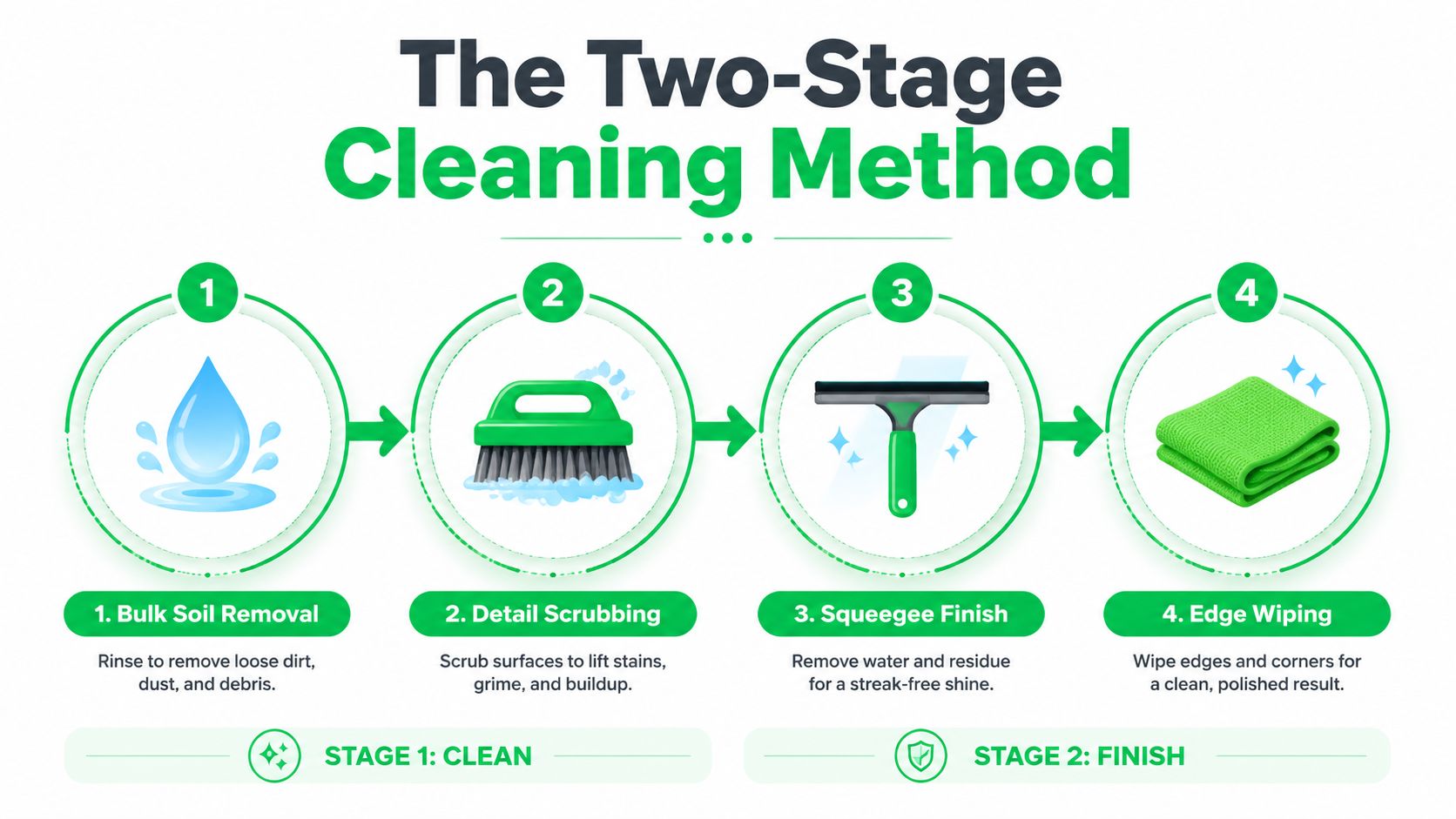
Stage one removes the working soil
A technician applies an appropriate solution or uses a pure-water brush system according to the glass, access, and soil level. Loose dust, fingerprints, pollen, and exterior grime must be lifted before the final pass. Frames and edges receive attention because dirt left there can run back onto freshly finished glass.
Work out of direct sun whenever possible. Sunlight accelerates drying, which can trap solution lines and make a clean pane look uneven. Clean water, fresh microfiber cloths, and a properly maintained squeegee are essential. Reusing dirty water or cloths transfers the problem.
The squeegee should move with deliberate, overlapping passes. Keep the rubber channel clean, control the angle, and wipe the edge between passes when needed. The finishing tool matters because professional window-cleaning guidance identifies the squeegee as the tool for removing cleaning solution immediately, with a clean, lint-free cloth used for suitable detail work. Renewal by Andersen's glass-cleaning guidance also distinguishes purpose-made squeegees and deionized-water methods from improvised wiping.
Stage two controls mineral residue
Pure water should be tested before use. Industry guidance recommends keeping total dissolved solids below 10 parts per million, because water above that level can become less reliable for spot-free glass. The practical sequence is to test the source water, filter or deionize it, maintain clean hoses and tanks, and verify the reading before starting.
Water-quality rule: Clear-looking water isn't necessarily clean enough. Dissolved minerals can remain invisible in the bucket and become visible spots after evaporation.
For high exterior windows, a water-fed brush and extension pole can combine reach with a mineral-free rinse. The method reduces the need for risky ladder positioning, but it still demands training, equipment checks, and awareness of nearby surfaces. After cleaning, screens must dry completely before reinstallation.
Scheduling and route planning matter on larger properties, too. A practical cleaning business scheduling playbook can help service providers organize recurring visits, access requirements, and customer communication without rushing the work.
Maintenance Tips for Lasting Clarity
A clean window needs a maintenance plan that matches the property. Flagstaff homes and cabins may face pine pollen, dry dust, wind-driven debris, and winter grime. Storefronts and commercial buildings add fingerprints, traffic film, and frequent contact around entrances. The right routine addresses the source of the soil rather than waiting until the glass looks neglected.
Keep the whole window system clean
Screens deserve regular attention because they sit directly in the airflow and can hold pollen against the view. During maintenance, check the mesh, frame corners, latches, tracks, and sills. A screen that isn't fully dry can also create a damp, dirty contact point when reinstalled.
Between professional visits, homeowners can remove loose debris from sills with a soft brush and watch for irrigation spray reaching the glass. Don't scrub dry mineral grit across a pane. If you notice spots returning quickly, identify whether the source is sprinklers, roof runoff, condensation, or a failing seal.

Know when cleaning isn't enough
Hard-water deposits and etching require different decisions. If a haze looks different when the glass is wet, some residue may still be sitting on the surface and may respond to appropriate treatment. If the haze looks the same wet and dry, guidance for hard-water damage indicates that the glass may be etched, which calls for polishing or replacement rather than ordinary cleaning.
Maintenance checkpoint: Recurring spots aren't always a scheduling problem. They may indicate a water source or permanent surface damage that needs correction.
For property managers, document damaged screens, failed seals, and etched panes during routine service. That record helps separate routine cleaning from restoration work and makes future maintenance decisions clearer.
When to Call a Professional
Call a professional when windows involve height, extensive glass, stubborn mineral deposits, delicate screens, or a dependable service schedule. A trained technician can select a ladder, extension pole, pure-water brush, lift, or another access method based on the property instead of improvising.
The equipment matters, but judgment matters just as much. A spotless pane is not a successful job if a ladder damages siding, a screen bends during removal, or someone takes an avoidable risk. Reputable providers should explain how they will reach the glass, protect nearby surfaces, communicate clearly, and leave the property orderly.
Northern Arizona homes also benefit from cleaners familiar with local conditions, including hard water, dust, sun exposure, and uneven terrain. Pine Country Window Cleaning has operated since 1999, was founded by Flagstaff native David Kaminski, and is a locally owned Flagstaff business. Its crews use professional squeegees, ladders, extension poles, and pure-water brushes, with screen removal, cleaning, and reinstallation included in the service. Professional window cleaning services from Pine Country can suit homes, cabins, commercial properties, and difficult-to-reach glass where consistent technique affects the result.
Care for the property, not just the pane
Good window cleaning protects the home as well as the glass. Technicians should control water, move carefully around furniture and landscaping, and watch frames and sills while working. They should also report damage and explain when a pane needs restoration instead of promising that another routine wash will remove etching.
Cloudiness that remains after cleaning, unsafe access, or recurring mineral buildup are practical reasons to bring in a professional. Proper squeegees, pure-water systems, and careful screen handling can produce crystal clear windows without exposing the glass or property to unnecessary damage.
Pine Country Window Cleaning provides residential and commercial window cleaning with professional squeegees, ladders, poles, pure-water brushes, and screen removal, cleaning, and reinstallation included with every service. Visit Pine Country Window Cleaning to request a free estimate or schedule service for your Flagstaff or Northern Arizona property.