
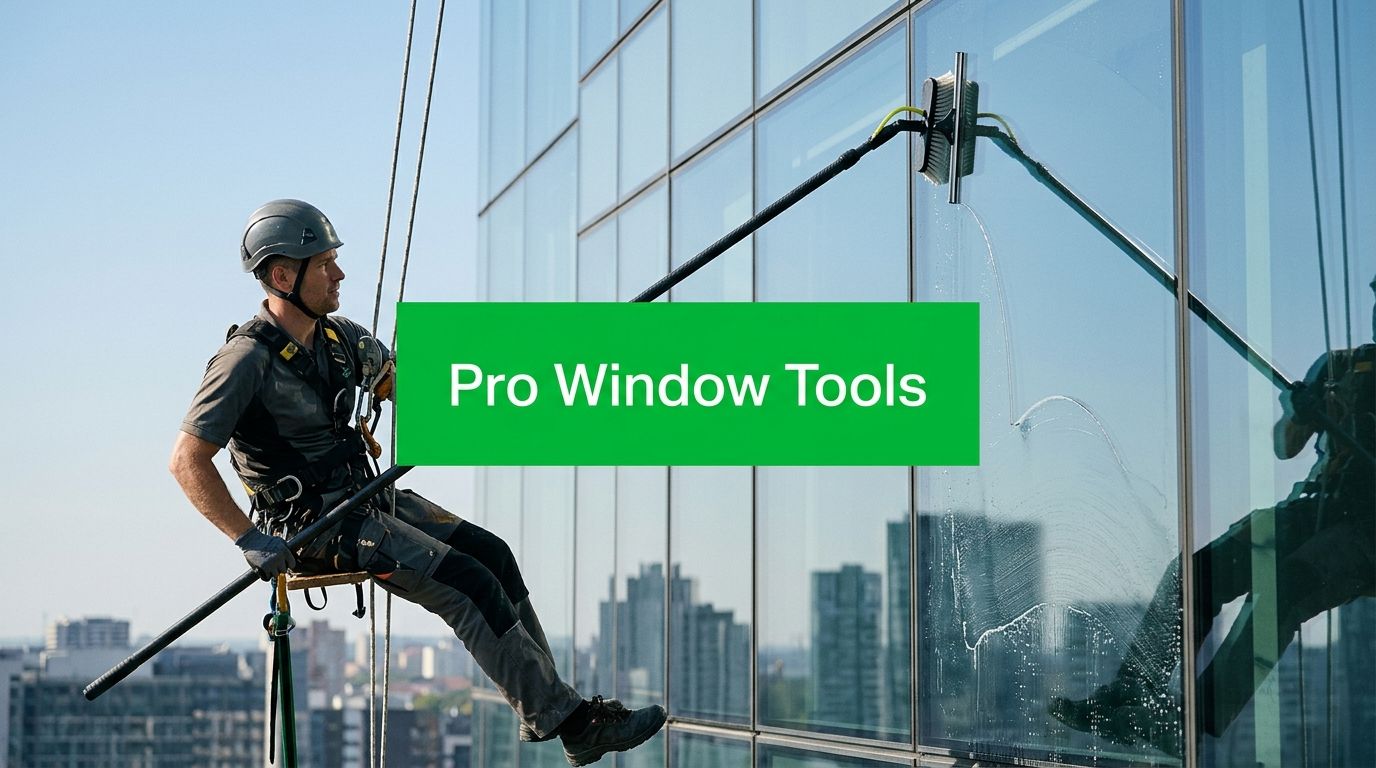
Spring storms in Flagstaff leave the same scene all over town. Dust on the glass, water spots drying too fast, and a homeowner standing under a second-story window with a store-bought pole that doesn't quite reach and a finish that still looks smeared in the afternoon sun.
That's usually the moment people realize window cleaning is less about spray bottles and more about the right equipment. In Northern Arizona, the conditions are unforgiving. Cold mornings, fast sun, pollen, monsoon dust, and a mix of cabins, custom homes, storefronts, and tall commercial buildings all punish weak tools and sloppy technique.
The best professional window cleaning tools earn their keep in two ways. They improve the finish, and they reduce risk. A quality squeegee clears glass cleanly. A proper pole saves ladder moves. A pure-water system changes how high windows get cleaned. Access equipment matters even more when you're dealing with atriums, steep approaches, or commercial glass that can't be reached safely with basic gear.
Customers also notice the difference in how the work is handled. Professional service isn't only about clear glass. It's about caring for the home, removing screens, cleaning screens, and reinstalling them properly with every service, while working cleanly around landscaping, floors, and entry points.
Introduction
A lot of people start with the wrong assumption. They think streaks mean they need a stronger cleaner. Most of the time, streaks mean the tool is wrong, the rubber edge is worn, the glass dried too fast, or the operator lost control of the water.
That's especially true in Flagstaff and the surrounding mountain communities. On one house you're dealing with divided-light panes tucked under deep eaves. On the next job it's a wall of glass facing full sun. Then you move downtown and access changes again. What works on a cabin in Munds Park won't always work on a storefront or a multi-story property.
The primary dividing line between amateur and professional results is equipment choice. Professional window cleaning that avoids rags, Windex, or newspaper relies on squeegees, pure-water brushes, poles, and ladders, and the IWCA recognizes pure-water systems as a best practice for high-quality, eco-friendly cleaning, as noted by Pine Country's residential window cleaning guide.
Practical rule: If the glass is high, exposed, or dries fast in the sun, the tool matters more than the soap.
The rest comes down to matching the tool to the building, the weather, and the level of access. That's where most generic tool lists fall short.
Overview of Professional Tool Categories
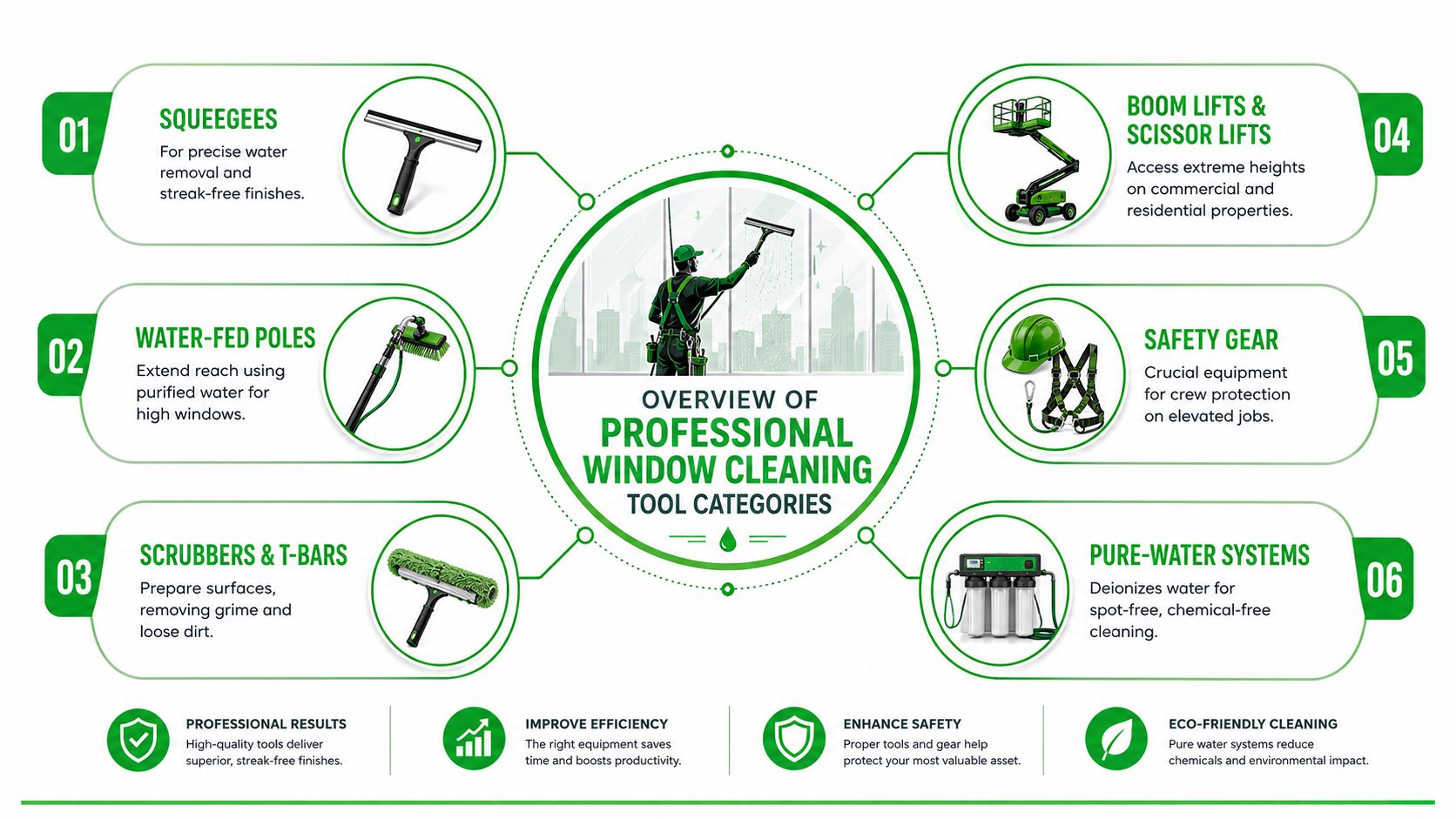
Professional window cleaning gear falls into a few core categories. Each one solves a different problem on the jobsite. If you try to get by with one basic kit, you'll usually lose time, quality, or safety.
Squeegees and detailing tools
The squeegee is still the centerpiece of professional work. Industry experts widely recognize it as the single most important tool for a streak-free finish, and it's typically paired with T-bars, washer sleeves, bucket-on-a-belt holsters, and microfiber cloths for edge detailing, as explained in this WorkWave overview of window cleaning tools.
A proper setup usually includes:
- A main squeegee handle and channel for pulling water cleanly off the glass
- A T-bar and washer sleeve for applying solution and loosening grit
- Microfiber cloths for tight edge work and frame cleanup
- A bucket-on-a-belt holster so the tool stays at hand instead of getting set down on floors, ledges, or landscaping walls
Poles, brushes, and pure-water systems
For upper windows, poles change the entire workflow. Traditional extension poles work well for many residential jobs. Water-fed poles go further by combining reach with purified water and a brush head, which is why they've become standard for a lot of exterior work.
Pure-water systems matter because they let crews rinse glass without leaving chemical residue behind. That's a major advantage when you're cleaning around painted trim, stone, decks, and sensitive landscaping. If you want a visual breakdown of how pros pair these tools on commercial jobs, Pine Country has a useful page on commercial window cleaning equipment.
Access equipment and job management
Some buildings can't be cleaned efficiently from a ladder or pole alone. That's where boom lifts, scissor lifts, ladders, and specialized access planning come in. On large properties, access equipment is part of the tool system, not an afterthought.
Operationally, good equipment only works when the business side is organized too. Scheduling, dispatch, and route planning affect how often crews move ladders, return for missed panes, or lose time between sites. For contractors trying to tighten that side of the operation, this guide to the best software for contractors is worth reviewing.
Good crews don't just clean glass well. They move efficiently, protect the property, and keep the right tool in hand for the next pane.
Choosing Tools for Different Jobs
A crew can leave one stop in Flagstaff with pine pollen caked on the glass, then pull up to a Sedona-area home with bronze frames, cut-up panes, and second-story windows that cook in direct sun by noon. The tool kit has to change with the job. A one-size setup slows the work down and usually shows up in the finish.
Residential work and mixed-pane homes
Homes in Northern Arizona rarely give you one glass type all the way around. It is common to see French panes at the entry, standard double-hungs on the sides, and large picture windows facing the view. That calls for more than one channel size and a tech who knows when to switch instead of forcing a wide squeegee onto small glass.
Small panes clean faster with short channels that can turn tightly without catching muntins or frame edges. Standard residential glass usually fits a mid-size squeegee. Larger fixed panes reward a wider channel, but only if the glass is open enough to let you fan cleanly. On our crews, that usually means carrying a few hand-tool options on the belt and choosing for control first, speed second.
For readers who want to see the basic hand-tool setup in context, Pine Country breaks down the core home window cleaning tools used on residential work.
Storefronts, high windows, and equipment budgets
Storefront glass is a different rhythm. Wide, uninterrupted panes reward wider channels because every extra pass costs time. The trade-off is control. An oversized squeegee can be efficient on straight commercial glass and frustrating on narrow doors, divided lites, or recessed entries, so many pros keep both sizes ready and swap as the frontage changes.
Height changes the decision even more. A basic hand kit is inexpensive and still earns its keep every day, but upper exterior glass often justifies a bigger equipment investment. As explained in HC Softwash's pricing breakdown for hard-to-reach window tools, water-fed and reach systems cost far more than a starter kit. They also save time on upper panes, reduce repeated ladder moves, and make more sense on buildings with difficult access.
That does not mean every tall window needs pure water. On some custom homes around Prescott and Flagstaff, detailed edges, deep ledges, and screens can make traditional hand work the better choice on lower glass while a pole system handles the upper exterior.
Climate changes the choice
Northern Arizona weather punishes lazy tool selection. Dry air, wind, dust, and strong sun can dry solution on the pane before a slower technician finishes the stroke pattern. A sleeve that holds water well, rubber in good condition, and a channel size matched to the glass all matter more here than they might in a milder climate.
I see this most on south-facing glass and high-elevation homes in the pines. Hand tools still give the sharpest detailing on low glass, especially where frames have corners, screens, and paint conditions that need close attention. For upper exterior work, pure-water brushes often win because they keep the operator on the ground and handle dusty buildup well on larger sections of glass.
The best setup is the one that fits the pane, the access, and the conditions on that property that day.
Maintenance and Safety Best Practices
A professional tool only performs like a professional tool if it's maintained. Most quality problems in the field come from worn rubber, dirty sleeves, bent channels, contaminated cloths, or rushed safety checks.
Keep the working edges clean
The squeegee is the tool that most directly controls finish quality. Since it's the key to getting glass nearly invisible, it deserves the most attention. A blade edge nick, dried grit in the channel, or hardened rubber lip can ruin a pane fast.
Use a simple maintenance rhythm:
- Check the rubber before each job and replace it when the edge loses consistency
- Wipe the blade between panes when you're working dusty exteriors or post-storm glass
- Wash sleeves and microfiber cloths separately so they don't pick up lint, grease, or grit from unrelated laundry
- Inspect channels for bends because even slight warping can leave thin water lines
Dirty tools create “mystery streaks” that people wrongly blame on the glass.
Protect the property and the technician
Tool maintenance and safety are tied together. A leaking bucket, slipping pole collar, or unstable ladder isn't only annoying. It creates real risk. On residential work, the standard should also include customer care. That means protecting floors, watching landscaping, handling screens carefully, and reinstalling them correctly after they've been removed and cleaned.
For work at height, the basics don't change:
- Inspect ladders before setup and avoid rushing the footing decision.
- Check harnesses and tie-off gear before any lift or high-access work.
- Plan the approach to the window before carrying tools up.
- Keep tools secured and close so there's less overreaching and fewer awkward body positions.
If you're dealing with hard-to-access upper glass, skylights, or anything that pushes beyond ordinary ladder work, this page on how to clean high windows gives a practical picture of where DIY usually stops making sense.
Efficiency and Cost Trade-offs
Tool selection is always a trade-off between control, speed, access, and cost. The hard part is that the answer changes by building type. A bucket-and-squeegee setup is still excellent for a lot of close-range work. A water-fed system becomes more attractive as height, repetition, and awkward access increase.
One of the most common unanswered questions in the trade is the actual cost-performance balance between water-fed pole systems and traditional bucket-and-squeegee work in dry climates. Pure-water systems can produce streak-free results, but many guides don't explain how arid conditions affect residue formation or the broader ownership trade-offs, as noted in this discussion of high-window cleaning systems.
Manual vs Water-Fed System Comparison
| Method | Initial Cost | Avg Time per Window | Water Usage per SqFt | Maintenance Needs |
|---|---|---|---|---|
| Manual bucket and squeegee | $100 to $200 for a basic starter kit | Fast on low, accessible panes. Slows down when ladder moves increase | Not specified in verified data | Blade care, sleeve washing, bucket and hand-tool upkeep |
| Water-fed pole system | $2,000 to $7,000 for professional-grade systems | Often more efficient on upper exterior glass because it reduces ladder dependence | Not specified in verified data | Filter care, hose management, brush upkeep, system maintenance |
Where each method wins
Manual tools still win when:
- The glass is easy to reach
- Edges and detailing matter most
- The operator can work the pane without repeated ladder moves
Water-fed systems make more sense when:
- The windows are high or repetitive
- Ground-based cleaning improves safety
- Exterior glass benefits from a pure-water rinse
What doesn't work is pretending one method replaces the other on every property. Strong crews use both.
Pine Country Equipment and When to Hire a Pro
Some windows are inconvenient. Others are specialized access jobs. There's a clear difference, and it matters.
Flagstaff Window Cleaners have served Northern Arizona since 1999, and Pine Country Window Cleaning was established by Flagstaff native David Kaminski and is recognized as Flagstaff's largest window cleaning company, according to the company's about page.
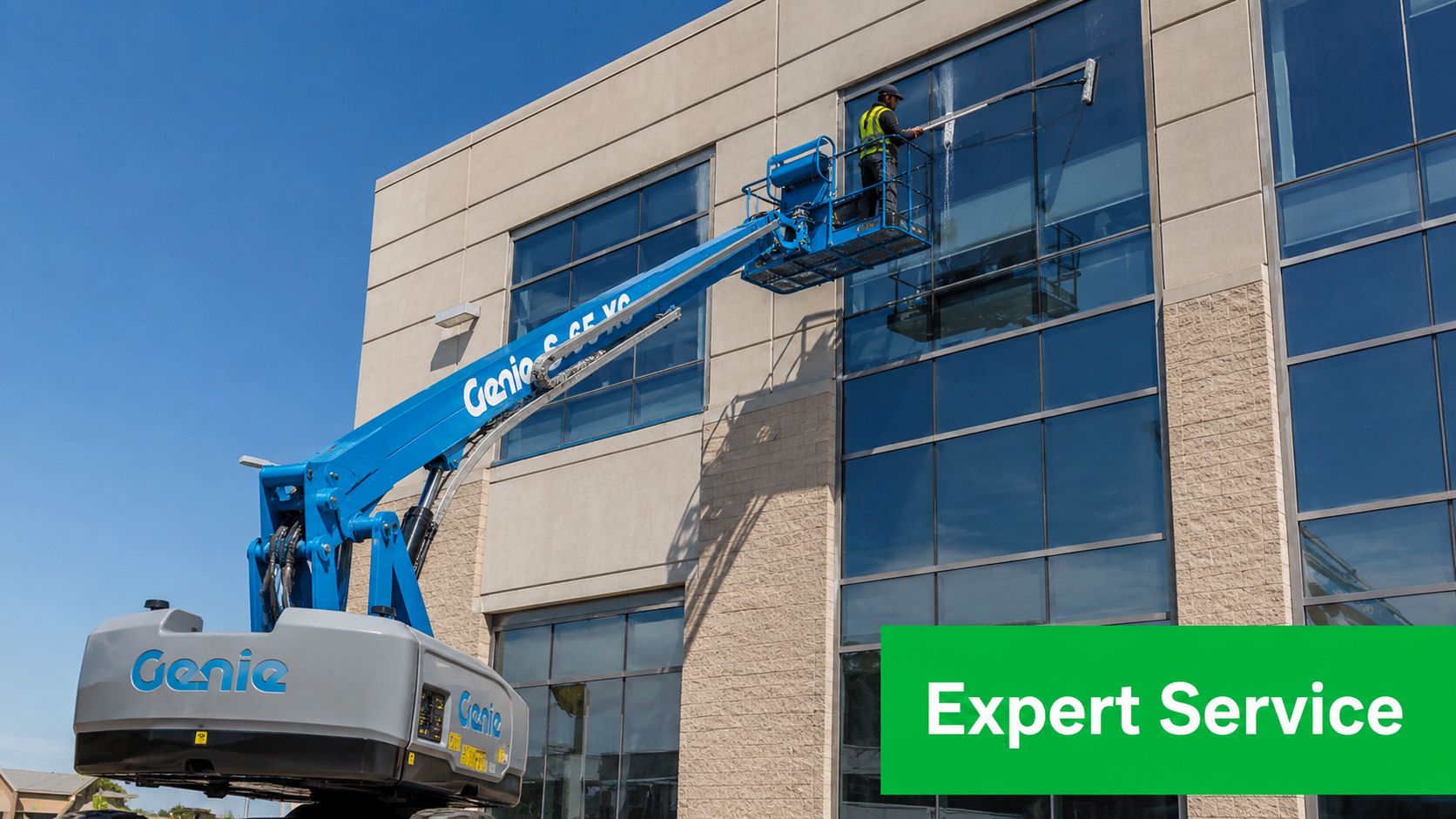
That kind of operation changes what “tools” means. On serious commercial and institutional work, the tool list extends well past hand gear. It includes boom lifts, scissor lifts, and a 95-ft atrium lift, plus crews trained to use them safely and efficiently. That's the difference between reaching glass and reaching it in a way that protects both the technician and the building.
When DIY still works and when it doesn't
If the windows are ground-floor, straightforward, and easy to access, a capable homeowner can handle basic maintenance with the right hand tools. Once the job introduces height, steep terrain, atrium glass, or large commercial frontage, the risk profile changes fast.
Call a pro when the job includes:
- Atrium or skylight glass that can't be reached from stable footing
- High-rise or multi-story commercial exteriors
- Storefront runs where speed and consistency matter across many panes
- Properties with difficult access, tight landscaping, or architectural obstacles
- Large numbers of screens that need to be removed, cleaned, and reinstalled properly
On bigger projects, legal and operational requirements matter too. Property managers and owners who want a broader picture of compliance should understand contractor licensing rules before hiring for at-height or commercial work.
A look at the equipment in action helps make the point:
What professional service includes beyond the glass
A real window cleaning service isn't only about the visible pane. It includes customer care. That means respecting interiors, protecting finishes, handling ladders thoughtfully, and not leaving a mess behind.
It also means doing the parts many people skip. Screens should be removed, cleaned, and reinstalled with every service. Tracks, sills, edges, and access points should be handled carefully. That's what turns clear windows into a complete job.
The right time to hire a pro is when the access challenge is bigger than the cleaning challenge.
Regional Considerations in Flagstaff and Northern Arizona
A crew can start a job in a calm Flagstaff morning and finish with wind, dust, or a temperature swing that changes how the glass behaves. In Northern Arizona, tool choice is tied to the weather, the elevation, and the kind of property in front of you.
What the climate changes
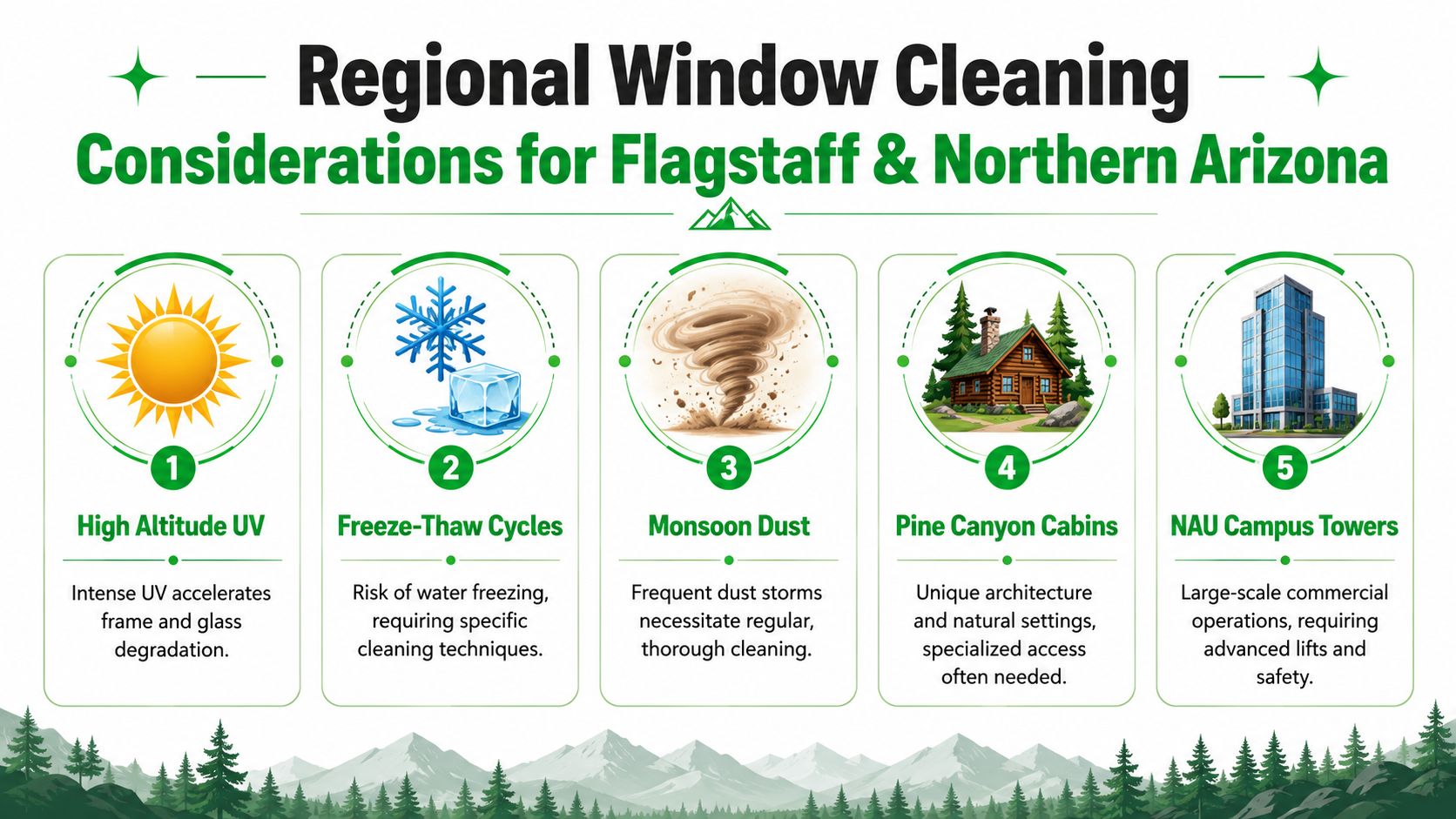
High-altitude sun dries solution fast, so rubber choice and technique matter more here than they do in milder markets. Freeze-thaw cycles also change scheduling. A tool that works fine on a warm afternoon can be a poor fit on cold glass early in the day. Monsoon season adds another problem. Fine dust settles on exterior panes and acts like grit if the washer sleeve is dirty or the rinse is rushed.
Pine areas add their own mess. Pollen, sap mist, needles, and debris build up around frames, tracks, and screens, especially on cabins and homes tucked into the trees around Flagstaff, Munds Park, and Williams. On those jobs, the glass is only part of the work.
That is why local crews usually carry a wider mix of tools than a generic supply list suggests.
- Mid-size squeegees handle mixed residential windows better because pane sizes change constantly on custom homes and older properties
- Wide-body channels earn their keep on large storefront glass where longer pulls save time
- Pure-water systems make more sense on upper exterior windows where spot-free rinsing and reduced ladder movement improve the workflow
- Extra sleeves, clean blades, and screen tools matter on dusty and wooded properties because debris loads up fast
Matching tools to local property types
The trade-offs are easy to see across Northern Arizona. A cabin with divided lights and heavy screens does not reward the same setup as a retail strip with long panes of flat glass. On our own Pine Country Window Cleaning trucks, that usually means carrying both residential hand tools and larger storefront channels instead of forcing one setup onto every job.
A good local setup often looks like this:
| Property type | Tool approach that usually makes sense |
|---|---|
| Cabin or custom home | Mid-size hand tools, extension pole, careful screen handling |
| Retail storefront | Wide-body squeegee, fast detailing system, efficient route workflow |
| Campus or commercial building | Pure-water exterior workflow paired with access equipment where needed |
Northern Arizona exposes weak tool choices quickly. Wrong rubber dries out faster. Dirty sleeves drag dust. Oversized channels slow down detailed residential work, while undersized tools waste time on broad commercial panes.
The best professional window cleaning tools in Flagstaff are the ones that match the glass, the access, and the conditions on that property that day.
Conclusion
The best professional window cleaning tools do three jobs at once. They improve the finish, reduce wasted motion, and make the work safer. That's why pros rely on squeegees, washer sleeves, poles, pure-water brushes, and access equipment instead of shortcuts that leave residue and streaks behind.
In Northern Arizona, tool choice gets even more specific. Dry air, dust, freeze-thaw conditions, and a wide range of property types force better decisions. A residential pane may need a different squeegee size than a storefront. A high exterior window may call for purified water instead of ladder-heavy hand work. And once access becomes complex, professional equipment and training matter more than effort.
If you want clear windows without the trial and error, use the right tools for the job. If the job involves height, difficult access, or a full-property service that includes screens and careful home protection, it's smarter to bring in an experienced crew.
For dependable service in Flagstaff and across Northern Arizona, get a free estimate from Pine Country Window Cleaning. They handle residential and commercial window cleaning, remove and clean screens with every service, and bring the right equipment for everything from cabin windows to large commercial glass.