
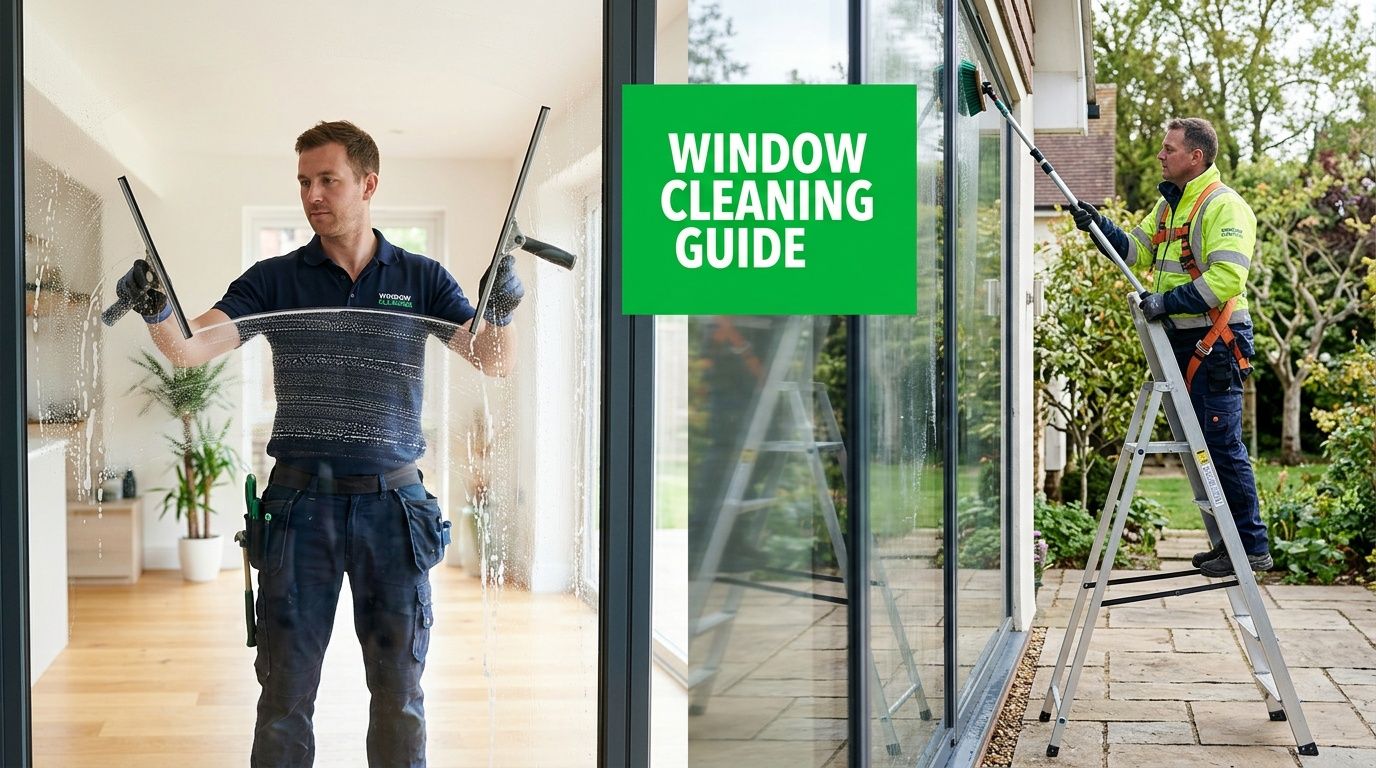
Most bad advice on glass cleaning starts with the same mistake. It treats windows like mirrors or countertops.
They aren't. If you clean windows with a rag, consumer glass spray, or newspaper, you're usually just moving dirty solution around until it dries into a film. In Flagstaff, that problem gets worse fast because high-altitude sun, dust, and mineral-heavy water expose every mistake.
Professional window cleaning inside and outside is a craft. The right result comes from the right tools, the right sequence, and respect for the house while you work. Clean glass matters, but so do the screens, tracks, sills, frames, floors, landscaping, and safety decisions around the job.
Forget Windex and Paper Towels
The most popular method is still the wrong one.
Professional window cleaning mechanics rely on a squeegee to get a streak-free, clear finish, and the standard method is a scrubber first, then a squeegee to remove the water and cleaning solution completely, rather than relying on rags, Windex, or newspaper that leave residue behind, as described in Thumbtack's overview of professional window cleaning.
What the common DIY method gets wrong
A paper towel doesn't remove water cleanly. It smears moisture, leaves lint, and often pushes dirt to the edges. Newspaper is old folklore, not a professional standard. Consumer sprays can work on a small bathroom mirror, but on full windows they often leave a visible film, especially once direct sun hits the glass.
That film shows up even more on dark-framed homes and large picture windows. Homeowners often think the glass is still dirty. Usually the problem is the method, not the effort.
Clean glass doesn't come from spraying more product. It comes from removing dirty water off the pane before it dries.
What works instead
The professional sequence is simple:
- Agitate the dirt first with a scrubber or washer so grit, dust, pollen, and residue loosen from the glass.
- Remove the solution completely with a sharp squeegee blade.
- Detail edges and corners with a clean microfiber cloth instead of wiping the whole pane by hand.
That difference matters. A squeegee doesn't just dry the glass. It physically pulls the dirty water off the surface so it can't dry into streaks.
For homeowners who want lower-waste cleaning products around the house, Fillaree's guide for eco-conscious homes is a useful read. Just keep the distinction clear. Eco-conscious products can fit a home routine, but the professional result on windows still depends on scrubber-and-squeegee technique.
Gather Your Professional Tool Kit and Prep Your Space
Good window cleaning starts before any glass gets wet. In Flagstaff, that matters even more because fine dust, dry air, hard water, and fast sun exposure punish sloppy setup. If the tools are wrong, the glass streaks. If the prep is rushed, floors, sills, screens, and tracks carry the mess.
The tools that actually matter
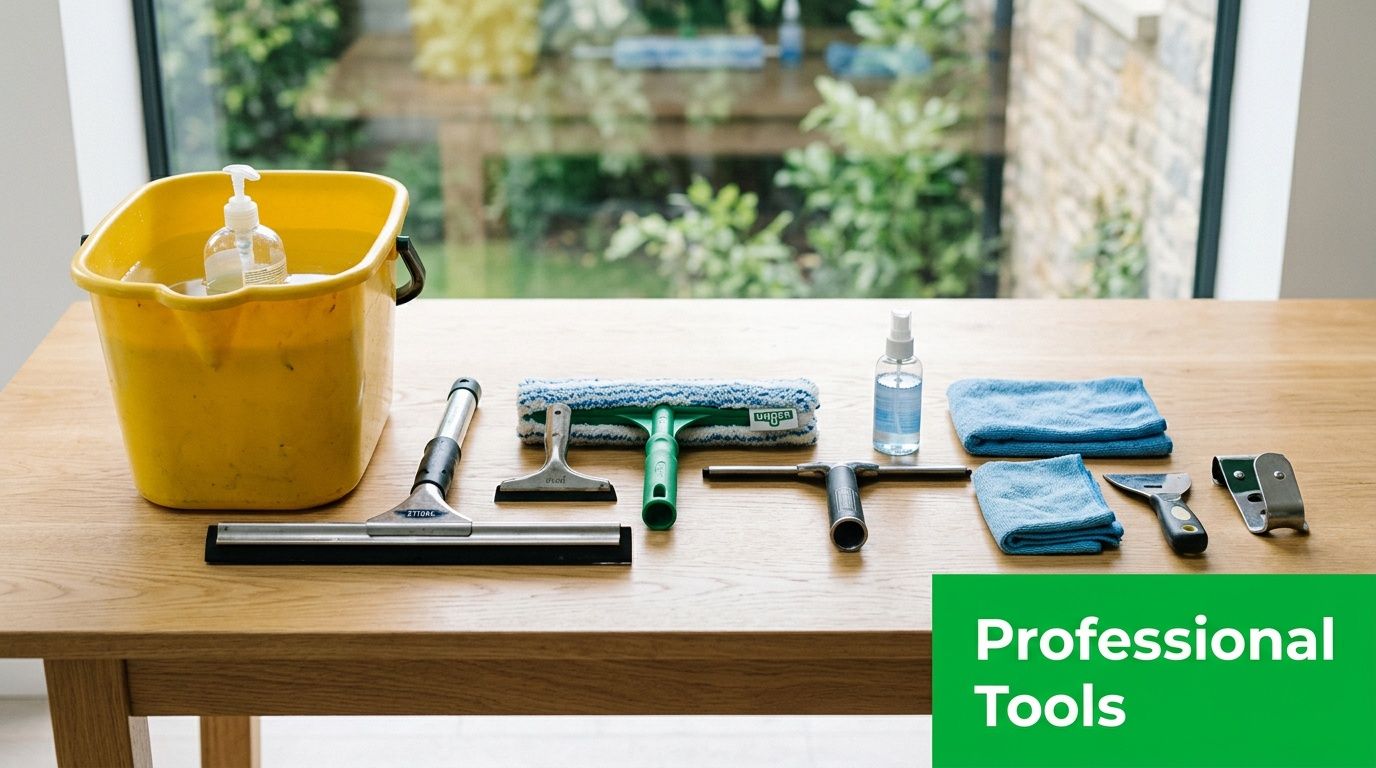
A professional kit is simple, but each piece has a job. The difference is quality and condition, not a shelf full of gadgets.
- Squeegee with fresh rubber. Dull or nicked rubber leaves lines, especially in our dry climate where solution flashes off fast.
- T-bar washer or scrubber. This loosens pollen, dust, bug residue, and the chalky film that builds up on exterior glass.
- Bucket with properly mixed solution. Too much soap leaves residue. Too little reduces glide.
- Lint-free microfiber cloths. Use them for edges, frames, sills, and touch-up work. Do not use one cloth for everything.
- Extension poles. These let you work safer and cut down on unnecessary ladder resets.
- Drop cloths and absorbent towels. Interior work should protect wood floors, baseboards, and furniture.
- Vacuum or narrow nozzle attachment for tracks. Loose grit in a track ends up back on the sill or dragged onto the glass.
- Screen tools and labels if needed. On larger homes or houses with multiple window types, keeping screens organized saves headaches later.
For a practical breakdown of what belongs in a residential setup, Pine Country has a guide to home window cleaning tools.
Cheap tools cost more in the end. A bargain squeegee with poor rubber can ruin an otherwise solid job, and worn microfiber leaves lint that shows up the second afternoon sun hits the pane.
Prep is part of the work
Professional window cleaners read the area before they start. Indoors, check flooring, wood trim, blinds, curtains, and anything sitting on the sill. Outdoors, check screens, landscaping, hose routing, and where dirty runoff will land.
In Northern Arizona, I also look at sun angle right away. Glass that sits in direct high-altitude sun can dry before the pass is finished, so setup and sequence matter. Start on the shaded side when possible, stage tools so they are within reach, and avoid extra walking that wastes time while solution dries on the glass.
Practical rule: If the setup allows dirt, drips, or hard water to spread beyond the window area, the process needs work.
Screens and tracks are part of the job
Clean glass beside a dirty screen is not a finished result. In Flagstaff, screens collect a surprising amount of dust and pollen, and that debris blows back onto the glass the first windy day or the first time the window opens.
Pine Country Window Cleaning treats screen removal, cleaning, and reinstallation as standard procedure because the whole window assembly needs attention, not just the pane. Tracks deserve the same respect. If loose grit stays in the track, it migrates back onto the sill, into the frame corners, and sometimes onto freshly cleaned glass.
There is a trade-off here. Full prep takes longer. It also prevents rework, protects the home, and produces a cleaner result that lasts longer.
A quick setup checklist
| Area | What to do |
|---|---|
| Interior floors | Lay down towels or drop cloths |
| Window area | Remove fragile items from sills and nearby furniture |
| Screens | Remove carefully and label if the home has similar sizes |
| Tracks and frames | Vacuum or dry-clean loose debris before any wet work |
| Tools | Inspect squeegee rubber, cloth condition, and pole fit before starting |
Customers notice this part. They notice careful screen handling, dry floors, clean sills, and hardware put back correctly. That is not an extra touch. It is the standard for window cleaning done right.
The Interior Window Cleaning Method
Interior glass demands control more than speed. You don't have the luxury of splashing water around a living room, and you can't leave drips on wood sills or fabric shades.
The expert interior method follows three steps: remove dust with a dry cloth, scrub with a damp sponge or scrubber, then wipe from top to bottom and buff immediately with a dry microfiber cloth within 15 seconds to prevent streaks. That protocol achieves over a 95% success rate, according to Pella's guide to cleaning windows.
Step one starts dry
Don't put solution on dusty interior glass first. Dry dust turns to mud the second it gets wet.
Start by wiping loose debris off the glass lightly with a dry cloth. Then deal with hardware, sill edges, and visible track debris before the damp work begins. This keeps dirt from getting dragged across the pane.
Control the water
Use a damp scrubber or sponge, not a dripping one. The goal is to loosen fingerprints, haze, and interior film without flooding the frame.
For large panes, cut a dry starting edge and work top to bottom with the squeegee. For smaller panes or divided lights, cloth work may make more sense, but the same rule applies. The dirty solution has to come off cleanly and quickly.
Here is a common mistake made indoors. They clean the glass, answer a text, then come back to buff the edges. By then, the residue has already started to dry.
Buff right away. On interior glass, delay is what turns a decent pane into a streaky one.
Where the finish is won
The final detail work is small, but it changes everything:
- Wipe the top edge first so no line of moisture drops onto finished glass.
- Catch lower corners with a folded microfiber cloth.
- Dry the sill and frame so dust doesn't wick back onto the pane.
- Check the pane from an angle rather than straight on. Interior haze often hides until side light hits it.
Interior trade-offs that matter
Some windows invite a squeegee. Others don't. Tight French panes, furniture-packed corners, and delicate trim may call for more cloth control and less tool movement.
The wrong trade-off is using too much solution because it feels easier. It isn't. Less water means fewer drips, cleaner edges, and less chance of mess on painted surfaces.
A tidy interior technician also works in a sequence that protects the room:
- Start high and shaded where practical, especially if sunlight is pushing into the room.
- Keep one cloth for glass edges and another for sill cleanup.
- Rotate cloth faces often so you don't reapply residue.
- Finish each window completely before moving to the next.
That last point matters in lived-in homes. Half-finished interiors create avoidable drips and call-backs.
Mastering Exterior Windows and Ladder Safety
Exterior work is where amateur methods usually fall apart. The dirt load is heavier, the sun is harsher, and the access decisions can turn a simple cleaning into a risky one.
The core method is technical, not casual. Expert exterior cleaning uses a dual-pass scrub to emulsify dirt, then a thorough rinse, followed by a precise S-technique squeegee pass. Overlapping passes by two inches is critical, because failing to overlap causes 90% of streaks, as shown in this exterior window cleaning technique video.
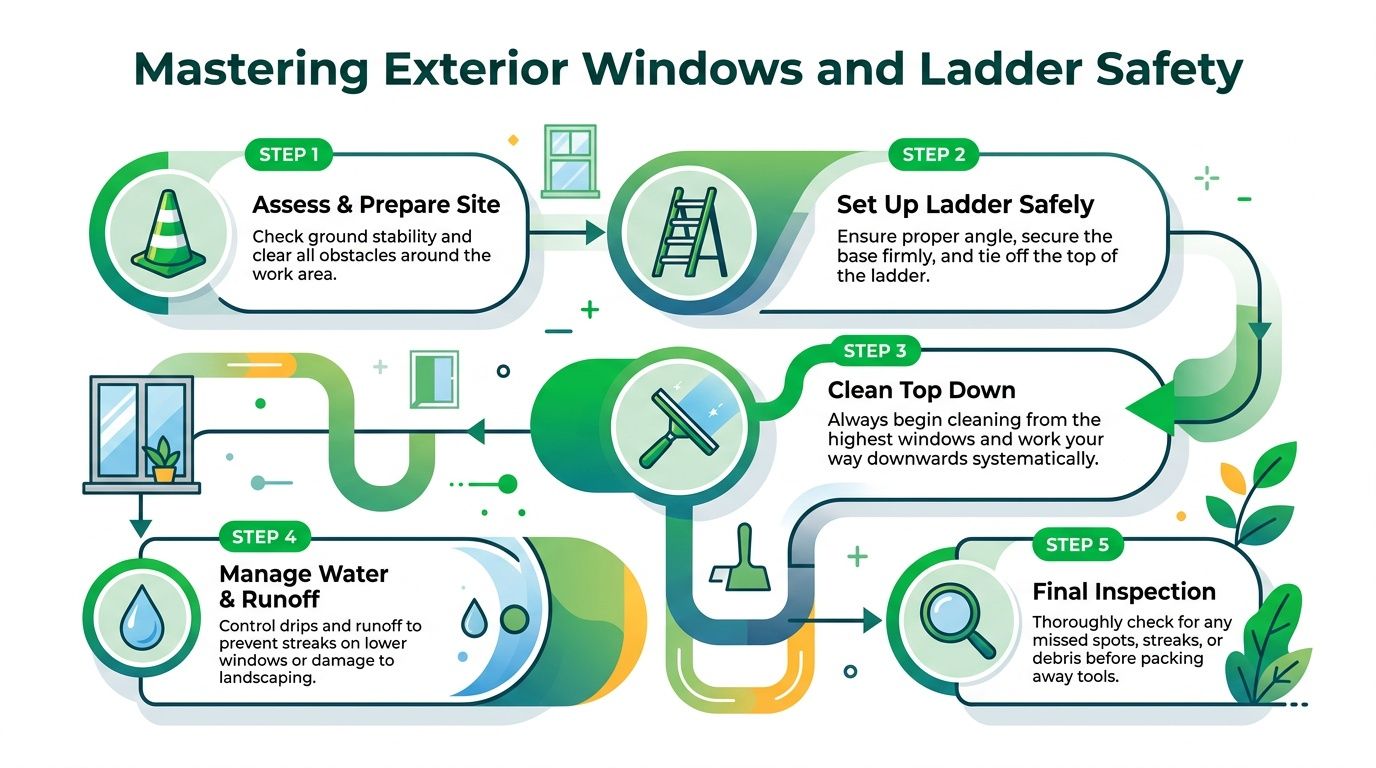
Start with the site, not the pane.
The exterior method that leaves glass clean
Exterior glass usually carries dust, pollen, bug residue, and mineral spotting. A quick wipe won't cut it.
The process that works looks like this:
- Scrub horizontally with a damp washer to break loose grime instead of just wetting the pane.
- Work the corners deliberately because edges hold the heaviest buildup.
- Rinse thoroughly until suds are gone.
- Squeegee in a fluid S-pattern while keeping the blade on the glass.
- Overlap each pass by two inches and wipe the blade as needed.
That overlap is what keeps lines from forming between passes. When someone fans too wide or hesitates too long, the glass tells on them.
Ladders, poles, and when reach changes the job
Exterior residential work often shifts between hand work, extension poles, and ladder access. Poles are useful for reducing ladder moves, but they also magnify small mistakes in angle and pressure. Ladders give precision, but they demand discipline.
For higher windows and second-story access, it helps to understand the limits before climbing. Pine Country has a practical page on how to clean high windows that outlines common access methods.
Basic ladder rules never change:
- Set on stable ground. Soft soil, rock, and uneven pavers create bad starts.
- Maintain three points of contact when climbing.
- Don't overreach. Move the ladder instead.
- Keep tools controlled so nothing drops onto glass, trim, or people below.
The fastest way to turn window cleaning into an injury is to keep working after your reach is gone.
A visual walkthrough helps with setup and movement:
Runoff and sequencing
Exterior work should move top down. If you clean lower panes first, upper runoff can undo your finish.
Experienced cleaners separate themselves by managing water, watching the frames, and planning the route around the house so drips, debris, and wet screens don't contaminate already-finished glass.
A good exterior cleaner also pays attention to what isn't glass:
| Surface | Risk | Better practice |
|---|---|---|
| Painted trim | Water spotting or drips | Control solution and wipe edges |
| Screens | Dust transfer back to glass | Clean separately before reinstalling |
| Landscaping | Runoff into beds | Direct water away where possible |
| Lower panes | Drips from upper work | Always clean top down |
That system matters more in Northern Arizona because exterior dirt often bakes onto the pane. The method has to remove it, not just wet it.
Tips for Flagstaff's Climate and Hard Water Stains
Northern Arizona punishes lazy timing.
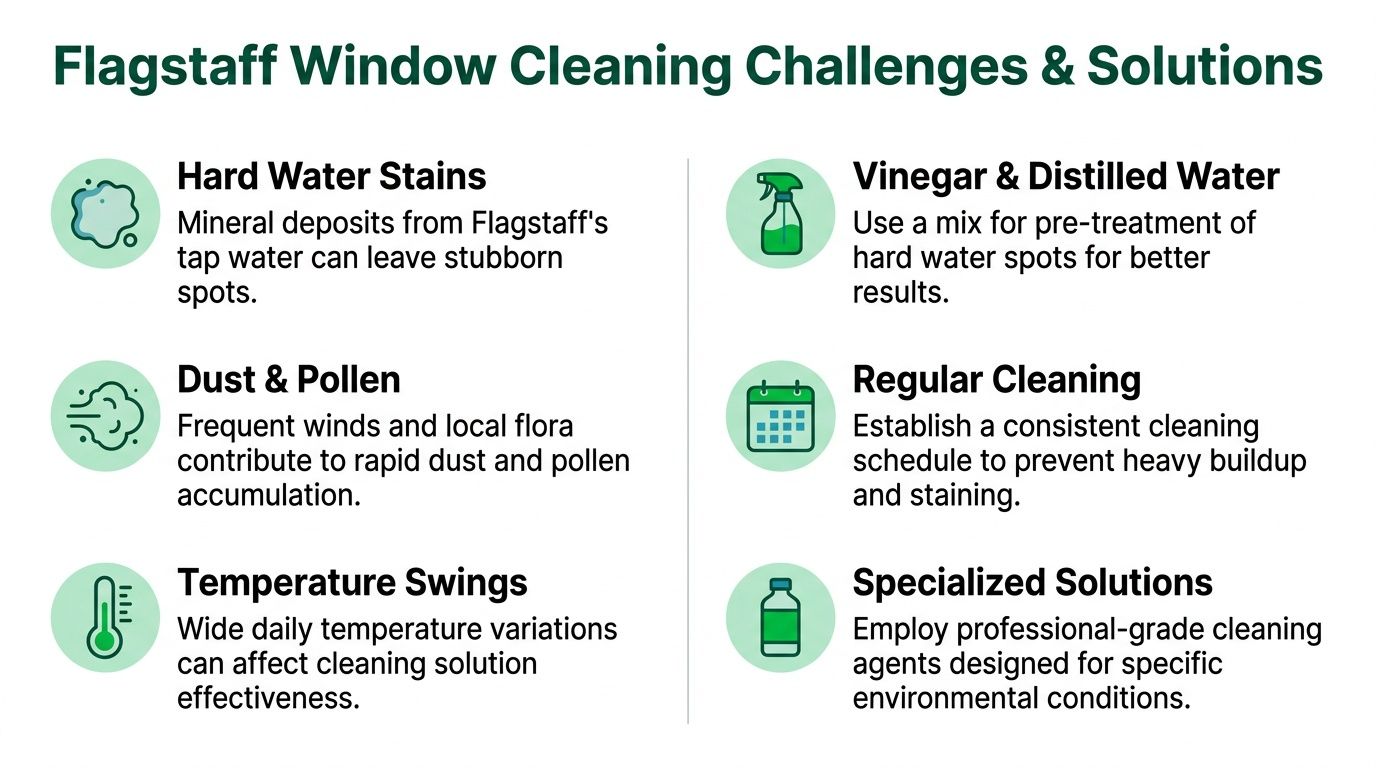
A lot of generic advice says to clean on a cloudy day, but it rarely explains why. In Flagstaff, the reason is visible on the glass within minutes. A study by the International Window Cleaning Association found that 78% of homeowners report streaks in windows cleaned within two hours of peak sun exposure, and the explanation given in The DIY Playbook's window cleaning article is straightforward: direct sunlight makes solution evaporate before it can be squeegeed off, leaving haze and mineral residue.
Timing matters more here
At this elevation, sun exposure changes the job. Glass heats up quickly, especially on south- and west-facing sides. The solution starts to flash off before the squeegee can clear it cleanly.
That creates two practical rules:
- Work the shaded side first whenever possible.
- Leave sun-blasted panes for better conditions instead of forcing the issue.
If the pane is hot to the touch, the window is telling you to wait.
Dust, pollen, and seasonal buildup
Flagstaff and Munds Park homes deal with windborne dust, pollen, and debris that settle on screens, tracks, and frames before they ever show clearly on the glass. That's why a house can look dingy even after a quick wipe-down.
A smarter seasonal rhythm is simple:
- Clean after the dusty spring stretch when buildup starts coating screens and sills.
- Clean after monsoon season when rain spots and runoff marks show up.
- Check second homes before guest arrivals because closed-up properties gather interior film and track debris.
Hard water needs a different mindset
Hard water stains aren't loose dirt. They're mineral deposits bonded to the surface.
That means normal soap-and-squeegee work may improve the appearance but not fully remove the spotting. Stubborn mineral damage usually needs a dedicated restoration approach and careful testing. For homeowners dealing with etched-looking spots or sprinkler staining, this guide on removing hard water stains from windows is a better starting point than repeating basic wash steps.
Some glass is dirty. Some glass is damaged by minerals. If you treat both conditions the same way, you waste time and risk scratching the pane.
Use restraint here. Aggressive pads, random blades, and household abrasives can damage coatings or leave visible scratches. Hard water correction is where technique matters as much as the chemical choice.
When to Call Pine Country Window Cleaning
A lot of window cleaning advice overstates what a homeowner can handle. In Flagstaff, the line between a routine wash and a problem job shows up fast once you add height, baked-on mineral staining, post-construction debris, or glass exposed to years of high-altitude sun and blowing dust.

The jobs that usually need a pro
Professional service makes sense for work that goes beyond basic maintenance:
- High or difficult access. Second-story glass, stairwell windows, atriums, steep lots, and tight exterior paths change the job from cleaning to access and fall prevention.
- Post-construction cleanup. Paint overspray, silicone, stickers, drywall dust, and fabrication debris require the right tools, testing, and blade discipline.
- Heavy hard water staining. Mineral deposits often need restoration methods, not a standard wash.
- Large properties or recurring service. Hotels, medical buildings, campuses, dealerships, and multi-unit properties need organized systems, consistent scheduling, and commercial-grade equipment.
Why local experience matters
Local experience matters because Northern Arizona is hard on glass. Dust loads screens and tracks. Sprinklers leave mineral spotting. Intense sun speeds up drying and exposes sloppy technique. Winter weather and steep terrain can also turn a simple exterior job into a safety problem.
Pine Country Window Cleaning has been serving this region for decades, and that kind of background shows up in the work itself. Crews familiar with Flagstaff, Munds Park, and surrounding areas know when standard soap-and-squeegee methods are enough, when stain removal needs a test spot first, and when ladder work should give way to poles, lifts, or a different access plan.
A practical dividing line
Here is the simple test. If you have to argue with yourself about whether the ladder placement is safe, whether the glass needs restoration instead of cleaning, or whether you can reach the window without cutting corners, the job has moved out of homeowner territory.
Professional crews also handle the details that usually get missed until there is a problem. Screen removal without bending frames. Interior floor and sill protection. Controlled runoff around stucco, wood trim, and entryways. Equipment matched to the building instead of forcing a homeowner-grade setup to do commercial work.
If your glass needs more than a quick wipe, Pine Country Window Cleaning handles residential and commercial window cleaning across Northern Arizona with inside-and-out service, screen removal and reinstallation, and the equipment needed for difficult access.