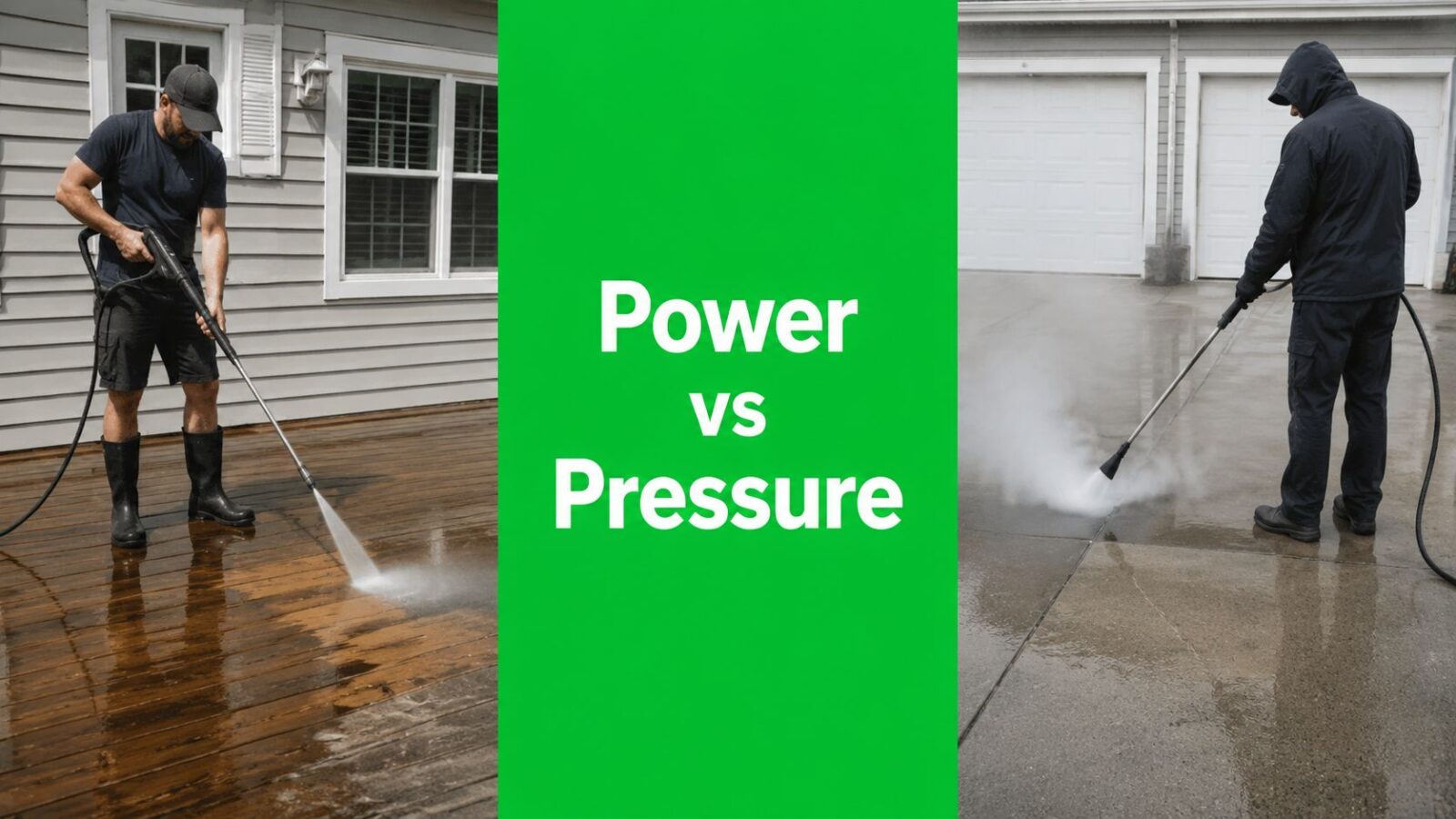
Power washing uses heated water, often around 200°F and commonly in the 150°F to 212°F range, while pressure washing uses unheated water. For most homeowners, that means power washing is better for greasy, stubborn buildup on hard surfaces, and pressure washing is the better fit for general exterior cleaning where the goal is to clean effectively without adding unnecessary risk.
If you're standing outside in Flagstaff looking at dusty stucco, a weathered deck, or a concrete driveway with dark buildup, the question usually isn't terminology. It's which method gets the surface clean without leaving behind etched concrete, stripped stain, lifted paint, or water pushed where it shouldn't go.
Up here, that matters more than people think. Northern Arizona homes deal with sun exposure, freeze-thaw cycles, pine debris, dust, and surfaces that can look rugged but still clean best with a controlled, surface-specific approach. The best wash isn't the strongest one. It's the one that matches the material.
| Method | Water temperature | Best for | Main advantage | Main risk |
|---|---|---|---|---|
| Power washing | Heated water | Grease, oil, sticky grime on durable surfaces | Heat breaks down bonded residue faster | More surface risk on delicate materials |
| Pressure washing | Unheated water | General cleaning on homes, patios, decks, and exteriors | Strong cleaning without added heat | Damage can still happen if pressure or technique is wrong |
The Fundamental Difference Heat vs No Heat
The simplest answer to what is the difference between power washing and pressure washing is this: power washing uses hot water, pressure washing uses unheated water. The pump, hose, and nozzle setup can feel similar from the outside, but the presence of heat changes how the cleaning works.
According to Window Genie's explanation of power washing versus pressure washing, the core technical distinction is water temperature. Pressure washing uses unheated tap water, while power washing adds a heating element and applies hot water, which improves cleaning on grease, oil, and other bonded contaminants without changing the basic high-pressure spray mechanics.
Why heat changes the job
A kitchen sink analogy works well here. If you rinse a greasy pan with cold water, some grime comes off, but the sticky film hangs on. Switch to hot water and the grease loosens faster. Exterior cleaning works the same way.
Hot water helps break down oily residue, gum-like buildup, and heavy grime that cold water tends to fight rather than dissolve. That doesn't mean hot water is always better. It means hot water is better for a narrower set of problems.
Practical rule: Choose the method based on the contaminant first, then the surface. Grease and oil point toward heat. Dust, dirt, pollen, and routine buildup usually don't.
What homeowners often get wrong
A lot of people assume "power washing" just means a stronger machine. That's where bad decisions start. Heat is the actual separator, and heat changes both cleaning strength and material risk.
On a durable surface with stubborn residue, hot water can save time and improve results. On painted trim, aging wood, composite decking, or vulnerable sealants, the same heat can raise the chance of damage if the operator gets too aggressive.
That risk-based mindset matters in Flagstaff. Mountain properties often combine multiple materials on one home: stucco walls, stained wood soffits, natural stone, painted railings, and composite deck boards. One blanket approach across all of them is a mistake.
A better way to think about it
Instead of asking which machine is better, ask:
- What is on the surface? Dirt, grease, sap, grime, mildew, or oil?
- What is the surface made of? Stucco, sealed stone, painted siding, wood, concrete?
- What condition is it in? Sound and durable, or aging and already vulnerable?
- What happens if the finish is damaged? Cosmetic issue, moisture issue, or expensive repair?
That's the answer behind what is the difference between power washing and pressure washing. One adds thermal cleaning power. The other relies on pressure, technique, nozzle choice, dwell time, and rinsing control.
A Deeper Dive Into Technical Specifications
Most homeowners only hear one variable discussed: pressure. In practice, professionals are balancing several things at once, and heat is only one of them.
Heat, flow, and spray pattern all matter
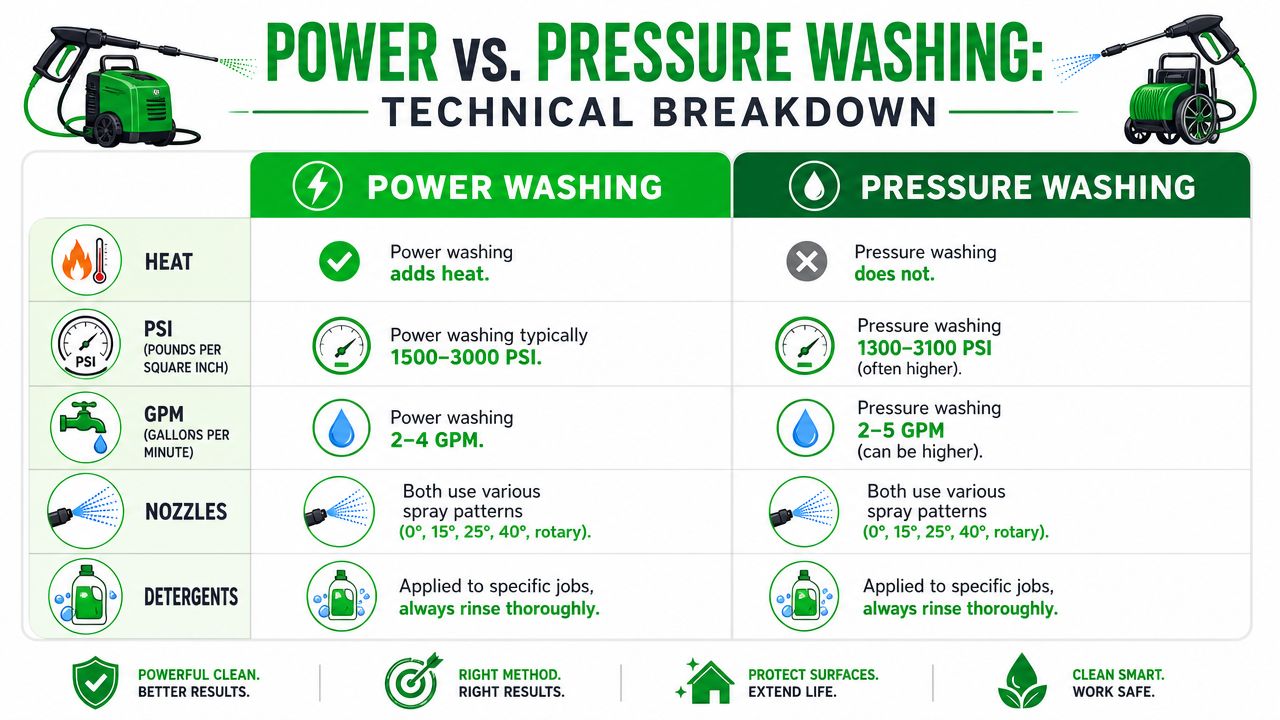
Next Insurance's breakdown of pressure washing versus power washing notes that professional power washers can heat water to about 200°F, with common operating ranges of roughly 150°F to 212°F. That heat is what helps break down sticky residues faster than unheated water alone.
But temperature isn't the whole setup. A technician also has to control:
- PSI. This is the force hitting the surface.
- GPM. This is the volume of water doing the rinsing and carrying contamination away.
- Nozzle angle. A tighter pattern concentrates force. A wider pattern spreads it out.
- Distance from the surface. The same machine can clean gently or aggressively depending on wand position.
- Detergent choice and dwell time. Sometimes chemistry does the work, and pressure then rinses.
Pressure isn't the same as cleaning skill
Homeowners often fixate on PSI because that's what rental equipment advertising pushes. But high PSI without judgment can gouge wood, scar softer stone, or leave visible wand marks on concrete.
GPM often matters more than people expect. Strong flow helps flush dirt out of pores, seams, and textured surfaces. Good rinsing also reduces streaking and residue left behind after detergent use.
A basic side-by-side view helps:
| Variable | Pressure washing | Power washing | What it means on the job |
|---|---|---|---|
| Water temp | Unheated | Heated | Heat helps on grease and bonded grime |
| Pump and nozzle | High-pressure spray | High-pressure spray | Spray mechanics are similar |
| Surface fit | General exterior cleaning | Tougher, dirtier, more durable surfaces | Material condition still decides |
| Risk profile | Lower heat risk | Higher heat risk | Delicate finishes need caution |
The nozzle is where a lot of damage happens
Operators don't clean with "pressure" in the abstract. They clean with a specific spray tip, at a specific angle, from a specific distance. That's why two people can use the same machine and get completely different outcomes.
A narrow, concentrated stream can cut into softer materials fast. A wider fan can clean more evenly and reduce the chance of striping or etching. Surface cleaners, extension wands, and downstream detergent systems also change the result.
For a practical look at how these decisions affect an actual exterior cleaning job, Pine Country's guide to pressure washing a house is useful because it connects equipment choices to siding, trim, and exterior condition rather than just machine specs.
Hot water adds capability. It doesn't replace judgment. A bad setup with heat can damage a surface faster than a cold-water machine.
Detergents still play a big role
People sometimes assume cold-water pressure washing means "water only." That's not how quality work is usually done. On many jobs, detergent selection and proper rinse technique matter as much as pressure.
On heat-sensitive surfaces, pros often lean on chemistry, dwell time, agitation where needed, and a controlled rinse instead of trying to blast contamination off. That approach is slower than brute force, but it's often the safer and better one.
Common Use Cases Which Method for Which Job
A method makes more sense when you tie it to real property problems instead of machine labels.
Where power washing earns its keep
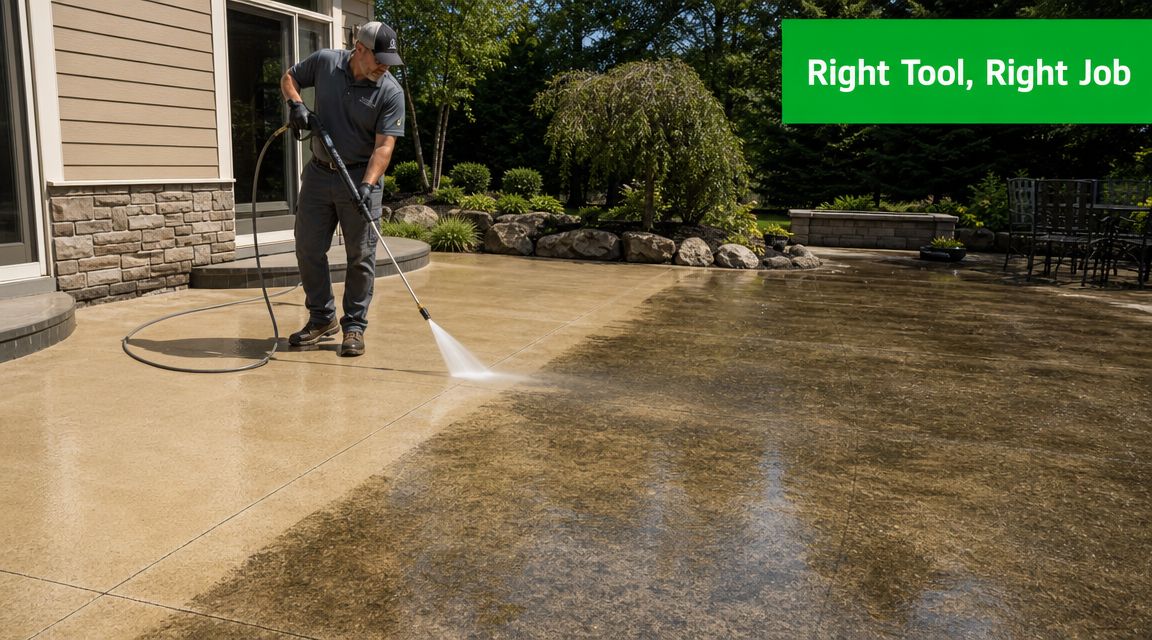
A greasy dumpster pad behind a restaurant is a classic hot-water job. So is concrete near an auto service bay, or a commercial area where oil and sticky residue have bonded to the surface.
In those situations, heat gives the operator an edge because the contamination isn't just sitting loose on top. It's clinging to the material. That's where specialized services can matter, and a useful outside example is Arelli's specialized power washing options, which show the kinds of heavy-duty jobs that often justify hot-water cleaning.
Other strong candidates for power washing include:
- Grease-loaded concrete
- Sticky residue in service areas
- Heavy grime on durable masonry
- Industrial or commercial surfaces where buildup is stubborn
Where pressure washing is usually the better fit
Most residential work in Flagstaff isn't a grease problem. It's a dust, pollen, cobweb, runoff, and seasonal grime problem. That's a different category.
A house exterior with normal buildup usually responds well to a controlled pressure wash. So does a patio that needs freshening up, a driveway with general surface dirt, or a deck that needs careful cleaning without unnecessary heat.
These are the jobs where pressure washing usually makes more sense:
- Stucco and siding cleanup when the issue is dirt, dust, and general buildup.
- Patios and walkways that need a surface refresh.
- Deck cleaning where preserving the finish matters as much as removing grime.
- Fence and exterior trim washing when the material is weathered or coated.
The right residential wash often looks less dramatic than people expect. That's a good sign. Controlled cleaning protects the surface.
The middle ground that needs judgment
Some jobs sit between the two categories. Concrete can handle a lot, but not every stain calls for heat. Wood can look durable, but old stain, dry grain, and sun exposure change the risk quickly.
A cabin owner in Munds Park might see dark traffic patterns on a deck and assume stronger is better. In reality, if the boards are already dry and the coating is tired, aggressive cleaning can leave permanent marks long after the dirt is gone.
That's why "what is the difference between power washing and pressure washing" isn't just a vocabulary question. It's a decision about how much force and heat a specific surface can take before cleaning turns into repair work.
Protecting Your Northern Arizona Property
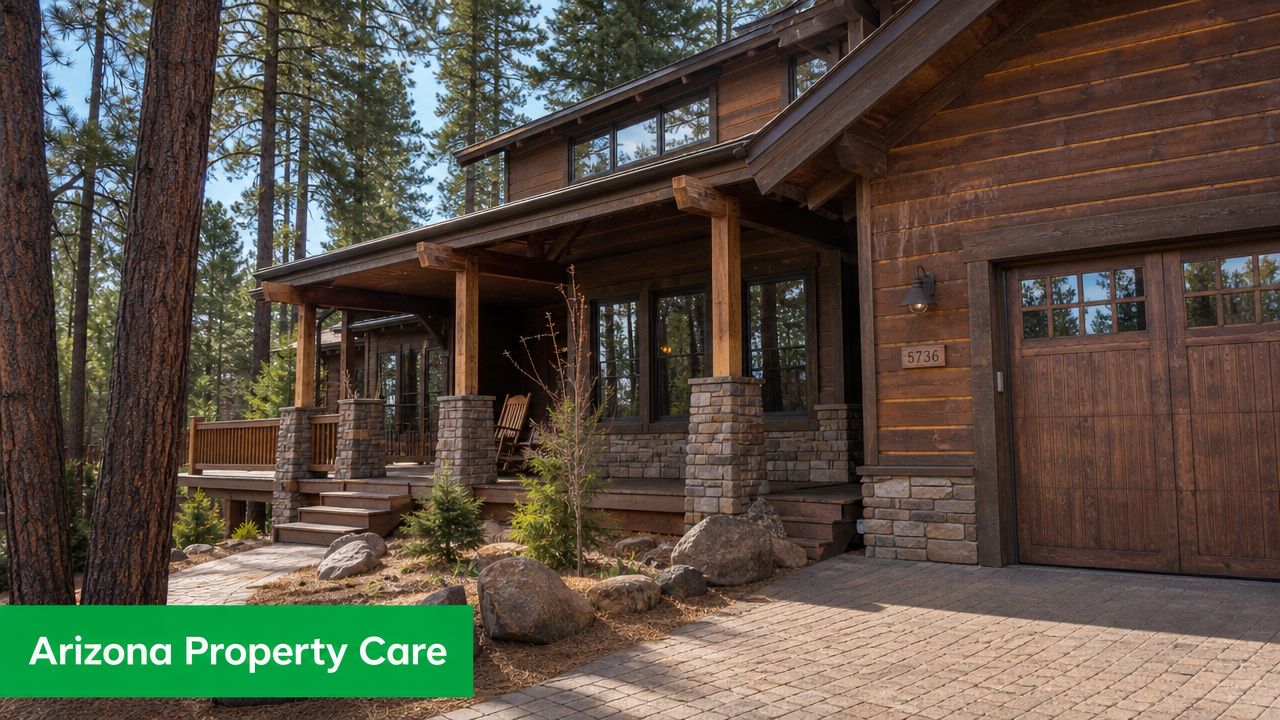
Northern Arizona homes aren't generic suburban boxes with one siding material and one easy answer. A lot of properties around Flagstaff combine stucco, stained wood, natural stone, exposed beams, sealed pavers, metal trim, and composite decking on the same exterior. Each one reacts differently to pressure, heat, and moisture.
The most useful guidance here comes from a surface-risk view, not a machine view. PHS explains the real differences between pressure washing, jet washing, and power washer usage by pointing out that most discussions stop at hot water versus cold water, when the more practical issue is material risk. The better choice is often the weaker one, especially on siding, decks, and sealed stone where minimizing damage matters more than maximizing force.
Why high-altitude properties need caution
Flagstaff's climate puts surfaces through a lot. Intense sun dries coatings out. Snow and freeze-thaw cycles open up weak spots. Dust settles into texture. Pine needles and runoff leave staining patterns that tempt people to attack the problem too aggressively.
That creates hidden cost in three common ways:
- Stucco can crack or take on moisture if water is driven into vulnerable areas.
- Wood siding and log elements can lose finish if pressure lifts stain or opens the grain.
- Composite decking can discolor or fuzz when the wrong nozzle or technique is used.
A clean surface is good. A clean surface with shortened lifespan is not.
Material-specific decisions that matter
For stucco, the issue usually isn't whether dirt can be removed. It can. The issue is whether the operator respects the finish, cracks, joints, and openings around trim and penetrations.
For log cabins and stained wood, the biggest mistake is treating the surface like concrete. Wood fibers don't forget bad technique. Once the grain is raised or the finish is stripped unevenly, the correction is much more involved than the original wash.
For sealed stone and pavers, heat and pressure can create problems that don't show up right away. Sealers can fail unevenly. Joint material can loosen. Surface appearance can become inconsistent after it dries.
A safer decision framework
If you're evaluating a Northern Arizona property, use this order of operations:
| Question | Why it matters |
|---|---|
| Is the surface coated or sealed? | Coatings and sealers can be stripped or weakened |
| Is the material porous or textured? | Porous surfaces hold grime and water differently |
| Are there existing cracks or failing joints? | Cleaning can force water deeper into weak points |
| Is the buildup organic, dusty, or oily? | The contaminant affects method choice |
| Would cosmetic damage be costly to fix? | Cleaning should never create refinishing work |
A similar risk-first mindset applies to upper exterior surfaces too. If the property also has staining or buildup overhead, it helps to review a service built around protection rather than brute force, such as Pine Country's roof cleaning services.
On mountain homes, the safest method usually wins. The strongest method only wins when the surface can actually handle it.
DIY Cleaning vs Hiring a Flagstaff Professional
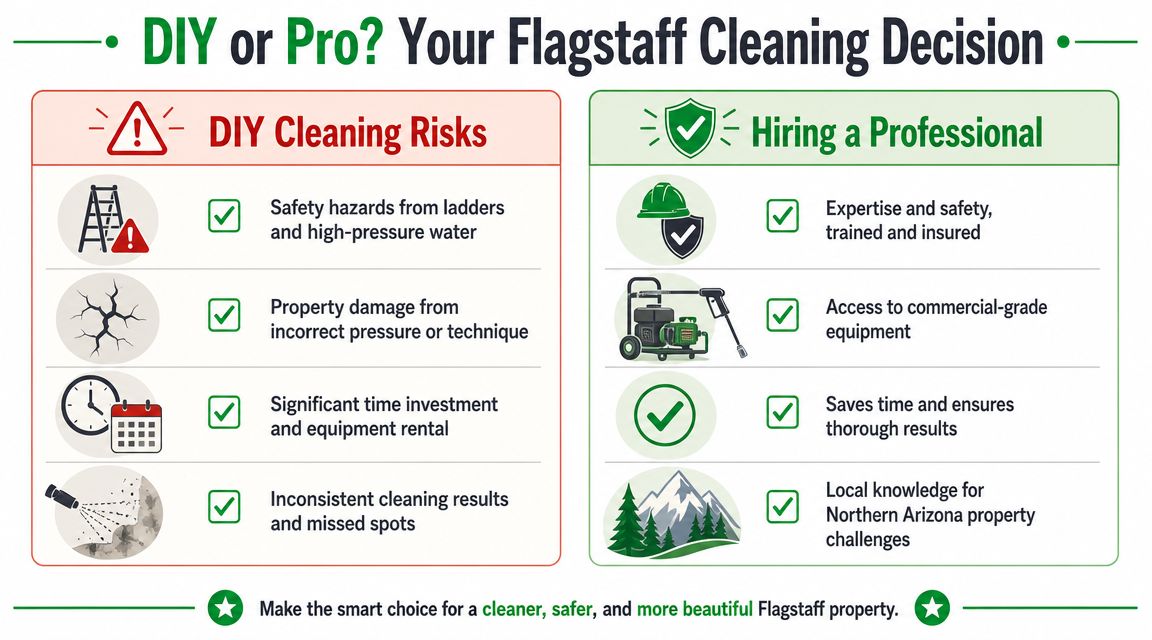
A lot of homeowners start with the same thought: rent a machine, buy a few tips, knock it out in an afternoon. Sometimes that works on a basic concrete slab. Often it turns into wand marks, damaged trim, soaked soffits, or a project that takes much longer than expected.
Where DIY goes sideways
The first problem is technique. Most damage doesn't happen because a homeowner is careless. It happens because the machine is more aggressive than expected, or because the person cleaning doesn't know how a nozzle behaves on aged stain, dry cedar, oxidized trim, or patched stucco.
The second problem is access and safety. Exterior cleaning often means ladders, sloped walks, wet surfaces, overspray, and trying to hold a wand steady while managing hose drag around landscaping and corners.
Common DIY trouble spots include:
- Using too narrow a spray pattern and cutting lines into wood or concrete
- Getting too close to the surface and stripping finish
- Forcing water behind siding or trim
- Cleaning unevenly and leaving streaks, tiger-striping, or lap marks
- Underestimating setup and cleanup time
A realistic pricing discussion helps too. Before renting equipment, buying accessories, and devoting a weekend to the job, it's smart to compare against professional service options and what they include. Pine Country's page on pressure washing service cost gives that conversation useful context.
What a local professional brings
A Flagstaff professional should understand more than machine operation. They should understand local materials, mountain home layouts, access constraints, weather timing, and how surfaces age in this climate.
Pine Country Window Cleaning has been in business since 1999, and it was started by Flagstaff native David Kaminski. That kind of local history matters because Northern Arizona properties aren't cleaned the same way as tract homes in milder climates. The materials, elevation, debris patterns, and weather exposure are different.
Customer care matters just as much as cleaning skill. On the window side, professional service means using squeegees, ladders, poles, and pure-water brushes instead of shortcut methods. It also means treating the home carefully, removing screens, cleaning screens, and reinstalling them properly as part of the job.
This video gives a useful visual look at the kind of exterior cleaning decisions homeowners are weighing:
A good contractor isn't selling pressure. They're selling judgment, consistency, and fewer expensive surprises.
Trust Flagstaffs Exterior Cleaning Experts
If you've read this far, the practical takeaway is simple. The difference between power washing and pressure washing comes down to heated water versus unheated water, but the smarter question is which method protects your property while still solving the cleaning problem.
That matters even more in Flagstaff, where homes often mix delicate finishes with rugged-looking materials. A driveway, deck, stucco wall, log accent, and window trim shouldn't all be treated the same way. Good exterior care means knowing when to use force, when to use heat, and when to back off.
It also helps to work with a company that understands the whole exterior, not just one task. Pine Country Window Cleaning is known first for professional window cleaning done the right way, with squeegees, ladders, poles, and pure-water brushes, not household glass-cleaning shortcuts. The team also removes screens, cleans screens, and reinstalls them with every service, which says a lot about how they care for the home and the customer experience.
For anyone curious about the broader business side of this trade, this guide on building a profitable local power washing business offers a useful outside look at why equipment, training, and local reputation matter so much in exterior cleaning.
If your goal is simple, safe, professional results, the right contractor should make the process feel clear from the first estimate to the final walkthrough.
Pine Country Window Cleaning helps Flagstaff homeowners, cabin owners, and property managers protect their exteriors with experienced, careful service. If you need window cleaning, pressure washing, gutter cleaning, post-construction cleanup, or help deciding which cleaning method is right for your property, contact the team for a free estimate and straightforward advice specific to Northern Arizona conditions.