
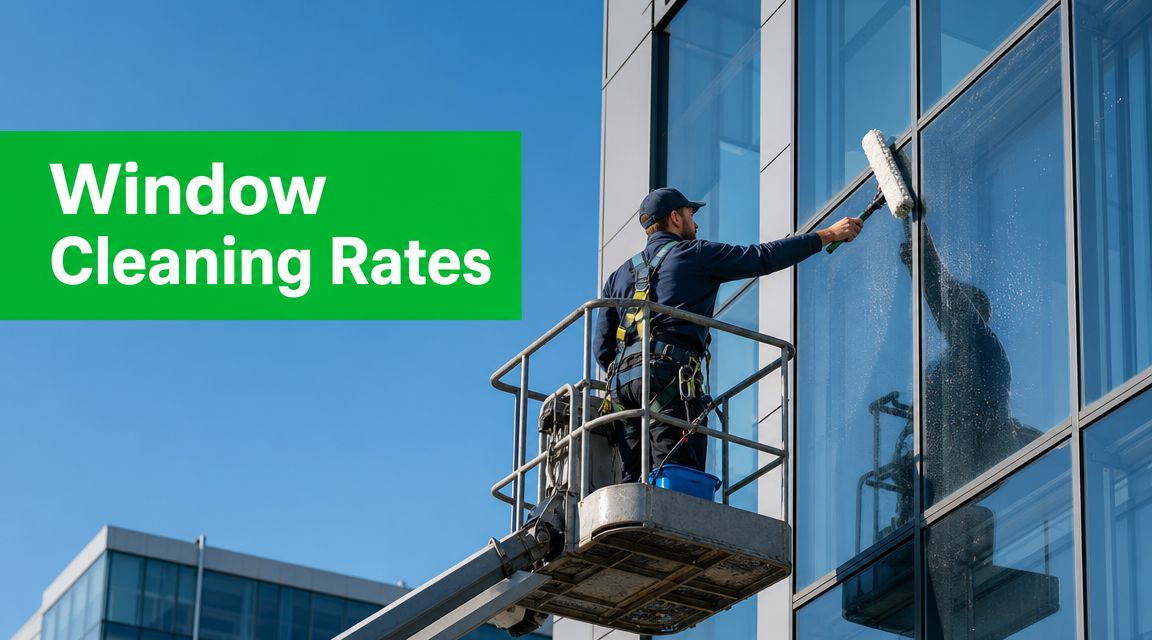
If you're managing a commercial property in Flagstaff, you're probably trying to answer a simple question that never seems to get a simple answer. What should commercial window cleaning rates look like, and how do you know whether a quote is fair?
That confusion is normal. Two buildings can have similar square footage and end up with very different pricing because window cleaning isn't just about glass area. Height, access, screens, frequency, mineral buildup, and the condition of the frames all change the labor on site. In Northern Arizona, pine pollen, sap, windblown dust, and strong sun add another layer.
I've been around this trade long enough to tell you this clearly. A useful quote isn't just a price. It's a scope of work, a safety plan, and a maintenance plan that fits the property.
How Professional Window Cleaning Rates Are Structured
A property manager in Flagstaff might get three bids for the same building and see three different pricing methods. That does not always mean one contractor is padding the number. It usually means each company is measuring the job a different way.
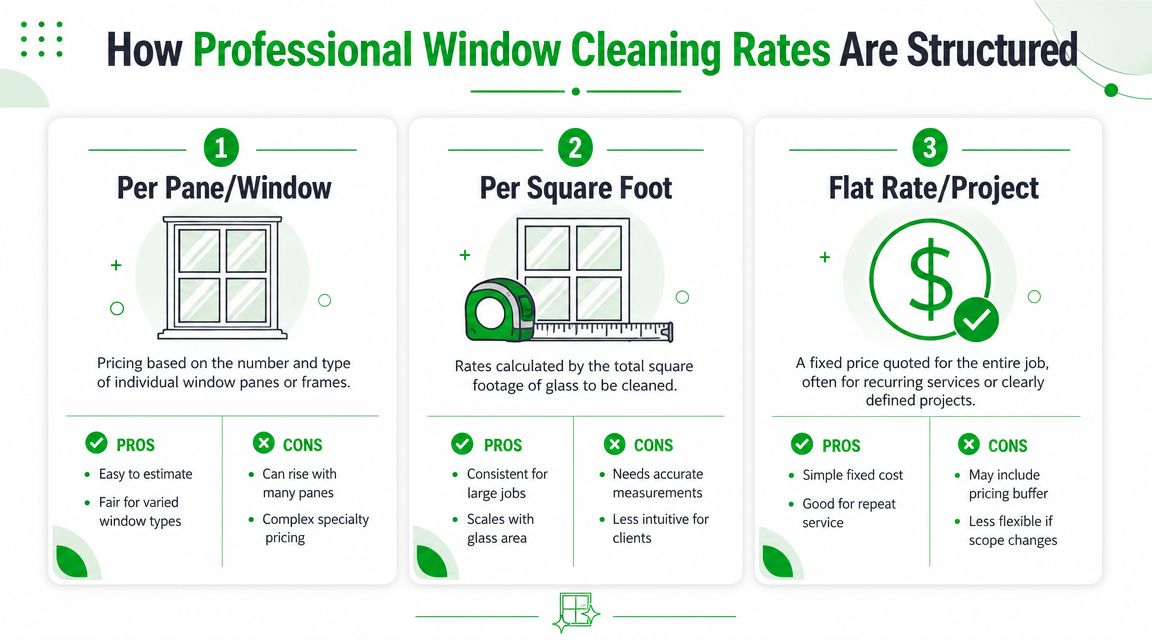
Commercial window cleaning rates generally fall into three structures. Per window or pane, per square foot, and flat-rate project pricing. All three can be fair. The question is whether the pricing method matches the building.
Per window pricing
Per-window pricing works well on buildings with clearly defined, repeatable glass. Office suites, medical buildings, schools, and smaller commercial properties often fit this model because the panes are easy to count and the labor is fairly consistent from one unit to the next.
It is also the easiest format for a manager to audit. You can walk the site, confirm the count, and make sure the invoice matches the agreed scope.
Pros
- Easy to verify: Window counts are visible and simple to confirm.
- Predictable for recurring service: Billing stays consistent if the scope stays the same.
- Clear for straightforward buildings: It reduces confusion on standard storefronts and office glass.
Cons
- Mixed glass creates disputes: French panes, divided lights, transoms, and atrium sections can blur the count.
- Labor is not always equal: One awkward upper pane can take longer than several ground-level panes.
Per square foot pricing
Square-foot pricing usually fits buildings with wide runs of continuous glass better than a pane count does. Large storefronts, auto dealerships, and some retail centers are good examples. HomeGuide's window cleaning cost breakdown shows commercial pricing is often quoted by square footage in cases where broad glass coverage matters more than the number of individual panes.
In practice, this method works best when the glass layout is open and uniform. It can also reduce arguments over whether a long storefront section should be counted as two panes, four panes, or one system.
That is why this pricing model shows up often in commercial window cleaning services for properties with long exterior glass lines and repeat maintenance schedules.
Practical rule: If your building has large uninterrupted glass sections, square-foot pricing is often cleaner and easier to compare than a pane-by-pane quote.
Flat-rate project pricing
Flat-rate pricing is common once the contractor understands the site and can define the work clearly. Route work, quarterly service, and multi-building properties often end up here because the client wants a fixed number and the cleaner knows the labor involved.
This structure can be the easiest one to budget for, but only if the written scope is tight. Interior glass, partition glass, screens, hard-water treatment, and after-hours access can all disappear inside a flat rate if the quote is vague.
Pros
- Simple budgeting: One fixed price for a defined visit.
- Useful for service agreements: It works well for monthly, quarterly, or annual schedules.
- Less billing friction: The client knows the number before the crew arrives.
Cons
- Scope has to be specific: If it is not written down, it is easy for work to get excluded.
- Low bids can hide omissions: A cheaper flat rate may leave out access equipment, interior panes, or detail work.
A solid quote should also show how access will be handled if the property has height changes, overhead obstacles, or loading-area constraints. Wilcox Door's guide on lifting solutions gives a useful general overview of how lifting systems are selected, which helps explain why two flat-rate bids can differ even before anyone starts cleaning.
Key Factors That Determine Commercial Window Cleaning Costs
Two buildings can have about the same amount of glass and still price very differently in Flagstaff. One has open ground access, clean lines, and routine quarterly service. The other has upper windows over landscaping, mineral buildup from irrigation, and tenants who only allow interior access before 8 a.m. The second job takes more planning, more labor, and usually more insurance exposure.
Height and access
Access drives cost fast.
A one-story storefront on a clear sidewalk is straightforward to clean. A medical office with second-story glass over shrubs, signage, or sloped entries is a different job entirely. Once a crew has to work around ladders, water-fed poles, scissor lifts, boom lifts, or rope-access rules, production slows and the risk profile changes.
That is why property managers should ask how the contractor plans to reach every elevation, not just whether upper windows are included. If access is vague in the bid, the price is not settled yet. For a useful general reference on how vertical access systems are selected, Wilcox Door's guide on lifting solutions helps explain why equipment choices affect both safety and cost.
Glass condition and specialty removal
Routine dust and fingerprints are one thing. Hard-water spotting, paint overspray, adhesive residue, oxidation near frames, and post-construction debris are another.
In Northern Arizona, the local conditions show up on the glass. Pine pollen, windblown dust, sap mist, and sprinkler overspray are common around Flagstaff, especially on properties with landscaping or exposed parking lots. Glass that looks lightly dirty from the curb can require much more handwork once a technician starts detailing edges, removing mineral film, or checking for debris that cannot be scrubbed aggressively without risking scratches.
A solid quote separates basic cleaning from restoration-type work. If those items are buried together, bid comparisons get messy fast.
Low pricing often assumes routine glass in routine condition. The number changes once bonded residue or mineral staining shows up.
Interior versus exterior scope
A surprising number of commercial quotes only cover exterior glass. That can be perfectly fine, but it needs to be stated clearly.
Interior work adds time for access, furniture, tenant coordination, security procedures, and floor protection. In medical buildings, offices, banks, and retail spaces, those details affect labor more than property managers expect. Screens do too. If screens have to come out, be cleaned, and reinstalled, that should be listed instead of treated like a small extra.
Property managers who want to see how contractors match tools to site conditions can review examples of commercial window cleaning equipment, including pure-water systems, ladders, and lift-based setups.
Frequency and site conditions
Frequency changes pricing in a practical way. Monthly and quarterly service usually costs less per visit than a one-time cleanup because the glass stays in maintainable condition. Crews spend less time removing buildup and more time cleaning.
I have seen this across Northern Arizona for years. A restaurant on regular service near downtown Flagstaff is usually simpler to maintain than an office park that waits a full year between visits, even if the annual glass count looks similar on paper.
Other factors that move a quote up or down include:
- Building design: Setbacks, atriums, canopies, parapets, and divided panes slow production.
- Obstructions: Parked vehicles, locked gates, patios, and dense landscaping add setup time.
- Scheduling limits: Hotels, medical offices, schools, and active retail often require tighter service windows.
- Local exposure: Windblown dust, pine debris, snowmelt residue, and irrigation spotting can push a property out of routine-maintenance pricing.
The best bids account for those site conditions up front. The weak ones leave them to be discovered after the work starts.
Northern Arizona Pricing Examples for Commercial Properties
A property manager in Flagstaff usually is not asking, "What is the national average?" The actual question is, "What should this building cost here, with our access, our weather, and our schedule?" That is the right question.
In Northern Arizona, two properties with a similar glass count can price very differently. Snowmelt residue, hard water, pine pollen, windblown dust, tight downtown access, and seasonal occupancy all affect production time. After pricing commercial work here since 1999, I can say the most useful examples are local ones tied to building type and operating conditions.
Downtown storefront
A small storefront in downtown Flagstaff often looks simple from the curb. It rarely is.
Historic facades, divided panes, limited parking, pedestrian traffic, and narrow sidewalks slow setup and detail work. A cleaner may only be working a few feet from foot traffic and entry doors the entire time. That affects labor more than square footage does.
For budgeting, small storefront service often falls in the lower commercial range, and industry guidance commonly places those jobs around $150 to $450+ per visit depending on scope, condition, and access, as outlined in Fieldy's commercial window cleaning cost guide. Around downtown, I would expect a solid quote to spell out whether that price covers exterior only, inside and out, entry glass, and any screen or track work.
Mid-size office or medical building
Office and medical properties around NAU, the hospital area, and east Flagstaff usually price by complexity, not just count. Upper-story glass, courtyards, shaded elevations, restricted work hours, and active tenant traffic all affect how a crew has to stage the job.
These buildings often get quoted as a flat project price rather than a simple per-pane number. That format is fine if the scope is clear. Exterior glass, interior glass, partition glass, and first-time cleanup should be separated so the manager can see what is routine service and what is corrective work.
A medical office adds another layer. If the proposal does not explain how the crew will handle patient entrances, parked vehicles, and timing around business hours, the quote is missing part of the job.
Resort or large hospitality property
Hospitality properties in places like Munds Park, Forest Highlands, and other campus-style settings need a different pricing approach. One contract may include guest room windows, restaurant glass, lobby glass, fitness areas, and high-access sections with different cleaning methods on the same site.
That is why resort pricing tends to widen quickly. Ground-floor lobby glass may be straightforward, while upper glass, breezeways, and amenity buildings take more labor and more coordination. On larger sites, quarterly or monthly maintenance usually prices better than one-off service because the glass stays in serviceable condition and crews can work from a repeat plan instead of starting from scratch each visit.
Sample commercial window cleaning rates in Northern Arizona
| Building Type | Typical Scope | Access Method | Estimated Quarterly Rate |
|---|---|---|---|
| Downtown Flagstaff storefront | Exterior glass, entry doors, interior front glass as needed | Ground access, ladder for detail work | Often priced at the lower end of commercial service, with costs rising for divided panes, screen work, and tight access |
| Mid-size office or medical building | Interior and exterior glass, screens where applicable, detail work around entrances | Ladders, poles, possible lift access for selected areas | Usually above storefront pricing because access, scheduling limits, and tenant coordination add labor |
| Resort or multi-building hospitality property | Mixed glass types across guest, lobby, and amenity spaces | Ground crews, ladders, pure-water poles, possible lift support | Usually quoted as a custom maintenance program based on building mix, route planning, and service frequency |
Use examples like these to set a realistic budget range. Then compare bids by how clearly each company defines the scope, access plan, and service frequency for your specific property.
Your Checklist for Getting an Accurate Window Cleaning Quote
Most bad comparisons start before the bids even arrive. If one company is pricing exterior only, another is including screens, and a third assumes quarterly maintenance, you're not comparing commercial window cleaning rates. You're comparing different jobs.
Walk the property with a written scope
Bring a printed list or digital checklist and mark every area the vendor should price. Include entry glass, sidelights, interior partitions, stairwell windows, transoms, conference room glass, and any upper glass that's easy to miss from the ground.
Ask whether the proposal includes all removable screens. In our trade, that's not a small detail. Screens collect dust and pollen, and if they stay dirty, the building still looks neglected even after the glass is cleaned.
Ask what method will be used
Not every building should be cleaned the same way. Professional crews may use squeegees, extension poles, ladders, lifts, and pure-water brush systems depending on the glass and access.
That matters because the method affects speed, safety, and final appearance. A property manager should know whether a vendor plans to clean from the ground, from ladders, or with mechanical access. If high sections are involved, ask how they protect walkways, vehicles, and landscaping while working.
Get line items for anything outside the base wash
Unclear quotes often cause problems. Ask whether these items are included or separate:
- Interior glass: Don't assume both sides are included.
- Screen service: Confirm removal, cleaning, and reinstallation.
- Frame and sill detailing: Especially important on storefronts and offices with visible entry glass.
- Post-construction debris: Paint, silicone, stickers, and dust should be priced separately if present.
- Hard-water spotting or adhesive removal: Specialty work needs to be named in writing.
Field note: A quote with fewer details isn't simpler. It's just hiding the decisions until after the work starts.
Nail down service frequency before comparing price
Customized maintenance plans matter more than many buyers realize. Guidance for facility managers consistently points out that the best apples-to-apples bid comes from requesting a detailed maintenance plan with line items, rather than relying on a generic rate card, as discussed in Smart Janitorial's perspective on customized maintenance plans.
That's especially true for commercial properties in dusty or high-traffic areas. Monthly, quarterly, and on-demand service should be priced as different strategies, not as if they create the same labor conditions.
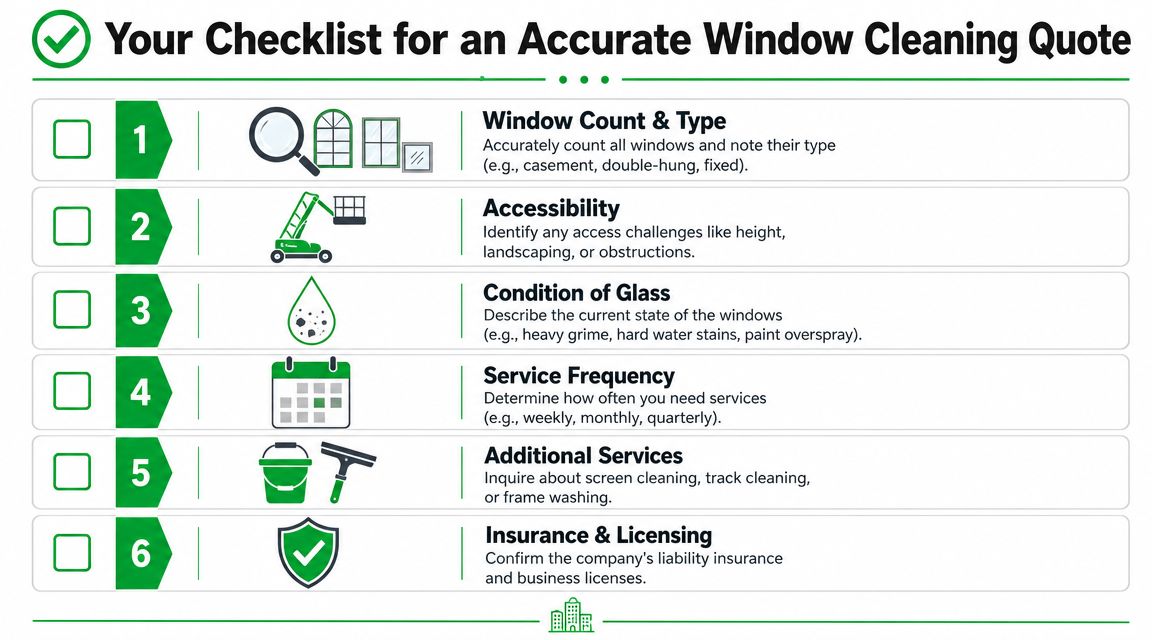
Use this simple quote checklist on site:
- Count the glass types and note anything unusual.
- Mark access issues like landscaping, locked areas, canopies, and upper glass.
- Identify glass condition such as sap, hard water, overspray, or neglected buildup.
- Set the service cadence before requesting the final proposal.
- Verify insurance and safety documentation before award, not after.
- Request a written scope with exclusions stated plainly.
How to Compare Bids and Choose the Right Partner
Once the proposals are in front of you, the lowest number usually grabs the eye first. That's normal. It just shouldn't make the decision for you.
Compare the scope before the price
Take each quote and strip it down to the actual work included. Is one vendor pricing exterior only while another includes interior glass? Are screens addressed? Does one bidder include frame wipe-downs and another skip them? A lower price often comes from omitted labor, not from better efficiency.
Create a side-by-side sheet with the same categories for every bidder. If a line item is missing, mark it as missing. Don't fill in the blanks with assumptions.
Watch for safety vagueness
Commercial window cleaning gets expensive fast when access is wrong, and it gets dangerous even faster. A serious proposal should tell you how the company plans to reach high-up glass and how it handles pedestrian areas, parked vehicles, and active entrances.
Red flags are usually easy to spot:
- No mention of insurance: That should never be absent from a commercial proposal.
- No access plan: If upper glass exists, the quote should state how crews will reach it.
- No scheduling detail: Retail, lodging, and medical properties need coordination.
- No exclusions: A proposal that excludes nothing probably hasn't been thought through.
Review contract terms like an operator, not just a buyer
A property manager isn't just purchasing a cleaning visit. You're choosing a service partner who may be on site for years. Contract language matters.
Look closely at cancellation terms, weather rescheduling, touch-up policies, and communication expectations. Also ask who signs off on completed work and how service issues are documented. The cleaner who responds well to a small problem today is usually the one who prevents bigger problems later.
The best commercial vendor is the one who makes the property easier to manage, not the one who creates the fewest line items on paper.
Value shows up in fewer headaches
Under-equipped companies often bid aggressively because they need the work. Then they hit an access problem, run behind, miss details, or start negotiating scope after arrival. That costs staff time, tenant goodwill, and sometimes another service call.
A stronger commercial partner usually shows it in ordinary ways. Clear arrival windows. Clean uniforms. Respectful technicians. Written scopes. Fast communication. Safe setups. Those aren't marketing details. They're operating details, and operating details are what keep a property running smoothly.
Why Flagstaff Businesses Have Trusted Us Since 1999
A property manager in Flagstaff can hire a low bid on Monday and be dealing with access problems, missed panes, or tenant complaints by Friday. Northern Arizona is hard on glass and hard on schedules. Wind, pollen, monsoon season, pine sap, snow, and heavy downtown foot traffic all change how commercial window cleaning needs to be planned.
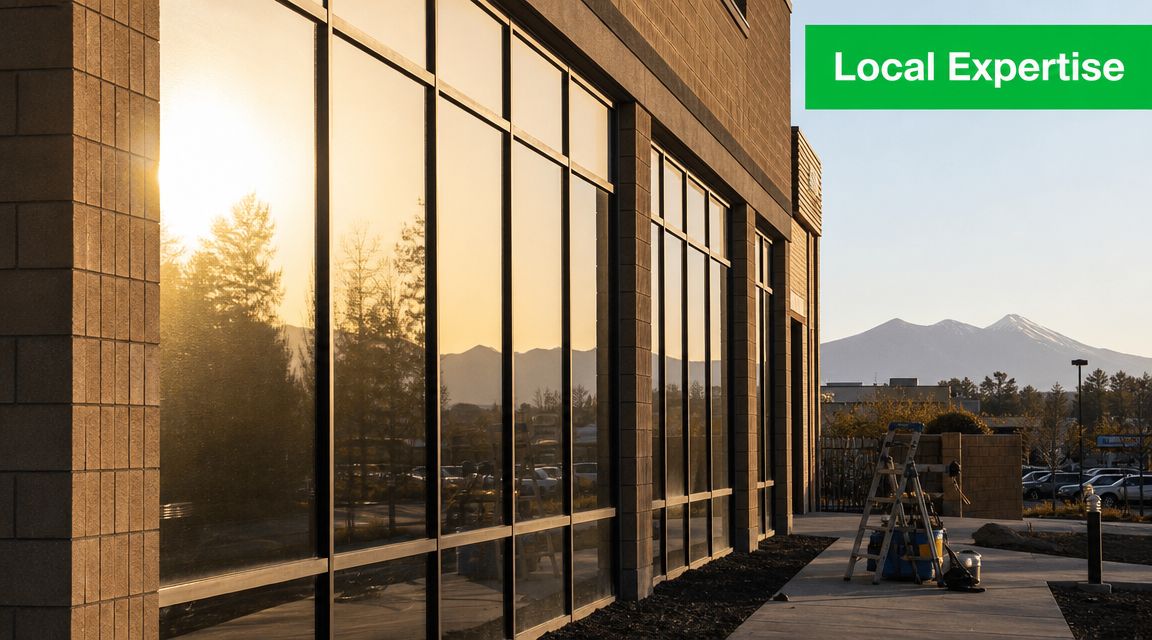
David Kaminski started this company in Flagstaff in 1999. That local history shows up in the work. A storefront on Aspen Avenue, a medical office near the hospital, an NAU building, and a resort property off the highway may all need window cleaning, but they do not need the same plan, crew timing, or access method. Pine Country grew into Flagstaff's largest local window cleaning provider by building around those site realities and by showing up consistently over time.
That includes using the right method for the building instead of forcing every property into the same setup. Some jobs need hand detailing with a squeegee. Some are better served by extension poles or pure-water systems for exterior maintenance. Some require lift access and a crew that already knows how to work the site safely. We also clean and reinstall screens as part of the service, because on many Northern Arizona properties, dirty screens can make freshly cleaned glass look unfinished.
Consistency keeps commercial accounts for years.
Clean glass gets attention. Reliable service keeps managers from having to babysit the vendor. Crews need to arrive when expected, work around business hours, protect walkways, communicate clearly, and leave the property looking better than they found it. That is what long-term commercial clients usually remember.
The same buying logic applies in related trades. If you're comparing vendors for shading, privacy, or interior light control, this article on finding a Tampa Bay window treatment provider makes the same practical point. Clear scope, professional execution, and the right fit for the property save problems later.
For owners and managers reviewing local options, our Flagstaff window cleaning services for commercial properties show the kinds of buildings, access conditions, and service frequencies common in this market.
Equipment and training also set a real ceiling on what a company can handle. If a property needs boom lifts, scissor lifts, or atrium work, that has to be planned by people who do it regularly. Pine Country maintains in-house access to that equipment, including a 95-foot atrium lift, and our crews are OSHA trained. For a manager comparing bids, that means fewer surprises, fewer workarounds on site, and a cleaner line between price and actual capability.
Here's a look at that kind of work in action:
Commercial window cleaning rates only make sense when you tie them to execution. The useful questions are simple. Can this company handle your access conditions, work safely around your tenants or guests, communicate well, and repeat the result on the next visit without creating extra work for your staff?
If you want a clear, detailed quote for your commercial property, contact Pine Country Window Cleaning. We'll walk the site, define the scope, explain the access plan, and give you pricing that makes sense for Flagstaff conditions.