
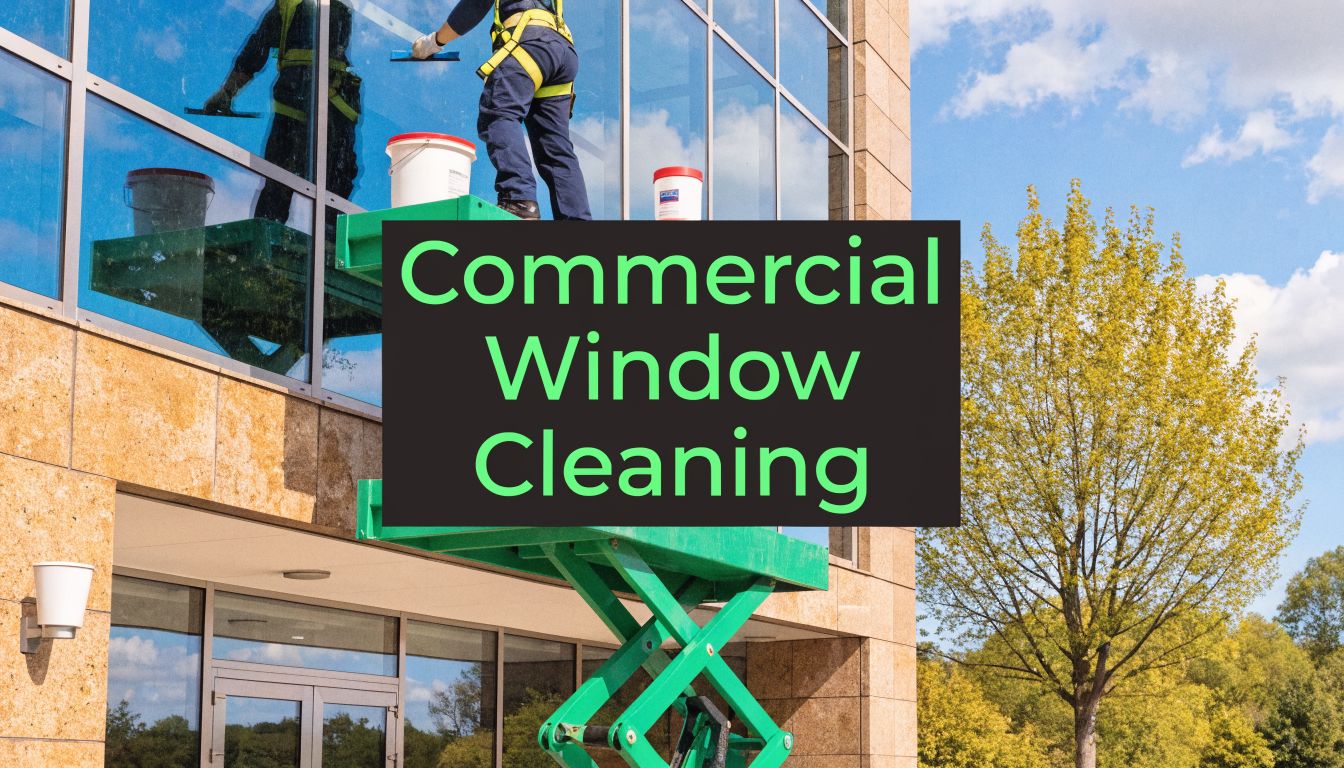
A lot of property managers in Flagstaff notice the same pattern. Windows look fine after a cleaning, then monsoon dust rolls through, winter leaves runoff marks, spring reveals mineral spotting, and by the time tenants, guests, or customers are arriving every day, the glass already looks tired again.
That’s not a small cosmetic issue. On a commercial building, dirty windows change how the whole property reads. A storefront feels neglected. An office looks dimmer. A hotel entrance loses some of the polish people expect before they ever step inside.
Flagstaff makes this harder than generic maintenance guides admit. Four real seasons, high altitude, strong sun, wind, snow, and dust all work against clean glass. A good commercial window cleaning plan has to account for those conditions, not fight yesterday’s problem with a one-size-fits-all schedule.
Your Guide to Commercial Window Cleaning in Flagstaff
If you manage a retail center, office building, hotel, medical property, campus facility, or dealership in Northern Arizona, you’ve probably had this happen. You walk the property after weather moves through, and the windows don’t just have a little dust. They have film on the glass, dirty corners, screens holding debris, and visible spotting that standard maintenance crews won’t fully remove.
That’s where commercial window cleaning services stop being an occasional add-on and become part of normal property care. The point isn’t just to make the building look better for a few days. The point is to protect appearance, maintain a professional standard, and keep routine buildup from turning into a larger restoration issue.
Flagstaff properties need a local approach. The work that makes sense on a mild, low-elevation office park doesn’t always hold up here. Buildings in this market deal with harsh sun, blowing dust, snowmelt, and changing access conditions throughout the year. Exterior maintenance has to be planned around those realities, especially when windows are part of the public face of the property.
Clean glass doesn't just improve curb appeal. It tells tenants, guests, and customers that the property is managed carefully.
Commercial exterior upkeep also tends to overlap. Window cleaning often sits alongside facade washing, entry cleanup, and seasonal exterior care. For managers coordinating broader maintenance, commercial building exterior cleaning is usually part of the same conversation because the glass, frames, screens, and surrounding surfaces affect each other visually.
Since 1999, Flagstaff native David Kaminski has built Pine Country Window Cleaning around those local conditions. That matters because mountain-town commercial properties don’t need generic advice. They need service that fits the climate, the building type, and the way Northern Arizona weather behaves.
What Professional Window Cleaning Actually Involves
Professional window cleaning starts by rejecting the shortcuts that cause problems. Commercial glass should not be cleaned with paper towels, spray bottles, newspaper, or household products. Those methods are slow, inconsistent, and a poor fit for larger buildings, detailed frames, and repeat maintenance.
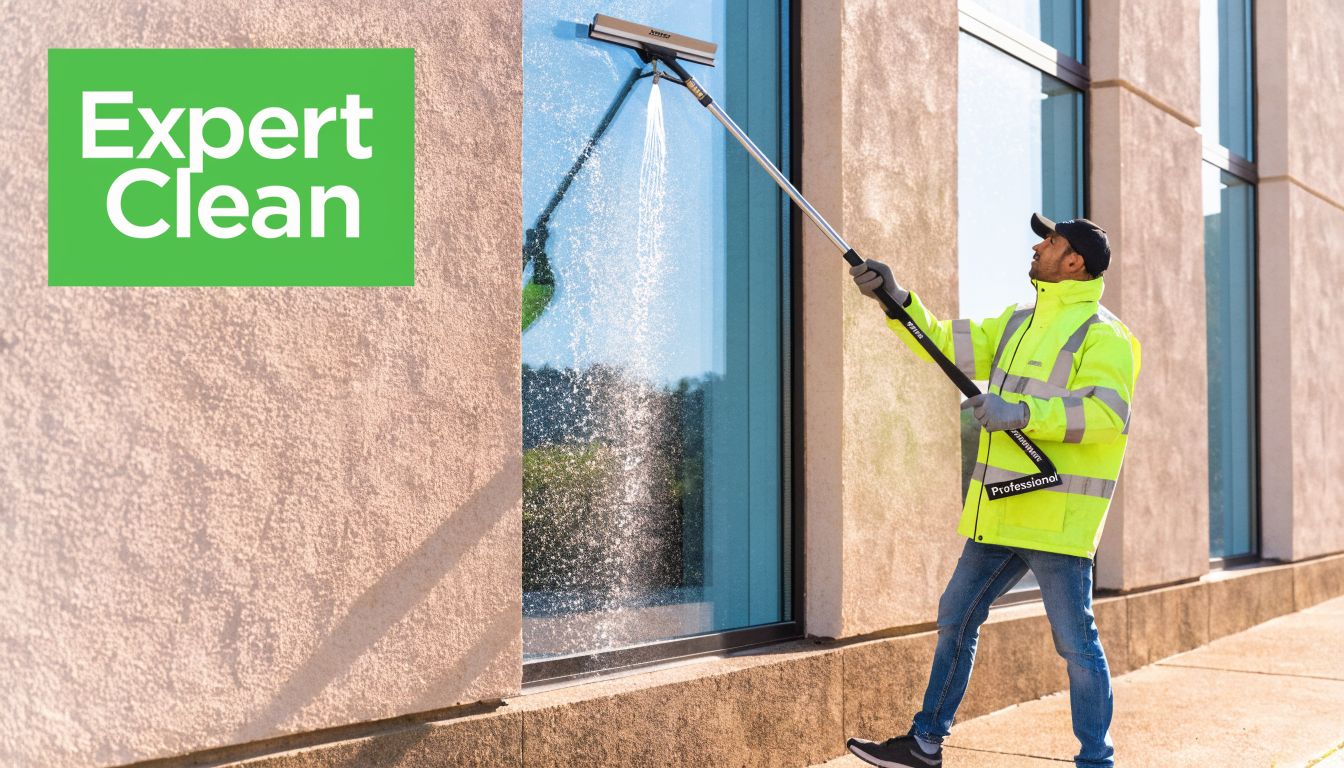
A professional crew uses the right method for the glass, height, and condition of the building. That usually means a combination of squeegees, extension poles, water-fed pole systems, detailing tools, ladders when appropriate, and access equipment when needed. The result is cleaner glass, fewer missed edges, and a process that can be repeated on schedule without reinventing the job every visit.
Pure-water cleaning for modern commercial work
One of the biggest improvements in the trade is the pure-water system. Modern commercial window cleaning uses a multi-stage purification process, typically reverse osmosis and deionisation, to create mineral-free water. Delivered through telescopic poles, that pure water lets windows dry spot-free without manual squeegeeing, and it’s effective for buildings up to four stories according to this guide to commercial window cleaning methods.
That matters in Flagstaff because mineral spotting is obvious in bright sun. If you clean with untreated water, residue often shows after the glass dries. Pure water avoids that final problem because there are no dissolved minerals left behind.
A lot of commercial jobs are ideal for this method:
- Office exteriors: It handles repeated maintenance efficiently on buildings where consistency matters more than one-time heroics.
- Storefront rows: It works well when crews need to move fast and still leave clean frames and glass.
- Hotels and mixed-use properties: It helps cover larger exterior runs without turning the job into a ladder-heavy process.
For routine service, professional window cleaning services often combine pure-water pole work outside with traditional hand cleaning where detail work, interior glass, or lower storefront presentation calls for it.
Complete service includes the parts people skip
A lot of inexperienced crews focus only on the visible pane. Property managers usually notice the missing pieces right away. Screens are still dirty. Tracks hold debris. Corners are left wet. Lower frames drip after the crew leaves.
A complete commercial service takes care of those details. Screens should be removed, cleaned, and reinstalled as part of the work when the building has them. That protects airflow, improves appearance from both sides, and prevents dust trapped in the screen mesh from immediately dulling the cleaned glass.
Here’s a short look at the process in action.
Practical rule: If a crew says they clean the glass but doesn’t mention screens, frames, edges, and access method, ask more questions before you hire them.
The difference between amateur and professional work is usually visible after the first weather event. Professional work holds up better because the system, not just the surface, was handled correctly.
The Right Equipment for Every Commercial Building
The right tool depends on the building, not the other way around. A competent contractor doesn’t show up hoping one method will fit everything from a street-level storefront to a campus atrium. They choose equipment based on height, setbacks, foot traffic, landscaping, interior access, and the finish required.
Ground access and lower-rise work
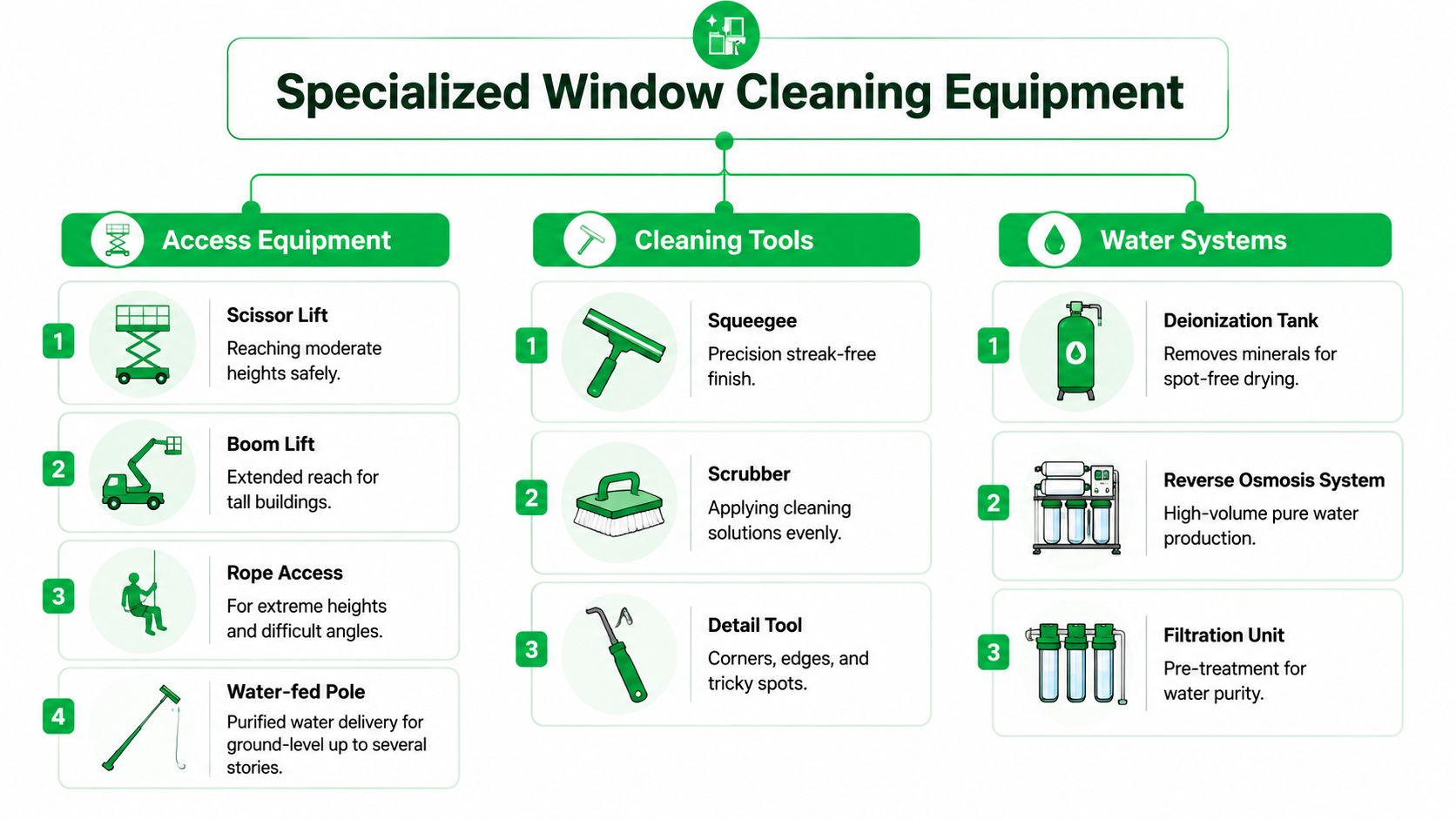
For storefronts, dealer showrooms, and lower office buildings, traditional tools still matter. A professional squeegee gives precise control on glass where close-up presentation matters. A scrubber and detail cloth help around edges, corners, and window divisions that a broad brush can’t finish cleanly.
Then there’s the water-fed pole. It covers a lot of modern commercial work efficiently, especially on buildings that don’t need a lift. Pure-water pole systems reduce ladder movement, speed up production, and keep more work safely on the ground.
This is also where many managers misunderstand “high window” work. Not every high pane calls for heavy equipment. A good contractor knows when a pole is the practical answer and when it becomes the wrong tool. For buildings with mixed heights, guidance on cleaning high windows helps explain where that line usually falls.
When lifts become the better choice
Once access gets more complicated, lifts stop being a luxury and become the right answer.
Think of a scissor lift as a straight-up access machine. It’s useful where the technician needs stable vertical reach on relatively open, flat approaches. Parking structures, hotel exteriors, and broad building faces often fit that profile.
A boom lift is different. It reaches up and over. If a building has landscaping, awnings, lower rooflines, entry canopies, or setbacks that block direct access, a boom lift can place the technician where a scissor lift can’t.
An atrium lift solves another problem entirely. Interior commercial spaces with high glass, narrow footprints, and sensitive flooring need equipment that can work inside without turning the lobby into a construction zone. Think hotel atriums, event spaces, and multi-story interior glazing.
Why in-house equipment matters
Property managers should ask a simple question. Who controls the equipment plan?
If a company owns and operates its own commercial access equipment, scheduling is usually smoother and the crew is more familiar with the machines they’re using. The publisher of this guide, Pine Country Window Cleaning, handles commercial work with in-house boom lifts, scissor lifts, and a 95-foot atrium lift. That kind of setup is useful for hotels, NAU facilities, dealerships, and other properties where access changes from one elevation to the next.
The wrong equipment choice usually shows up as delays, incomplete sections, or a crew that avoids the hardest glass on the building.
Equipment doesn’t replace skill. But on commercial jobs, it determines whether the work gets done efficiently, safely, and to a standard you can maintain.
The Critical Role of Safety Certifications and Insurance
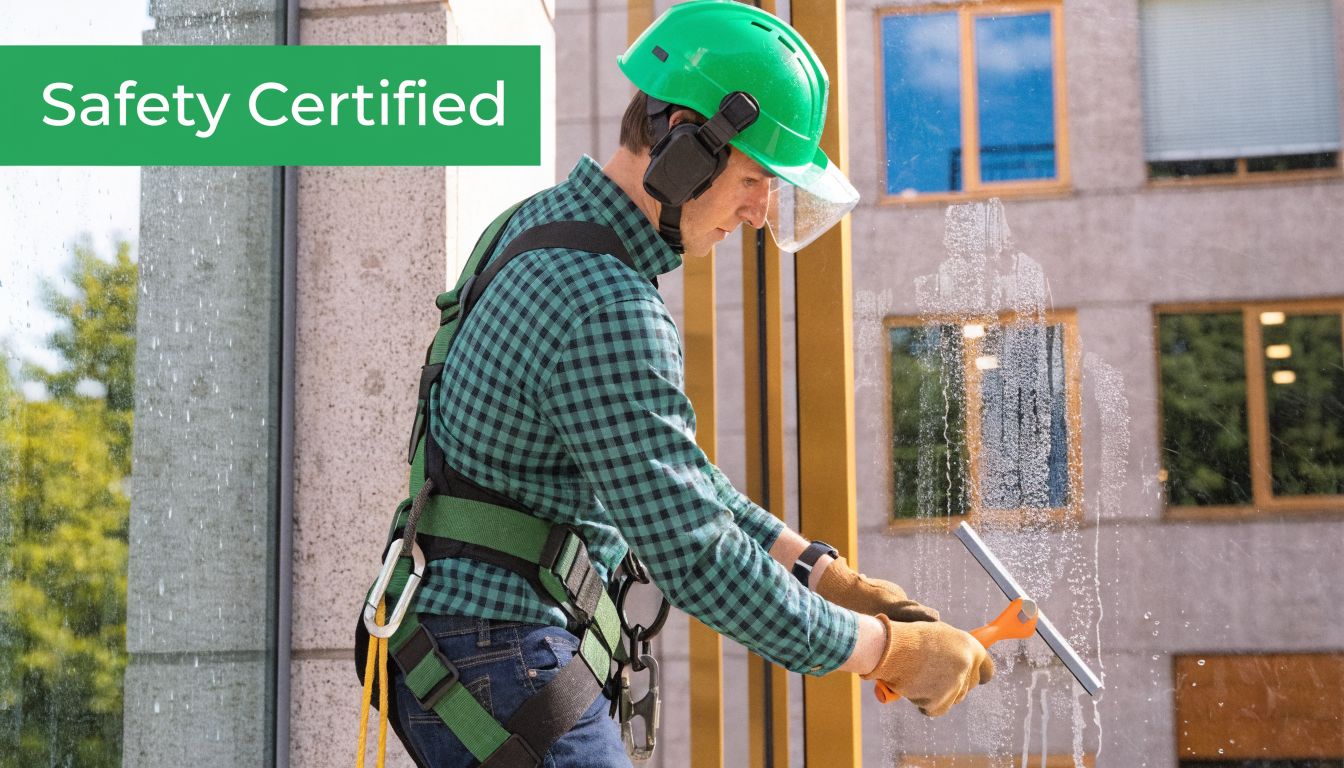
If you’re hiring for a commercial property, safety paperwork is not a side issue. It’s part of the service. A window cleaning vendor works around entrances, pedestrians, vehicles, landscaping, rooflines, ladders, lifts, and sometimes interior public spaces. That means your hiring decision affects liability as much as appearance.
The industry has moved in this direction for a reason. The global commercial window cleaning service market is valued at about $5 billion annually, with projections reaching $6.2 billion over the forecast window, and that growth is tied in part to the professionalization of the trade, including formal safety compliance and advanced technician training according to commercial window cleaning market analysis.
What a property manager should verify
You don’t need a long speech from a vendor. You need clear answers.
Ask for:
- Proof of insurance: General liability and workers' compensation should be current and available.
- Safety training: Crews doing work at height should have documented OSHA-related training and site safety procedures.
- Equipment competency: If lifts are involved, the crew should know how to operate them properly on active commercial sites.
- Jobsite planning: Cones, barriers, entry coordination, and communication with management should be standard, not improvised.
A vendor who hesitates on any of those points is creating risk for your property.
Cheap bids can become expensive problems
The low bid often looks attractive until the access issue gets harder, weather shifts, or the building has more complexity than expected. Then corners get cut. Maybe the crew works from ladders where a lift should have been used. Maybe they skip sections that require more planning. Maybe they can’t provide current insurance documents when your office asks.
That’s not just poor service. It’s a management problem.
Untrained labor can clean glass. It can't reliably manage commercial risk.
Certified, insured professionals protect more than the windows. They protect your staff, your tenants, your visitors, and your operating routine. For commercial properties, that’s the standard to hold.
Understanding Commercial Window Cleaning Costs and Scheduling
Property managers usually ask two questions first. What drives the price, and how often should the building be cleaned? Both are reasonable questions, and both have practical answers. The mistake is expecting a serious commercial quote to come from a simple price-per-window guess.
What actually affects cost
Commercial window cleaning services are priced by job conditions, not just by pane count. The major cost drivers are usually the same across building types:
- Access difficulty: Ground-level glass is one thing. Glass that requires lifts, interior coordination, or work around obstacles is another.
- Building layout: Long storefront runs are faster to clean than scattered panes across multiple elevations.
- Condition of the glass: Routine maintenance costs less than first-time cleanup, post-construction residue removal, or neglected buildup.
- Screens and details: Removing, cleaning, and reinstalling screens adds labor, but it also delivers a complete result.
- Service frequency: Recurring service usually runs more smoothly than irregular one-off cleaning because the glass and frames stay under control.
A good estimate should account for those factors clearly. If a quote seems unusually low, it may be leaving out access, detailing, or screen work.
Why scheduling should follow the building
The best schedule is tied to property use, exposure, and presentation standard. A retail storefront on a busy corridor won’t have the same needs as a professional office set back from the road. A hotel entrance and public-facing common areas usually need more frequent attention than rear elevations.
Some companies now use dirt accumulation monitoring and climate-based planning to set intervals more intelligently. That matters because a data-driven approach to cleaning frequency has been linked to a 10% increase in property value, a 15% rise in walk-in customers, and up to a 25% reduction in energy use through better natural light according to this overview of scheduling and commercial window performance.
For budgeting, it helps to think in tiers instead of fixed numbers:
| Property type | Typical pricing pattern |
|---|---|
| Small storefront | Usually straightforward if access is simple and glass is maintained regularly |
| Mid-size office building | Often priced around mixed access, screen handling, and interior-exterior coordination |
| Hotel or larger campus-style property | Commonly depends on phasing, lift use, public safety setup, and seasonal timing |
If you’re reviewing exterior maintenance as part of a broader operating budget, Edinhart's property management cost guide is a useful reference for seeing how recurring services fit into overall property management expenses.
Maintenance plans usually save frustration
One-time cleanings have their place. New ownership, special events, inspections, and post-winter cleanup are common examples. But many commercial properties benefit more from a recurring plan because the building never gets too far behind.
That’s especially true in Flagstaff. Dust season, snow season, and high-visibility tourist periods don’t arrive on your vendor’s convenience. They arrive on the calendar and the weather. A maintenance plan keeps the property presentable without having to scramble every time the glass starts showing it.
How to Hire the Right Flagstaff Window Cleaning Partner
A lot of vendors can talk confidently about window cleaning. Fewer can explain how they’ll handle a commercial property in a mountain climate where access, weather, dust, and seasonal buildup all change the job. That’s why hiring should be based on questions, not promises.
Flagstaff isn’t a generic market. At 6,910 feet, local conditions matter, and guidance built for lower-elevation cities often misses what happens here. Intense UV can accelerate oxidation of window frames and coatings by 40% to 60%, while monsoon dust and heavy snow create maintenance demands that require climate-specific knowledge, as noted in this discussion of high-altitude glass cleaning challenges.
Questions that separate professionals from guesswork
Ask direct questions and listen for direct answers. A serious company should be comfortable talking through methods, safety, and local conditions without hand-waving.
| Question Category | What to Ask | Ideal Answer / Red Flag |
|---|---|---|
| Insurance | Can you provide current proof of insurance? | Ideal: Sends documentation promptly. Red flag: Says it’s “available if needed” but doesn’t provide it. |
| Safety | How do your crews handle elevated work and active pedestrian areas? | Ideal: Describes training, barriers, crew procedures, and site coordination. Red flag: Gives vague reassurance with no process. |
| Equipment | What access equipment do you use for buildings like mine? | Ideal: Matches tools to your property type and explains why. Red flag: Tries to force one method onto every building. |
| Local climate | How do you adapt for Flagstaff UV, dust, snow, and mineral spotting? | Ideal: Talks about timing, buildup patterns, and method changes by season. Red flag: Says window cleaning is the same everywhere. |
| Scope of service | Do you remove, clean, and reinstall screens if the building has them? | Ideal: Includes it in the service discussion. Red flag: Focuses only on exposed glass. |
| Scheduling | How do you recommend service frequency for this property? | Ideal: Bases it on building use, visibility, and exposure. Red flag: Gives the same interval to every client. |
Red flags that usually show up early
You can often tell within one conversation whether a vendor is set up for commercial work.
Watch for these signs:
- Evasive answers: They talk around insurance, safety documents, or access limitations.
- No site-specific plan: They quote before understanding building layout, screens, traffic flow, or glass condition.
- No climate awareness: They don’t account for monsoon dust, snow runoff, or high-altitude sun exposure.
- Presentation over process: They emphasize being fast or cheap but can’t explain how the work will be performed.
Ask one local question every bidder should be able to answer: How do you adjust your service plan for Flagstaff conditions?
The best hiring decision usually comes from comparing how vendors think, not just what they charge. Commercial cleaning partners should sound like they understand buildings, risk, scheduling, and climate. If they only sound like they clean glass, keep looking.
Protect Your Property's Value with a Local Expert
Window cleaning is easy to undervalue until the building starts looking neglected, the glass stops bringing in light, or tenants begin noticing details management has overlooked. On a commercial property, windows are part of asset protection. They affect presentation, routine maintenance burden, and the overall impression of how the property is run.
That’s one reason the service is so established. The U.S. window washing industry was valued at $2.9 billion in 2024 and employs over 100,000 people, according to this window washing industry overview. That scale reflects something practical. Professional cleaning is a standard maintenance service because owners and managers rely on it to protect appearance and preserve assets.
In Flagstaff, the value of local knowledge is even clearer. Commercial properties here deal with a mountain climate, not a generic maintenance calendar. Crews need to understand seasonal dust, snow, access changes, and how bright sun exposes every missed detail on the glass.
Property managers who think long term usually group window cleaning with other asset-minded improvements. If you’re looking at the bigger picture of curb appeal and property care, Clouddle's smart investment strategies offers a useful overview of how steady maintenance supports value over time.
The right commercial window cleaning partner should bring three things every time. A method that fits the building. A safety standard that protects the property. And a service routine that respects the people using the space every day.
If you manage a commercial property in Flagstaff or Northern Arizona and need a practical plan for clean, safe, professional-looking glass, contact Pine Country Window Cleaning for a free, no-obligation estimate. They handle commercial window cleaning services for storefronts, offices, hotels, campuses, dealerships, and other complex properties with the equipment, safety training, and local experience required for this climate.