
You're staring at a cluttered kitchen, a guest texted they're 20 minutes away, and the windows still look dull enough to bother you in daylight. That's the moment people start searching for 40 minute cleaners, hoping a short visit can save the day without turning into a half-finished project.
The honest answer is that 40 minutes can fix the look of a space fast, but only if the work is tightly focused. In a market as large and fragmented as cleaning, speed, scheduling, and labor efficiency matter a lot, because the industry is operating inside a $442.09 billion global market in 2025, with projections reaching $770.76 billion by 2033 at 7.3% CAGR, and U.S. janitorial services alone are estimated at about $112 billion in 2026 with 2.4 million jobs in 2024 in the same labor group, which had median hourly wages of $17.27 in May 2024 and about $17.71 in May 2025 (Upmetrics cleaning industry statistics). That scale explains why fast, predictable service has real demand, but it also explains why rushed work fails when the scope is unrealistic.
What 40 Minute Cleaners Can Accomplish
A homeowner usually doesn't call for 40 minute cleaners because the house is spotless. They call because the place needs to look presentable now, before a showing, a dinner, a turnover, or a last-minute arrival. In that kind of appointment, the win is visual and functional, not restorative.
A good 40-minute visit can make a kitchen counters-first, bathroom-sink-first, entryway-first difference. It can remove clutter from sightlines, wipe obvious surfaces, sanitize touchpoints, and make floors look intentionally maintained. It cannot usually handle grime that has built up over time, and it definitely can't turn a neglected space into a deep-cleaned one without more time or specialized equipment.
What fits and what does not
The cleanest way to think about the window is by production rate, not by wishful thinking. Commercial cleaning guidance recommends breaking a job into measurable task minutes and totaling them before you promise a result, because task difficulty changes with the surface, the amount of soil, and the level of detailing needed (commercial cleaning production rates guidance). That logic is the difference between a realistic service and a rushed one.
Practical rule: if the cleaner has to sort, carry, and re-carry items more than once, the appointment is already losing efficiency.
A 40-minute service works best when the home is already close to ready. It can handle a quick real-estate reset, a light rental turnover, or a guest-ready polish. It starts to break down when the job includes heavy pet hair, sticky buildup, post-construction residue, or large glass surfaces that need professional tools and safe access. That is where exterior and vertical work pulls away from DIY speed-cleaning advice. A cloth and a spray bottle can help on a reachable pane, but high windows, streak-free glass, and safe access often call for the kind of equipment and know-how described in this cleaning service overview.
For homeowners who want more than a surface reset, a broader service plan matters, and a well-defined scope is better than hoping a short appointment will stretch. For example, disinfection for 5-star reviews can be part of a turnover strategy, but only when the cleaner has enough time to reach the contact points that matter and not just the obvious ones.
The practical line is simple. Time-boxed cleaning is triage, not deep cleaning. It can restore order fast, but it isn't built for rescue work on every surface in the house.
Priority Areas and Time Allocation Strategies
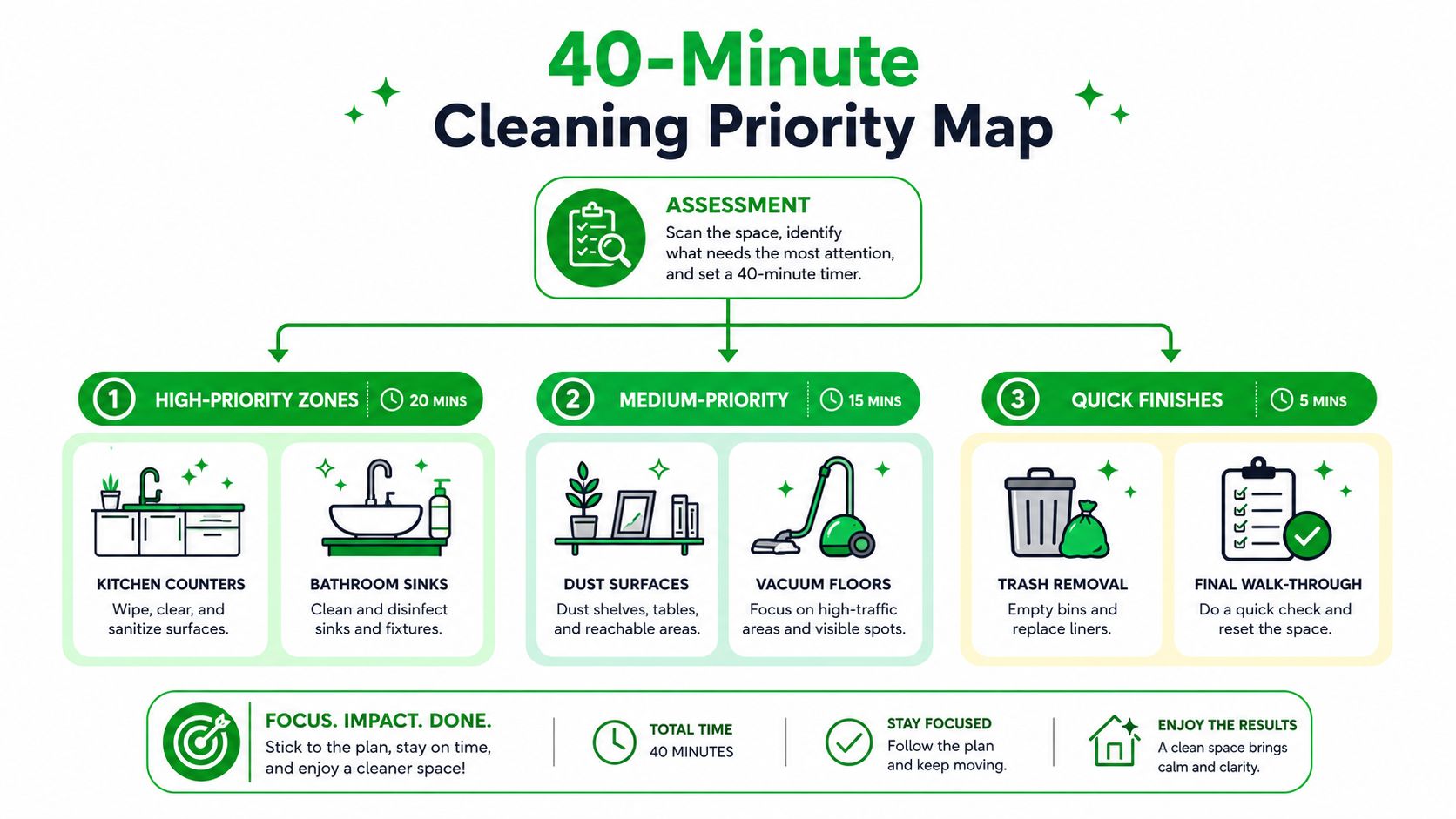
A 40-minute appointment is lost fast when the work starts in the wrong place. The cleaner should spend the earliest minutes on what people notice first, then move to the areas that affect smell, hygiene, and the general sense of order. That means sorting by visibility and impact, not trying to perfect every room one by one.
Commercial time budgeting works because it starts with task minutes first, then adds them up into a total that fits the appointment window. In home cleaning, the same logic becomes a simple priority map. Kitchens, bathrooms, entryways, and living areas carry the most weight. Hall closets, untouched shelves, and decorative clutter do not.
The sequence that protects the clock
A disciplined cleaner moves once, not twice. Older speed-cleaning guidance stressed keeping tools close, moving through each room in one pass, and working from top to bottom so dust and debris fall onto unfinished surfaces instead of cleaned ones (Chicago Tribune speed-cleaning method). That habit still matters because wasted steps eat the whole appointment.
- Assessment first. Decide which room creates the biggest visual problem.
- Remove clutter. Put stray items in one basket or tote so surfaces can be wiped.
- Hit high-use surfaces. Counters, sinks, handles, tables, and visible bathroom fixtures.
- Finish with floors. Vacuum or sweep last so earlier work does not get undone.
- Walk the space once. Look for what a visitor will see in 10 seconds.
A lot of generic speed-cleaning advice stops at room timers, but that leaves out the central question: whether the job is a quick reset or a specialized turnover. In vacation-rental and turnover work, disinfection for 5-star reviews is a standards issue as much as a time issue, because the cleaner has to reach the touch points that matter instead of only the obvious surfaces.
Exterior and vertical surfaces make that gap easy to see. A homeowner can wipe a reachable pane or door frame quickly, but windows, high glass, and other hard-to-reach surfaces often call for professional equipment, safe access, and the right technique. That is where DIY speed-cleaning advice starts to run into its limits.
For a short-term rental, a short-term rental cleaning checklist helps keep the work focused on the turnover tasks that move the needle.
If there is one rule to keep in mind, it is this. A 40-minute appointment works when the cleaner can follow a straight line. Once the job turns into sorting, doubling back, or redoing missed spots, the value falls quickly.
Homeowner Preparation Checklist for Maximum Efficiency
A short cleaning appointment starts before the technician arrives. If the surfaces are buried, the pets are roaming, or access is blocked, the cleaner spends the clock on setup instead of cleaning. That's why the homeowner's prep is part of the service, not an optional extra.
The best prep work is boring and practical. It clears the path, reduces decision-making, and lets the cleaner focus on visible results. In short-turnover work, that's the difference between an appointment that feels crisp and one that feels rushed.
What to do before the doorbell rings
- Clear surfaces. Remove mail, toys, dishes, chargers, and loose décor from counters and tables.
- Put personal items away. Anything private, fragile, or easily misplaced should already be stored.
- Secure pets. Keep them in a separate room or crate so doors can open and close safely.
- Flag problem spots. Point out the one sink, window, or room that matters most.
- Open access routes. Make sure the cleaner can reach utilities, supplies, and any areas they're expected to service.
That last point matters more than people think. A cleaner can't work efficiently if they're stepping around furniture or hunting for access to a window line, a sink, or a supply closet. If you're scheduling a rental reset, a checklist like this short-term rental cleaning guide helps make access and priorities obvious before the appointment starts.
A cleaner should arrive to clean, not to organize the job on your behalf.
For short visits, communication is just as important as prep. Give the cleaner your top three priorities, and be specific about any delicate finishes, hard-to-reach spots, or areas you don't want touched. If a room has special access needs, say so upfront. That prevents wasted minutes, and it protects the surfaces you care about.
The best 40-minute appointments feel almost calm. That happens when the homeowner does the sorting, the cleaner does the cleaning, and nobody burns time on avoidable decisions.
When Time-Boxed Cleaning Falls Short
Some jobs do not fit inside a short appointment, no matter how efficient the cleaner is. Heavy clutter, embedded pet hair, post-construction dust, hard-water buildup, and large exterior glass call for different tools and more setup than a quick tidy can cover. The issue is not effort. It is the condition of the surface, the amount of buildup, and whether the right equipment is on site.
Vertical and exterior surfaces separate professional work from household wipe-downs. Glass, screens, frames, and higher areas need squeegees, extension poles, ladders, and pure-water brushes, not a rag and a spray bottle. Professional window cleaners use those tools because they let the technician clean efficiently and safely, and OSHA ladder guidance stresses three points of contact and stable footing when working at height (window-cleaning tools and ladder safety).
A quick interior wipe can make a window look better for a short time. It is not the same as cleaning the glass properly, removing screens, cleaning the screens themselves, and reinstalling them without damage. Exterior work adds another layer of difficulty, because ladder placement, reach, balance, and surface contamination all matter at once. For homes with awkward access or tall glass, Pine Country Window Cleaning's Flagstaff cleaning services are built around that kind of work, where the setup matters as much as the cleaning pass.
Professional cleaning follows a chemistry-and-mechanics principle, not a wipe-and-hope approach. The operational formula Agitation × Chemistry × Temperature × Time + Rinse + Dry = Clean shows why a fast pass with the wrong method can miss the actual contamination problem. A lot of visible soil on glass or trim does not come off just because someone moved faster (commercial cleaning production rates guidance).
One practical benchmark from terminal cleaning is also useful here. When disinfectants were appropriate and staff were trained, spending more time did not improve disinfection of high-touch surfaces as measured by aerobic bacterial colony counts. That does not mean all work should be rushed. It means the right variables matter more than stretching out the appointment.
If a job requires ladders, poles, or safe ground-level reach systems, it is no longer a generic quick clean.
For home interiors, that sets a clear boundary. Time-boxed cleaning is for visible order. Specialized cleaning is for surfaces, height, safety, and residue that short methods cannot handle well.
For short-term rental operators, the service model usually needs clearer scope and stronger accountability than a generic tidy. That is why it helps to compare providers that explain Global's approach to short-term rental cleaning with providers that focus on specific trades, access needs, and the equipment needed for the job.
Choosing Between Quick Clean and Specialized Services
The choice is not whether the property needs cleaning. It is whether the job calls for a fast refresh or for a specialist. Routine maintenance, light touch-ups, and event prep fit a quick service model. Stains, buildup, exterior glass, post-construction residue, and properties with access problems belong in another category.
That split matters most with windows and other vertical surfaces. A quick general clean can improve the look of the interior, but exterior glass, screens, and high surfaces usually need trained technicians and equipment that can handle the access problem. Pine Country Window Cleaning uses in-house equipment like boom lifts, scissor lifts, and a 95-foot atrium lift, which is the kind of setup that makes tall or awkward jobs realistic instead of improvised.
Quick clean or specialized service
| Situation | Quick clean makes sense | Specialized service makes more sense |
|---|---|---|
| Day-to-day upkeep | Yes | No |
| Guest arrival or showing | Yes | Sometimes |
| Dirty windows and screens | No | Yes |
| Post-construction dust | No | Yes |
| High or awkward access | No | Yes |
For short-term rental operators, the service model usually needs clearer scope and stronger accountability than a generic tidy. That is why it helps to compare providers that explain Global's approach to short-term rental cleaning with providers that focus on specific trades, access needs, and safety procedures.
The trade-off is easy to miss until a job is underway. Quick cleaning saves time now, but specialized service reduces rework, damage, and guesswork later. If a job requires screens to be removed, glass to be cleaned properly, or work to be done at height, the equipment and training are part of the service, not extra frills.
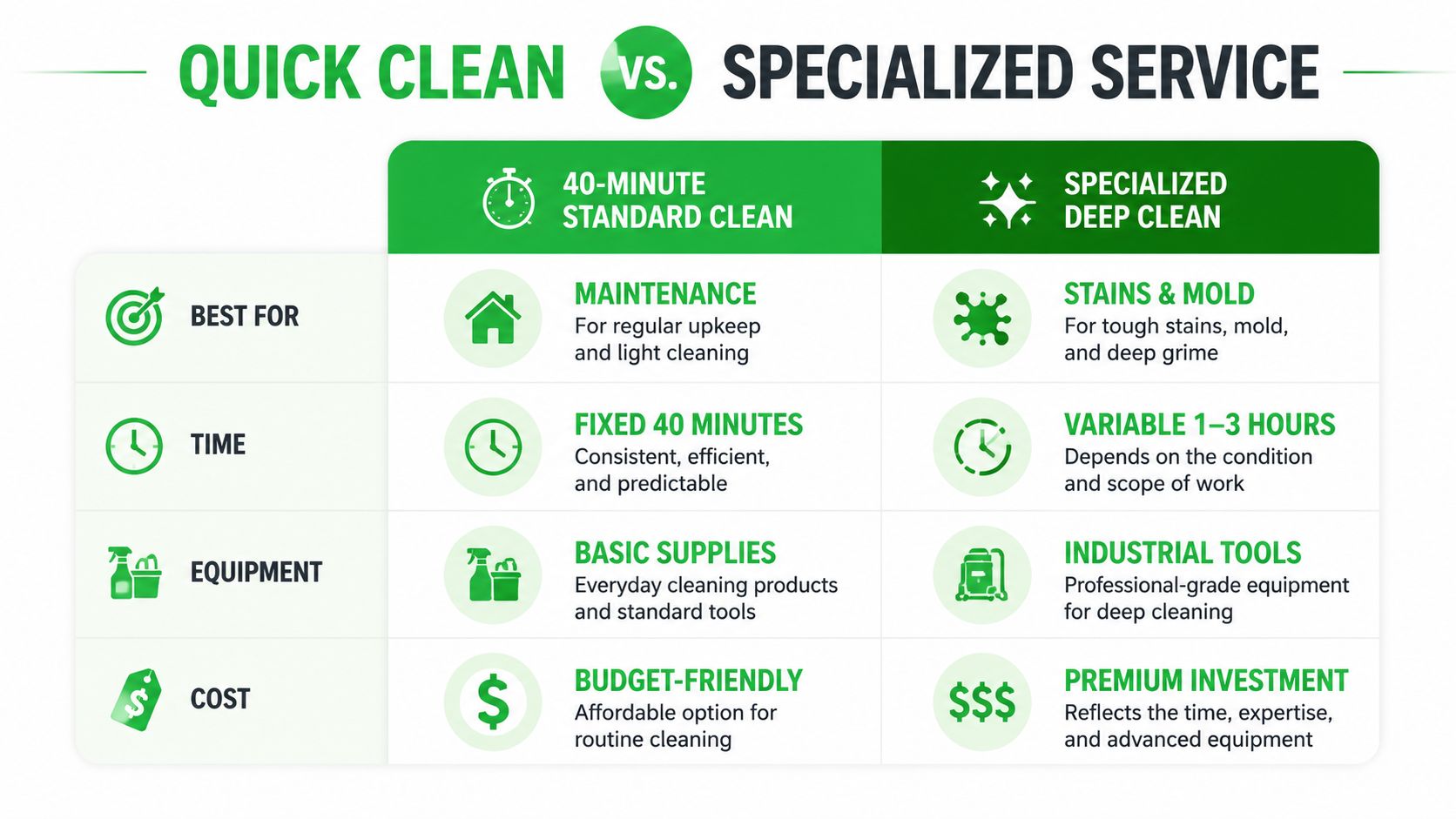
For a local comparison point, Pine Country Window Cleaning's cleaning services in Flagstaff sit squarely in the specialized category, where exterior glass, access, and care for the property matter more than stopwatch speed.
Booking and Scheduling Your Cleaning Service
Booking a cleaning service works best when the provider knows the scope before the truck leaves the yard. Give the type of property, the areas you want prioritized, and any access limits up front. If the job involves windows, say whether screens need to be removed, cleaned, and reinstalled, because that changes the workflow.
For short-notice jobs, scheduling flexibility matters as much as cleaning skill. People looking for same-day availability are often really asking for reliability under time pressure, which is why they should ask about arrival windows, equipment, and whether the provider brings what's needed for the job. Reviews help too, especially when you want a sense of consistency, and a resource like find Able House Cleaners ratings can be useful when you're comparing service patterns.
Ask these questions before you confirm
- What's included? Make sure the company defines the scope, not just the time.
- Do they bring their own equipment? That matters for windows, ladders, and specialty work.
- How do they handle access? Confirm gates, pets, locked rooms, and exterior entry points.
- What's the safety process? Ask about training, especially if work at height is involved.
- How do they communicate completion? A simple note, photo, or checklist beats guesswork.
A provider's paperwork matters as much as the promise. For work that involves glass, ladders, and high access, a company should be able to explain how it protects both technicians and the property. That's standard professionalism, not an extra favor.
Pine Country Window Cleaning has been serving Northern Arizona since 1999, and the company positions itself around fast scheduling, dependable communication, background-checked technicians, and 100% satisfaction guarantee service. For homeowners, cabin owners, managers, or anyone trying to match the right level of service to the job, that kind of clarity is what keeps a short appointment from becoming a long problem.
If you need windows cleaned the right way, not just quickly, Pine Country Window Cleaning handles residential and commercial jobs with the equipment and care that short appointments can't replace. Visit Pine Country Window Cleaning to request a free estimate and schedule service that fits your property, your timing, and your expectations.