
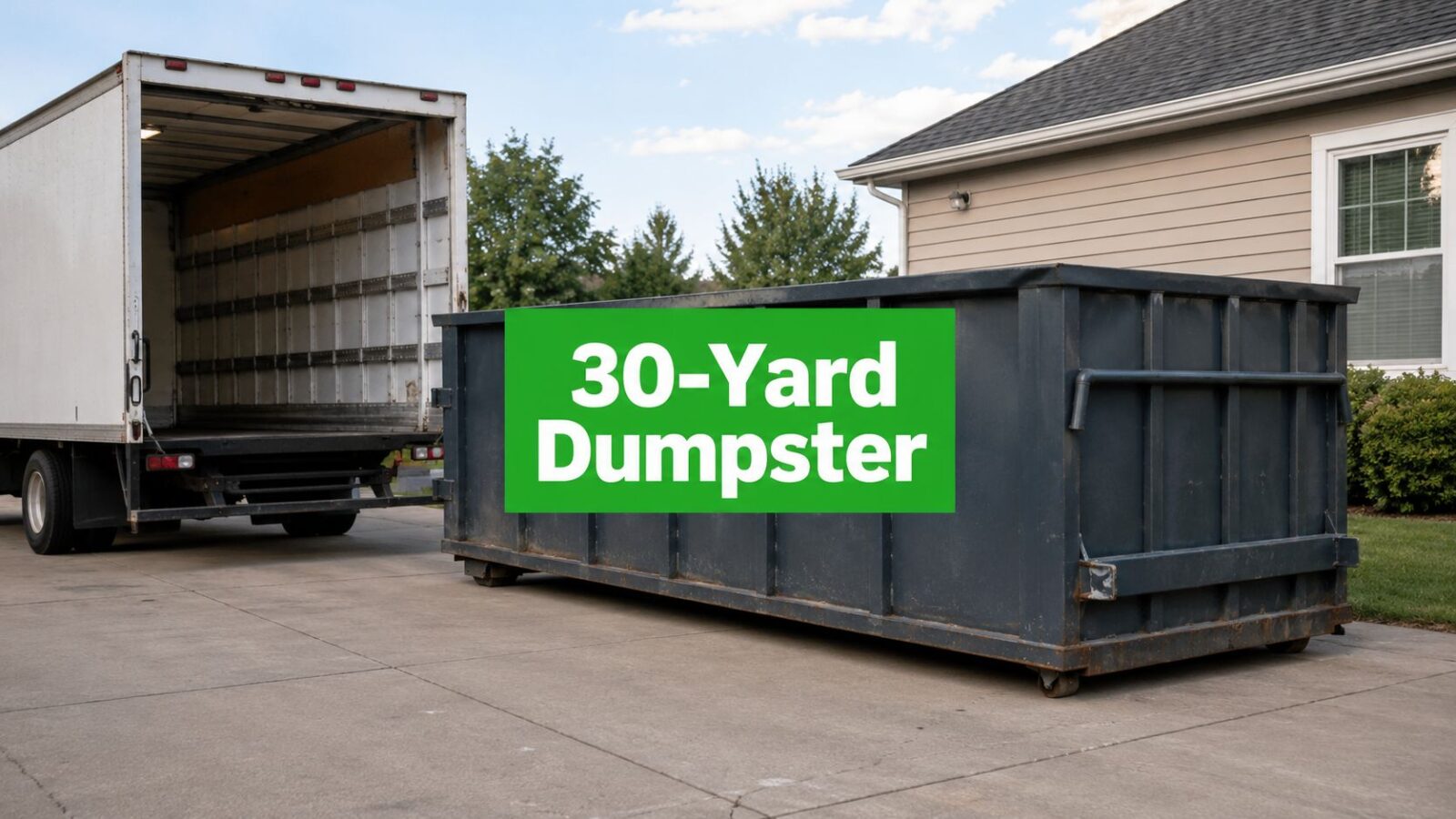
A 30 cubic yard dumpster holds about 810 cubic feet, or roughly 9 to 12 pickup truck loads and 170 to 190 contractor bags, but the limit is usually 3 to 5 tons. If you're staring at a remodel pile, that size is the right call for bulky debris, not for concrete, soil, or other dense material.
That's the part homeowners miss. They look at the pile, see room left in the box, and assume they're safe. In Northern Arizona, that mistake gets expensive fast, because the bin can hit weight limits before it looks half full, and weather, driveway access, and permit rules can complicate pickup long before the truck shows up again.
What a 30 Cubic Yard Dumpster Is
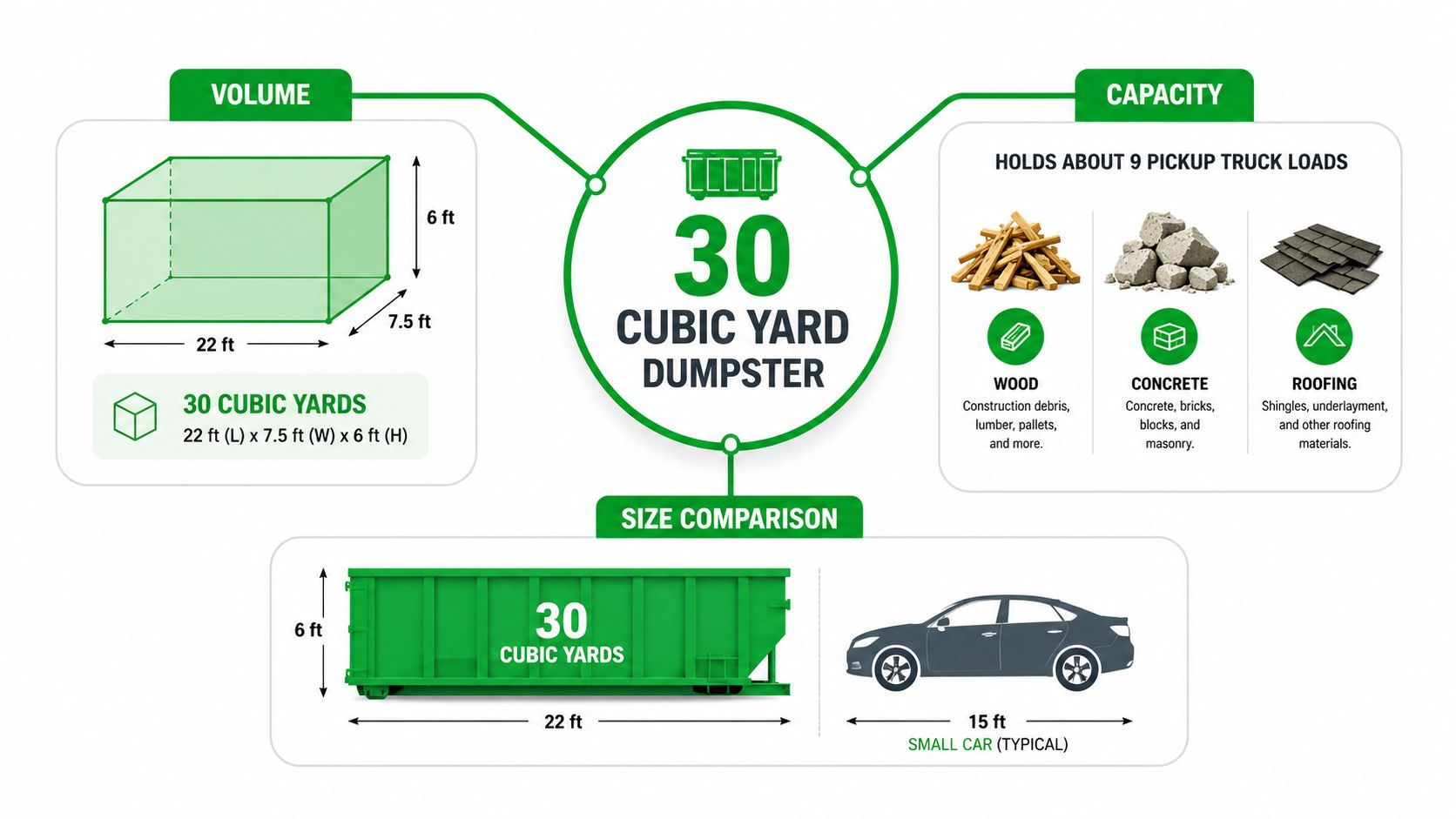
A 30 cubic yard dumpster is a capacity label first and a box shape second. The “30” tells you how much debris it can hold, not the outside length, so the cleanest way to picture it is 810 cubic feet of space, since 1 cubic yard equals 27 cubic feet. That is why two containers with the same 30-yard rating can still look a little different and both be correctly sized, because the label tracks internal volume, not a fixed outer shell. Veit Disposal's 30-yard roll-off guide spells out that translation clearly.
How to visualize it in the driveway
In real terms, this size usually lands around 22 feet long, 8 feet wide, and 5 to 6 feet high. Some guides use slightly different dimensions, which is normal, because haulers build and spec these bins differently. The footprint still demands a real measurement before delivery, especially on a Flagstaff driveway where cars, retaining walls, and tree branches already eat up usable space. Quarry Rents' size guide gives the same general footprint range and ties it to driveway access.
For most homeowners, the faster way to judge it is by load count. A 30-yard bin typically holds about 9 pickup truck loads and roughly 170 to 190 33-gallon contractor bags, depending on how tightly the debris is packed. Mazzarecycling's dumpster size guide points to that same basic capacity range, and that is the number people should keep in their head when the pile starts growing.
Practical rule: If the load is bulky, uneven, and mostly light construction waste, a 30-yard bin is usually the right call. If the load is dense, start with weight first and volume second.
For homeowners, that means one thing. Do not guess by eye alone. Measure the pile, think in cubic yards, and compare that to the bin's usable volume before you book delivery. If the job leaves you with a mountain of drywall dust, trim, wrapping, and mixed debris after the crew clears out, post-construction cleanup help is the kind of follow-up that keeps the site from turning into a second project.
Jobs That Fit a 30 Yard Bin
A 30 cubic yard dumpster earns its keep on jobs that throw off a lot of loose, awkward debris. Estate and trust cleanouts are a solid fit, especially when you are clearing furniture, boxed junk, old shelving, and the kind of mixed household clutter that would otherwise mean a pile of dump runs. Major kitchen and bath remodels also belong here, because cabinets, countertops, drywall, flooring, and trim stack up fast without always getting especially heavy.
Where this size makes sense
In Northern Arizona, I'd put this bin on jobs like:
- Estate and trust cleanouts where speed matters more than sorting every object twice.
- Multi-room remodels in cabins, second homes, and primary residences.
- Garage, shed, and barn cleanouts where bulky items build up faster than people expect.
- Light commercial tenant improvements in storefronts, offices, and service spaces.
- Post-construction cleanup on custom homes and additions where framing scraps, wrap, and drywall make up the load.
That matches the project mix described in national rental guides for large remodels, cleanouts, roofing, and construction debris. It is the box you want when the job is too big for a mid-size roll-off but does not justify jumping straight to a larger container. Advantage Waste Disposal's 30-yard guide lays out that same basic use case.
The mistake I see all the time is using a 30-yard bin for the wrong kind of big. Big and bulky is fine. Big and heavy is where people get burned. If you are tearing out old shingles, hauling wet landscaping waste, or loading mixed demo debris with masonry in it, the box may fit the project on paper and still be the wrong choice in practice.
For builders, the best use case is a site that needs one clean, central debris point while crews finish framing, drywall, trim, and punch-list work. For homeowners, it keeps a remodel from turning into a driveway full of piles and half-finished stacks. A lot of post-construction jobs also need a final cleanup pass after haul-out, and post-construction cleaning services fit neatly into that handoff.
Good call: If your debris is mostly furniture, cabinetry, flooring, lumber, drywall, and packaging, 30 yards is a sensible size. If it is mostly dirt, brick, concrete, or wet heavy waste, look harder before you book.
Weight Limits and Why the Bin Fills Up Before It Looks Full
The most expensive lesson with a 30 cubic yard dumpster is simple. Volume is not weight. Most rental markets treat this bin as a large-project container with a typical allowance around 3 to 5 tons, or about 6,000 to 10,000 pounds. Some haulers allow more, some less, and the limits change with debris type and service area. Dumpster Size Calculator's 30-yard guide and Green Star Roll Off's resource page both show that spread.
Dense debris is the real problem
A bin loaded with drywall, shingles, brick, concrete-like material, or wet yard waste can hit the scale limit before the wall line gets anywhere near full. That's why a half-full dumpster can still trigger an overage charge. It looks harmless from the driveway, but the scale at the transfer station doesn't care how empty it appears.
Here's the blunt version. If your remodel includes masonry or heavy tear-out, assume the weight limit will matter more than the space. That's the pattern most first-time renters underestimate.
| Material type | Typical risk level | What happens in practice |
|---|---|---|
| Light demo debris | Lower | The box fills by volume first |
| Mixed remodel waste | Medium | Weight starts mattering before the top rail |
| Roofing, brick, soil, wet debris | High | The bin can max out long before it looks full |
Some market guides place weight allowances as high as 7 to 9 tons in certain service areas, while others describe limits closer to 3.5 tons. That spread is exactly why I tell people to ask for the tonnage rule before delivery, not after pickup. Home Services Near Me's size explainer is useful here because it highlights the mismatch between size and weight across providers.
Contractor habit worth copying: Estimate the heaviest material first, then choose the dumpster. Don't choose the dumpster and hope the scale works out later.
If you want the safe rule, plan by mass as much as by volume. Dense debris is what turns a clean quote into an ugly invoice.
What You Can and Cannot Throw In
Every hauler has a restricted list, and the bad calls are the ones that cost money at the curb and again at the landfill. In general, a 30 cubic yard dumpster is fine for non-hazardous construction and cleanout debris, but you need to separate the easy stuff from the troublemakers before you load anything. For a public recycling reference, Beyond Surplus recycling list is a practical place to cross-check what belongs in a disposal stream versus a separate route.
The short version
Allowed materials usually include household cleanout debris, wood, drywall, flooring, cabinetry, and general construction waste. Materials like concrete, brick, block, dirt, and roofing shingles may be accepted by some haulers, but they're often capped or priced differently because they're heavy. That's the part renters get wrong when they assume “allowed” means “unlimited.”
Restricted or prohibited items are the ones that create environmental or safety problems:
- Liquids and wet chemicals.
- Paint, oils, solvents, and fuels.
- Batteries and tires.
- Appliances with refrigerants.
- Propane tanks.
- Asbestos and contaminated soil.
Homeowners also get caught by mattresses, TVs, and e-waste. Those items aren't automatically fine just because they aren't dangerous in the obvious sense. They often follow separate disposal rules, and local transfer stations can be picky about them depending on the load and the outlet used.
| Material category | Allowed | Restricted or prohibited | Notes |
|---|---|---|---|
| Wood, drywall, flooring | Yes | No | Standard cleanout and remodel debris |
| Concrete, dirt, brick | Sometimes | Often capped or limited | Weight makes these tricky |
| Roofing shingles | Sometimes | Often capped or surcharged | Heavy fast, especially on tear-offs |
| Paint, oils, solvents | No | Yes | Hazardous disposal route needed |
| Batteries, tires | No | Yes | Separate handling required |
| Appliances with refrigerants | No | Yes | Needs special removal |
| Mattresses, TVs, e-waste | Sometimes | Often restricted | Ask before loading |
For local planning, I'd rather have a homeowner ask one dumb question than pay for one expensive mistake. The best habit is to send your hauler a materials list before delivery day. That's cleaner than arguing about a load after the bin is already full.
This is also where construction debris removal should be treated as a controlled process, not a guess-and-stack job. The more mixed the debris, the more important the rules become.
Real Cost Ranges and What Moves the Price
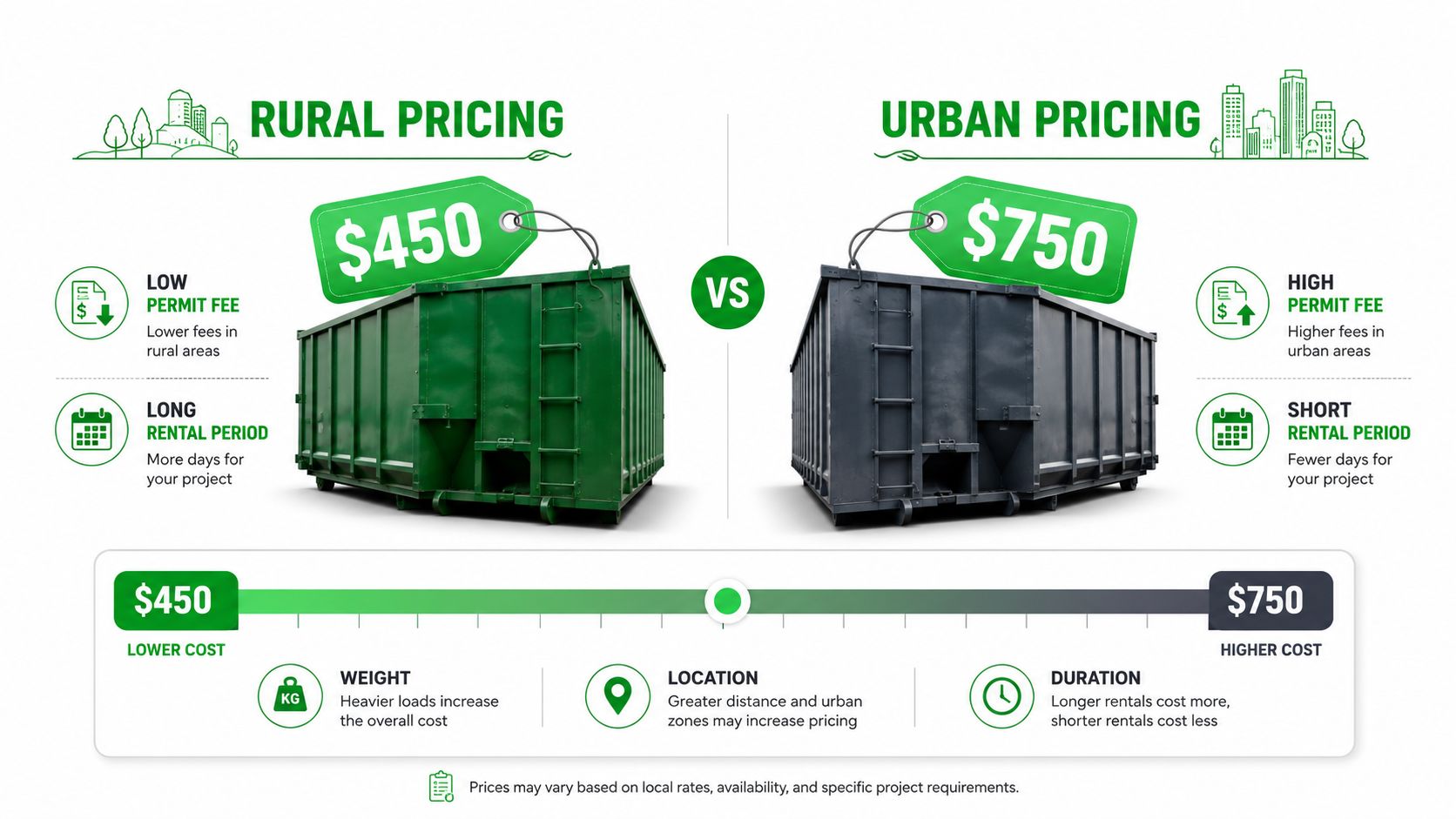
A 30 cubic yard dumpster does not come with one clean price tag. Around Northern Arizona, a normal rental often lands in the $450 to $750 range, while some national pricing surveys put it closer to $801 depending on region and disposal conditions. That spread is normal, not a trick. The market comparison in the verified brief and the general sizing guidance from the Dumpster Size Calculator's guide show why quotes can look so different from one yard to the next.
What determines the final quote
The base rental is only part of the bill. Haul distance, landfill or transfer-station tipping fees, rental period, overage charges, and prohibited-item surcharges all stack on top of it. If the bin stays longer than the standard rental window, daily extension fees can land hard, and that is where a lot of homeowners get surprised on weather-delayed projects.
Around Flagstaff and the surrounding counties, logistics matter even more. If the nearest transfer station is a longer haul, the provider builds that into the price. If monsoon conditions slow down pickup, the clock keeps running. If the debris is heavy, the tonnage charge can move the invoice more than the base rental ever did.
For a demolition schedule, where to put demolition debris during a job is a useful reminder that waste needs to be part of the plan from the start, not a pile you sort out at the end.
| Price driver | What it does to the quote | What to ask |
|---|---|---|
| Haul distance | Raises transport cost | How far is the disposal site? |
| Tipping fees | Adds disposal cost | Are those included? |
| Rental length | Extends base rental | How many days are included? |
| Weight overages | Raises total fast | What is the ton limit? |
| Prohibited items | Triggers extra charges | What materials are restricted? |
| Weather delays | Can affect timing | What happens if pickup slips? |
Blunt advice: If the quote does not state the ton limit and the overage rule in plain English, keep shopping.
The best quote is the one that spells out what is included and what costs extra. If you have to guess, you are not comparing prices, you are comparing surprises.
Delivery, Pickup, and Placement Logistics
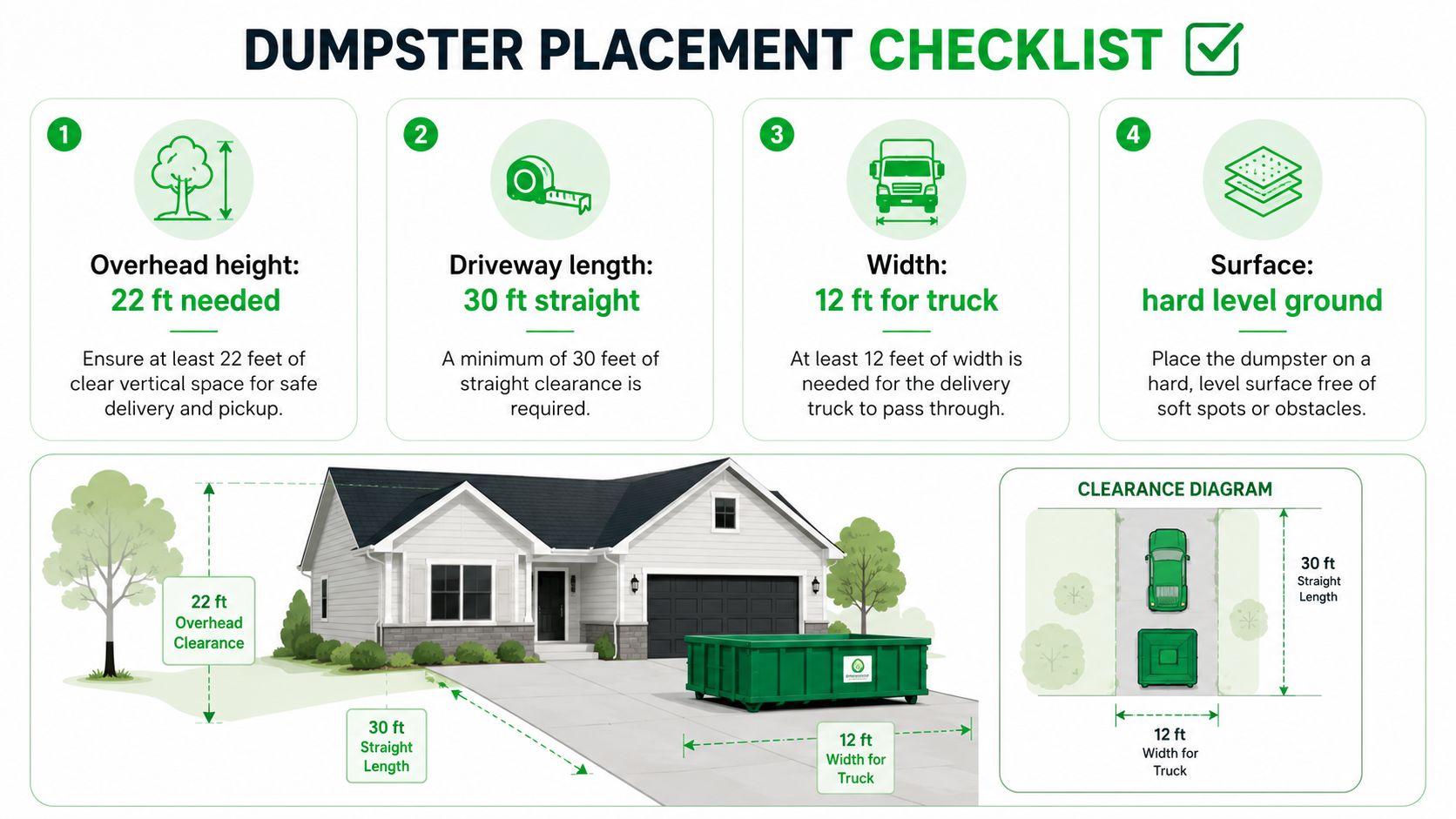
A 30 cubic yard dumpster needs room before it ever needs volume. The delivery truck typically wants about 25 to 30 feet of straight driveway length, 10 to 12 feet of width, and about 22 to 23 feet of overhead clearance to set and retrieve the bin. Quarry Rents' dumpster size guide gives those access numbers, and they're the first thing I check on any site in Flagstaff.
Start with the approach, not the bin
Measure the entry path, then look up. Tree limbs, power lines, and garage overhangs can ruin a delivery even when the driveway itself looks wide enough. If the site sits on pavers, stamped concrete, or soft ground, lay down plywood where the rollers will travel. That matters even more after monsoon rains, when clay and unpaved driveways get slick and easy to gouge.
Street placement changes the rules. A bin on private property is usually simpler, but if it sits in the right-of-way, you may need a Coconino County permit or another local clearance depending on the exact location. HOAs also care about visible dumpsters, so don't assume the truck can just drop it wherever there's space. Keep it away from hydrants and sidewalk crossings too, because access blockers turn into hassle fast.
A smart site crew also thinks about removal equipment. ANTS walking floor trailer technology is worth knowing about when material needs to be moved efficiently from one container to another, especially on larger jobs where loading methods matter.
Practical rule: If the truck can't get in cleanly, the bin isn't going anywhere. Measure before you clear the debris pile.
On Northern Arizona driveways, I'd rather place a few sheets of plywood than repair a rut after the first rain or snowmelt. That's cheap protection compared with fixing a damaged surface later.
Flagstaff and Northern Arizona Specific Considerations
Northern Arizona changes the dumpster game. At 7,000 feet elevation, weather, access, and driveway surface all matter more than they do in a flat-market guide written for somebody in a warm suburb. Monsoon-season clay can turn soft and slick fast, and that's when a bin that looked easy in the quote starts creating ruts on the day of delivery.
Seasonal access is the hidden constraint
Winter is its own problem. In Munds Park and Pine Canyon, snow berms can block the normal placement spot, and frozen ground makes plywood less forgiving under the rollers. Second-home owners run into a different issue, they're not always there when the truck needs a decision, so a pickup window can slip if the driveway isn't cleared in advance.
The other local variable is timing. A storm can delay service, and if your job sits right on the edge of a weather cycle, that delay ripples through the whole schedule. Builders who wait too long to order the swap usually end up with an overfilled bin, a dead jobsite corner, or both.
There's also the practical matter of disposal flow. Wildfire-debris events and seasonal service spikes can tighten hauler availability, which means the normal “we'll just swap it tomorrow” plan can fail during busy periods. That's why local crews need to book around the calendar, not just around the demo crew's pace.
For projects that end with glass work, schedule the cleanout and final detail in one clean sequence. 1800 You Got Junk is a reminder that the end of a debris job is often the start of the finish work, not the finish line itself.
Local rule of thumb: In Flagstaff, a perfect bin size can still fail if the surface is soft, the snow is in the way, or the pickup window is too tight.
That's why I tell homeowners and builders to think like a site superintendent. Clear the path, check the season, and confirm the pickup window before you commit to the delivery date.
Planning Your Project and Next Steps
Use the 30 cubic yard dumpster when the debris is bulky, the site is accessible, and the weight stays under control. Use a smaller or heavier-duty option when the material is dense, because that's where the billing gets ugly. For homeowners, builders, and property managers, the smartest move is to match the bin to the heaviest likely material first, then verify the ton limit, placement rules, and pickup timing before anyone starts ripping anything out.
A clean checklist keeps the whole job sane:
- Homeowners: confirm what's being tossed, what's restricted, and whether the driveway can handle the truck.
- Builders: line up the dumpster with demo timing, finish work, and final cleanup.
- Property managers: check access, permits, and pickup windows before tenant work starts.
If you're trying to leave the property clean, the dumpster is only half the equation. Once the debris is gone, the glass, frames, and surrounding surfaces still need a careful finish pass, especially after remodel dust and construction mess.
Pine Country Window Cleaning handles the final clean after the heavy debris is out, with streak-free window cleaning, screen removal and reinstall, and careful service that respects your home or jobsite. If your cleanup is wrapping up and the glass needs to look as finished as the rest of the property, visit Pine Country Window Cleaning to schedule a free estimate or book your service.