

You know the feeling. The morning light is right, the peaks are out, and the view should be the whole point of living in Flagstaff. Instead, your glass has that familiar film on it. Pollen. Dust. A little mineral spotting. Maybe a few screen shadows you didn’t notice until the sun hit just right.
That’s a normal windows flagstaff az problem. It’s not a sign that you’ve neglected your home. It’s what happens when you live in a mountain town with real weather, tall pines, construction dust, snow, and wind.
Flagstaff has always been shaped by that environment. The city’s rise began with the railroad in 1882, and the surrounding economy grew around lumber, ranching, and the world’s largest contiguous Ponderosa pine forest, a history that still defines the area around us today, as noted in Flagstaff’s historical record. The same setting that makes this place beautiful also creates stubborn glass maintenance problems that don’t show up the same way in lower-elevation Arizona towns.
Our company was founded in 1999 by Flagstaff native David Kaminski, and that local history matters because window cleaning here is never just about making glass look nice for a day. It’s about protecting views, preserving finishes, and taking care of homes that deal with altitude, snow, pine debris, and seasonal swings year after year.
A Clearer View of Flagstaff From a Local Expert
A lot of calls start the same way. The homeowner isn’t asking for “a basic window wash.” They’re talking about what they can’t see anymore. The trees out back look muted. The natural light inside the living room feels flat. The big fixed pane facing the Peaks has gone from a feature to something they keep meaning to deal with.
That’s common in Flagstaff because the mess on the glass is rarely just dust. It’s layered. Pollen settles first. Then wind-driven grit sticks to it. Then moisture dries and leaves spotting behind. On screened windows, airflow can carry fine debris into corners and tracks, which is why a quick wipe on the visible glass rarely solves the whole problem.

What local experience changes
A local company sees patterns that out-of-town crews and generic cleaners often miss. Homes near dense pine coverage need a different maintenance rhythm than exposed properties that catch more wind and ash. Historic homes need a careful hand. Large custom glass walls need the right access equipment and planning before a technician ever touches the pane.
That’s why homeowners searching for Flagstaff window cleaning usually aren’t just looking for labor. They want someone who understands how Northern Arizona windows age, soil, and react to cleaning methods over time.
Practical rule: In Flagstaff, the job isn’t finished when the glass looks clear. The job is finished when the screens, edges, tracks, access points, and surrounding surfaces have been handled with care too.
What people usually notice after professional service
The biggest difference isn’t always the shine from the curb. It’s what changes inside the house.
- Brighter rooms: Natural light comes back without the haze that dulls interiors.
- Cleaner lines: Frames, screens, and sills stop distracting from the architecture.
- More usable views: Picture windows and tall great-room glass feel like assets again.
- Less homeowner hassle: No dragging ladders around, no guessing on products, no half-finished upper windows.
Clean windows in Flagstaff aren’t cosmetic fluff. They’re part of enjoying where you live.
Why Windex and Rags Wont Work in High Altitude
You see it all the time on Flagstaff homes. A window gets sprayed, wiped down with a rag, and looks fine in the shade. By midafternoon, the sun hits the glass and every smear, drag mark, and missed edge shows up at once.
That happens because exterior glass in Flagstaff is dealing with more than fingerprints or a little dust. At 7,000 feet, windows collect windblown grit, pine pollen, ash, hard-water spotting, and residue that bonds to the surface faster than many homeowners expect. Arizona State University notes that Flagstaff has a high-elevation mountain climate with colder temperatures, stronger seasonal weather swings, and regular winter precipitation, all of which shape how exterior surfaces weather over time, as described by the Arizona State Climate Office's Flagstaff climate summary.
What makes Flagstaff glass harder to clean
In lower, milder markets, a basic spray cleaner and microfiber cloth can be enough for light interior touch-ups. On exterior residential glass here, that same method usually falls short.
The problem is friction and residue.
Rags pick up some soil, but they also drag fine abrasive particles across the pane and bunch contamination into the edges. Household glass sprays often leave behind surfactants and fragrance additives that flash off unevenly in strong sun. Once that film dries, the window can look cloudy or streaked from only a few feet away.
Screens make the problem worse. Pine pollen, dust, and roof runoff residue settle there first, then transfer back onto the glass if the screen and frame are not handled as part of the same job.
Why spray-and-wipe methods fail outside
A homeowner can work hard and still get a poor finish. I see that often after well-intentioned DIY cleanings on custom homes, vacation properties, and cabins tucked into heavier tree cover.
Common trouble spots include:
- Fine grit on the glass: Wiping before proper wetting and removal increases the chance of dragging debris.
- Residue from store-bought cleaners: Many leave a light film that becomes obvious in direct sun.
- Tap water spotting: Minerals dry on the pane and create marks a towel cannot fully hide.
- Uneven hand pressure: Extra scrubbing tends to happen at corners, edges, and problem spots, which is where seals, frames, and buildup already need more care.
The issue is not effort. The issue is using a method designed for quick indoor cleanup on glass that needs a controlled exterior process.
If the window looks decent in soft light but shows streaks once the afternoon sun hits it, residue is still on the glass.
High altitude changes the margin for error
Flagstaff’s elevation makes shortcuts show faster. Stronger UV exposure, colder nights, spring pollen, monsoon splash, and winter moisture all leave their own kind of residue. Each one responds differently to cleaning.
That is the trade-off homeowners run into. A bottle cleaner and rag can improve appearance for a day. It rarely gives a durable finish on outside glass, especially on larger panes or upper windows. Professional service uses the right water quality, the right tools, and the right sequence so contamination is lifted off the surface instead of spread around it. That is why many property owners eventually switch to a dedicated spotless window cleaner service.
What works better than a rag and spray bottle
Professional window cleaning in Flagstaff is built around removal, not masking. That means controlled application, proper agitation, squeegee work, detail work at the edges, and purified water where the glass and access call for it.
Here is the practical comparison:
| Method | What usually happens | Best use |
|---|---|---|
| Household spray and rag | Smears pollen, leaves cleaner residue, struggles with exterior buildup | Small interior touch-ups |
| Hose water and towel | Leaves spotting if minerals are present | Limited use, poor for finish work |
| Professional squeegee system | Removes soil edge to edge with controlled detailing | Routine residential and commercial glass |
| Pure-water fed pole system | Rinses clean without mineral spotting when water is properly filtered | Higher exterior glass and large window walls |
After 25 years cleaning windows in Northern Arizona, the pattern is consistent. Flagstaff glass punishes casual methods. Good results come from cleaning the whole window system correctly, not just making the center of the pane look better for a few hours.
Our Professional Process for Flawless Flagstaff Windows
You notice the difference before we finish the job. The west-facing glass that looked dull at sunrise reads clear by midday, the screens are back in place, and the tracks are not holding a line of muddy runoff. In Flagstaff, that result comes from process. At 7,000 feet, sun, wind, pollen, and hard water expose every shortcut.
Professional work starts before the first pane gets wet. We assess access, glass condition, screen type, surrounding finishes, and any problem areas like oxidized frames, post-construction debris, or windows that bake in afternoon sun. That planning protects stucco, stain, decking, and landscaping, and it keeps the cleaning method matched to the property instead of forcing one system onto every job.
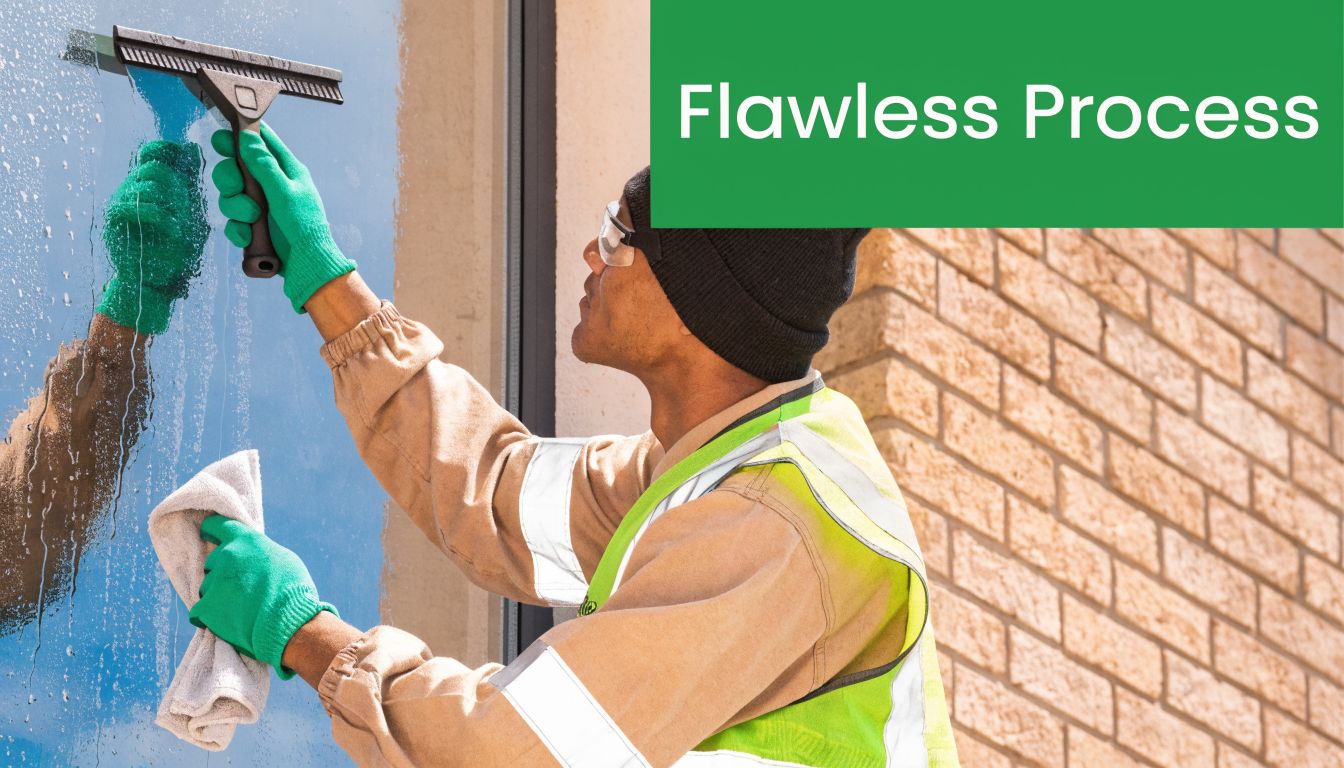
The service sequence that gets reliable results
We clean windows as a system, not just a sheet of glass. The order matters because each step affects the finish.
Assess the glass and access
We identify soil type, mineral buildup, paint specks, bug debris, and any signs that standard methods need to change. Then we choose the access method that fits the elevation and the surface below it, whether that means ladders, extension poles, pure-water equipment, or lift access.Remove and clean screens
Screens come out first so trapped dust and pollen do not fall onto freshly cleaned glass. We clean and stage them carefully because bent frames and loose corners create problems long after the window cleaning is done.Detail frames, sills, and edges
Rushed crews often lose the finish at this stage. Dirt packs into lower corners, tracks, and frame edges. If those areas are skipped, water pulls residue back across the pane and leaves the window looking half-done.Clean the glass with the right method
Ground-level and accessible glass often responds best to professional scrubber-and-squeegee work with controlled detailing at the edges. Taller exterior glass often cleans better with pure-water fed poles because filtered water can be rinsed away without leaving mineral residue behind.Inspect in real light and reset the opening
Final checks happen from more than one angle because reflected light catches misses that head-on viewing does not. Then screens go back correctly, the area is wiped down, and the property is left orderly.
Why pure-water systems matter here
Pure-water cleaning solves a real problem on Northern Arizona exteriors. Standard tap water can leave spotting as it dries, especially on large sunlit elevations and upper glass that cannot be detailed by hand from the ground. Filtered water changes that finish because it rinses cleaner and dries cleaner.
On taller homes and custom builds, Pine Country Window Cleaning uses pure-water fed poles and lift access where appropriate, including atrium work that cannot be handled responsibly with a ladder alone. The point is not the equipment itself. The point is choosing the method that protects the property and gives the glass a clean finish without avoidable residue.
Homeowners who want a clearer explanation of upper-story access can review the best way to clean high windows. It shows why safety, reach, and water quality all matter on glass at height.
Here’s a look at the kind of access and technique modern window work can require:
What we do to protect the home, not just the glass
A good crew pays attention to everything around the window.
- Screen care: Screens are removed carefully, cleaned, and reinstalled squarely so they sit right and do not rattle or bow.
- Thoughtful ladder placement: Access equipment is set where it will not scar trim, crush plants, or shift against delicate surfaces.
- Method matched to material: Wood, vinyl, metal, and specialty coatings each call for different pressure, tools, and detailing habits.
- Controlled workflow: Dirty water stays controlled, tracks are not left holding sludge, and clean siding does not get splashed during rinse work.
After decades of cleaning windows in Flagstaff, one trade-off shows up again and again. Fast service can look cheaper on paper, but if it skips screens, edges, access planning, or proper rinse quality, the glass degrades faster and the result does not last. Homeowners dealing with aging frames or failed seals sometimes use a cleaning visit to sort out whether maintenance is enough or whether they should review broader window replacement options.
What doesn’t work
A hurried bucket-and-towel job usually leaves obvious signs. Edges stay hazy. Screens go back dusty. Upper panes get whatever tool reaches them fastest, not the tool that fits the glass and the access.
That approach breaks down on atrium windows, tall entry glass, divided-light panes, and custom homes with mixed elevations. Those properties need a crew that can choose the right method, work in the right order, and leave the whole window system cleaner than they found it.
Specialized Window Cleaning for Every Northern Arizona Property
A cabin in the pines, a downtown storefront, and a newly completed custom build might all need “window cleaning,” but they don’t need the same service. The dirt is different. The access is different. The risk is different.
That’s why property type drives the approach. On windows flagstaff az jobs, the right method comes from how the building is used and what the glass has been exposed to.
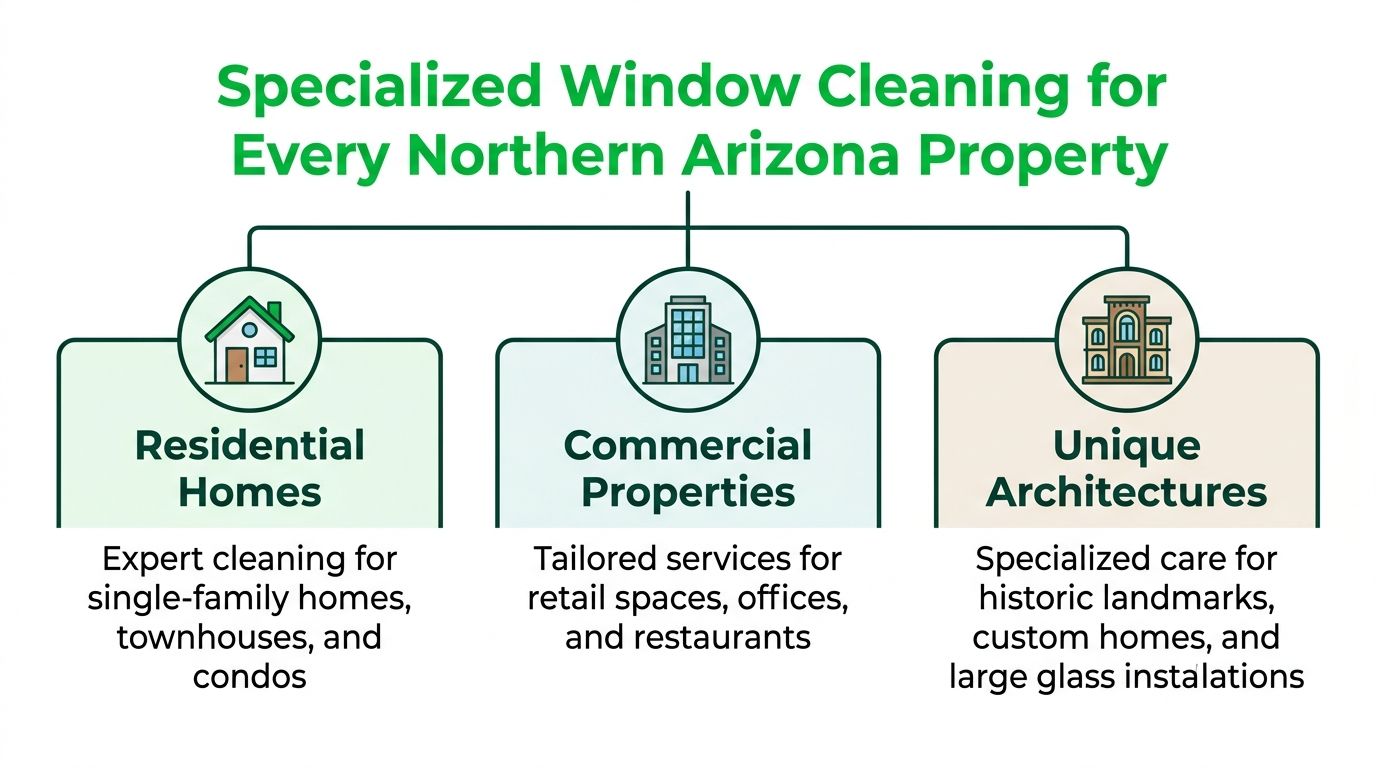
Residential homes and cabins
Residential work in Northern Arizona often means balancing appearance with long-term care. Full-time homes, second homes, and rental cabins all collect debris differently depending on pine cover, wind exposure, and how often the property is occupied.
A primary residence usually benefits from recurring maintenance because the homeowner sees the buildup happen in real time. A second home can go longer between visits, but when it’s time for service, the dirt load is often heavier because no one has been catching the screens, tracks, and lower corners as they build up.
For owners who are also evaluating aging glass, frame issues, or energy performance, it can help to review broader window replacement options before scheduling construction or finish work. Replacement and cleaning solve different problems, but on many homes they’re part of the same property-maintenance decision.
Commercial buildings and public-facing properties
Commercial work has a different standard. The question isn’t just whether the glass is clean. It’s whether the property looks cared for during business hours and whether access can be handled safely with minimal disruption.
Hotels, campus buildings, medical offices, dealerships, and retail storefronts each have their own challenges:
- Storefront glass: Fingerprints, traffic film, and frequent touchpoints make regular maintenance important.
- Medical and office buildings: Appearance matters, but so do scheduling windows and clean, predictable workflow.
- Hospitality properties: Guests notice lobby glass, entry doors, and high-visibility common areas first.
- Large facilities: Multi-story access often requires lifts, poles, or careful route planning rather than basic ladder work.
Post-construction cleanup is its own trade
Post-construction window cleaning is not regular maintenance with more dust. It’s a separate discipline. New glass can carry adhesive residue, paint specks, silicone smears, stucco dust, and cement haze. If those materials are handled carelessly, the damage becomes permanent.
In Northern Arizona, that risk is higher because the climate can accelerate alkali silicate reactions by 25% when construction residue isn’t properly removed, and the use of pH-neutral chelators can prevent permanent etching and stop up to 70% of potential coating failures, according to this post-construction cleaning reference.
That’s the difference between “washing new windows” and finishing a project correctly.
New glass is often at its most vulnerable right after construction. The residue left behind is what causes the expensive problems, not the cleaning itself when it’s done properly.
Matching the service to the property
From a practical standpoint:
| Property type | Main issue | Best approach |
|---|---|---|
| Occupied home or cabin | Pollen, dust, screens, seasonal buildup | Routine interior and exterior service with full screen care |
| Storefront or office | Visibility, presentation, repeat maintenance | Scheduled service with minimal disruption |
| Hotel, campus, or large facility | Safety, scale, access complexity | Equipment-based planning with poles or lifts |
| New construction or remodel | Residue that can etch or bond to glass | Specialized post-construction cleaning |
A good window cleaner doesn’t just bring the same method to every address. They bring the method that fits the property.
Understanding the Value of Your Professional Window Service
Most homeowners start by asking about price. That’s reasonable. But window cleaning makes more sense when you look at what drives the work and what the service protects.
The cost of a professional visit usually comes down to a few practical variables. How many windows are there. How large are they. How accessible are they. Is the service routine maintenance or cleanup after a long gap, weather event, or construction project. A house with straightforward access and well-maintained glass is a different job from a custom home with tall panes, divided lights, and difficult screen removal.
What you’re actually paying for
You’re not paying someone to spray glass. You’re paying for an organized process, proper tools, safe access, and reduced risk to the property.
That includes things like:
- Correct equipment: Squeegees, extension poles, ladders, lift access, and pure-water systems when needed.
- Labor that knows the difference: A trained technician recognizes when glass can be cleaned normally and when residue requires a specialty approach.
- Full-service handling: Screens are removed, cleaned, and reinstalled instead of ignored.
- Property care: The crew works around landscaping, trim, furnishings, and entry areas without treating the home like a construction site.
Why value matters more on high-performance windows
Flagstaff homes often have expensive glass packages for cold-weather performance. Some have low-E coatings, specialty panes, or newer glazing systems that cost real money to replace. If they’re cleaned with the wrong method, the savings from “doing it yourself” disappear fast.
A quick comparison helps:
| Option | Short-term result | Long-term impact |
|---|---|---|
| DIY with household products | May look improved for a short time | Higher chance of streaks, residue, or avoidable wear |
| Low-cost rushed service | Inconsistent finish, skipped details | Screens, edges, and difficult windows often remain a problem |
| Professional maintenance | Cleaner glass, better presentation, safer access | Better protection for the window system and less homeowner effort |
Where homeowners usually feel the return
The value shows up in daily use. Rooms feel brighter. Views look sharper. Guests notice. Listings photograph better. Business frontages present better. And the homeowner doesn’t spend a weekend balancing on ladders to get a result they still aren’t happy with.
Worth remembering: Window cleaning belongs in the same category as exterior maintenance, not last-minute cosmetic cleanup. It protects the property while making it more enjoyable to live in.
If you own a home, manage a building, or care for a second property in Flagstaff, routine professional service usually costs less than fixing avoidable problems later.
Proudly Serving Flagstaff Munds Park and Forest Highlands
Northern Arizona isn’t one uniform service area. Each neighborhood asks something different from a window crew. The homes don’t look the same, the exposure isn’t the same, and the maintenance rhythm isn’t the same either.
That local familiarity matters more than many people think. A technician who works these communities regularly understands the difference between a historic home near downtown, a cabin in Munds Park, and a large custom residence in one of Flagstaff’s golf communities.

Historic downtown and older neighborhoods
Older homes in and around the Townsite and Downtown Overlay areas call for patience. Screen fit can be more delicate. Access can be tighter. Surrounding materials may be less forgiving than what you find on a newer build.
Flagstaff property owners also need to stay aware of preservation-related requirements. The city’s guidance notes special consideration for historic properties in these districts, including situations where the work intersects with preservation review, as outlined in the historic property guidance from the City of Flagstaff.
That doesn’t turn routine maintenance into a paperwork exercise in every case. It does mean local knowledge helps avoid careless assumptions.
Munds Park cabins and second homes
Munds Park properties often present a different pattern. They may sit vacant between visits, then need a full reset before owners arrive or guests check in. Pine needles, dust on screens, and buildup around exterior frames can be more noticeable when a home hasn’t had recent traffic.
For second-home owners, timing matters almost as much as technique. The cleaning needs to happen before arrival, and the crew needs to be dependable enough that the owner doesn’t have to come up just to supervise.
Forest Highlands, Pine Canyon, and larger custom homes
Luxury homes and club communities tend to have more glass, taller glass, and more architectural variation. Clerestory windows, entry towers, atriums, and large rear-facing view windows all require access planning.
A lot of service-area companies build trust by showing they understand these differences online before they ever step onto the property. This guide to local SEO for service area businesses explains why location-specific visibility matters. In practice, it matters here because homeowners want a provider who knows their neighborhood well, not one using generic Arizona messaging.
A clean result starts before the first tool comes out. It starts with knowing what kind of property you’re walking into.
The local advantage in plain terms
What works downtown may not be the right workflow in Forest Highlands. What works for an occupied home in Flagstaff may not fit a second home in Munds Park. Local service means those distinctions are already part of the plan.
That’s one reason long-term Northern Arizona crews tend to produce more consistent results. They’re not learning the property type on your time.
Your Flagstaff Window Cleaning Questions Answered
Homeowners and property managers usually ask practical questions right before they book. That makes sense. By that point, they already know the windows need attention. What they want is clarity on timing, access, safety, and what the appointment will feel like.
How often should windows be cleaned in Flagstaff
Most properties do better with a maintenance schedule rather than waiting until the glass looks bad from every angle. In Flagstaff, seasonal debris, pine pollen, weather shifts, and changing light can make windows look dirtier fast.
For many homes, a spring visit and a later-season visit make sense. Properties with heavy tree coverage, short-term rental turnover, large view glass, or high-visibility commercial frontage often benefit from more frequent service. The right schedule depends on exposure, occupancy, and how important constant presentation is to you.
Do I need to be home during the service
Not always. Many homeowners arrange exterior service while they’re away, especially for second homes and vacation properties. Interior service is different because technicians need access, alarm coordination, and clear communication about pets, locked rooms, and any special instructions.
If you won’t be onsite, the best results come from confirming the scope in advance. That includes which windows are included, whether interiors are part of the visit, and whether there are gates, codes, or parking constraints to plan around.
Are your cleaning methods safe for pets, plants, and landscaping
Professional window cleaning should be controlled and deliberate. That means using methods suited to the glass and being careful around the surrounding property. On most homes, the bigger concern isn’t harsh chemistry. It’s careless overspray, sloppy ladder placement, or crews moving too fast around planters, decorative rock, furniture, and entries.
A careful company works with the property in mind. Pets should still be secured as needed, and homeowners should mention sensitive landscaping or any areas where access is tight.
What about screens
Screens should be part of the service, not an afterthought. If they stay dusty, the whole job looks incomplete. A professional crew should remove them carefully, clean them, and reinstall them properly so the finished window still looks finished when viewed from inside and outside.
That one detail changes the final result more than people expect.
Clean glass behind a dirty screen never looks fully clean.
Can you clean modern low-E or cold-climate windows safely
Yes, but the method matters. For homes with modern, high-performance windows designed for Northern Arizona’s cold climate, including triple-pane and low-E coatings, professional cleaning is essential because improper methods can etch coatings or void warranties, as explained in this Northern Arizona cold-climate window guide.
That’s why professional crews use techniques and solutions that align with manufacturer recommendations instead of improvising with household products or abrasive tools. If you’ve invested in newer glass, the cleaning method is part of protecting that investment.
What if my windows were recently installed or my home just finished construction
That should be mentioned before scheduling. New windows and post-construction glass need a different approach than regular maintenance. Construction residue can bond to the surface, and the wrong cleanup method can leave scratches or etching behind.
If the property is newly built or recently remodeled, say so upfront. That helps the crew arrive with the right plan rather than treating the job like a routine maintenance visit.
How should I prepare for the appointment
Preparation is simple, but it helps.
- Move fragile items: Clear breakables away from window areas inside the home.
- Ready access points: Gates, side yards, and fenced areas should be available if exterior service is included.
- Secure pets: Even calm animals do better with a little separation during service.
- Share concerns early: Mention hard-to-open screens, newly installed windows, or areas you want prioritized.
What should I expect after the service
You should expect clean glass, properly reinstalled screens, and a property that feels cared for rather than disrupted. If something doesn’t look right, say so. Good service includes follow-up communication and a willingness to address concerns directly.
For most homeowners, the immediate effect is simple. The house feels brighter, sharper, and better maintained the same day.
If your windows are overdue, newly installed, hard to reach, or just not looking the way they should in Flagstaff’s climate, Pine Country Window Cleaning is a practical place to start. You can request an estimate, schedule service, and get help choosing the right maintenance approach for your home, cabin, rental, or commercial property.