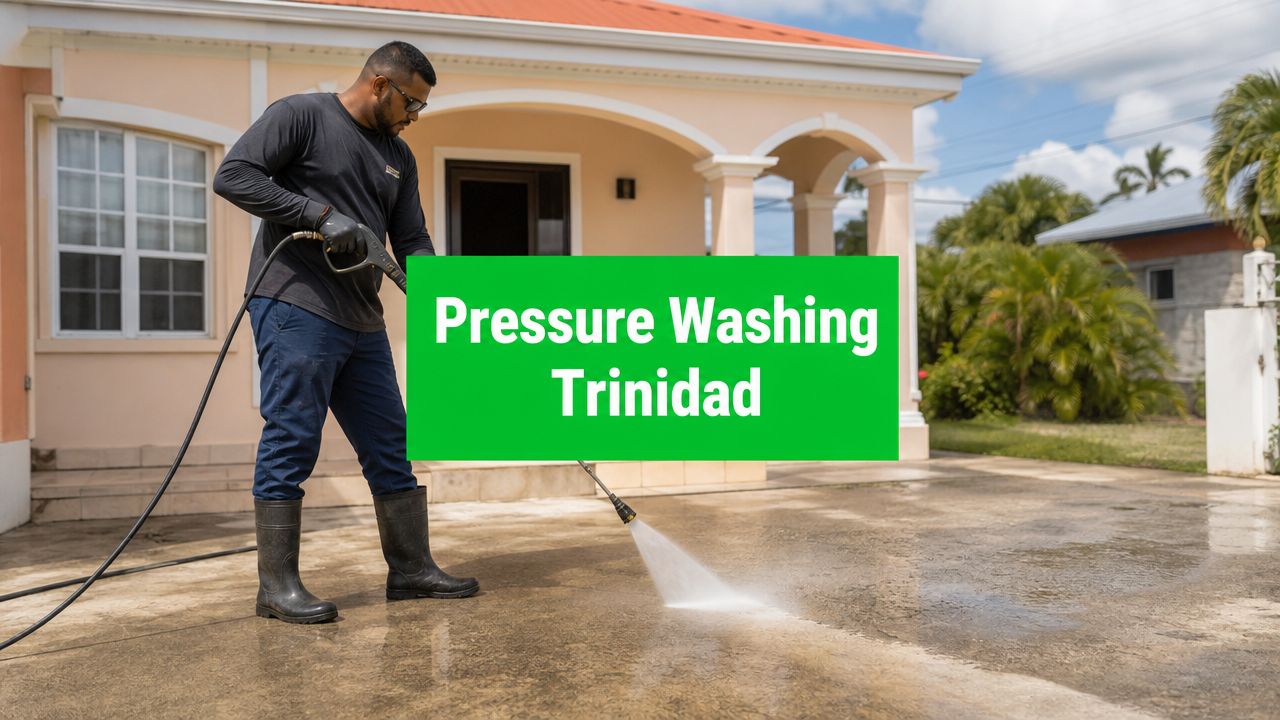
A driveway in Trinidad can look fine from the street and still tell a different story up close. The concrete holds a dark film from humidity and dust, the carport roof has algae streaks, and the walls start to look tired long before anyone thinks about repainting. That's usually the moment people start searching for pressure washing services Trinidad, because they want the property to look cared for again without risking damage to tiles, paint, or landscaping.
Professional exterior cleaning isn't one single blast of water. It's a set of methods chosen surface by surface, based on how hard the material is, how much contamination is sitting on it, and how much rinsing or chemistry it needs. In Trinidad's climate, where moisture and salt can keep grime coming back, the right approach matters just as much as the equipment.
What Professional Pressure Washing Actually Covers
A proper service starts with the property, not the machine. A homeowner in Port of Spain might need the driveway, a front wall, a fence, and the roof edge dealt with in one visit, while a property manager may need storefront walkways, loading areas, and fleet washing handled on a schedule. That's why pressure washing is better understood as a category of exterior cleaning, not a single job type, and the mechanical definition supports that broader view, since it refers to high-pressure water used to remove loose paint, mold, grime, dust, mud, and dirt from surfaces like buildings, vehicles, and concrete (pressure washing definition).
What usually gets cleaned
The most common requests are driveways, walkways, walls, roofs, fences, decks, and commercial frontage. On mixed-use sites, crews may also clean vehicles, parking aprons, and outdoor common areas. A good provider should be able to explain which parts get pressure, which parts get softer treatment, and which parts shouldn't be cleaned the same way at all.
Practical rule: if a contractor describes every surface with the same method, that's a sign they're selling speed, not care.
The simplest way to think about it is this. Hard surfaces need force. Softer, coated, or raised surfaces need a gentler wash with the right detergent and rinse strategy. If you're comparing broader exterior cleaning options for homes and buildings, a useful reference point is this overview of exterior building cleaning, which helps show how pressure washing fits into a bigger maintenance plan.
That broader mindset matters outside Trinidad too. Homeowners comparing service categories, even in other markets, often run into the same issue, the terminology sounds simple, but the actual job changes by surface, soil level, and access. A homeowner looking at compare turf installers in Austin Texas is seeing a similar pattern of service specialization, where the buyer has to understand what's included before booking.
For Trinidad property owners, the key takeaway is straightforward. You're not just hiring someone to spray water. You're hiring someone to judge surfaces correctly, protect finishes, and leave the property cleaner without creating new problems.
Pressure Washing vs Soft Washing
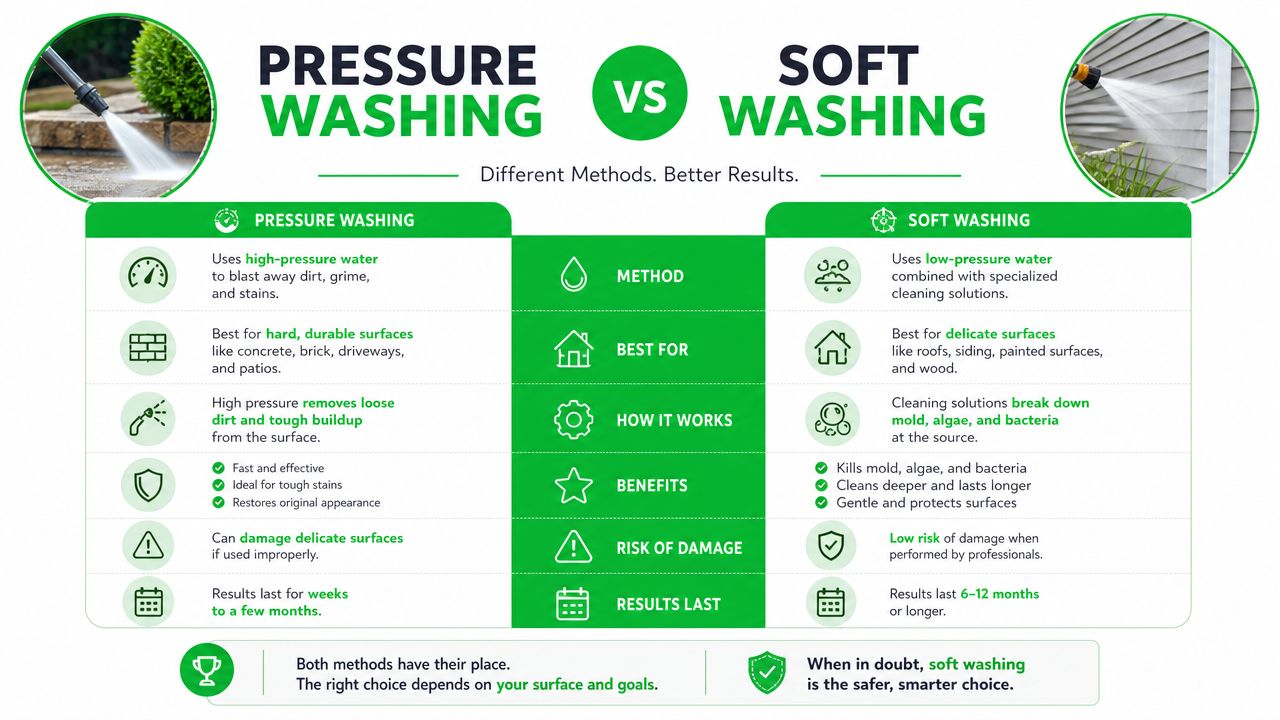
A lot of confusion starts because people hear “pressure washing” and think every exterior surface gets the same treatment. That's not how the work should be done. Pressure washing uses force to strip dirt from durable materials, while soft washing relies more on chemistry, controlled application, and a lighter rinse for surfaces that can't take aggressive pressure.
The technical difference that matters
For concrete pressure washing, a widely used benchmark is 1,750 to 2,000 psi at a minimum 3.5 gpm flow rate (technical benchmark). That combination matters because pressure alone isn't the whole story. PSI is the impact, but gpm helps carry dirt away and flush the surface clean.
Soft washing stays away from that aggressive level of force. It's the better fit for painted walls, roof coverings, and other surfaces where high pressure can lift material, strip coatings, or force water where it shouldn't go. On a Trinidad home, that usually means using the right mix of detergent and low-pressure rinse instead of trying to “power through” mildew.
Which surfaces need which approach
Concrete driveways and certain commercial hardscape areas can usually handle stronger cleaning when the surface is sound. Roofs, wooden features, and painted exteriors need more caution. If someone proposes the same nozzle, same pressure, and same chemistry for all of them, they're not tailoring the job.
On softer surfaces, the goal isn't to blast away the stain. The goal is to loosen it, rinse it, and leave the finish intact.
That difference also affects results in Trinidad's climate. Humidity makes algae return faster, so a surface cleaned the wrong way may look better for a short time and then fail earlier because the finish was damaged. A careful contractor understands that the right method is part of the cleaning outcome, not an extra.
For most homeowners, the safest question is simple. Ask whether the contractor plans to pressure wash or soft wash each surface, and ask why. If they can't explain the reason in plain language, keep looking.
Surfaces and Methods Common in Trinidad
Trinidad's climate changes what needs attention first. Humidity, salt air, and dust create a mix of staining that shows up differently on each material, so the cleaning plan has to follow the surface, not the other way around. A driveway, a roof, and a glass-and-aluminum storefront can all look dirty for different reasons, and they shouldn't be treated with the same settings.
Hard surfaces and high-traffic areas
Concrete driveways, carport slabs, and pool decks usually respond well to stronger washing because they're made for wear. In practice, that means surface-specific equipment and even pressure distribution, not just a hand wand moved back and forth. Flatwork cleaning is especially helpful where tire marks, algae, and mud collect in the low spots.
Roofs are a different story. In Trinidad, they're usually better handled with a soft wash approach because aggressive pressure can lift material and damage the surface. That's especially important on older roofs or on homes where the owner plans to keep the structure in service for years, not just make it look good for one weekend.
Wooden balconies and decks also need restraint. Too much pressure can raise the grain or make the boards look rough, and that creates more finishing work later. Painted walls, too, need a careful hand because water force can expose weak spots in the coating.
Commercial and mixed-material properties
Storefronts and facade areas often combine glass, aluminum, painted trim, and concrete, so crews need to switch methods as they move across the building. One bad assumption, like using the same pressure on all sides, can leave streaks or damaged sealant. That's why property managers should ask how a contractor handles mixed materials before they approve the work.
A contractor who understands Trinidad properties should be able to talk about roof coverings, painted masonry, aluminum frames, and concrete in the same conversation.
On coastal and urban sites, grime tends to settle into corners, joints, and ledges. That means a one-size-fits-all spray won't give a lasting result. The best crews match the method to the material and the stain, then explain the tradeoff before they start.
If you're booking pressure washing services Trinidad for the first time, the most useful habit is to walk the property with the contractor. Point out what's painted, what's sealed, what's raised, and what's fragile. That short conversation prevents most avoidable damage.
What Pressure Washing Costs in Trinidad
Pricing is where many buyers get stuck, because too many local listings stop at “call for a quote.” Trinidad homeowners and property managers usually need something more practical than that. A local estimator lists TT$0.35 to TT$0.55 per square foot for typical pressure washing, a minimum service charge of TT$150, and roof cleaning at TT$0.38 to TT$0.63 per square foot (local calculator).
How to read the price
That pricing structure shows a simple pattern. Small jobs still need a crew, travel, setup, and cleanup, which is why the minimum charge exists. Larger or dirtier jobs move toward the upper end of the quoted range because condition, access, and stain severity matter.
A 1,000-square-foot surface at the quoted rate would land roughly between TT$350 and TT$550 before add-ons or specialty treatment, which gives you a usable baseline for driveway or flatwork estimates. If a quote falls far outside that logic, ask what the price includes and whether the contractor inspected the site first.
The best comparison is always scope, not just price. Is the contractor cleaning one surface or several? Is roof cleaning separate? Is water access available on site? Are chemicals included? Those details are where good quotes become useful and vague quotes become expensive.
| Service | Price Range (TTD) | Typical Driver |
|---|---|---|
| Typical pressure washing | TT$0.35 to TT$0.55 per sq ft | Surface area and soil level |
| Minimum service charge | TT$150 | Small-job setup and travel |
| Roof cleaning | TT$0.38 to TT$0.63 per sq ft | Height, access, and roof condition |
| 1,000 sq ft typical surface | TT$350 to TT$550 | Area before add-ons |
For buyers who want a broader pricing frame, this pressure washing service cost guide helps show how scope and access affect exterior cleaning pricing in practice.
The gap in Trinidad isn't just price, it's clarity. A useful quote should say what's included, what's excluded, and whether recurring maintenance is priced differently from one-off cleaning. That matters even more for hotels, campuses, dealerships, and multi-property operators who need predictable budgeting.
How to Prepare Your Property for a Service Visit
A smooth service visit starts before the truck arrives. If the crew has to move cars, untangle hoses, ask for tap access, or work around loose patio furniture, the job takes longer and the risk of damage goes up. A little preparation also shows courtesy, which matters when someone is working around your home, tenants, or business frontage.
Homeowner preparation
Move vehicles off the driveway so the contractor can clean edge to edge. Clear toys, planters, chairs, and other loose items from the work area. Close windows, secure pets, and tell anyone inside that water and noise will be part of the job.
If you know where the outdoor tap is, point it out. If there are delicate plants, electrical fixtures, or recently painted areas, mention them before work starts. That kind of walk-through prevents surprises and helps the crew protect what should stay dry.
Commercial preparation
Property managers should do a little more. Post temporary signs if foot traffic needs to reroute, notify tenants, and confirm which entrances will stay open. If the site has delivery windows or customer parking, the contractor should know that before the machine starts.
A quick checklist helps keep the visit efficient:
- Move the vehicles: Give the crew full access to concrete, curbs, and edges.
- Remove loose items: Furniture, mats, bins, and toys should be out of the way.
- Secure pets and people: Keep children and animals away from the active cleaning zone.
- Shut windows and doors: This reduces water intrusion and splatter.
- Mark problem spots: Point out stains, cracks, or areas you don't want hit hard.
Practical rule: the clearer the property is before the appointment, the cleaner the result tends to be.
That mindset is especially useful in Trinidad, where humidity can make surfaces slick quickly and where outdoor living spaces often sit close to gardens, drains, or parked vehicles. Good prep protects the property and helps the team finish on time.
Safety, Water, and Environmental Considerations
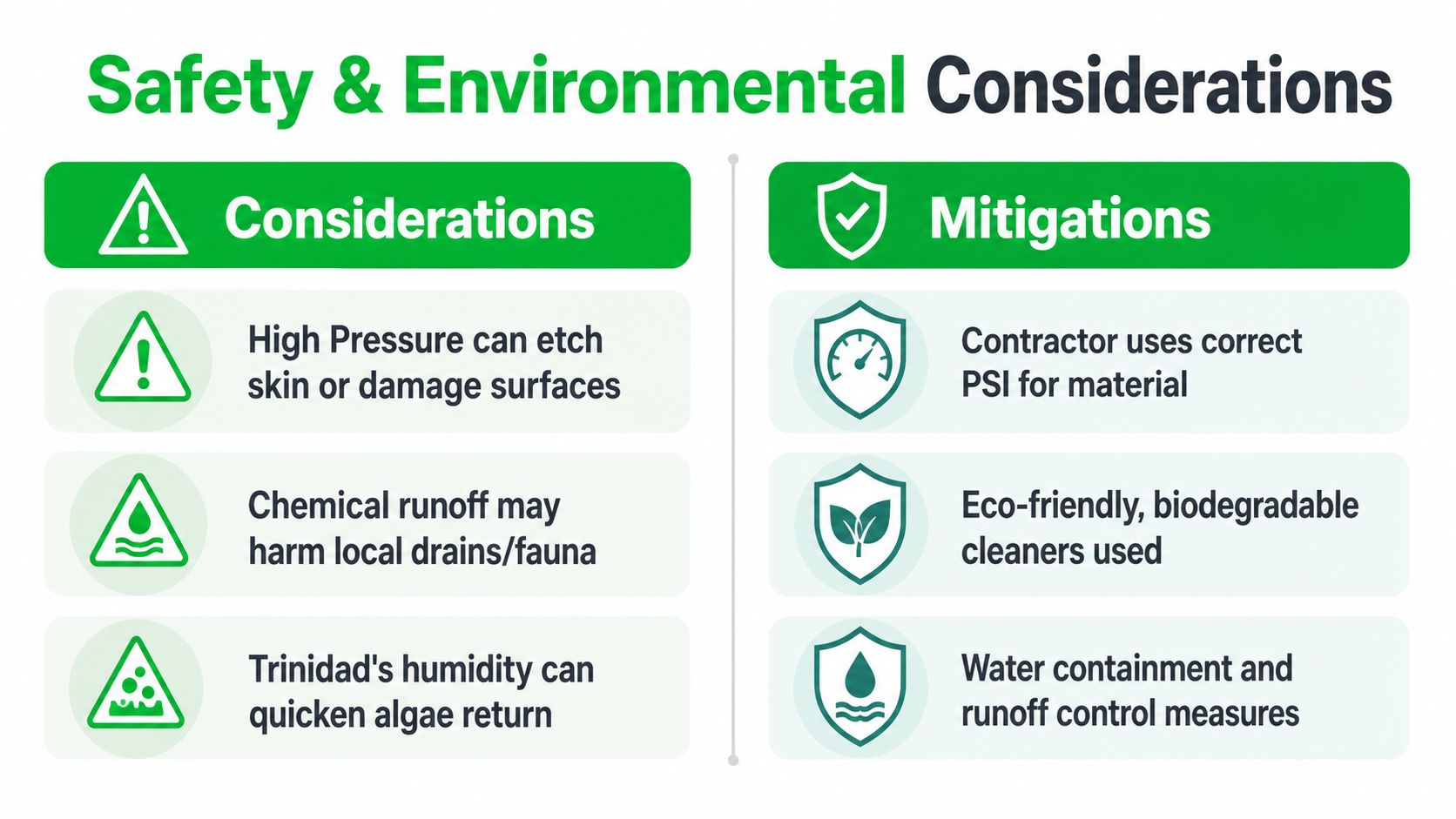
High-pressure water can do real damage if it's used carelessly. It can etch skin, force water into seals, blow debris around, and send dirty runoff into the wrong places. In Trinidad, where humid conditions help algae return quickly, the cleaning chemistry and runoff control matter just as much as the spray pattern.
The safety basics
A professional crew should use eye protection and keep a safe distance from electrical fixtures, outlets, and other vulnerable areas. Ladders and roof work need extra caution, and any high-up work should be handled with the right access plan instead of improvised climbing. If the contractor seems casual about those basics, the risk is bigger than the stain.
Environmental care matters too. Runoff shouldn't end up in garden beds or storm drains if it can be managed another way, and detergent choice should fit the site. The right contractor will explain how they handle water source responsibility, rinse control, and surface protection before they start.
Ask how the crew handles runoff before you ask about shine. That order tells you whether they think like cleaners or like caretakers.
For buyers who want to screen for environmentally aware practices, eco-friendly pressure washing guidance gives a useful benchmark for how careful exterior cleaning should be discussed.
Insurance and liability
The other overlooked issue is coverage. A serious contractor should be able to explain their insurance and the scope of the work they'll take on. That's especially important for roofs, tall facades, and commercial sites where a mistake can affect more than one property line.
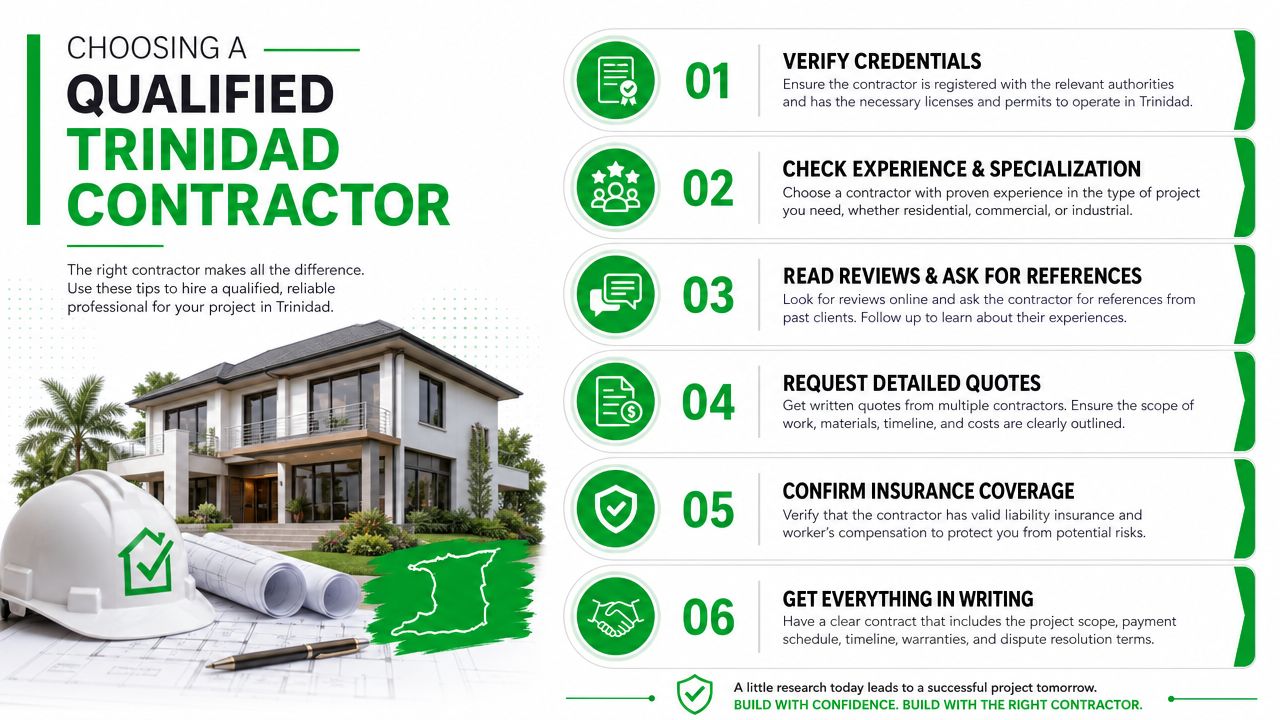
The infographic above makes the point clearly, but the practical version is even simpler. High pressure can damage surfaces, chemicals can affect drains and nearby landscaping, and Trinidad's humidity can help algae return if a job is rushed. Good crews prevent problems by controlling pressure, selecting the right cleaners, and managing water responsibly.
A professional service should leave the site cleaner, safer, and easier to maintain. If it leaves you worried about leaks, staining, or runoff, it wasn't done carefully enough.
Choosing a Qualified Trinidad Contractor
Most bad experiences come from one of two problems. Either the contractor was vague about the work, or the buyer didn't know what questions to ask. A good Trinidad contractor should be able to explain methods, timing, pricing, and limitations in plain language before they touch your property.
Red flags that should slow you down
Best Pick Reports highlights several warning signs that matter in this trade, including pressure to sign immediately, requests for full payment upfront, no written contract or documentation, bids far below competitors, and reluctance to provide references (contractor warning signs). Those signs don't guarantee a bad outcome, but they do tell you to pause and ask more questions.
The green flag is simple. A solid contractor welcomes questions and puts the scope in writing. That written scope should say which surfaces are included, which methods will be used, and whether things like roof cleaning, gutters, or water tank work are separate line items.
Questions worth asking first
Ask whether they use soft washing on roofs and painted walls, and ask what pressure range they use on concrete. Ask who will be on site, how runoff is managed, and whether the crew protects landscaping and nearby vehicles. If it's a commercial or multi-property job, ask how recurring service is billed and whether the quote changes if access is restricted.
One Trinidad provider does publish example prices such as driveway and carport wash, house exterior cleaning, roof soft wash, and full-property packages, which is helpful because it shows how much more useful a detailed scope is than a vague quote (pricing examples). Even so, many pages still don't explain what drives the differences, so the buyer still needs to ask.
The clearer the answers, the easier the comparison. Two quotes that look different on price may be describing completely different jobs.
Trinidad Pressure Washing FAQs
How often should you clean? In Trinidad's humid environment, exterior cleaning usually becomes a recurring maintenance issue because algae and grime return faster than they do in drier climates. The right cadence depends on shade, salt exposure, roof style, and how much foot traffic the surface gets.
Will pressure washing damage paint or tiles? It can, if the wrong method is used. Hard surfaces can take more force, but painted walls, roofs, and wood need gentler treatment, which is why the contractor's method matters more than the phrase “pressure wash” on its own.
Can it be done during rainy season? Yes, but the job should be planned around weather windows, runoff control, and site safety. Wet conditions make access trickier, and a contractor should be honest if a roof or higher area needs a safer day.
Is it safe around children and pets? It can be, if the crew controls access and uses the right chemicals. Keep kids and animals away while work is active, and let the contractor know about any sensitive areas before they start.
Why do some neighborhoods seem to book faster? In Trinidad and Tobago, demand is concentrated in Port of Spain, San Fernando, Chaguanas, Arima, Trincity, Curepe, and San Juan, where dispatch density supports faster turnaround for residential and commercial accounts (service corridor coverage). That usually means urban scheduling is easier to route, while outlying jobs may need more planning.
If you want the exterior of your home or property cleaned with the same care outlined here, Pine Country Window Cleaning handles pressure washing along with window and exterior cleaning work for homes and businesses. Visit Pine Country Window Cleaning to request a free estimate and book a service that fits your property, your surface type, and your schedule.