
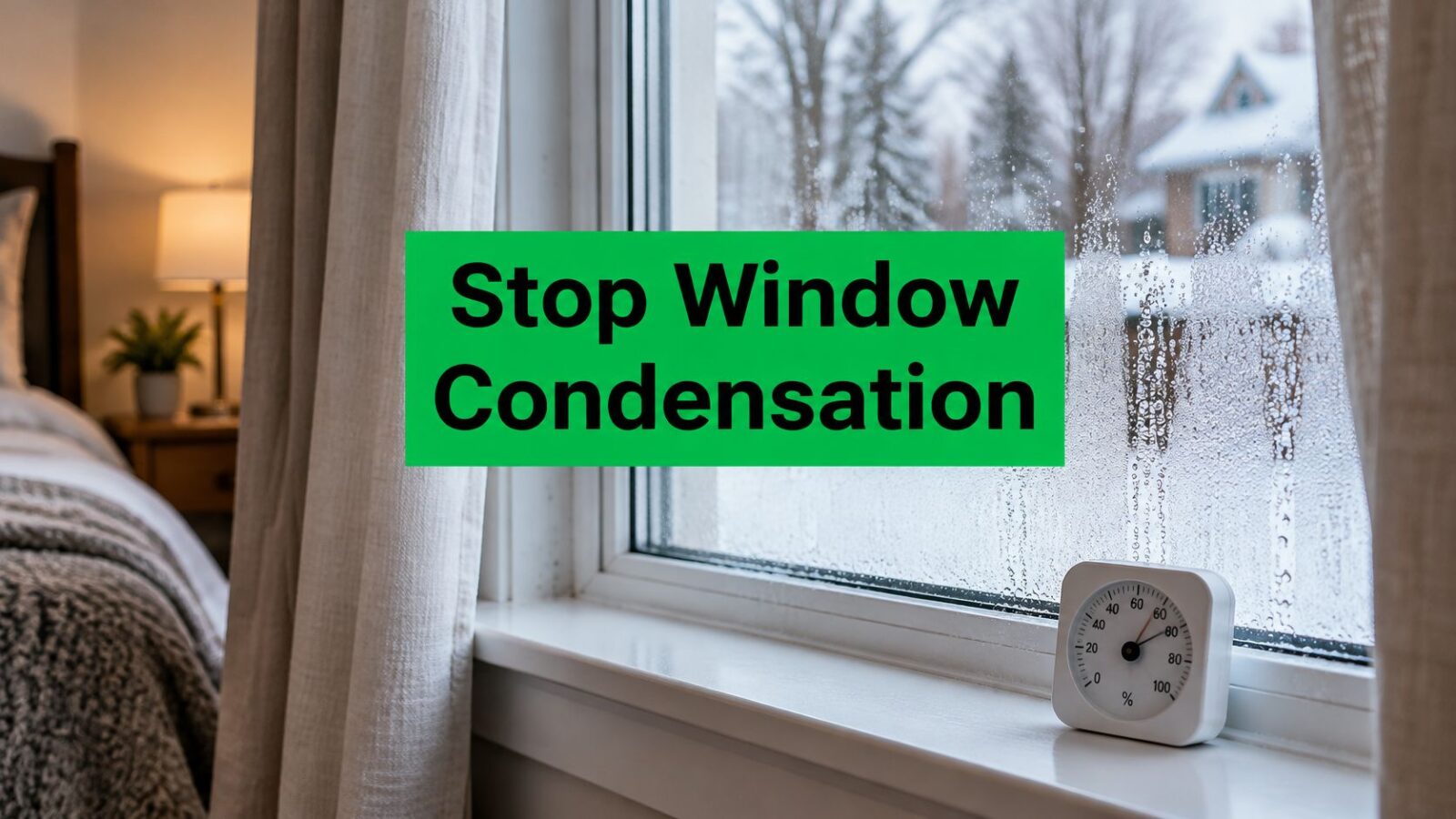
You wake up, pull the bedroom curtain, and the glass is already wet. The heat ran all night. The room doesn't feel steamy. The sill still has a puddle.
That is the usual winter scene in Flagstaff, Munds Park, and Forest Highlands. How to stop window condensation in winter starts with one fact. Indoor vapor turns to liquid when it meets glass colder than the air's dew point. Wipe the pane and the water comes back, because the glass is still the coldest surface in the room.
Indoor Humidity Limits by Outdoor Temperature
Forty percent relative humidity looks safe on a general comfort chart. On a cold-snap morning it can still leave a pane dripping, because the limit that matters is set by the glass temperature, and the glass tracks the outdoor low.
The U.S. Environmental Protection Agency moisture guidance sets winter indoor relative-humidity ceilings that drop as it gets colder outside: 35% at 20°F, 30% at 10°F, 25% at 0°F, 20% at −10°F, and 15% at −20°F. Those targets treat the window as one surface. Glazing type splits the limit further.
The ASHRAE handbook condensation table assumes indoor air at 74°F with natural convection, and it gives a separate ceiling for single and double glazing at each outdoor temperature.
| Outdoor temperature | Single glazing limit | Double glazing limit |
|---|---|---|
| 40°F | 39% | 59% |
| 30°F | 29% | 50% |
| 20°F | 21% | 43% |
| 10°F | 15% | 36% |
| 0°F | 10% | 30% |
Read the two sources together. At 20°F the EPA ceiling is 35%, yet single glazing starts sweating near 21%. A room held at a common indoor target of 40% to 50% sits above the single-pane limit through most of this table, and double glazing only tolerates that range near the top rows. That gap is why insulated units stay dry on nights when older glass runs wet, and why the same room fogs at one outdoor temperature and stays clear at another.
The limit depends on your glass as much as the thermometer.
To use the table, check the forecast low, find the nearest row, and hold your hygrometer reading against the column for your glazing. A reading above the limit explains the water. At Flagstaff elevation, plan on the lower rows for a good share of winter.
A reading under the limit with water still sitting on the sash points to moisture coming from somewhere besides room air. Look past the glass at fixing household leaks that cause mold, because a plumbing or roof leak feeds the same wet cycle. Folding a humidity check into a seasonal home maintenance checklist before the next cold snap catches the drift early, especially in a house that sits empty for weeks.
How to Cut Indoor Moisture in Five Steps
Lower the vapor, or warm the glass. Either one stops the dew point from crossing the pane. Wiping alone doesn't.
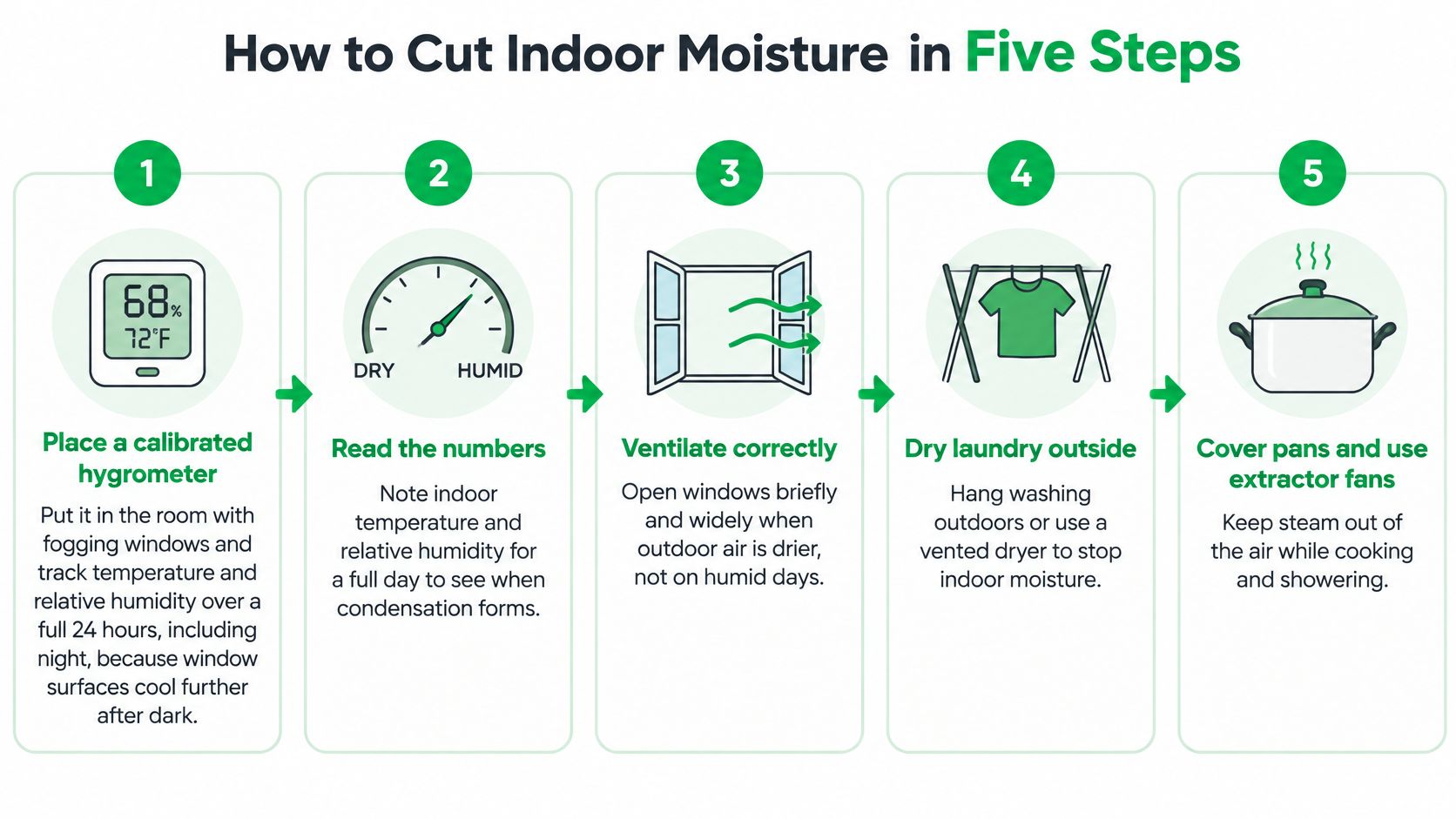
The ASHRAE fundamentals handbook frames this as a dew-point workflow, not a cleaning chore. EPA guidance in that same discussion keeps indoor relative humidity below 60%, ideally 30–50%, while cold-climate houses often need a lower winter target than that comfort band.
- Put a calibrated hygrometer in the room that fogs, away from the supply register. Record temperature and relative humidity through a full day, including night, because the pane cools further after dark. A daytime-only reading misses the worst hour.
- Set that reading against the outdoor low and your glazing type. If the number is over the limit for that glass, the fog is expected, not mysterious.
- Cut moisture at the source. Run the bath and kitchen fans during and after use, lid the pots, vent the clothes dryer outdoors, and repair plumbing or roof leaks. Turn a humidifier down or off during a cold snap. This is the durable fix. A lower thermostat is the common slip, because it leaves the glass colder than the room air and the dew point arrives sooner.
- Move air across the glass. Open interior doors, pull furniture off cold exterior walls, and keep curtains and blinds from pressing on the pane. Still air in that gap is what lets the surface drop.
- Take standing water off with a squeegee, then dry the sill and frame so the opening doesn't stay wet for days. A squeegee is the only tool you need for that water. Leaving beads in the corners is how finishes stain.
Holding 40–50% through a severe Flagstaff cold snap can still exceed what an older pane, or the edge of the glass, can carry. Chase the lowest humidity that avoids dry skin and static, not a round number on a comfort chart. Pushing a dehumidifier or the air conditioner just to sit at 50% is often the wrong spend, which is the point of why chasing 50% humidity wastes energy.
You know it worked when the hygrometer stays under the limit for that outdoor temperature and the glass clears within a few hours of the next cold morning. Check the edges, the frame, and the drywall beside the opening, not only the center of the pane.
When Opening Windows Makes Condensation Worse
"Air the house out every morning" fails on a humid outdoor day. What matters is how much moisture the outdoor air carries, and on a wet day it often carries more than the room you're trying to dry.
A short look at the glass before you decide:
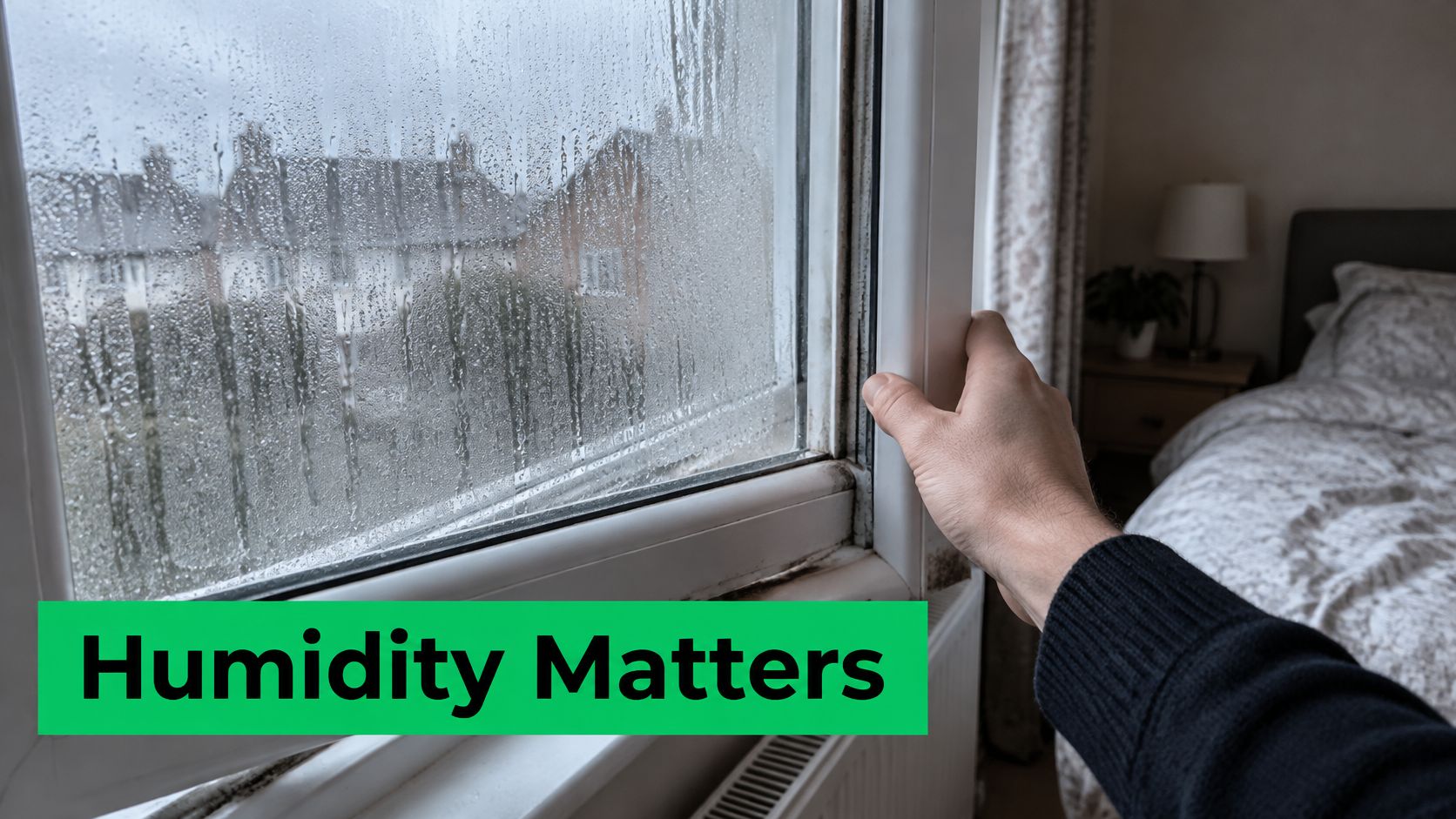
The Gravesham housing safety guidance is direct. Short ventilation after showers, cooking, laundry, or a full house can remove indoor vapor, while opening windows on a damp day can add moisture instead. Use cross-ventilation, and keep background vents clear. Skip the fixed airing schedule whenever the outdoor air is wetter than the room.
The humidity test
Read indoor and outdoor relative humidity on the hygrometer. Open a window only when the outdoor reading sits lower than the indoor one. Crack it briefly after a shower, a boil, laundry, or guests, and open a second window across the room so air moves through. Exhaust fans that vent outside, as in the source-control step, do this job without dumping the whole house's heat.
Tight cabins, vacation rentals, and second homes in Munds Park and Forest Highlands are the risky cases. Moisture builds while nobody is inside, then shows up as wet glass on the next arrival. Heat-recovery ventilation is the long-term cold-climate answer. It brings in fresh air and cuts the heating loss you get from repeated open windows. In very cold weather I would choose balanced or heat-recovery ventilation over adding more heat or running a dehumidifier all night.
Condensation on the pane alone doesn't prove a house is under-ventilated. Cold glass in a well-aired room fogs the same way. Measure indoor humidity against the outdoor reading instead of guessing, and let the numbers decide whether the window opens.
If you want a short walk-through of spotting the pattern on the glass, this clip is a useful companion:
Glass, Frame and Seal Fixes That Last
Windows are usually the coldest surfaces in a heated home, so they collect moisture first. For severe cold, a Department of Energy building guide recommends keeping indoor relative humidity at no more than 30% during the coldest part of winter. Milder stretches of the heating season allow a wider comfort band, which is why the right target still depends on the window and the weather. Persistent condensation, sill staining, or frost between panes is a diagnostic sign, and prolonged moisture damages finishes and feeds mold conditions.
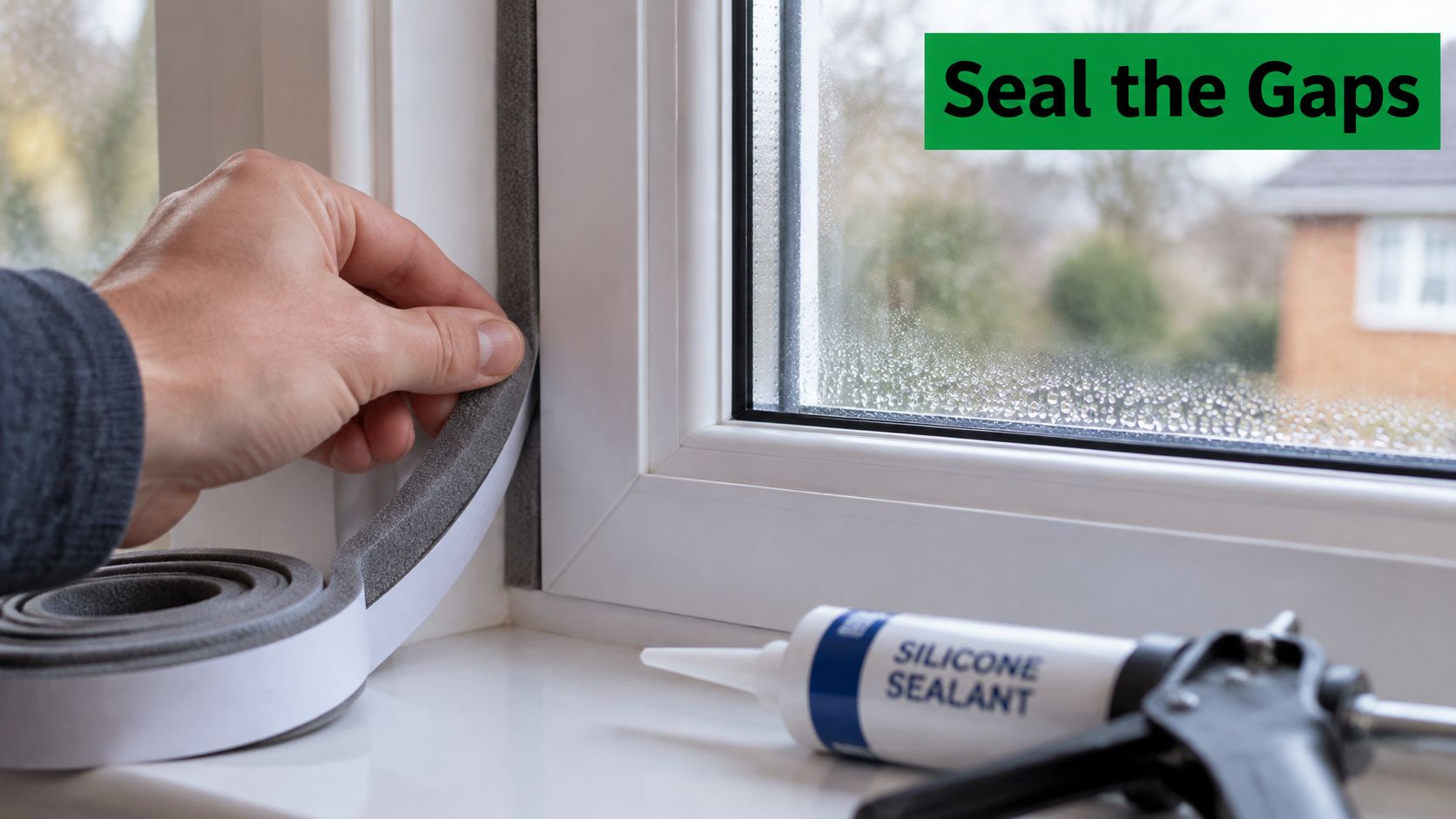
Start with the cheap fixes. Seal the sash-to-frame gaps and the wall-to-window joint. The Department of Energy also advises checking caulking and flashing around windows and keeping gutters clear so water runs away from the house, because water at the opening compounds what you see indoors, as its home ventilation guidance explains. Foam tape on a loose sash is often enough for a draft you can feel with your hand.
Treatments, air, then the unit
Heavy curtains or blinds pressed to the glass trap a cold pocket against the pane and make condensation worse. Leave a gap at the sill, or open them during the day so room air can reach the glass.
Then move warm air across the interior surface. A small fan, or a heat register aimed at the window, raises the glass temperature without new equipment. A register buried behind a sofa never reaches the pane, so check where the heat lands before blaming the window.
The lasting assembly is at least double glazing in a frame that conducts cold poorly, such as wood, vinyl, or fiberglass rather than bare metal. Say one single-pane window fogs every cold night even after the gaps are sealed. Replacement is the honest answer there. A double-pane unit that clears once the sash is weatherstripped only needed the seal and the airflow. Wiping the glass every morning holds the problem in place without repairing anything.
Sealing and airflow reach their limit at a failed insulating-glass seal, where moisture sits between the panes. Confirm where the water forms before you order glass. The track matters too: grit packed into the channel holds water against the frame, and our notes on cleaning window tracks cover that pocket. Track cleaning is excluded from a standard window cleaning and priced as an extra when the buildup is the problem.
Telling Room Condensation From a Failed Window
Wipe the glass. Water that smears off the inside face came from room air hitting a cold pane, and it clears within hours once humidity or airflow improves. Fog or film sitting between the panes of a sealed double-glazed unit survives every wipe, because the insulating seal has failed and household ventilation cannot reach it.
The EPA school moisture-control guidance recommends indoor relative humidity of 30–50%, with levels below 60% to limit moisture-related risks. A room can hold that band while one frame, a thermal bridge, an exterior air leak, or a blocked heat path still runs cold enough to fog. Humidity control works alongside insulation, draught sealing, and warmer interior surfaces. A wet window is not automatically an occupant habit problem.
What the pattern means
| Symptom | Likely cause | Next action |
|---|---|---|
| Water beads on the inside glass and clears within hours | Indoor humidity above the limit for the outdoor temperature | Lower indoor humidity and improve airflow |
| Condensation only at edges or corners | Thermal bridge or cold frame | Seal gaps and check insulation around the frame |
| Fog or film between panes of double glazing | Failed insulating-glass seal | Ventilation will not fix it; arrange seal repair or replacement |
| One window fogs while identical windows stay clear | Cold spot or blocked airflow behind a curtain | Move the curtain and compare with the matching window |
| Water staining on sills, frost between panes or mold near frames | Persistent moisture or a larger window problem | Check flashing and caulking, then arrange a professional inspection |
Log indoor temperature and humidity for a week, and compare the suspect window with an identical one, before spending on replacement. Slide the curtain off the fogging unit for a few mornings. If the match stays clear while the suspect fogs at the same reading, the difference sits in the window or its surroundings, not the room.
If the reading stays under the limit for your outdoor temperature, the exhaust fans run, and the glass still fogs, the window or its seal needs attention.
Fog between panes, water staining on sills, frost between panes, or mold near the frame are reasons to call. Exterior beads on new, efficient glass mean something else. Premier Builders on window condensation explains how outdoor moisture can sit on a cold outer pane in the morning and then disappear as the day warms, which is not a failed seal.
For film you cannot wipe from either side, our page on condensation between window panes walks through a failed insulated unit. Pine Country Window Cleaning has been locally owned and operated in Flagstaff since 1999. A home service covers outside and inside glass, bug screens removed, cleaned and reinstalled, frames wiped inside and out, and interior sills; heavier work such as track cleaning is priced separately. Windows are washed with pure water fed to the top of a pole fitted with a soft brush, and the work is guaranteed. When you call or schedule online, a staff member comes out to look at the home, building, or project. Reach the office at (928) 527-0671 or through the online scheduler, and the estimate is free.
Measure the humidity, fix the room-side causes, and call when the glass still fogs after the numbers are right.
Pine Country Window Cleaning helps Flagstaff and Northern Arizona owners separate a humidity problem from a window that needs a closer look. Home service covers washing the glass, wiping frames and interior sills, and removing, cleaning and reinstalling bug screens. Visit Pine Country Window Cleaning to schedule a look at the wet windows before the next cold snap.