
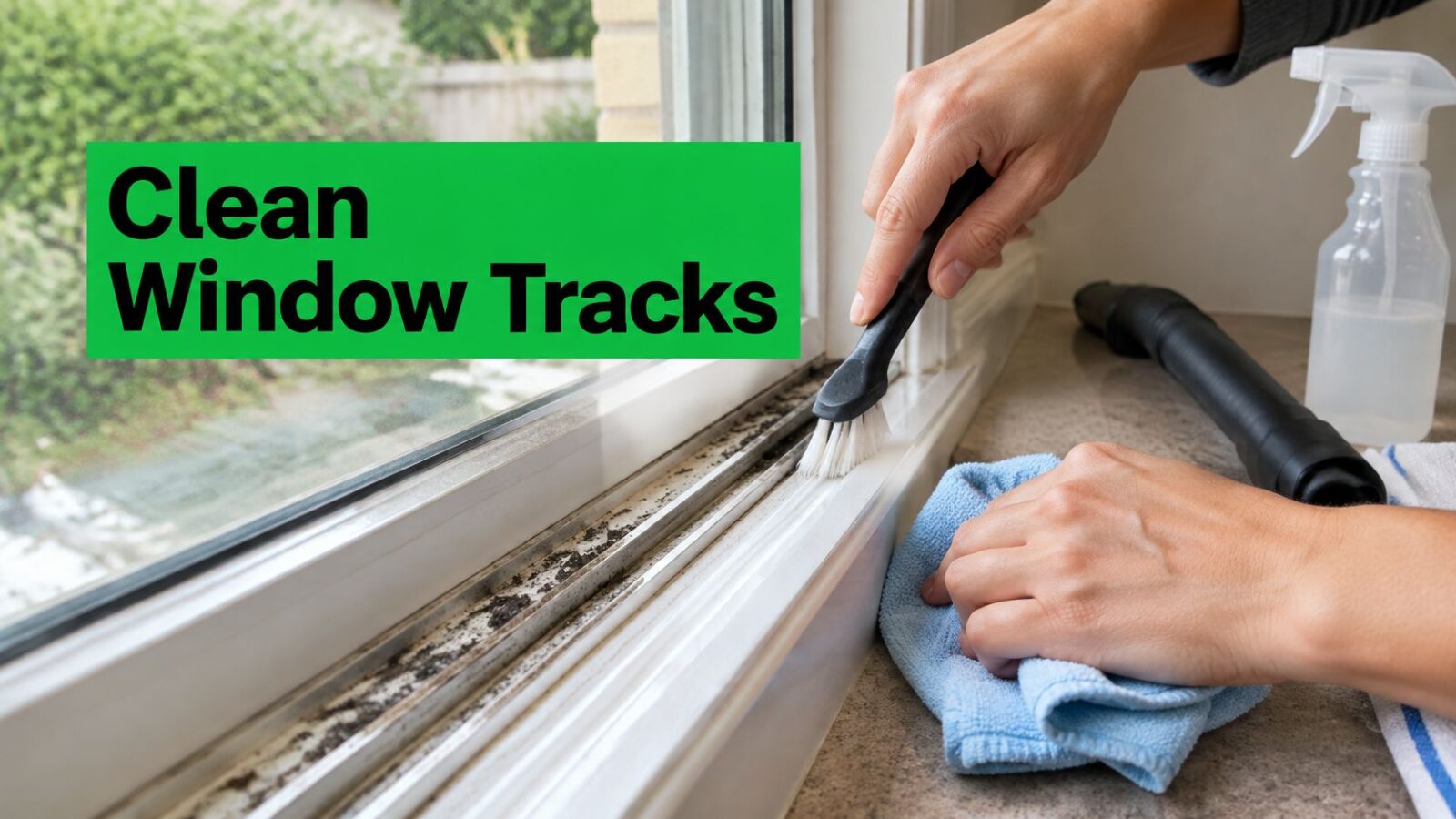
Your sliding window grinds halfway open and the channel underneath holds a grey paste of pollen, dust and pine grit. Or the window slides fine, but the morning after a storm there's a shallow pool of water sitting in the track that hasn't drained. Those look like the same job. They aren't. One is dirt, the other is drainage, and scrubbing harder won't clear a blocked weep hole.
Tracks are the part of a window people skip, and the reason is easy to understand. The glass looks clean, the room looks bright, and the channel hides below the sash where nobody looks. It's also the spot where moisture sits against seals, frames and sills, which makes it the most consequential part of the window to get right.
The order that works is this. Identify the material and the hazards, clear the channel dry, loosen what's stuck, wipe it, rinse it, dry it completely, then test that water still leaves the way it's supposed to. Everything below sits inside that sequence.
Safety Checks for Older Homes and Mold
A darker, smellier track doesn't call for a stronger cleaner. Bleach, solvents, abrasive pads and a razor blade dragged along that hardened line are how finishes get scarred, weatherstripping gets torn, and a moisture problem gets hidden for one season before it returns.
Make three checks before anything wet touches the channel. The track material (vinyl, aluminum, painted wood, fiberglass or composite) decides which products are safe. The paint condition decides whether you wipe or stop and call someone. And the age of the house decides how careful you have to be with the dust itself. A home built before 1978 can carry lead-based paint on frames, sills and stop beads, and the grit in the channel may hold paint dust and chips. Don't dry sweep, scrape or sand it. Wet wipe with disposable cloths, bag them, and where paint is flaking or chalking, use HEPA-equipped cleanup or bring in a certified lead-safe professional.
What mold in a track actually tells you
Mold is a moisture signal, not a stain. Wear eye and hand protection, isolate loose debris, and skip the dry brushing, which throws spores into the air you're breathing. Damp-wipe or scrub the hard track surfaces with detergent and water, then dry completely. The EPA notes that mold can penetrate porous materials and occupy crevices, making complete removal difficult or impossible, and that porous materials which are wet and moldy may require removal or replacement (EPA). That's why the practical threshold is to dry the cleaned assembly within 24 to 48 hours, the interval EPA materials identify as important for preventing continued growth in damp materials.
Stop rule: if the same corner comes back after a proper clean and a full dry, you have a moisture path, not a cleaning failure.
Never paint or caulk over visible mold, and never mix bleach with ammonia or an acidic cleaner. Bleach plus vinegar produces a toxic gas, and a narrow window channel is a terrible place to discover that. Ventilate the room, keep gloves on, and test any product on an inconspicuous patch before it goes near the whole track.
Wood sills and painted frames take the worst of this. How to clean mold off wood from AMPM Restoration Services sets out the gentler sequence those surfaces need before you escalate to anything harsher.
Tools and Cleaners Matched to Each Track Material
The right tool depends on the material in front of you and on the stage of the job, not on how bad the mess looks. Match the row to the track you're working on.
| Tool or cleaner | Best for | Avoid on or with |
|---|---|---|
| Crevice vacuum nozzle | Loose dust, grit and pollen before any water | Wet debris, which turns to paste |
| Soft dusting brush | Dry dust on sills and track edges | Stiff or metal bristles on aluminum |
| Narrow nylon detailing brush | Packed grime in corners and roller path | Wire brushes that scratch finishes |
| Plastic scraper | Hardened deposits on vinyl or aluminum | Wood tracks, which gouge easily |
| Mild detergent solution with soft microfiber wipe | Final wipe on aluminum, vinyl and painted metal | Bleach, strong solvents and steel wool |
| Old toothbrush or plastic pick | Drainage slots and weep holes | Forcing debris deeper into the drain |
| Squeegee and pole-mounted pure-water brush | Professional finishing on high or hard-to-reach tracks | Dirty blades dragging grit across glass |
Dry tools come first
Dyson's Global Dust Study reports that 49% of people worldwide neglect windowsills, which commonly includes the narrow edges and tracks where pollen, outdoor particles and indoor dust accumulate, and it recommends a soft dusting brush and a crevice-style vacuum nozzle to reach those confined areas (Dyson). That's the pair to start with. The crevice nozzle pulls loose grit out of corners and the roller path before water arrives, and a soft dusting brush lifts the dry film from a sill edge without scratching anodized aluminum.
Detailing tools come next. A narrow nylon brush gets into packed corners and along the roller path where a cloth can't reach. A plastic scraper lifts hardened deposits off vinyl or aluminum, and it stays away from wood, which gouges. An old toothbrush or a plastic pick clears the drainage slots, worked gently outward so you're not pushing debris deeper into the channel.
Wet tools and the professional finish
For the final wipe, use a mild detergent solution on a soft microfiber cloth wrung out to damp. Bleach, strong solvents, abrasive powders and steel wool damage finishes, and wood tracks should be wiped lightly and never soaked. That's the whole wet kit for most homes.
The professional comparison is worth knowing because it explains the finish you can't get by hand. A squeegee gives controlled finishing on accessible glass with a dry edge and no residue. A pole-mounted pure-water brush reaches high or hard-to-reach windows and tracks without repeated ladder work, using filtered water and a soft brush to loosen and rinse grime. Different tools, different jobs, and neither one is a rag and a spray bottle.
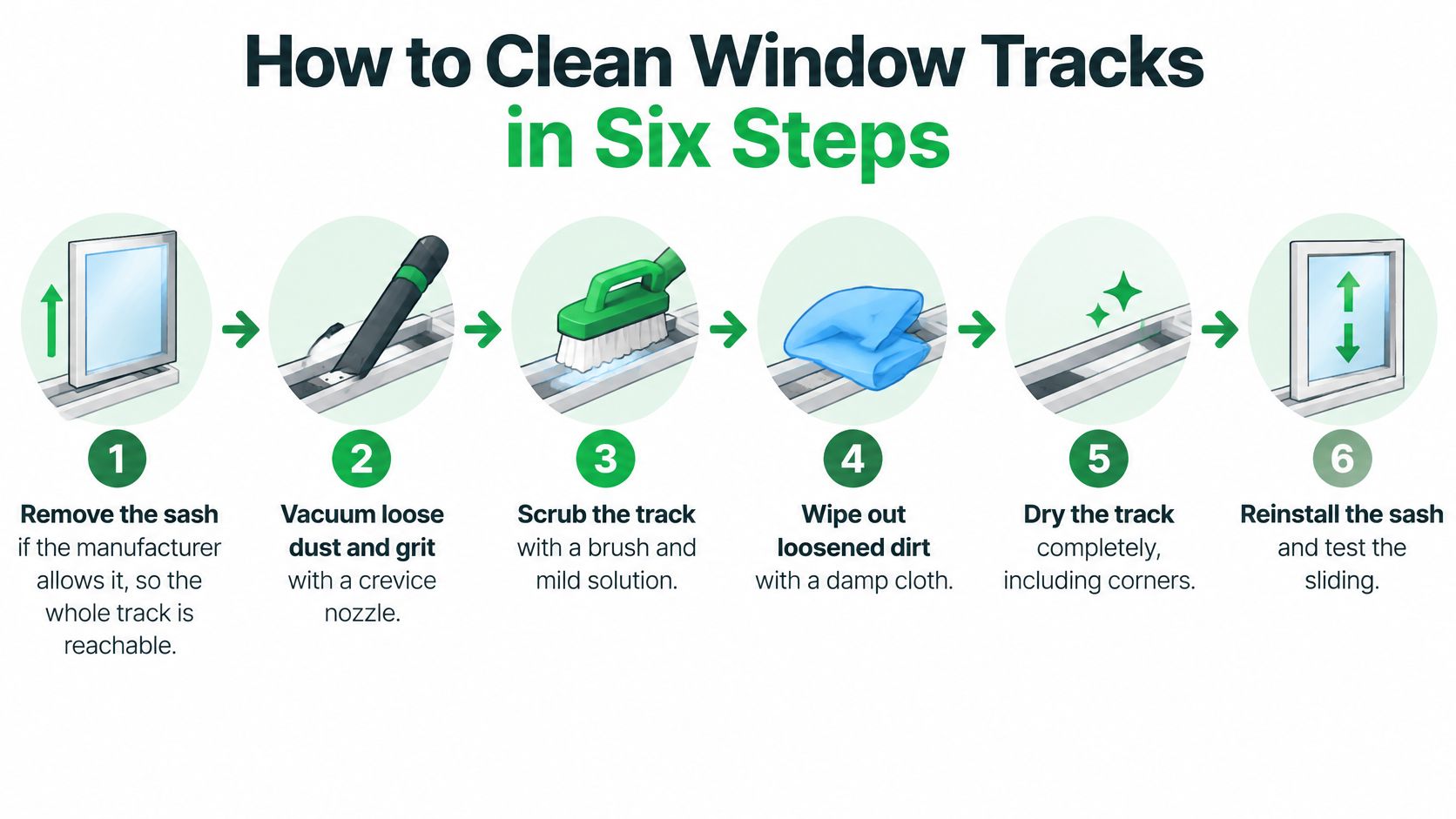
How to Clean Window Tracks in Six Steps
The sequence matters more than the products. Dry, then damp, then dry again, with a drainage check at the end.
- Remove the sash if the manufacturer allows it. With the sash out, you can see the whole sill, both corners and the roller path. That's the only way to judge whether the job is finished.
- Vacuum dry before anything wet touches the channel. A crevice nozzle takes out dust, grit and pine needles. The common mistake here is vacuuming after wetting, which turns dust into paste and smears it into the corners.
- Loosen packed grime with a narrow nylon brush or a plastic scraper. Work in short sections so loosened debris doesn't fall back onto areas you've already cleaned. Metal tools are the mistake at this stage, because they scratch aluminum and vinyl.
- Wipe with a lightly damp microfiber cloth and mild detergent solution. Flip to a clean face often so you're lifting dirt rather than pushing it around. Don't flood the track. Water can enter weep holes, seals and concealed cavities.
- Rinse the residue and confirm the drainage slots are open. Loosened debris is the usual culprit when weep holes stop working, so check them before you call the channel clean.
- Dry the full channel, including the sill, corners and roller path. Not just the center. Trapped water sits against seals and frames long after the visible surface looks dry.
Here's the sequence as a single flow you can follow at the window.
Judge the job by feel, not by shine
Run a finger along the channel when you finish. It should feel dry, smooth and free of tacky residue. A track that looks clean but still feels cool and damp will be damp again tomorrow. The EPA's household mold cleanup guidance supports detergent-and-water scrubbing on hard, nonporous surfaces and stresses rapid, thorough drying to discourage mold growth (EPA).
On older or heavily soiled tracks, work in short sections, change cloth faces often, and test any cleaner on an inconspicuous spot first. Concentrated alkaline or solvent products can discolor finishes or damage weatherstripping, and the cost of that mistake is a replacement sash rather than a cleaner track.
Once the channel is clear, the surrounding frame is the next surface worth attention, and this walkthrough of window frame cleaning covers the order for frames and sills. The same mild-first discipline applies to other narrow channels in a house, and this guide to chemical-free grime removal for Dallas bathrooms follows the identical wet-then-dry logic on shower door tracks.
Remove, Wash and Reinstall Screens Correctly
Screens come out before the glass is touched. They carry dust and hold rinse water, so leaving them in place turns the next step into a redo.
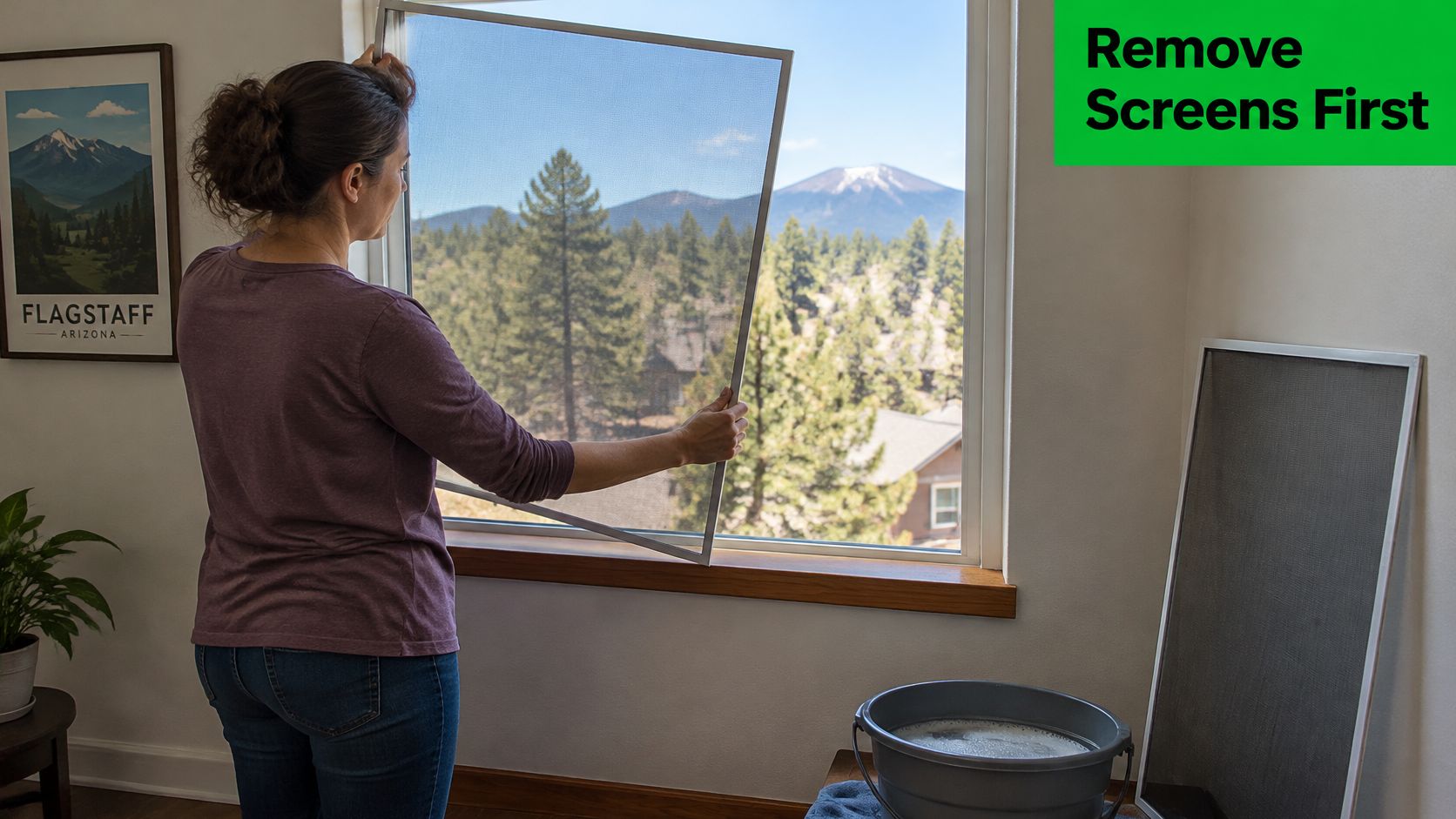
A standard residential visit from Pine Country Window Cleaning covers outside and inside windows, bug screens removed, washed and reinstalled, frames wiped inside and out, and interior sills wiped. The same order works at home: wash each screen separately, let it dry while the glass is finished, and set it back only after the channel is clear. Dirty runoff from a screen will streak fresh glass, and a damp screen becomes a new moisture source against the frame.
Order matters for a second reason. Clearing the track before the screens go back means grit is not ground into the channel as the screen slides home. On Flagstaff windows that grit is usually a mix of pine needles and fine dust, and pressed under a screen frame it works like sandpaper on vinyl rails.
The homeowner version of the same job
Slow down before anything comes off the window. Label each screen by opening, since sizes are close and a mismatched screen binds. Then:
- Lift straight out of the track. Tilting a screen on removal bends the frame corners and makes it sit proud when it goes back.
- Wash separately, never in place. Soapy water on a screen above freshly cleaned glass runs down and streaks it.
- Dry fully before reinstall. A damp screen sheds dirty water the first time it rains and keeps the frame wetter than it should be.
- Check the slide on reinstallation. Each screen should sit flush and move without catching.
If a screen is bent, torn or missing a spline, replacing it is cheaper than living with the gap. For deeper cleaning, this guide to how to clean window screens walks through the frame and mesh without tearing either.
Water Pooling and Drainage Problems to Diagnose
Water in a track the morning after rain is normal up to a point. Tracks are built to collect water and send it outside, and some lag after a heavy storm is expected. Pooling that's still there the next day is the signal, and it usually means the drainage path is restricted rather than that the channel needs another scrub.
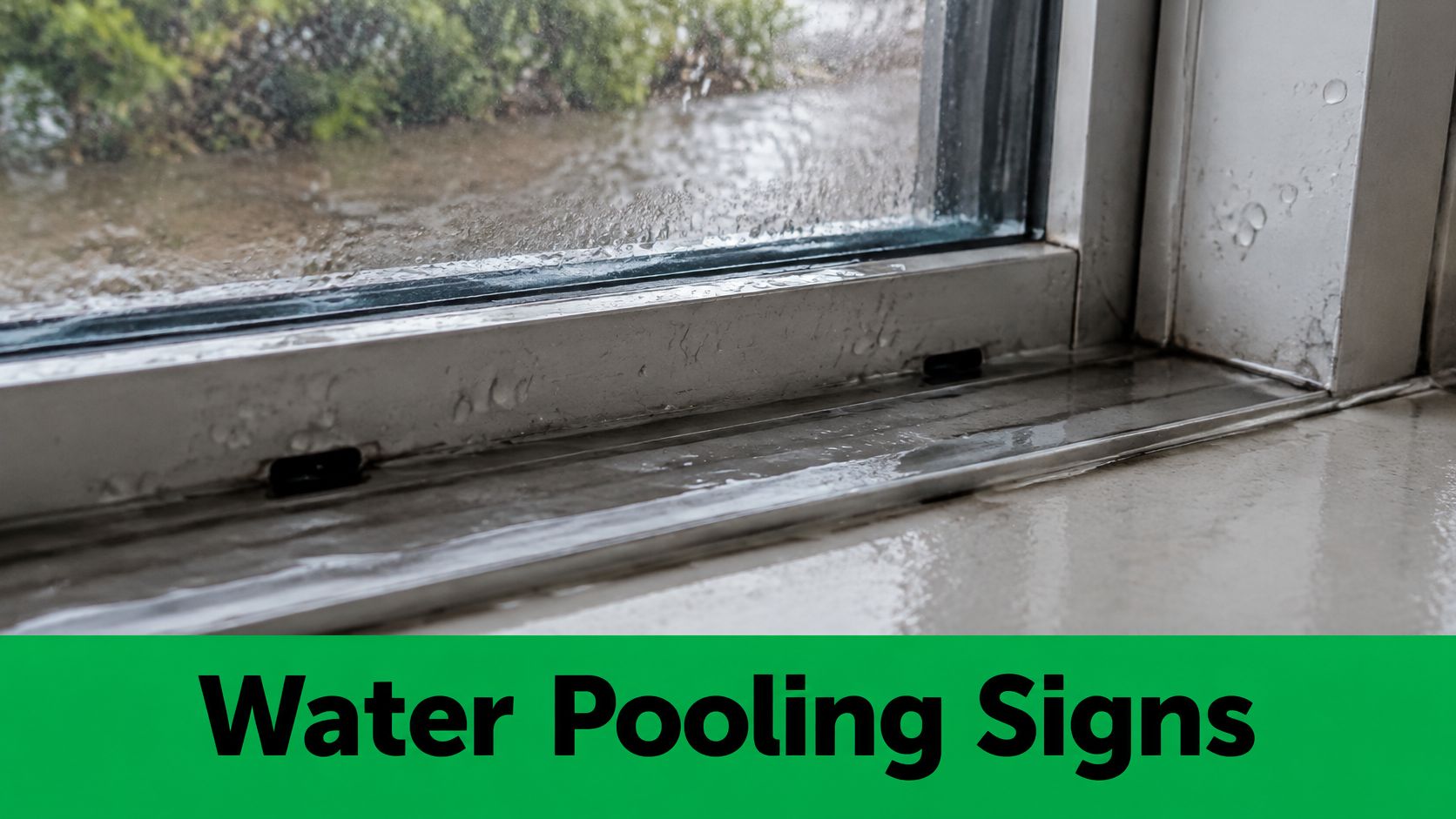
Moisture is a building-wide issue, not a window-cleaning one. Lawrence Berkeley National Laboratory summarizes survey evidence that approximately 50% of U.S. homes show visible evidence of a dampness problem or mold contamination, and in a survey of 100 representative U.S. office buildings, 45% had current water leaks (LBNL). Those figures don't prove a dirty track causes mold. They show why a track belongs to a moisture system you manage, not a surface you polish.
The drainage test that settles the question
Clear the channel dry, then clear each weep hole gently with a plastic pick. Pour a small amount of water into the interior track and watch the outside face. It should drain away. If it sits, clear the opening again and retest. Dry everything completely, then look at the same window in a week.
A track that drains and still returns to damp isn't dirty. It's either condensing or leaking, and both are repairs.
| Symptom | Likely cause | Fix |
|---|---|---|
| Water pools after cleaning | Blocked weep holes | Clear the drainage slots and retest with a small water test |
| Dark spots return within days | Condensation or high indoor humidity | Dry the channel completely, raise airflow, lower indoor humidity |
| Frame sags or stains below the track | Failed seal or warped frame | Replace the seal or have a technician inspect the frame |
| Musty smell along the sill | Trapped moisture inside the channel | Dry the full track and recheck drainage after one week |
| Mold spreads past the track | Moisture source in the wall or frame | Stop cleaning alone and bring in a remediation professional |
Cabins, short-term rentals and second homes get misdiagnosed most often, because the condensation is seasonal. A house that sits closed for weeks at 8,000 feet collects humidity with nowhere to go, and the owner blames the cleaner when the underlying issue is airflow.
Decide Whether to Clean Tracks Yourself or Book Help
Use one rule. Clean them yourself when the track is dry, dusty and intact with no pooling, staining or growth. Call someone when water returns after the drains are clear, mold comes back, seals are failing, or the windows are high up or part of a multi-unit building.
Height deserves its own mention. A ground-floor slider is a different job from a second-story window above a stairwell, and a ladder leaned against the frame adds risk you don't need for a chore this small. If the symptom list is short and the window is easy to reach, do it yourself.
For cadence, treat it as seasonal work rather than a spring project. Vacuum tracks monthly through pollen season, check drainage at every window cleaning, do the full six-step clean each quarter, and finish the last one before the first hard freeze. Those intervals are judgment calls, but they match how fast a Flagstaff window loads up with pine pollen and grit.
Track cleaning is an add-on to standard window cleaning here. So are paint and stain removal from glass, hard water removal, sunscreen removal, cleaning and re-installing, ceiling fans and mirrors, and customers pay extra for those. Knowing that up front saves an awkward conversation on the day. If you want the whole job handled, our professional window cleaners work with screens, frames and sills on the same visit.
Pine Country Window Cleaning has been locally owned and operated in Flagstaff since 1999, and its service includes careful screen handling and frame and sill cleaning along with the window work itself. Our cleaners are background checked and industry safety trained, we guarantee our work, and you can schedule online or by phone at (928) 527-0671.
Write down what your tracks are doing this week. Pooling water, returning dark spots, a musty sill, screens that bind. That short list tells you whether you need a cleaning, a repair, or both.
Tracks are the part of the window most companies wipe and move past, and they're the part that tells you whether the window is healthy. Pine Country Window Cleaning has worked on Flagstaff and Munds Park windows for more than 20 years, and we handle screens, frames and sills on every visit, with track cleaning added when a window needs it so nothing gets reinstalled over grit. Call (928) 527-0671 or visit Pine Country Window Cleaning to book a visit, and tell us which windows pool water so we can look at the drainage while we're there.