

Your driveway has dark tire marks, the cabin siding looks dusty, and guests arrive soon. Booking a wash seems straightforward until you notice the downhill storm drain and an overnight freeze in the forecast. In Northern Arizona, choosing pressure washing services means deciding how to clean, where the water will go, and whether the property can dry safely.
A clean surface isn't a successful result if the work leaves damaged wood, water behind siding, or an icy entrance. The right service starts with the property's materials and drainage, not the machine's maximum pressure.
What Pressure Washing Services Cover
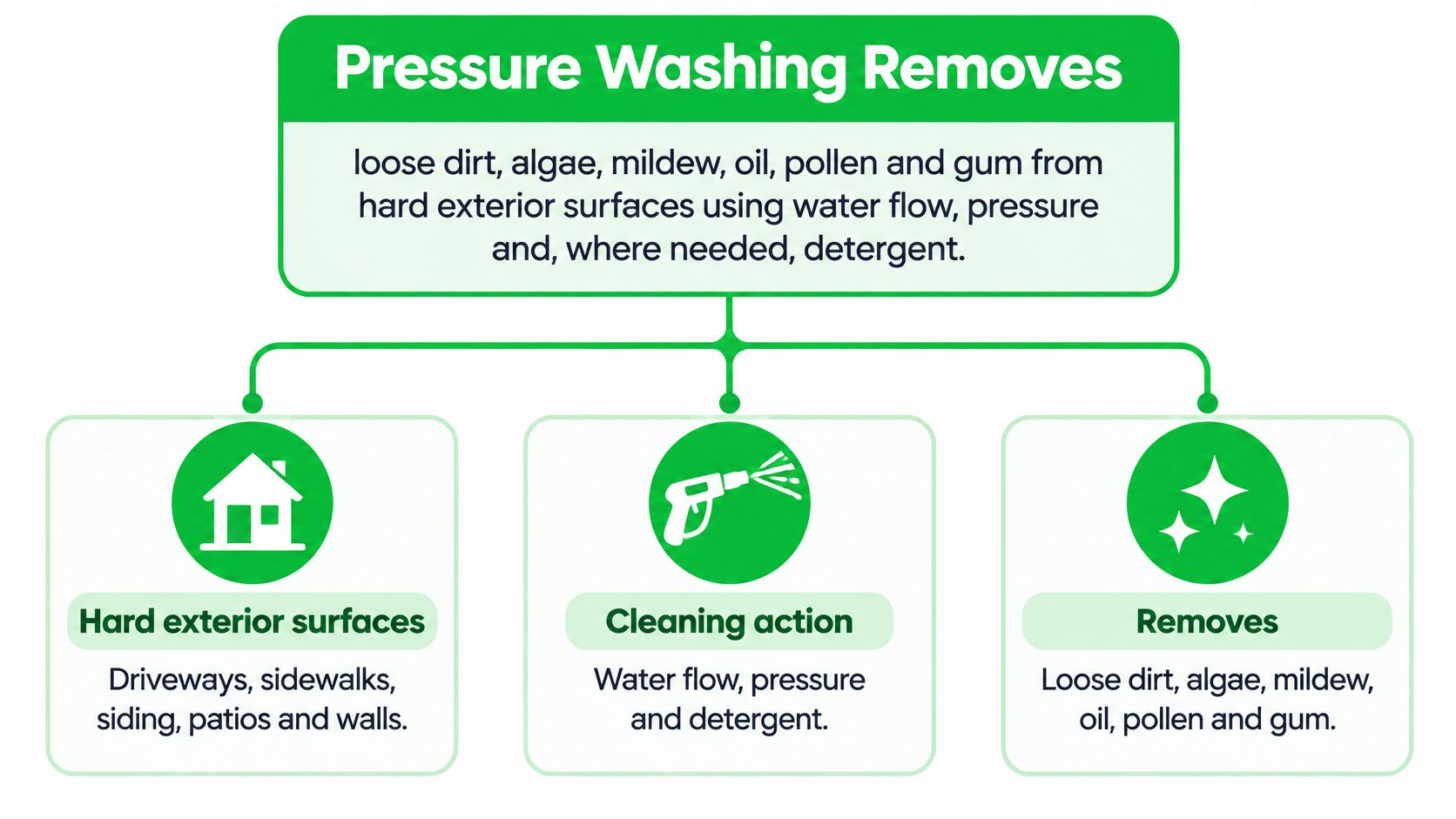
Pressure washing services remove loose dirt, algae, mildew, oil, pollen, and gum from hard exterior surfaces using water flow, pressure, and, where needed, detergent. The appropriate method changes with the surface. Concrete can tolerate an approach that would damage roof shingles or weathered cabin siding.
Common surfaces, buildup and service
| Surface | Typical buildup | Common service |
|---|---|---|
| Driveways and sidewalks | Oil, dirt, tire marks, algae | Surface cleaner with detergent |
| Home siding | Mildew, pollen, dirt | Low-pressure soft wash |
| Roof shingles and eaves | Algae, black streaks | Low-pressure soft wash only |
| Decks and patios | Graying, mildew, grime | Low-pressure wash, then sealing if needed |
| Garages and entry walkways | Oil drips, grease, tracked dirt | Detergent wash with spot treatment |
| Commercial lots and loading docks | Oil, grease, debris | Degreasing wash with runoff collection |
The service breaks down into surfaces, cleaning action, and the material being removed.
Start at the driveway and sidewalk. A surface cleaner helps produce an even finish, while oil and tire marks may need detergent before the cleaning pass. In garages and entryways, targeted treatment is more useful than repeatedly blasting the entire floor.
Around the house, siding needs a low-pressure soft wash rather than a concentrated jet. Roof shingles and eaves require gentle treatment, with the roof material's cleaning guidance taking priority. On decks, cleaning removes grime but doesn't repair degraded wood; let the surface dry and assess its condition before deciding whether sealing is appropriate.
Practical rule: Rinse loose dirt first, use suitable detergent for greasy or biological buildup, and reserve stronger mechanical cleaning for sound, dense materials.
The method grew from industrial steam cleaning for factories and fleets before households adopted it, as described in Cleaner Times' history of pressure washing.
We offer pressure washing for driveways, sidewalks, garages, roof shingles, roof eaves, and home siding. Every written quote should identify the surfaces included, the method for each surface, and runoff handling. Without those details, the service description is incomplete.
What Pressure Washing Costs in Flagstaff
Typical pressure washing price ranges
| Job | Flagstaff scope to price |
|---|---|
| Driveway | Measured area and any separate stain treatment |
| House exterior wash | Wall height, siding material, and access |
| Deck or patio | Washing, listed separately from restoration or sealing |
| Commercial lot | Containment, water collection, and disposal responsibilities |
Pressure-washing costs depend on the property and the work included, so compare written estimates for matching scopes rather than relying on a single typical price. The pressure washing service cost guide can help you identify what to discuss. Pine Country Window Cleaning offers a free estimate when you call to schedule.
What moves the price
Square footage affects labor time, but surface condition and runoff handling also shape the job. Open concrete with loose dirt differs from oil-stained concrete beside landscaping and a downhill storm drain. House washing costs can also vary with wall height, siding material, access, and water availability.
Ask the estimate to identify:
- Cleaning area and condition: Larger areas and embedded grime can require more labor or repeated treatment.
- Height and access: Upper walls and obstructed elevations can add complexity.
- Water and travel: Ask whether water availability or travel to a remote property affects the estimate.
- Wastewater management: Clarify how wash water will be contained, collected, and handled. Runoff must not be allowed to carry contaminants into storm drains.
- Minimum service charge: Setup and cleanup take time even on small jobs, so check whether a minimum applies.
A driveway-and-house example
For a driveway paired with upper-story siding, ask for separate line items. The driveway estimate should state whether detergent treatment for oil spots is included. The siding estimate should identify the soft-wash method and how the crew will reach upper walls. Include runoff handling and cleanup in the scope.
In Flagstaff, a low quote that leaves wastewater control unspecified may not reflect the full job. Freeze-thaw conditions also make timing and surface condition relevant: washing does not repair concrete damage or remove stains that have penetrated the material.
Some discoloration comes from aging or damage rather than removable dirt. A useful estimate distinguishes cleaning from restoration and sets a reasonable expectation for the result. Compare complete scopes, not just totals.
Hiring a Pro or Doing It Yourself
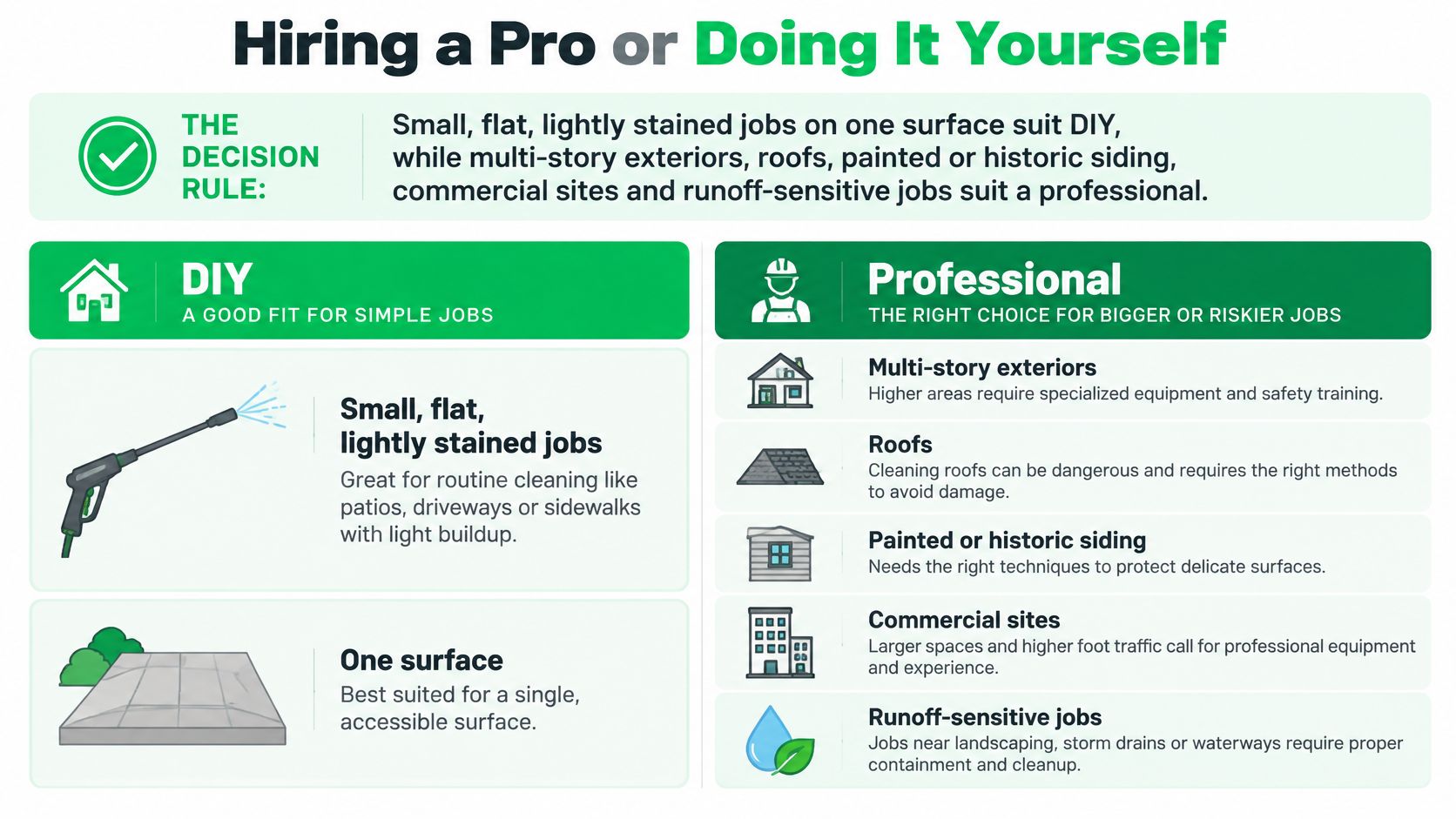
Small, flat, lightly stained jobs on a sound surface can suit DIY. Multi-story exteriors, roofs, historic or painted siding, commercial sites, and runoff-sensitive properties are better professional assignments.
This decision guide separates manageable ground-level work from jobs with more consequential risks.
Compare the whole job
A rented washer gives you a pump, hose, and spray gun. It doesn't automatically provide a compatible surface cleaner, appropriate detergent, wastewater recovery equipment, or a safe way to reach upper walls. When comparing equipment, resources such as outdoor equipment from Material Handling USA can help you identify equipment categories, but equipment availability isn't evidence that a particular setup suits your property.
Professional crews should bring trained operators, purpose-built tools, and insurance appropriate to the work. Request the insurance certificate and verify the covered operations rather than assuming every cleaning policy covers every exterior task. Our window cleaners are all background checked and industry safety trained.
The market offers plenty of choices: 32,193 pressure-washing businesses operated in the United States in 2024, according to IBISWorld data reported by Maxx Effect. That makes the written scope and operator qualifications more useful selection criteria than the mere availability of a contractor.
The rental-weekend trade-off
Say you rent a machine to clean a deck. A narrow tip raises the grain, a dark stain remains, and you angle the wand toward nearby lap siding to chase another mark. Water gets behind the boards.
The rental bill may be modest, but sanding damaged wood and repairing water intrusion can outweigh the saving. The practical comparison is rental plus your time plus possible correction, not rental versus a professional invoice alone.
Before taking on the work, consider the setup and handling involved in this pressure-washing video.
I would consider DIY for a straightforward driveway only after checking its condition and drainage. Hire a professional for the house, roof, and commercial site, where access, material damage, and wastewater responsibilities make mistakes harder to contain.
Safe Pressure Settings for Each Surface
A high-pressure stream can penetrate gloves and inject water beneath the skin. OSHA documents an incident involving water at 3,500 psi that penetrated safety gloves and caused a lacerating injection wound. An apparently small puncture after high-pressure contact needs urgent medical assessment.
Pressure is a safety parameter before it's a cleaning specification. A machine's advertised output doesn't establish a safe setting for your driveway, siding, or deck. Surface condition, nozzle selection, distance, and the cleaning chemistry all change the result.
Safe starting pressure approach by surface
| Surface | Safe starting point |
|---|---|
| Concrete driveway | Surface cleaner at lowest effective pressure, detergent on oil spots |
| Brick and mortar | Lowest effective pressure with a wide tip |
| Vinyl siding | Soft wash with detergent |
| Painted wood | Wide tip, test a small area first |
| Wood deck | Wide tip, spray parallel to the grain |
| Roof shingles | Soft wash only |
These are starting methods, not universal pressure approvals. Crumbling mortar, peeling paint, deteriorated wood, and damaged shingles may require repair or a different cleaning method altogether. Don't turn up the machine to compensate for a substrate that can't tolerate washing.
Decorative concrete deserves separate consideration. Concrete Resurfacing Products, Inc.’s guide to stamped patio cleaning for Atlanta homeowners is a useful companion when identifying a stamped surface rather than treating it like unfinished driveway concrete. The finish and sealer should inform the cleaning approach.
Set up before pulling the trigger
Begin with a wide spray pattern and the lowest effective pressure. Test an inconspicuous area, let the test reveal any change in texture or finish, and maintain a controlled distance during the main pass. Don't sweep closer to the surface just because a mark remains.
Follow these handling rules:
- Control the spray direction: Never aim at people, hands, feet, electrical components, window seals, or fragile trim.
- Isolate equipment before adjustments: Stop and depressurize the system before changing tips, hoses, or fittings.
- Protect the building envelope: Keep water from being forced upward beneath laps, flashing, and vulnerable joints.
- Treat chemistry as part of the setup: Use a surface-compatible cleaner, control dwell time, and prevent it from drying where that could damage the finish.
Pressure, flow rate, nozzle angle, water temperature, distance, dwell time, and chemistry work together. More pressure can etch concrete, strip paint, raise wood fibers, and drive water behind cladding. A remaining mark may need targeted treatment, or it may be permanent discoloration.
For siding-specific preparation, our vinyl siding pressure washing guide addresses that material separately.
Before authorizing work, have the written scope answer: What starting method will be used? Where will the crew test? Which defects or materials rule out pressure washing? A clear answer is more useful than a maximum-psi sales pitch.
Keeping Wash Water Out of Storm Drains
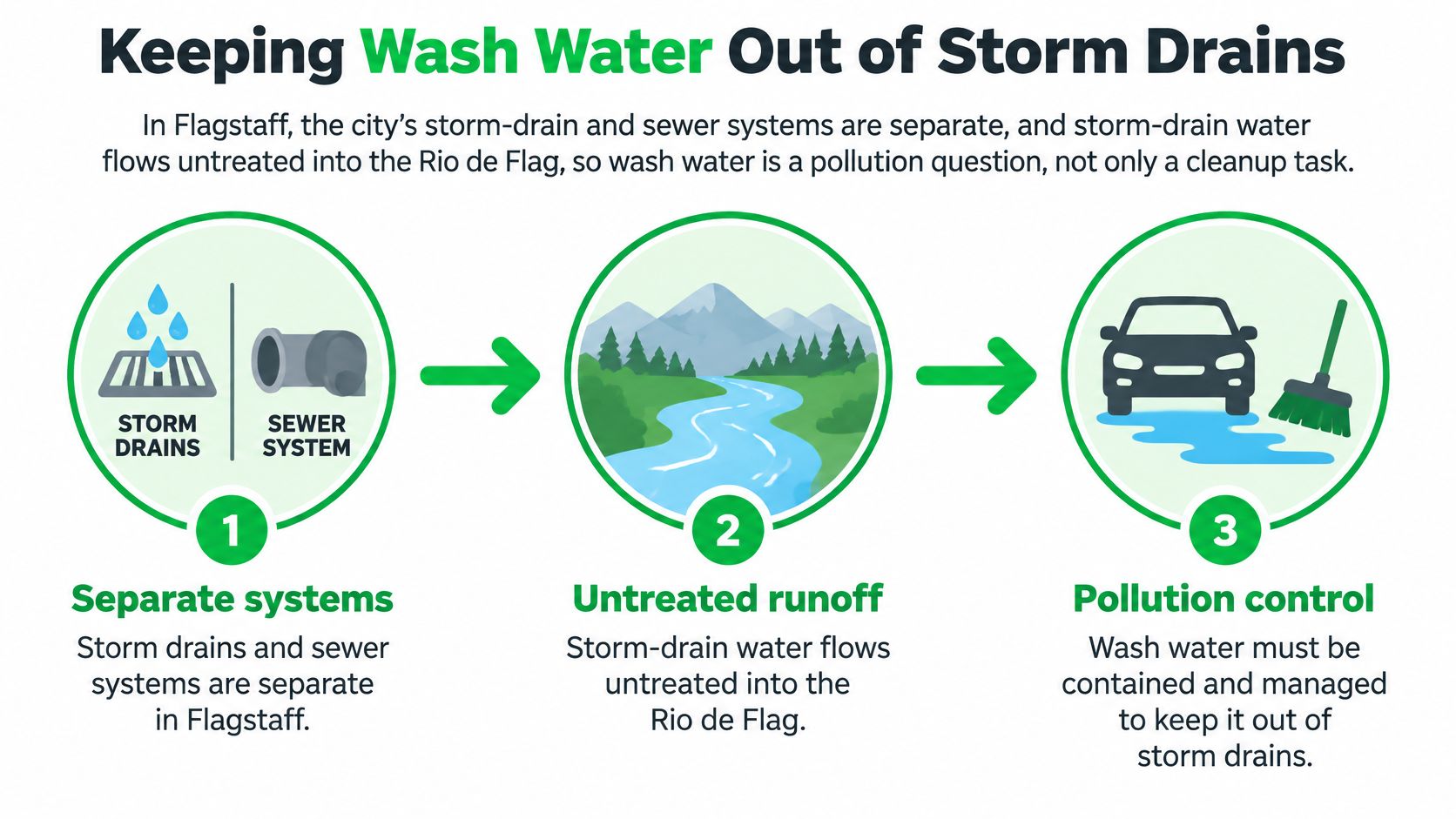
A clean driveway isn't a finished job if the crew sends dirty water into the street. Flagstaff's storm drains and sanitary sewer are separate, and storm-drain water flows untreated into the Rio de Flag; the city's stormwater program addresses polluted runoff and unauthorized discharges, as outlined in its water and stormwater information.
The route from property to waterway explains why containment matters.
Plan the discharge before washing
The EPA's pollution-prevention guidance recommends planning wastewater handling, dry-cleaning contaminants first, minimizing water and chemical use, and collecting polluted runoff. Put that into a site-specific sequence:
- Map drainage. Identify slopes, low points, driveway exits, and storm inlets before placing equipment.
- Remove dry contamination. Sweep or vacuum debris and absorb oil instead of spreading it with water.
- Protect inlets. Use suitable drain covers, berms, or booms, and check that water can't escape around them.
- Limit water and chemistry. Choose the least-toxic suitable detergent and use only what the cleaning requires.
- Recover contaminated water. Use a suitable wet/dry vacuum, portable sump, or recovery system when runoff contains detergent, oil, or substantial solids.
- Use an approved disposal route. Obtain authorization for sanitary-sewer disposal or arrange appropriate off-site disposal. Allow infiltration only where local rules permit.
- Avoid approaching rain. Don't begin when precipitation could overwhelm containment or carry loosened contamination off-site.
Match the controls to the property
Parking lots and loading areas should be assessed with collection as the starting assumption because vehicle residues and accumulated debris are common concerns. Older painted buildings need attention to loose coating material before washing starts. On sloped cabin sites, containment must address the downhill exit, not merely the nearest visible drain.
Hotels, dealerships, and campuses should retain a simple record of containment locations and wastewater disposal. Our eco-friendly pressure washing guidance provides additional context for planning exterior cleaning around the property.
A cleaner-looking surface doesn't justify a polluted discharge. More water and stronger detergent aren't automatically better service.
Discharge rules differ by jurisdiction. Confirm the approved route with the City of Flagstaff before work begins, and check the relevant authority for properties outside city limits.
When to Pressure Wash in Flagstaff's Seasons
Flagstaff's high-elevation conditions make freeze-thaw exposure and storm timing more important than a generic spring-cleaning date. A sunny afternoon isn't enough if wash water will remain on a shaded entrance when temperatures drop.
Flagstaff pressure washing calendar by season
| Season | Months | Best work | Timing risk to avoid |
|---|---|---|---|
| Spring | April-May | Full-property wash after the last hard freeze | Washing when overnight freezes are still forecast |
| Summer monsoon | July-August | Quick spot cleans between storms | Runoff surges during heavy rain |
| Early fall | September-October | Decks, siding and walkways before freezing | Late-season washing that leaves runoff to freeze |
| Winter | November-March | Snow removal only | Any washing, because runoff refreezes on walkways |
Treat these months as planning windows, not weather guarantees. The cold-climate homeowner guide to pressure washing and surface cleaning offers useful surface-cleaning context, but Flagstaff scheduling still requires the actual property conditions and local forecast.
Spring is the opportunity to inspect winter damage before committing to a full wash. Check aging mortar, peeling paint, and exposed wood rather than assuming every dirty surface is ready for cleaning. During monsoon season, keep the scope manageable and don't start work that an approaching storm could interrupt.
Early fall is the practical opportunity to address decks, siding, and walkways before sustained freezing. For winter planning, use snow removal rather than wet exterior cleaning.
Schedule around occupancy and repairs
Cabins and second homes in Munds Park, Forest Highlands, and Pine Canyon need schedules that match access and visits. Arrange cleaning before arrival or rental turnover, leaving time for drying and any follow-up maintenance. Inspect gutters and downspouts too, especially where discharge could reach steps or shaded paths.
Wildfire ash, soot, and bird waste can accumulate between stays. Assess residue before washing, remove loose material appropriately, and arrange suitable cleaning before sustained freezes rather than leaving contamination through another season. Don't assume every ash-covered surface should receive an immediate high-pressure rinse.
- Deck condition: Inspect connections and deteriorated wood before cleaning. If repairs involve fasteners, the XTREME EDEALS INC. guide to sizing anchors for deck post bases is a planning reference, not a substitute for structural assessment.
- Commercial documentation: Log the service date, areas cleaned, runoff controls, photos, and defects.
- Property access: Coordinate keys, gates, parked vehicles, and guest arrivals before the crew travels.
The best maintenance appointment leaves enough weather margin to finish, dry, and address defects without creating an icy access route.
Booking Your Pressure Washing Service
A driveway wash scheduled just before a Flagstaff freeze can leave runoff on the pavement when temperatures drop. When booking, discuss the surfaces, drainage, and timing together so the job can be scoped around the property's conditions.
Prepare a comparable scope
- List the surfaces and their condition. Name the driveway, sidewalks, garage, siding, or roof areas to be cleaned. Note stains, worn materials, and access restrictions. Photos can help describe the work, especially at a cabin that is not occupied year-round.
- Clarify the work and runoff plan. Ask what method will be used on each surface, how wash water will be managed, and what cleanup is included. Identify delicate or damaged areas that may need a different approach.
- Compare equivalent estimates. Check which surfaces and tasks each estimate covers before comparing totals. A lower estimate may reflect a smaller scope or different cleanup responsibilities.
Coordinate care for the whole home
Pine Country Window Cleaning offers pressure washing for driveways, sidewalks, garages, roof shingles, roof eaves, and home siding, alongside window and gutter cleaning. Window cleaning uses filtered pure water delivered through a pole fitted with a soft brush, rather than pressure washing glass.
Pine Country has served Northern Arizona since 1999 as a locally owned and operated business. Customers can schedule online or call (928) 527-0671. A friendly staff member can visit to look at the home, building, or project, and customers can request a free estimate.
Before confirming a date, ask how the planned wash fits the site's drainage and the forecast. In Flagstaff, runoff that reaches a storm drain or shaded pavement can create problems, especially as temperatures approach freezing. A clear scope and suitable weather window help avoid surprises.