
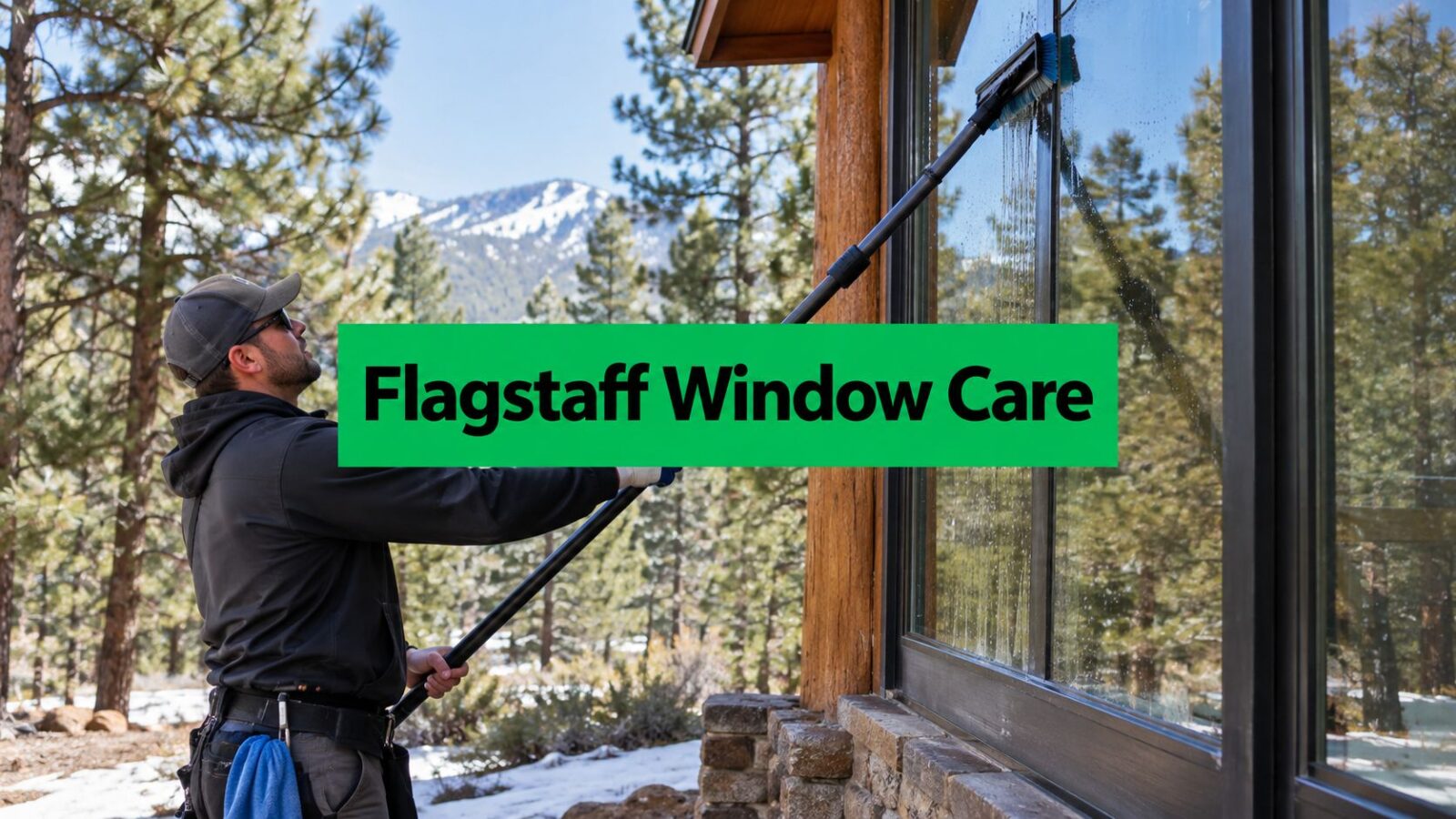
The sun reaches your living room before you've finished your coffee, and suddenly every mark on the glass shows. Outside, snowmelt has dried along the lower panes, grit has collected in the screens, and the mountain view looks duller than it should. Good window washing in Flagstaff, AZ starts with those conditions, not with a generic cleaning calendar.
A Flagstaff Morning That Sets the Scene
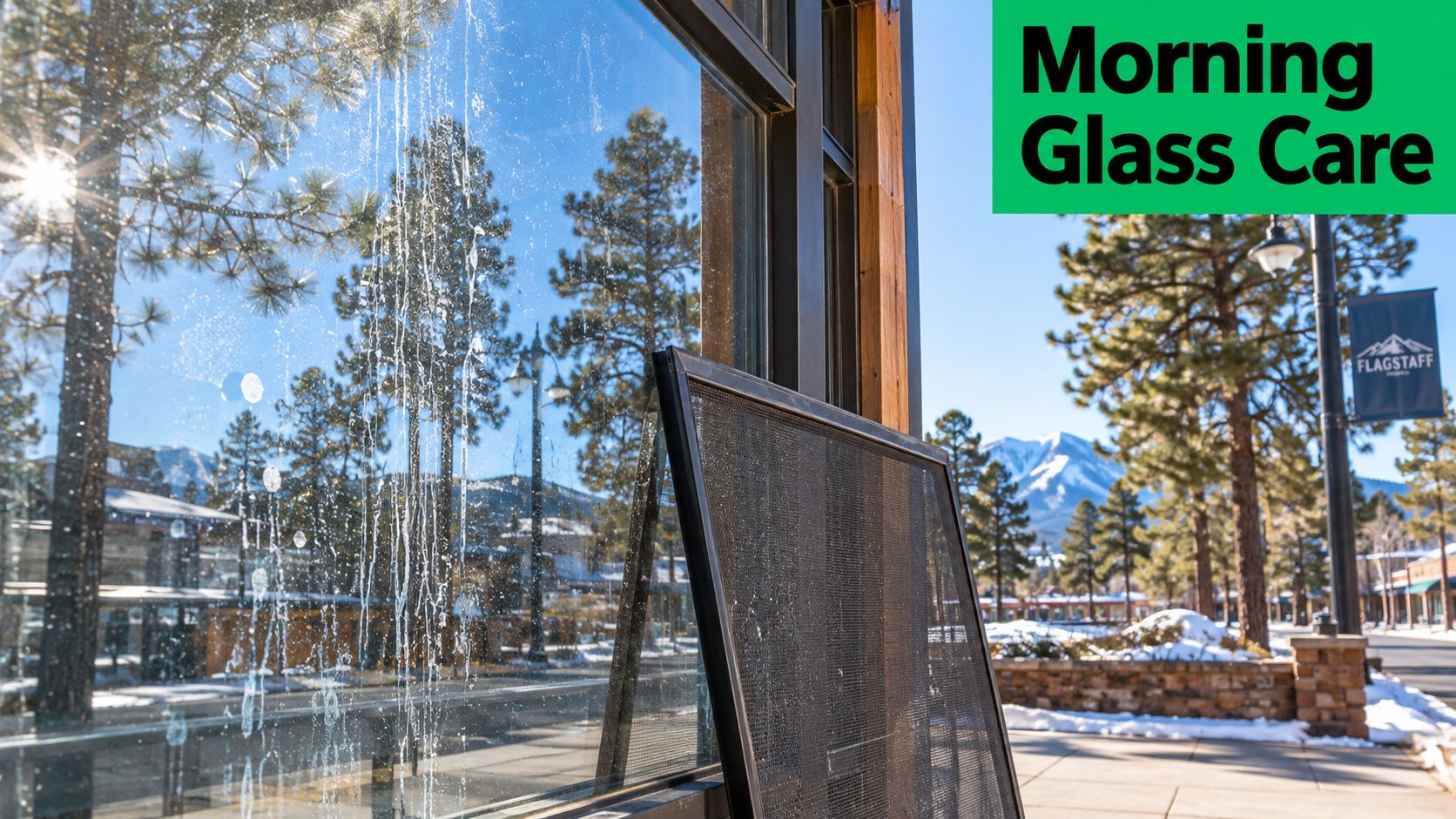
Sunlight catches the ponderosa branches while the shaded side of the house still feels like winter. Yesterday's snow has slipped off the roof, leaving splash marks below. Through the kitchen window, you can see the outline of yesterday's meltwater, but you can't immediately tell whether the remaining haze is outside, inside, or between the panes.
Across town, a property manager faces a different version of the same problem. The entrance glass needs attention before customers arrive, but the upper panes sit above a busy walkway. Reaching them isn't a reasonable job for whoever happens to have a ladder.
The familiar view below shows why clear glass matters, but the surrounding conditions determine how to get there.
Read the property before choosing the method
Flagstaff Airport's 1991–2020 climate normals report approximately 20.5 inches of annual precipitation, 90.1 inches of snowfall, and annual average high and low temperatures of 61.8°F and 31.9°F, respectively, according to the Flagstaff climate summary. Those conditions make exterior maintenance a weather-dependent job rather than an appearance-only appointment.
A useful starting inspection separates the problems:
- Glass condition: Identify loose soil, water marks, persistent deposits, or haze that may not be accessible from either surface.
- Surrounding condition: Look at screens, frame edges, sills, and drainage openings.
- Working conditions: Check shaded ground, overhead exposure, pedestrian routes, and the temperature of the glass.
The homeowner and property manager need the same basic answer: what can be cleaned now, what requires different treatment, and what should wait? A dependable crew answers those questions before unloading equipment.
What a Professional Window Cleaning Actually Involves
A complete service starts with a walk-through, not a wet window. Before work begins, identify fragile screens, existing damage, difficult latches, furniture near the glass, and any rooms that need special coordination. This is also the time to agree on interior and exterior scope so nobody assumes that tracks, restoration work, or inaccessible panes are automatically included.
Customer care belongs in that conversation. Ask where technicians should enter, how pets will be kept clear, which furnishings need protection, and whether gates must remain closed. Respecting someone's home means making those arrangements before carrying equipment through it.
A sensible cleaning sequence
The work should follow an orderly progression rather than moving randomly between windows:
- Inspect and organize: Note existing concerns and keep removable components associated with their original openings.
- Remove and clean screens: Our published screen-care process includes carefully removing every screen, cleaning it, and reinstalling it after the glass work, with every service.
- Prepare the surrounding surfaces: Address loose debris and agreed frame or sill cleaning before finishing the pane.
- Clean and finish the glass: Apply the appropriate professional method, draw off the solution with a squeegee where suitable, and detail the edges.
- Check the completed opening: Review the finish, reinstall the screen, and flag anything that needs repair rather than further cleaning.
For a home or cabin, that final check should include a conversation about anything the owner might otherwise mistake for missed dirt. A permanent mark, damaged component, or inaccessible defect deserves a clear explanation.
Practical rule: Ask what “complete” includes before comparing prices. A glass-only proposal and a full-service visit aren't equivalent scopes.
Owners coordinating several contractors can also use Zeus Command Hub to browse service capabilities while organizing their vendor questions. For the window-cleaning agreement itself, insist on a written description of the actual work, exclusions, and responsibility for putting everything back.
Why Flagstaff's Climate Changes the Cleaning Calendar
A fixed annual appointment may suit one sheltered home and leave another visibly overdue. Condition-based scheduling is more useful: inspect after the events that affect your property, then clean when the work will produce a worthwhile result.
The National Weather Service reports average snowfall of approximately 90.1 inches between October and May at Flagstaff Pulliam Airport, supporting the need to plan around snow and melt cycles rather than assume year-round working conditions are interchangeable (Flagstaff National Weather Service office information). Snowfall alone, however, doesn't establish the right cleaning frequency.
Use the seasonal calendar as an inspection guide rather than a promise that every property needs the same appointment dates.

Match the trigger to the exposure
| Season | What to inspect | Practical scheduling decision |
|---|---|---|
| Winter | Meltwater marks, lower-frame debris, shaded working areas | Inspect after major melt cycles and wait for suitable conditions |
| Spring | Dust on glass and screens, especially near unpaved roads | Coordinate cleaning with reopening, showings, or increased occupancy |
| Summer | Fresh spotting and debris after monsoon weather | Assess the result after the weather passes rather than repeatedly cleaning during it |
| Fall | Needles, leaves, and debris around frames | Address accumulated material before colder conditions limit access |
Smoke and haze warrant a similar approach. Inspect after the event has cleared, but don't treat active smoke or strong wind as a sensible opportunity for routine exterior work.
Separate interior needs from exterior needs. A cabin's outside glass may need attention while its lightly used interior remains presentable. A rental may need targeted interior touch-up between guests without requiring a full exterior visit at every turnover.
For a property-specific starting point, review how often windows should be cleaned, then adjust for tree cover, road exposure, orientation, and use. The useful schedule is the one that responds to observable conditions, not the one with the most appointments.
Tools Crews Use to Reach and Finish the Glass
Choose the access method first, then the cleaning method. A pane that looks straightforward from the driveway may sit above an awkward roof, behind landscaping, or beside a public entrance. The right equipment lets technicians work from a suitable position without making the building or occupants accommodate an improvised setup.
Professional squeegees, extension poles, and pure-water brushes serve different purposes. They aren't competing signs of quality, and a capable crew may use several methods on the same property.
Squeegees and pure-water brushes
A squeegee gives the technician direct control over solution removal and finishing. It's useful where the glass can be reached from an appropriate working position and where interior surroundings require controlled water handling.
For suitable exterior glass, a pure-water brush system delivers purified water through a pole-mounted brush. The technician works the surface and rinses it rather than removing the water with a squeegee. Our professional equipment guide provides context for discussing these choices with a contractor.
The trade-off is access and control. Pole work can reduce the need for ladders on raised exterior panes, but geometry, obstructions, and the ability to inspect the finish still matter. Pure water isn't a substitute for assessing stubborn deposits or damaged glass.
Ladders and powered access
Our access-equipment information identifies in-house boom lifts, scissor lifts, and a 95-foot atrium lift, alongside ladders, poles, and pure-water systems. Equipment availability expands the options, but the site assessment still determines which option belongs on the job.
| Equipment | Useful application | Question that decides suitability |
|---|---|---|
| Ladder | Localized work with a suitable setup position | Can it be positioned and secured without obstructing occupants? |
| Boom lift | Glass requiring reach around an obstruction | Is there adequate positioning space and an appropriate operating area? |
| Scissor lift | Work approached primarily from directly below | Does the route and supporting surface suit the equipment? |
| Atrium lift | Difficult interior or constrained access | Can it enter, travel, and operate within the building's limits? |
A hard surface isn't automatically a safe ladder location. Slope, slipperiness, doors, and pedestrian movement all deserve attention. Likewise, roof anchors shouldn't be assumed usable just because they're visible.
The right tool is the one that fits the entire work area, not just the height of the window.
What to Ask Before Approving Work at Height
High-access work deserves a procurement conversation before anyone arrives with equipment. The building owner should understand the proposed method, the contractor's responsibilities, and the conditions that could stop the job.
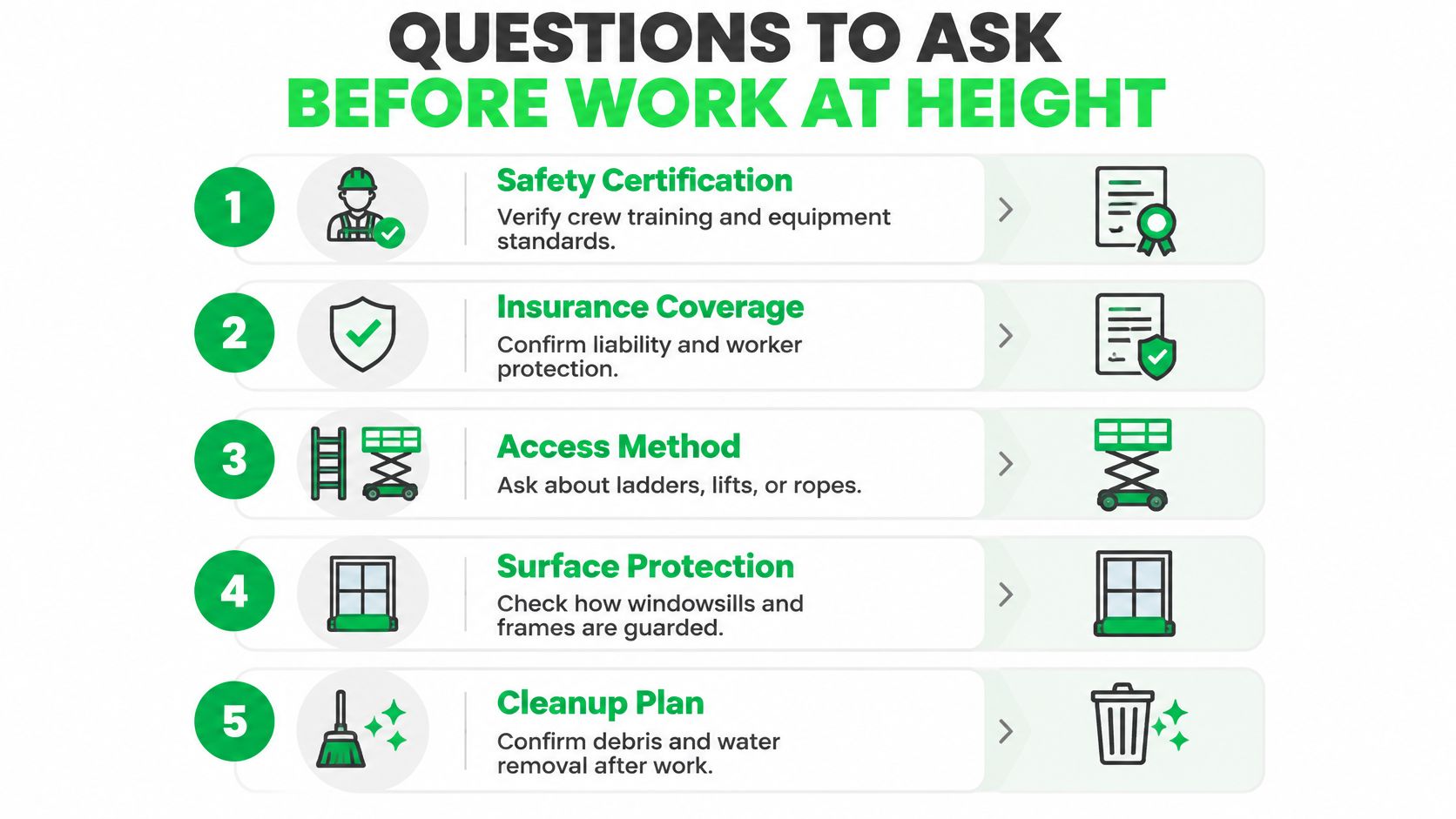
Use this checklist to organize that conversation, then ask for project-specific answers rather than a general assurance.
Require a plan that matches the building
OSHA rules for scaffolds and rope-descent systems include inspection and fall-protection requirements, and building-owner anchorage information must be available before rope descent is used, as outlined in this overview of OSHA window-cleaning requirements. That makes documentation part of planning, not paperwork to sort out after arrival.
Ask the contractor:
- Why this access method? Request an explanation tied to the building, ground conditions, glass location, and surrounding activity.
- Who supplies and inspects equipment? Establish responsibility for delivery, pre-use checks, operation, and removal.
- What training applies? Ask for documentation relevant to the proposed equipment and work, rather than relying on a vague safety claim.
- What protects occupants and property? Confirm exclusion zones, entrance management, surface protection, and coordination with building staff.
- What happens during an emergency? Require an appropriate emergency or rescue plan and identify who makes weather-related stop-work decisions.
- What insurance documentation is available? Obtain the relevant coverage information before authorization.
A visual reference can help frame the access discussion, but it doesn't replace the contractor's written site plan.
The lowest quote may still be reasonable, but only when it covers the same access responsibilities. If one proposal includes lift coordination and pedestrian controls while another leaves them undefined, you aren't comparing equivalent jobs.
These questions aren't accusations. They let a hotel manager, campus representative, or building owner approve the work with a clear understanding of what will happen.
Homes, Cabins, Rentals, and Commercial Properties
The property category changes the service priorities. A family home needs careful coordination around occupants and belongings; a commercial building may require staged access around customers. Neither should receive a scope written for the other.
Flagstaff also supports a substantial visitor-facing property market. The broader housing-market-area figures supplied for this market include an estimated 145,500 residents and approximately 16,000 leisure and hospitality jobs, representing 23% of nonfarm payroll employment; the Flagstaff Census profile provides local demographic context. For maintenance planning, the practical distinction is who uses the building and when they need access.
Choose scope around use, not just appearance
| Property | Main planning concern | What to clarify |
|---|---|---|
| Family home | Privacy, furnishings, pets, and daily routines | Interior access, protected areas, and completion walkthrough |
| Cabin or second home | Owner absence and reopening arrangements | Entry authorization, condition reporting, and secure departure |
| Short-term rental | Guest arrival deadlines | Whether the turnover needs inspection, targeted work, or full service |
| Commercial facility | Public access and operating hours | Staging, restricted areas, equipment routes, and staff coordination |
For cabins and second homes in Forest Highlands, Pine Canyon, Munds Park, and Flagstaff Ranch, provide access instructions before the appointment. Explain gates, parking restrictions, alarm arrangements, and who can authorize additional work if the inspection identifies a concern. An absent owner benefits more from a specific condition report than a vague completion message.
Short-term rentals on Airbnb and Vrbo need a realistic handoff window. Don't schedule equipment removal against the exact moment guests are expected to arrive. Agree on who verifies the finished work and whether housekeeping will still be operating inside.
Keep adjacent work explicit
Retail storefronts and dealerships often prioritize customer-facing glass, while hotels, NAU facilities, medical buildings, and high-rise properties may need phased work. For these sites, divide the proposal by work area and access requirements rather than treating the whole building as interchangeable.
Gutter work, pressure washing, and post-construction cleaning should be separately described if they're being considered. Don't assume a window-cleaning quote includes them, and don't let a broad “exterior cleaning” label obscure what happens at each surface.
The useful comparison is scope against scope. Property type explains the priorities, but the actual building determines the work.
Pricing, Scheduling, and What Drives a Real Quote
A useful quote explains the labor, access, and condition of your property. A generic price per window can hide differences between a straightforward pane and a divided opening with difficult access.
Request a written estimate identifying what counts as a window, which surfaces are included, and which conditions require separate approval. The illustration below identifies common pricing inputs; any example amounts shown should not be treated as published rates or a quote for your property.

Compare the full written scope
Use the residential window-cleaning cost guide to frame your estimate questions, then confirm the details that apply to the building:
- Glass quantity and configuration: Record pane size, divided sections, and unusual glazing.
- Included components: Confirm screen handling and the agreed extent of frame, sill, and track work.
- Access requirements: Identify interior obstructions, raised areas, and specialized equipment.
- Surface condition: Separate routine maintenance from construction residue, mineral treatment, or restoration.
- Related services: List gutter work or pressure washing independently if included.
A free estimate should clarify the proposed scope and exclusions, not merely supply a total. Ask whether photos are sufficient or a site visit is needed. Also ask directly about seasonal discounts, recurring-service arrangements, and time-sensitive rental turnovers; don't assume any discount or surcharge exists.
Agree on the weather decision
Technicians should assess glass temperature, wind, sun exposure, and overnight freezing risk before water-based exterior work. Cleaning solutions can freeze on cold glass, while rapid drying in direct sun can leave an uneven finish. A workable appointment includes permission to adjust the sequence or reschedule.
For managers organizing several vendors, Voicedial.ai's guide to home services appointment setting offers a related resource for the booking conversation. Keep the actual agreement specific: arrival window, access contact, weather notification, and completion confirmation.
Before approving: Ask what happens if a pane is missed, weather interrupts the visit, or an existing defect becomes visible afterward.
Dispatch availability and guarantee terms should come from the contractor's current confirmation. Don't build a guest turnover or property showing around an unconfirmed turnaround.
Thinking Beyond the Streak and Toward Real Care
Clear glass is the visible result. Good property care is the work surrounding it: choosing suitable access, protecting occupied spaces, communicating limitations, and leaving the home or business orderly.
Our company was founded in 1999 by Flagstaff native David Kaminski and describes itself as Flagstaff's largest window-cleaning company, with professional squeegees, ladders, extension poles, and pure-water brushes identified in our window-washing service information. Local roots matter most when they translate into accountability, not just a line in a company history.
Know when cleaning isn't the repair
Recurring moisture deserves diagnosis rather than repeated cleaning. Moisture on the room-facing surface generally relates to humidity and cold glass, while persistent fogging between sealed panes points toward an insulating-glass seal problem that cleaning can't correct, as explained in Vitro's condensation guidance.
That distinction captures the standard worth expecting from a professional crew: explain what the service can accomplish and identify what needs another solution. Caring for customers means being candid about both.
The right maintenance program leaves you with more than a clearer view. It gives you an understood scope, a sensible next inspection point, and confidence that someone paid attention to the property.
Pine Country Window Cleaning offers professional residential and commercial window washing, including screen removal, cleaning, and reinstallation, with equipment for challenging access. Visit Pine Country Window Cleaning to request a free estimate and discuss a weather-aware plan for your home, cabin, rental, or facility.