

You've received a window cleaning quote that sounds either surprisingly low or unnecessarily complicated. The total may be based on “windows,” while the crew is really cleaning dozens of separate panes, working around landscaping, moving ladders, protecting interior furnishings, and handling screens. To estimate window cleaning prices accurately, you need to look beyond the headline number and understand what the job requires.
A professional estimate starts with pane count, then adjusts for access, condition, equipment, labor, travel, overhead, and the level of care your property needs. That approach gives homeowners, cabin owners, and facility managers a much clearer way to compare quotes without sacrificing safety or quality.
Understanding Baseline Window Cleaning Costs
A homeowner in Northern Arizona may receive three very different prices for what sounds like the same visit. One company may count each opening as a window, while another counts every separate pane, includes screen washing, or allows for interior access and setup. Start with the glass units, then price the work required to reach and clean them properly.
Broad U.S. benchmarks place residential service around $8–$16 per window, $4–$15 per pane, and approximately $150–$302 for a typical home visit, according to HomeAdvisor's window cleaning cost guide. These figures help set expectations, but they are not a quote. A compact, accessible home may sit near the lower end. A larger property with many panes, screens, or restricted access needs a different calculation.
A 2026 pricing guide illustrates the difference between general averages and a measured estimate. It puts a standard house with 22 double-hung windows at about $310, with commonly cited labor equivalents of $40–$75 per cleaner and $45–$75 for residential hourly work. For commercial service, it lists roughly $0.10–$0.35 per square foot or $50–$100 per hour, depending on scale and access. These ranges explain why experienced cleaners count the work before adjusting the price.
Choose the pricing unit that fits the job
Per-window pricing suits homes where the units share similar designs and access. Per-pane pricing gives a clearer scope for double-hung windows, divided lights, sidelights, and other openings containing several separate pieces of glass.
Hourly pricing fits work that cannot be standardized easily. Commercial buildings, heavily soiled glass, post-construction cleanup, and complicated access can require very different labor from one visit to the next. The same estimating factors also affect residential quotes, as outlined in this guide to factors affecting residential window cleaning cost.
| Pricing model | Best fit | What to clarify |
|---|---|---|
| Per window | Similar residential units | How many panes count as one window |
| Per pane | Multi-pane homes and detailed residential work | Whether fixed and operable panes differ in price |
| Per square foot | Larger commercial glass areas | Whether access and setup are included |
| Hourly | Complex or unpredictable jobs | Crew size, equipment, and minimum charges |
A clear quote identifies the glass count, interior and exterior scope, screens, access conditions, and travel. Compare that scope rather than choosing by total alone.
Practical rule: A low quote is not a bargain if it excludes panes, screens, interior glass, difficult access, or travel.
Evaluating Access Complexity and Building Height
A ground-floor pane beside an open walkway doesn't require the same planning as glass above a steep roof, behind dense shrubs, or over a fragile patio. The cleaner must evaluate height, reach, setup time, footing, obstacles, and safe equipment placement before assigning a price.
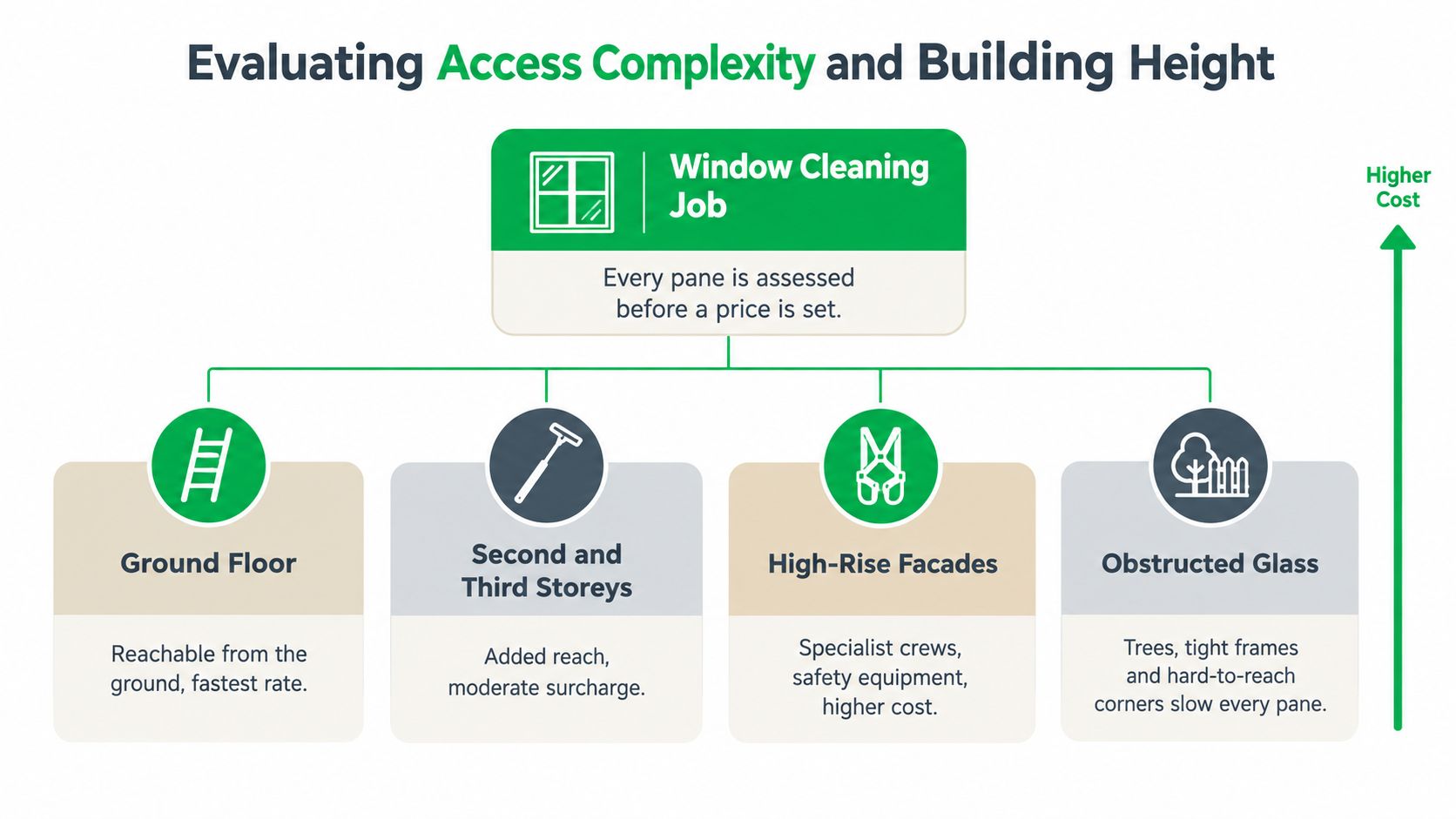
The difference becomes clear above the second floor. One widely used pricing guide reports an average range of $10–$40 per window above the second floor, compared with roughly $8–$16 per window overall, because work at height requires additional equipment and safety measures. The figures come from HomeGuide's window cleaning pricing guide, which also notes that commercial or high-rise work can reach approximately $170 per hour in some markets.
What makes access expensive
Building height affects more than the cleaner's reach. A technician may need an extension pole, specialized ladder configuration, lift, rope-access system, or another platform. Each option brings setup, transport, inspection, and safe-working requirements.
Roof pitch and ground conditions matter just as much. A second-story window above a flat driveway may be straightforward with the right pole. The same window above a sloped roof, retaining wall, or uneven ground needs more careful positioning and may require equipment that takes longer to deploy.
Landscaping and architectural obstacles also add time. Shrubs, fences, awnings, balconies, narrow side yards, and decorative features can prevent direct access. Moving equipment repeatedly for a small group of panes can make those panes disproportionately costly.
For commercial properties, the estimator must also consider pedestrian traffic, operating hours, loading areas, parking restrictions, and the need to keep entrances usable while work proceeds. A hotel, dealership, or campus may need sections cleaned in stages rather than in one uninterrupted visit.
Safety is part of the service, not an optional surcharge. A quote should account for the equipment and labor required to protect technicians, occupants, landscaping, glass, and surrounding surfaces.
A professional won't reduce a height-related price just by rushing. That may shorten the visit, but it increases risk and can produce missed edges, incomplete frames, or unsafe ladder placement. The better trade-off is to use the equipment class that matches the building and explain the access adjustment before work begins.
Building a Professional Pricing Workflow
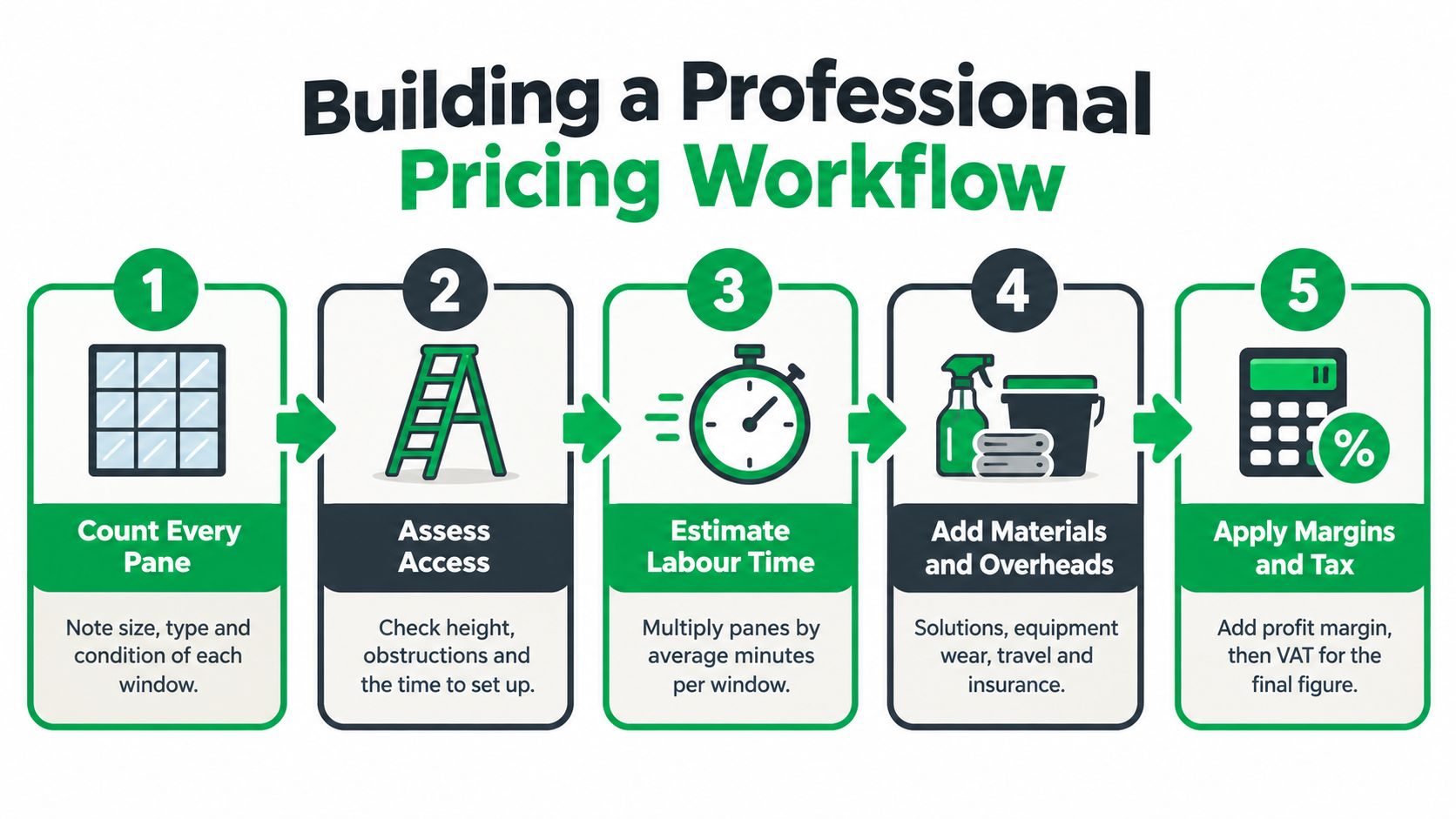
An accurate estimate should be reproducible. If two estimators inspect the same property, they may propose different prices, but both should be able to explain how they reached them. The most dependable method starts with a property survey and builds the final figure from the actual work involved.
Start with the glass, not the house
Count every pane. Record whether each pane is fixed, operable, divided, oversized, skylit, or part of a door. Note interior, exterior, or both-sided service, because “one window” can represent very different amounts of work.
Then mark condition. Construction dust, paint, adhesive, mineral deposits, heavy pollen, and long-neglected buildup may require a separate restoration or post-construction process. Don't bury that work inside a basic maintenance rate, because it distorts future pricing and creates disagreements about what the quote includes.
Build the full cost stack
A professional quote should account for:
- Labor, including cleaning, screen handling, setup, breakdown, and property protection.
- Materials, such as cleaning solution, rubber, replacement wear parts, and protective supplies.
- Travel, especially for cabins, second homes, remote properties, or multi-site routes.
- Overhead, including insurance, vehicles, equipment maintenance, training, scheduling, and administration.
- Target profit, which allows the company to maintain equipment, retain skilled technicians, and stand behind the work.
This is the same broad discipline used in other service businesses. For a wider explanation of cost structure and margin decisions, how to price home service jobs offers useful context without replacing a property-specific inspection.
Benchmarking 3–5 comparable quotes for a standard 20–30 window residential job can help identify an outlier, as noted in this window cleaning quoting workflow. Treat that comparison as a sanity check only. A competitor may have excluded screens, interior work, travel, or difficult panes, so matching the lowest figure can create an underbid rather than a competitive offer.
For commercial properties, a dedicated commercial window cleaning cost calculator can help organize the variables, but the final estimate still needs a site-specific review. The strongest quote makes assumptions visible instead of hiding them in a single attractive total.
Professional Equipment and Comprehensive Screen Care
Professional window cleaning isn't an upgraded version of wiping glass with household supplies. It uses equipment selected for the surface, height, access conditions, and finish required.
Rags can leave lint and redistribute dirt. Windex and similar household products may leave residue when used with unsuitable cloths or techniques. Newspaper is inconsistent, can transfer ink, and doesn't address the frames, edges, screens, or access risks that come with a full service. These methods may have a place for a quick touch-up on reachable interior glass, but they aren't a professional system.
The equipment changes the result
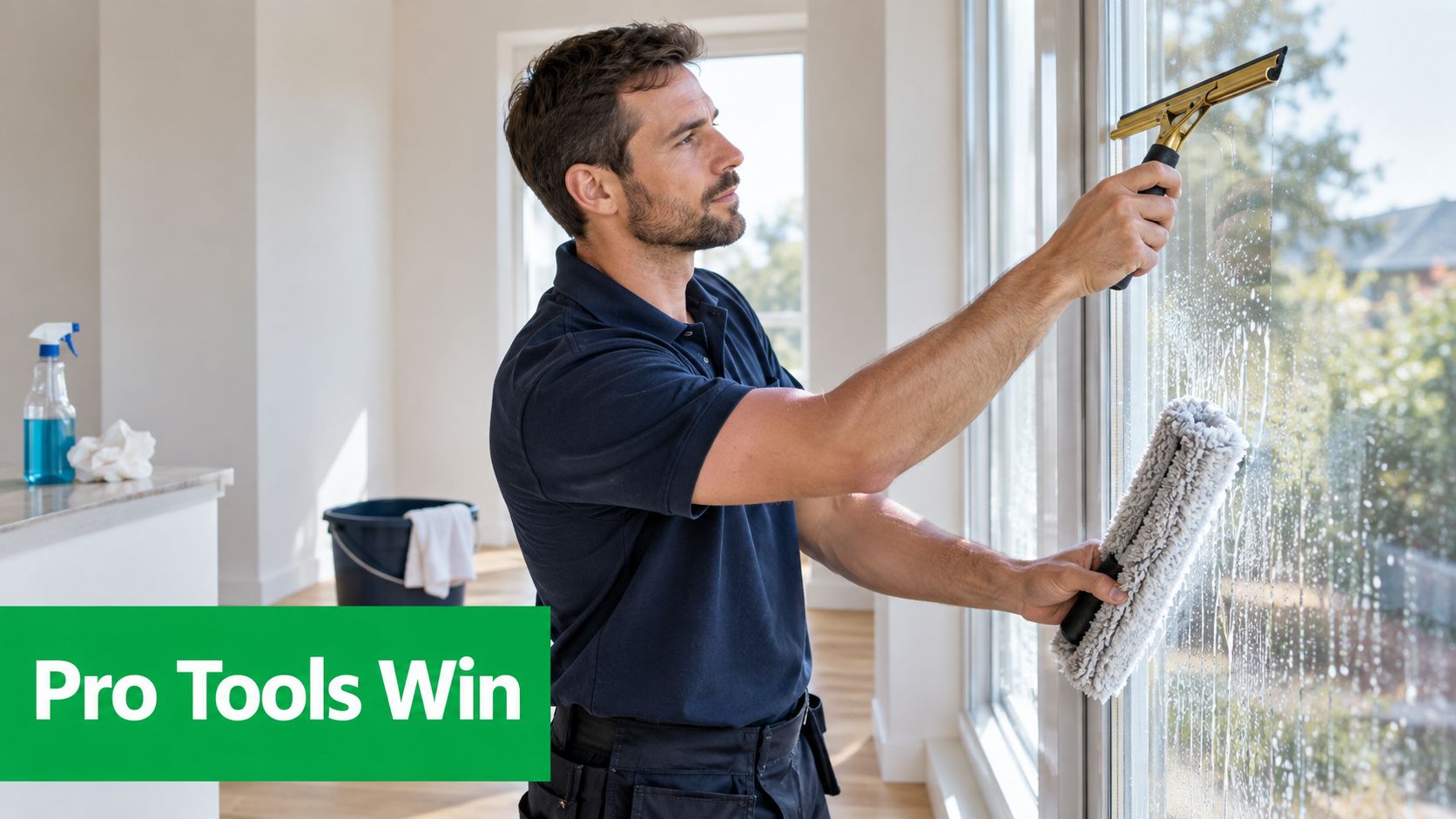
A professional crew may combine squeegees, ladders, extension poles, scrubbers, and pure-water brushes. Squeegees provide controlled results on accessible glass. Ladders handle selected areas when stable placement is available. Water-fed poles and pure-water systems allow technicians to rinse glass from the ground in suitable applications, reducing ladder movement and helping reach upper panes efficiently.
Pure-water cleaning also changes the workflow. The brush agitates the glass and frames, while purified water dries without the same mineral residue associated with ordinary tap water. The system isn't appropriate for every surface or condition, so an experienced technician still has to assess the glass and surroundings.
A useful overview of specialized tools appears in this guide to professional window cleaning tools. The important point isn't owning a long equipment list. It's matching the right tool to the pane without creating unnecessary risk or damaging seals, screens, frames, roofing, or landscaping.
Screen care belongs in the scope
Screens collect dust, pollen, insects, and fine debris. Leaving them in place can mean the glass looks cleaner while the openings around it remain visibly dirty. Removing them also gives the technician a chance to inspect fit, frame condition, and damaged mesh before reinstalling them.
With every service, Pine Country Window Cleaning removes screens, hand-cleans them, and puts them back in place as part of standard window washing, as described in its window washing service details. That level of handling takes time, and a quote that includes it should reflect the labor rather than treating screen care as invisible.
The same property-care standard applies indoors. Technicians should use drop cloths or other protection where needed, avoid dragging equipment across floors, communicate about furniture and fragile items, and leave the work area orderly. Clean glass matters, but so does the condition of the home when the crew leaves.
Navigating Commercial Contracts and Local Market Factors
A commercial quote should make service predictable for the buyer and workable for the cleaning crew. Hotels, campuses, dealerships, medical buildings, and storefronts have different access, scheduling, and disruption concerns. The contract should define the glass, service frequency, working hours, equipment, and response expectations before the first visit.
Commercial work is often priced around $0.10–$0.35 per square foot or $50–$100 per hour. Some high-rise markets reach approximately $170 per hour, according to the market ranges summarized earlier. These figures provide context, not a shortcut. A storefront maintenance visit requires a different crew plan and risk assessment than rope-access facade work.
Recurring service changes the economics
Monthly or quarterly maintenance generally costs less per visit than one-time cleaning because technicians remove less accumulated buildup and can plan routes and staffing consistently, as explained in this overview of commercial window cleaning rates. A recurring agreement can also specify priority glass, interior service timing, door and screen handling, and the process for unusual conditions.
A useful commercial scope answers practical questions:
- Service areas: Which elevations, entrances, interior spaces, skylights, and glass doors are included?
- Frequency: Will visits occur monthly, quarterly, seasonally, or on a custom schedule?
- Access: Are lifts, water-fed poles, rope systems, or after-hours setup required?
- Coordination: Who provides access, moves obstacles, and approves completed work?
- Exceptions: How will construction debris, mineral staining, damaged screens, and weather delays be priced?
A pane count still matters on a contract. It gives the buyer a way to verify that the crew is servicing the agreed glass, while giving the company a basis for estimating labor when access or conditions change.
Northern Arizona needs local judgment
Flagstaff and surrounding Northern Arizona properties may include cabins, second homes, steep sites, high elevations, seasonal occupancy, and commercial buildings with limited access. A local estimator can account for route planning, property layout, weather exposure, and the practical constraints of working around residents, guests, customers, and staff.
Pine Country Window Cleaning says it was founded in Flagstaff in 1999 by Flagstaff native David Kaminski and identifies itself as Flagstaff's largest window cleaning company, according to its Flagstaff company history. That history provides useful context for local buyers, but the decision should rest on the written scope, safety plan, equipment, communication, and contract terms.
A bundled agreement can work well when it combines scheduled window maintenance with related exterior services. List each service separately, including pane counts, access requirements, screen work, and exclusions. That keeps any discount understandable and prevents the bundle from obscuring what the crew will deliver.
Crafting Clear Quotes and Finalizing Your Decision
A reliable quote lets you understand what will happen before you authorize the work. It should identify the glass, service sides, screens, frames, access requirements, condition issues, equipment, schedule, and total price. If the proposal only says “whole house windows” with no count or exclusions, you can't tell whether two companies are offering the same service.

What a transparent estimate includes
Look for these line items or clearly stated inclusions:
- Pane and window count: The quote identifies the units being cleaned instead of relying on a vague room or property description.
- Interior and exterior scope: It states whether technicians clean one side or both.
- Screen handling: It explains whether screens are removed, cleaned, and reinstalled.
- Access equipment: It identifies special ladders, pure-water poles, lifts, or other methods where relevant.
- Condition work: It separates post-construction cleanup, hard-water removal, paint, adhesive, or restoration from routine washing.
- Protection and cleanup: It describes how the crew will protect floors, furnishings, landscaping, and customer areas.
- Payment terms: It states the due date, accepted methods, deposits if applicable, and how approved changes are handled.
A written satisfaction guarantee can demonstrate accountability, but read the terms rather than assuming what it covers. The same applies to background-checked and OSHA safety-trained technicians. Those safeguards matter because the crew enters private homes, works around valuable property, and may handle equipment accessed from heights, but you should still ask how the company manages training, insurance, damage reporting, and quality corrections.
The embedded video offers another way to think about the estimating process:
The best quote is not necessarily the cheapest quote. It's the one that tells you exactly what you're buying and leaves the fewest surprises.
Before hiring, ask the estimator to walk the property with you or review clear photos of every elevation. Confirm difficult panes, screen care, access limitations, scheduling, and the process for addressing missed spots. A professional should answer directly and revise the scope when new information changes the job.
The simplest answer to how to estimate window cleaning prices is this: count every pane, evaluate every access condition, calculate the full cost stack, and compare complete scopes rather than headline totals. Good equipment and careful screen handling add value, but only when the quote makes that work visible.
Pine Country Window Cleaning provides residential, cabin, commercial, high-rise, and post-construction window cleaning with clear estimates and equipment suited to Northern Arizona properties. Visit Pine Country Window Cleaning to request a quote, discuss your pane count and access conditions, and schedule service for a home, facility, storefront, or multi-site property.