

A Munds Park cabin can look fine from the driveway and still be collecting problems. A gutter fills with ponderosa needles, a screen tears during a winter storm, and a dark mark appears beneath the north eaves. By the time water enters a wall or a pipe freezes, the easy weekend fix has become a repair project.
Year round property maintenance works differently in Northern Arizona. Flagstaff and Munds Park demand a schedule built around weather transitions, vacant-home risk, wildfire exposure, snow, and intense sunlight. The right plan doesn't treat every month equally. It puts labor and budget ahead of the periods when predictable trouble arrives.
Why Flagstaff Homes Need a Different Kind of Maintenance Plan
A Munds Park owner walking the property in March might find ice-dam staining on the north eaves, a torn window screen, and a gutter packed with needles. None of those discoveries guarantees serious damage, but each one deserves a decision. The stain may point to repeated moisture. The screen may allow rodents inside while the cabin sits vacant. The blocked gutter may send meltwater toward siding, trim, or a foundation instead of away from the building.
Flagstaff properties have to handle high-elevation sunlight, heavy winter weather, and repeated freezing and thawing. Munds Park cabins add long vacancy periods, wood-stove residue, dense tree cover, and wildlife pressure. A maintenance template designed for Phoenix won't address frozen soil or roof snow, and a Sedona-style checklist won't account for the same winter exposure.
Prevention beats the weekend emergency
Reactive care feels inexpensive because the owner postpones the decision. The bill arrives later through emergency access, rushed scheduling, damaged finishes, or a failed system that could have been serviced during a mild transition window. The American Society for Health Care Engineering's preventive maintenance benchmark illustrates the broader operational pattern: newer facilities average 63% preventive maintenance and 37% repair or breakdown maintenance, while facilities aged 31 to 50 years average 42% preventive and 58% repair or breakdown maintenance.
That pattern matters for homes and cabins too. As a property ages, owners often spend more time responding to failures and less time completing recurring inspections. A better system maps the roof, gutters, HVAC, plumbing, windows, screens, chimney, trees, and drainage by risk, then assigns each item a season.
Practical rule: “Year round” doesn't mean doing the same amount of work every month. It means preparing before the month that creates the most trouble.
Build around local transition points
March, June, September, and late November are useful decision windows. March reveals winter damage. June brings tree, irrigation, pest, and wildfire-preparation work. September gives you a final chance to prepare before cold weather. Late November is when pipe insulation, chimney service, weather-stripping, and rodent exclusion should already be complete.
Outdoor systems also need regional timing rather than generic advice. For a useful perspective on adapting yard care to Arizona's seasonal conditions, review this seasonal irrigation advice for Arizona, then adjust the recommendations for Flagstaff's colder nights and mountain exposure.
A property owner who wants a visual reference for one of the area's distinctive communities can also review Pine Country's Pine Canyon Flagstaff service information. The principle is simple: inspect during shoulder seasons, correct small defects while access is safe, and document the condition before the next weather cycle.
The Four Seasonal Priorities for Northern Arizona Properties
Northern Arizona maintenance is easier to manage when each transition has a job. Spring finds damage, summer reduces exposure, fall closes winter vulnerabilities, and winter monitors the systems that can't be safely repaired in a storm.
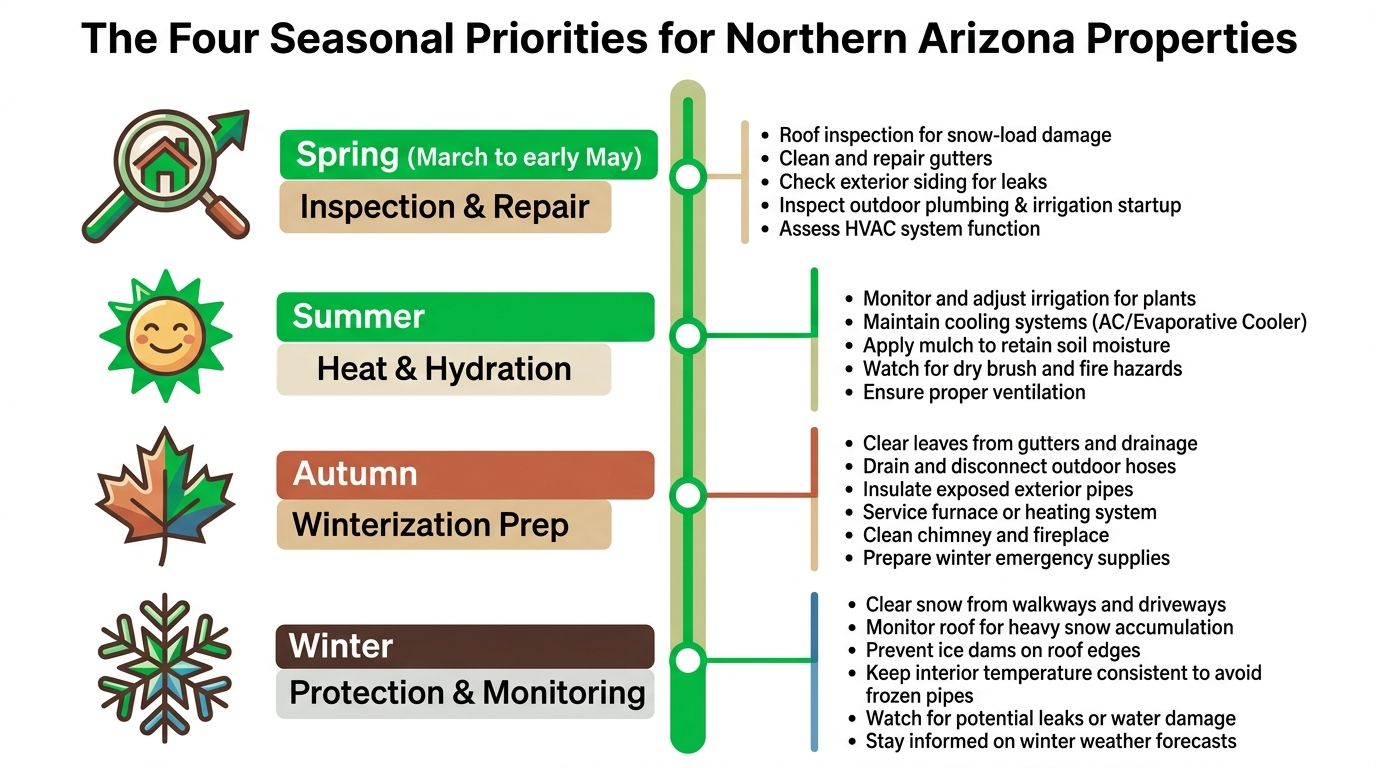
Spring is for inspection and repair
From March into early May, inspect the roof for lifted shingles, damaged flashing, loose metal, and evidence of snow or wind stress. Clean gutters after winter debris and ponderosa needle accumulation. Wash exterior glass and siding before grime and ash bake onto sun-facing surfaces, and remove, clean, inspect, and repair screens before insects and open-window weather arrive.
The HVAC changeover belongs here too. A heating system that worked through winter may need attention before cooling demand begins. For technical guidance on preparing cooling equipment, use a qualified provider and consult this resource on seasonal AC maintenance.
Good at the end of spring: roof concerns are logged, drainage flows freely, screens fit their original openings, exterior surfaces are clean enough to inspect, and the HVAC system is ready for the next operating mode.
Summer is for exposure and growth
June through August brings tree work, defensible-space maintenance, pest checks, irrigation attention, and deck care. Look for branches over roofs, dry debris near structures, loose deck fasteners, fading or splitting on south and west faces, and runoff problems that monsoon storms can expose.
Munds Park owners should pay special attention to cabins that sit empty. A small gap at a vent, soffit, crawl-space opening, or door can become an invitation to rodents or other wildlife. Monsoon preparation should leave downspouts directing water away from the structure and exterior surfaces clear enough to reveal new staining.
Good at the end of summer: vegetation is managed around the building, tree hazards are addressed, drainage has been tested, pest entry points are closed, and decks and fences aren't carrying preventable weather damage.
Fall is the winterization window
September through November deserves the most deliberate preparation. Insulate vulnerable pipes, check the roof and gutters before snow, sweep the wood-stove chimney, renew worn weather-stripping, and seal likely rodent entry points before colder weather drives animals toward shelter.
Good at the end of fall: pipes have protection, the chimney has been serviced when required, doors and windows close tightly, roof drainage is open, and the property can remain secure during an extended vacancy.
Winter is for protection and monitoring
From December through February, monitor snow accumulation, ice dams, roof drainage, decks, and access routes. Snow removal should be planned before storms rather than improvised after a deck or walkway becomes hazardous. If a storm reveals an active leak, frozen pipe, or structural concern, protect the interior and call the appropriate trade instead of climbing onto an icy roof.
Good at the end of winter: you know what the property needs for the March inspection, urgent water and access hazards are handled, and photos document any storm-related change.
A Month-by-Month Maintenance Calendar That Works
A useful calendar groups work before demand rises, leaves room for weather delays, and separates safe owner checks from jobs that need equipment or trade knowledge. Spring and fall vendors can book out 4 to 8 weeks during local rush periods, so schedule before a problem becomes visible.
| Period | Key Tasks | DIY or Pro |
|---|---|---|
| January to February | Monitor snow load, inspect from the ground for ice dams and leaks, clear safe access routes, respond quickly to frozen pipes or storm damage | Owner monitoring, pro response for hazardous access or active damage |
| March | Inspect roof, clean gutters, check downspouts, inspect screens, wash exterior surfaces, photograph winter conditions | Owner walkthrough, schedule roof, gutter, and window vendors early |
| April to May | Service HVAC, start irrigation carefully, repair decks and fences, check spring pest barriers | Mixed, pro HVAC and roof and facade work |
| June to August | Thin vegetation, manage defensible space, complete tree work, prepare for monsoons, rinse exterior surfaces, check drainage | Owner observation, qualified crews for trees and work at height |
| September | Complete the main winter-preparation inspection, confirm roof and gutter condition, plan snow services | Schedule vendors, do not wait for the first storm |
| October to November | Insulate pipes, sweep the chimney, renew weather-stripping, exclude rodents, confirm vacancy protection | Mixed, pro chimney and difficult access |
| December | Monitor weather, confirm snow-removal arrangements, check for leaks after storms | Owner monitoring, emergency or contracted response as needed |
Use March, June, September, and late November as anchor points. These transition months give Flagstaff and Munds Park owners time to account for late snow, monsoon weather, and early freezes. A monthly reminder helps, but the practical question remains, “What must be finished before the next transition?”
Keep a maintenance log with the task date, weather conditions, contractor or owner name, invoice, and before-and-after photographs. Photos taken from safe ground positions can document winter or storm changes without creating a fall risk. Insurance and resale conversations are easier when records show what was inspected, what was corrected, and when the work occurred.
For a repeatable routine, use this property maintenance checklist from Pine Country alongside the log. Owner checks can identify changes early, while roof access, chimney service, tree work, and other hazardous tasks belong with qualified crews.
Caring for Windows, Screens, Gutters, Siding, and Roof the Right Way
Exterior care should remove contamination without damaging the components you're trying to preserve. Pine pollen, wildfire ash, wood-stove residue, ice melt, and hard-water spotting all behave differently from ordinary household dust.
Start with windows and screens
Professional window cleaning uses a squeegee, ladders, water-fed poles, or pure-water brushes according to the glass location and access. A pure-water system lets a brush agitate the glass and rinse away residue without leaving mineral deposits when the water is properly treated. Rags, Windex, and newspaper shortcuts can spread grime, leave a film, and make later cleaning harder, especially on Low-E glass.
Screens deserve careful handling. Remove each screen gently, mark which window it came from, and place it flat on a clean tarp or soft surface. Scrub both sides with soapy water, rinse completely, dry thoroughly, and inspect the frame, spline, corners, tears, and stretched areas before reinstalling it. The screen-maintenance guidance from Beak Buster Window Cleaning supports this component-by-component approach.
Pine Country Window Cleaning has operated since 1999 and was started by Flagstaff native David Kaminski. Its service process includes removing, cleaning, inspecting, and reinstalling screens with each service, which protects the glass and reduces the chance of returning a screen to the wrong opening.

Keep water moving away from the building
Ponderosa needles can bridge across gutters and pack into downspouts. Clean the channel, flush the downspout, and verify that the outlet carries water away from the foundation. Micro-mesh guards can reduce debris entry, but they aren't maintenance-free. Fine pollen and small debris still collect on top, and the guard must suit the roof and needle conditions.
Inspect north-facing eaves after February storms for staining, lifted edges, and ice-dam patterns. On south and west siding, look for UV-driven fading, chalking, cracked caulk, and drying around joints. Extend downspouts far enough to prevent discharge against frozen soil or the foundation, then confirm the extension won't create an icy walkway.
Treat the roof as a safety system
A proper roof review includes shingles, metal seams, flashing at penetrations, vent boots, valleys, chimney crown cracks, and signs of lifted or missing material. Asphalt roofs need visual checks for shingle lift and granule loss. Metal roofs need attention to seams, fasteners, flashing, and hail dents after severe weather. For an example of why a roof inspection after a hail storm should be handled methodically, review the inspection resource from Paletz Roofing and Inspections.

Older Munds Park cabins may also have pack-out putty around windows or trim that has dried, cracked, or pulled away. Resealing requires compatible material and a clean, dry surface. Don't cover active moisture or structural movement with caulk.
When to DIY and When to Call Pine Country
The decision isn't based only on whether a chore looks simple. It depends on elevation, footing, weather, equipment, and whether you can keep your body stable while using both hands.

Reasonable owner projects
A homeowner can often handle a single-story screen swap on level ground, a visual roof inspection from the ground with binoculars, light siding washing, and a hose-down gutter flush when the ladder isn't necessary. Basic caulk touch-ups are also reasonable if the surface is dry, the joint is accessible, and the owner knows the caulk is sealing a cosmetic gap rather than concealing active damage.
These tasks still need discipline. Keep screens organized by window, don't force a gutter connection, and stop if water backs up or enters the structure. A cabin owner should also inspect interior ceilings, utility rooms, and under-sink areas after a major weather event.
Elevated work belongs to trained crews
Call a professional for gutters above one story, roof work on a sloped lot, pure-water pole work above 20 feet, icy eaves, and any roof walk without proper fall protection. OSHA guidance permits exterior window surfaces to be cleaned from inside only when the worker's feet are firmly on the floor and the sill prevents a fall through the opening. If that method isn't practical, workers need protection against falling through the opening with a personal restraint system anchored securely. Review the OSHA window-washing safety standard before treating a job that requires working at heights as routine.
Cornell's window-washing program requires an approved fall-protection harness and prohibits a particular ladder-based method when the interior window top is more than 35 feet above the nearest interior floor or equivalent surface. Its window-washing program requirements show why access planning matters more than convenience.
A separate window-cleaning field safety guide identifies a fall hazard at 48 inches or more above a lower level without edge protection and emphasizes three points of contact on ladders. Winter makes those rules harder, not less important. Frozen ladders, snow-loaded decks, and slick ground can turn a quick fix into a 911 call.
If a task needs both hands and both feet off the ground in below-freezing conditions, it's a Pine Country job, not a Saturday project.
Realistic Costs, Insurance Records, and What Drives the Price
Maintenance pricing in Flagstaff and Munds Park reflects access as much as labor. A simple single-story home with clear ground access is a different job from a cabin tucked among mature ponderosas on a steep lot.
The following ranges are practical planning figures for the work described here. They aren't quotes, and the final price depends on the property's condition and the crew's access plan.
| Service | Typical Cost Range | Key Price Drivers |
|---|---|---|
| Annual exterior cleaning for a typical Flagstaff home | $250 to $600 | Glass area, screens, siding condition, access, and service frequency |
| Annual exterior cleaning for a larger Munds Park cabin | $400 to $900 | Cabin size, tree cover, height, vacancy condition, and difficult terrain |
| Gutter service | $150 to $400 | Needle load, gutter length, downspout blockage, roof pitch, and ladder access |
| Roof inspection | $150 to $350 | Roof design, slope, height, flashing complexity, and safe access |
| Full seasonal maintenance package | $1,200 to $3,000 | Square footage, access, tree cover, number of systems, and repair scope |
Ponderosa needle accumulation can slow hand cleaning. Elevation, steep roofs, ladder-unfriendly terrain, and snow or ice conditions can require specialized equipment or additional setup. A low price that excludes screens, downspouts, difficult elevations, or documentation may not be comparable to a complete service.
Records turn upkeep into evidence
Keep dated invoices, inspection notes, work descriptions, and photos from consistent viewpoints. Photograph roof edges, gutters, downspout outlets, screens, siding damage, HVAC-related work, and visible storm conditions before and after service. Insurers and buyers may ask what happened, when it happened, and whether the owner responded responsibly.
Insurance requirements are becoming more documentation-focused, while digital records are becoming more important in property management. A documented maintenance history doesn't guarantee coverage or reduce a premium, but it can support a clearer claim conversation after monsoon damage, ice-related intrusion, or a winter pipe event.
For resale, the same file gives a buyer confidence that the cabin wasn't just opened for guests and closed again. Good records show a pattern of care, reveal recurring trouble, and help the next owner budget for future work.
Your Year-Round Plan Starts With One Free Estimate
Start with one property walk, not a shopping list. Print the calendar, walk the home or cabin during daylight, and record the three highest-risk issues. For many Northern Arizona properties, those concerns involve the roof, gutters, and pipe insulation, but the actual priorities depend on the building and its exposure.
Then build a twelve-month plan around the transition windows:
- March: inspect winter damage, clear drainage, check screens, and schedule exterior work.
- June: address tree exposure, defensible space, pests, irrigation, decks, and monsoon drainage.
- September: finish the winter-preparation inspection before contractors become difficult to schedule.
- Late November: verify pipe insulation, chimney service, weather-stripping, rodent exclusion, and snow-response arrangements.
A Munds Park cabin might set aside about $300 for owner DIY work, $500 to $800 for two seasonal Pine Country visits, and $1,200 for a one-time repair such as a snow-damaged gutter run. Those figures are a planning example, not a promise or estimate. Your actual budget will change with roof height, tree cover, property size, and the condition you find.
Store the schedule, photos, invoices, and inspection notes in one digital folder. That file makes future service easier, supports resale conversations, and gives you a clearer record if a winter storm or monsoon creates damage.
Request a free Pine Country estimate, provide the property address, mention whether it's occupied or seasonal, and list any known concerns. Booking the spring shoulder-season visit before summer turnover work fills the schedule gives the crew time to plan safe access and handle the details properly.
Pine Country Window Cleaning provides window and screen cleaning, gutter and downspout cleaning, pressure washing, post-construction cleaning, and seasonal snow removal for Northern Arizona homes, cabins, and commercial properties. Visit Pine Country Window Cleaning to request a free estimate and set up a maintenance visit built around your Flagstaff or Munds Park property's transition-season needs.