
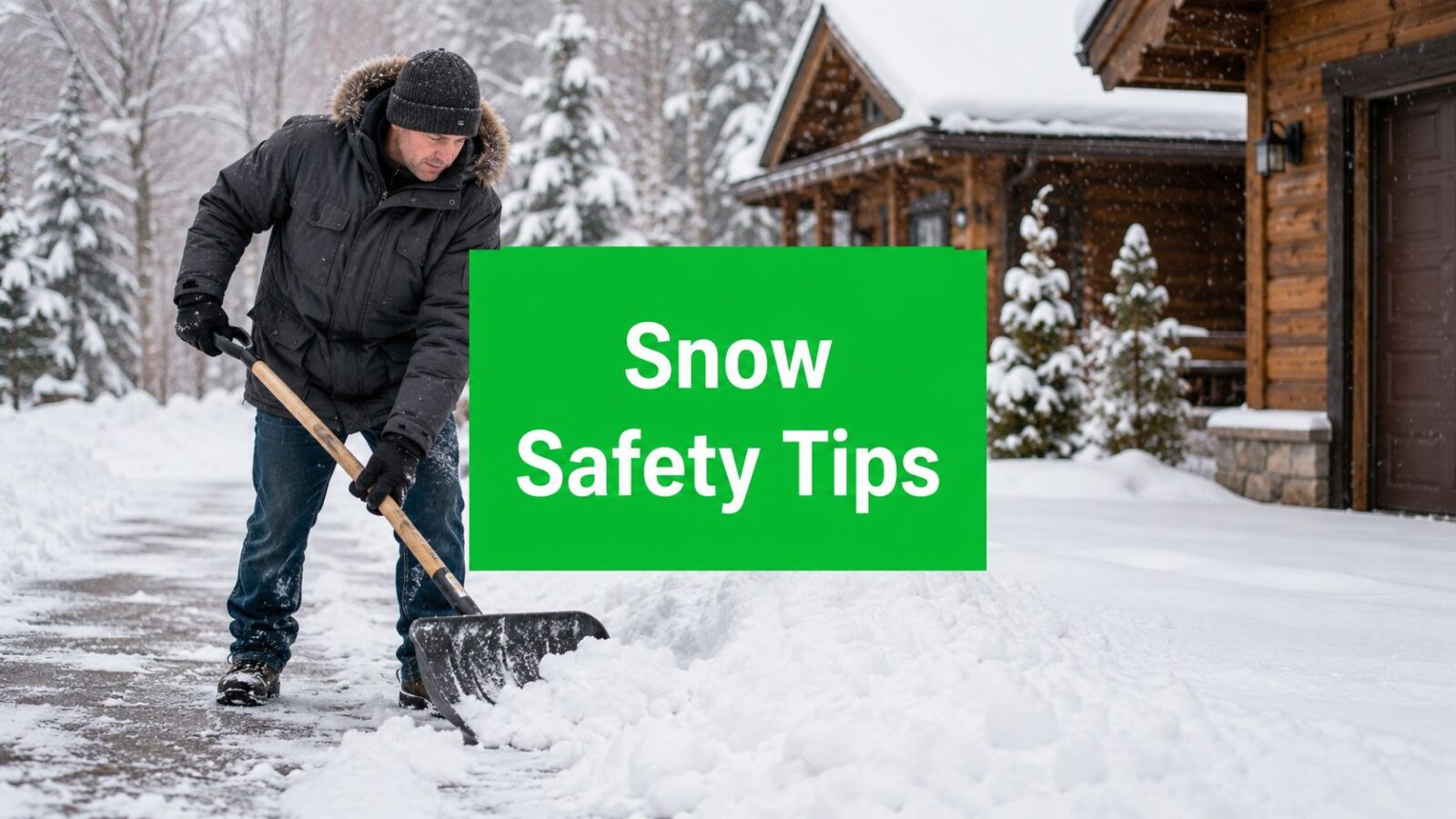
Fresh snow has covered the driveway, the walkway is hard to see, and a thin layer of ice may be hiding underneath. A homeowner needs to open the front steps before work, a cabin owner needs to make the property safe for arriving guests, or a facility manager needs to clear an entrance before employees and customers arrive. The pressure to move quickly is understandable, but rushing turns ordinary snow into a collection of preventable hazards.
Safe removal starts before the first shovel enters the snow. You need suitable clothing, a controlled pace, clear visibility, a plan for buried obstacles, and a place to put the snow that won't create a new problem. Ground-level work is different from roof work, high-reach clearing, or managing a busy commercial entrance. OSHA identifies falls as the leading cause of worker fatalities and injuries during rooftop ice and snow removal, so roof work demands a higher standard than clearing a short walkway (OSHA roof snow hazard guidance).
These snow removal safety tips apply to homes, cabins, driveways, walkways, and commercial properties throughout Flagstaff and Northern Arizona. For broader project precautions, review this guide to on-site safety for home renovations before work begins.
1. Wear Appropriate Cold-Weather Gear and Non-Slip Footwear
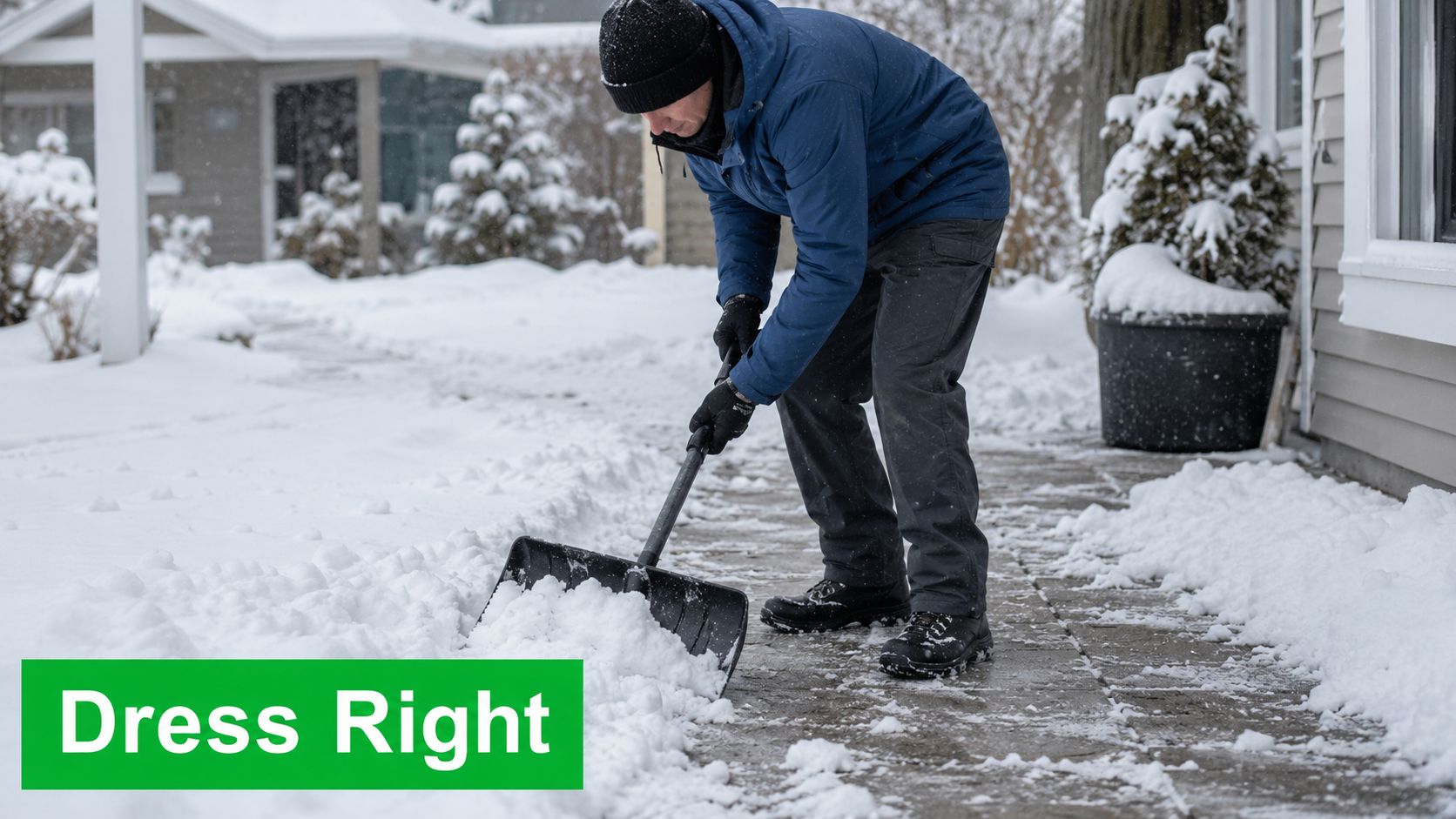
Clothing and footwear are part of the snow-removal system, not an afterthought. Wet fabric, frozen gloves, and smooth boot soles reduce grip and balance just when you need both. Choose an insulated, waterproof jacket and pants, waterproof gloves that still let you hold a shovel securely, and boots with aggressive tread.
Layering works better than wearing one bulky outfit. You can remove a layer as exertion increases, then put it back on during a rest period. Overheating leads to damp clothing, while cooling down too quickly can make fingers stiff and reduce control.
Build traction before you start
Test your boots on an icy section before committing to a full driveway or stairway. Removable ice cleats can add traction on hard ice, but they should come off before you walk across delicate indoor flooring or smooth surfaces where the metal points may slip. Check that the cleats fit tightly and won't shift underfoot.
A few small habits make a noticeable practical difference:
- Protect circulation: Select boots with enough room for thick socks. Tight footwear can restrict circulation and leave your feet colder.
- Rotate wet items: Keep spare gloves and socks available so wet pairs can dry between uses.
- Preserve dexterity: Choose gloves that let you grip the handle and operate equipment without removing them.
- Inspect the route: Make sure cleats, laces, and boot soles are secure before stepping onto stairs or sloped ground.
A cabin in Munds Park or Forest Highlands may have shaded steps that stay icy after the surrounding driveway looks clear. Treat those shaded areas as separate hazards, and don't assume fresh snow has improved traction.
2. Use Proper Snow Removal Equipment and Tools
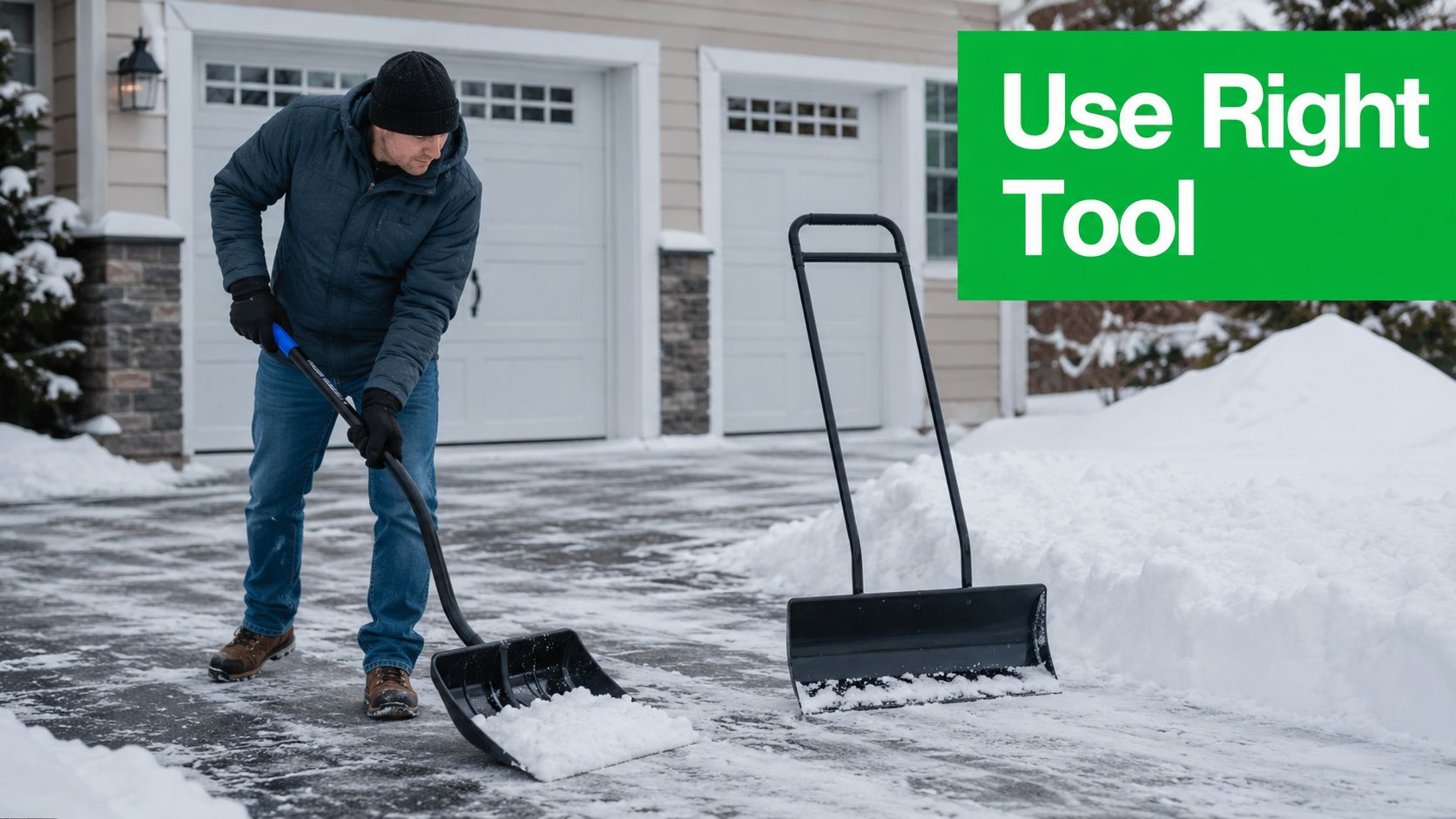
The right tool reduces unnecessary lifting and helps you keep a safer body position. A lightweight aluminum shovel is easier to control over a long session than a heavy steel model, while an ergonomic or bent handle can help you work with your back more upright. A wide snow pusher is useful for moving lighter snow across a driveway, whereas a metal-edged tool may be more effective against packed snow and surface ice.
Tool choice should match the snow and the property. Dry powder can often be pushed or blown. Wet, compacted snow may require smaller shovel loads and more frequent repositioning. A large driveway, a long commercial walkway, and a narrow cabin stairway each call for different equipment and movement patterns.
Match the equipment to the property
Test a shovel before buying it. Stand with the blade on the ground and check whether the handle lets you keep your back relatively straight without reaching too far. A shovel that's too short encourages bending, while one that's too long can make lifting and turning awkward.
For powered equipment, read the owner's manual, inspect the machine before use, and keep hands and feet away from moving parts. If a snow blower jams, shut it down completely and use the supplied clearing tool, never your hands, to remove the obstruction. Keep children and pets away from the operating area, and use eye protection where blowing debris is possible.
For larger driveways or repeated property service, seasonal snow removal services from Pine Country Window Cleaning can reduce the amount of manual work required. A Flagstaff homeowner may need a different approach from a cabin owner managing a sloped driveway, while a property manager may need reliable clearing across several entrances.
Practical rule: If the tool forces you to bend, twist, reach, or lift more than you can control, it's the wrong tool for that part of the job.
3. Avoid Overexertion and Take Regular Breaks
Snow removal combines cold exposure with strenuous exertion. Shoveling can be especially demanding because each load requires lifting, carrying, and sometimes twisting on unstable ground. A large injury study recorded an estimated 195,100 emergency-department-treated snow-shoveling incidents over 17 years, an average of about 11,500 cases per year, with an annual rate of 4.15 per 100,000 people (the study indexed by PubMed).
The same research found that cardiac-related cases represented only about 7% of incidents, but they accounted for more than half of hospitalizations and all 1,647 fatalities recorded during the study period (PubMed study details). That pattern matters in Flagstaff, where cold conditions and elevation can make a hard physical task feel more demanding.
Use a deliberate pace
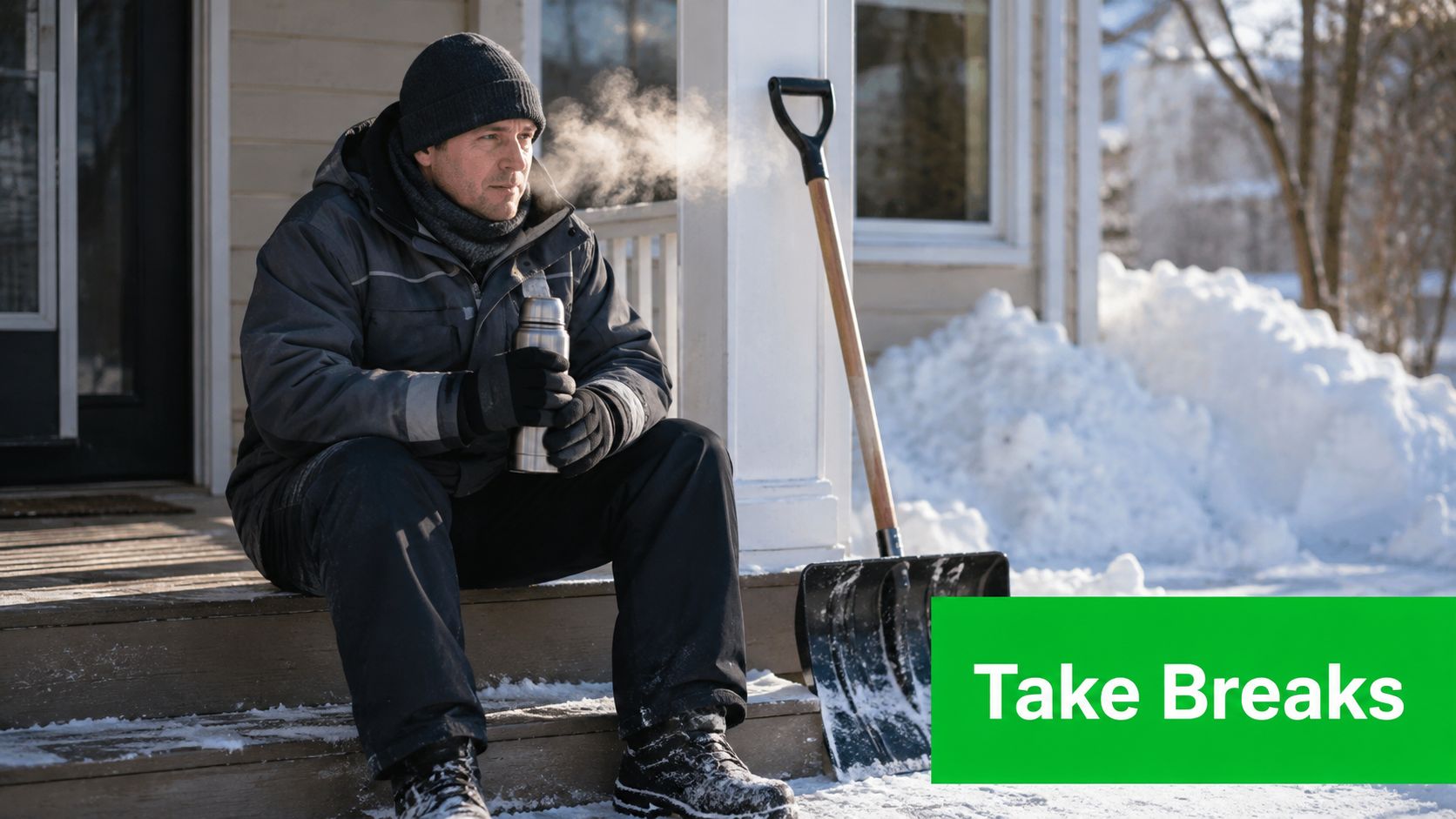
Warm up indoors or with gentle movement before starting. Work in manageable intervals, take breaks in a warm area, drink water or a warm beverage even when you aren't thirsty, and consider dividing a large clearing job into separate sessions. Pushing smaller amounts is generally safer than trying to lift a full shovel, and OSHA recommends warming up, taking frequent breaks, scooping small amounts, and pushing snow when possible (OSHA winter weather guidance).
Don't work through chest pain, chest pressure, lightheadedness, unusual shortness of breath, palpitations, or an irregular heartbeat. The American Heart Association advises stopping immediately if those symptoms occur while shoveling heavy snow (American Heart Association warning signs). People with known or suspected heart disease or relevant risk factors should arrange for someone else to do the work rather than relying on caution alone.
A sedentary homeowner, an older adult, or anyone with a cardiac or blood-pressure concern should speak with a healthcare professional before taking on strenuous snow removal. Hiring help isn't a failure of self-reliance. It can be the safer decision.
4. Clear Visibility and Remove Snow from Windows, Lights, and Reflectors
Before moving a vehicle, clear the windshield, side windows, mirrors, headlights, taillights, brake lights, and reflectors. A narrow opening in the windshield does not provide enough visibility. Snow removal also requires a clear view of curbs, driveway edges, parked vehicles, and people approaching the work area.
Use a soft brush or suitable squeegee on glass and plastic lenses. Scraping aggressively can damage delicate surfaces. Do not rely on activated headlights to melt snow away. At a cabin driveway in Munds Park, guests may arrive during active snowfall, so include a visible walking route and clear sightlines in the arrival plan.
Protect the building as well as the view
Snow and ice along roof lines can affect gutters and downspouts. Accumulation may contribute to ice dams or keep meltwater from draining away from the structure. Pine Country Window Cleaning provides gutter and downspout cleaning as part of its seasonal property services, which can help keep drainage paths open when winter access is difficult.
Commercial properties have broader visibility needs. A Flagstaff dealership must keep vehicle entrances, pedestrian paths, signs, and lighting visible. Hotels, retail storefronts, and campuses need routes that remain easy to understand after repeated plowing and snow piling.
Clear windows and lights before driving. Do not climb onto a roof or reach a roof line from an unstable ladder just to improve visibility. Change the work plan when access becomes unsafe.
For multi-story homes, steep-roof cabins, and commercial buildings, roof-line clearing calls for suitable access equipment and fall-protection training. Ground-level clearing is a separate task from roof work, even when both occur at the same property. A worker secured with a safety harness is on a snowy roof while another stabilizes the ladder.

5. Be Aware of Hidden Hazards
Snow hides the features that normally guide your feet and equipment. Rocks, curbs, parked cars, storm drains, retaining walls, deck edges, and changes in grade can disappear under the same smooth surface. A shovel may catch on a buried object, a snow blower may strike debris, or a person may step beyond an unseen edge.
Walk the property before clearing it, if conditions allow. Note where vehicles and equipment are parked, identify drains and transitions, and mark drop-offs with visible stakes or tape. On a complex Flagstaff ranch property with multiple structures, a quick hazard map can prevent repeated surprises as piles grow and sightlines change.
Treat mountain terrain as a separate worksite
Munds Park cabins and properties in Forest Highlands or Pine Canyon may have steep approaches, uneven terrain, stairs, or retaining walls. Use a probe or long stick to test uncertain areas around edges and slopes, but don't use probing as permission to enter an area you can't safely see or control. Mark hazards before the storm whenever possible, because visible stakes installed in fall are easier to find than objects buried after a storm.
Commercial sites need the same preparation on a larger scale. Hotels, campuses, and busy parking areas can contain loading zones, service covers, curbs, and pedestrian routes that aren't obvious in a storm. Keep people away from the active clearing area, and pause equipment when someone enters the path.
- Mark fixed hazards: Identify drains, deck edges, curbs, and drop-offs before moving snow.
- Track movable hazards: Record where vehicles, trailers, bins, and tools are parked.
- Protect vulnerable surfaces: Use equipment settings and tools appropriate for pavers, decks, asphalt, and gravel.
- Reassess after piling: Snowbanks can hide the same hazards again as the clearing pattern changes.
Professional operators can assess a complicated site before committing to a route. That's particularly useful when the property has slopes, multiple structures, poor lighting, or visitors who may not know the terrain.
6. Never Throw Snow into the Street or Block Drainage
Snow placement is a safety decision, not just a cleanup detail. Pushing snow into a roadway can obstruct traffic and visibility. A pile beside a crossing can hide pedestrians, while snow packed over a storm drain can redirect meltwater onto a walkway, driveway, or neighboring property.
Choose designated pile areas on your own property before removal begins. Place snow where it won't block doors, stairs, sightlines, drainage, utility access, or emergency routes. Keep property lines in mind, especially where a shared drive or narrow road leaves little room for storage. Local rules and HOA requirements may also govern where snow can be placed, so check the applicable guidance for the property.
Plan for meltwater, not just the storm
A pile that looks harmless during freezing weather can become a drainage problem during a thaw. Keep storm drains, gutters, and downspouts open, and don't push snow toward a low point where water will refreeze across a walking route. For related drainage maintenance, Pine Country Window Cleaning's gutter cleaning service is relevant to homes, cabins, and commercial buildings preparing for seasonal runoff.
Flagstaff properties may have neighborhood or municipal expectations about keeping public routes clear. HOAs in communities such as Forest Highlands and Flagstaff Ranch may also have appearance and access requirements. Facility managers should define snow-storage zones for staff or contractors, then communicate those zones before the first storm.
Placement rule: Never solve a private access problem by creating a public traffic, drainage, or neighbor-access problem.
A professional snow-removal crew should be able to work from a placement plan rather than pushing snow to the nearest open edge. That small distinction protects walkways, curb visibility, drainage, and relationships with neighboring properties.
7. Stay Alert to Changing Weather Conditions and Avalanche Risk
A safe route can become unsafe while you're clearing it. Heavy snowfall reduces visibility, wind can move snow back into a cleared path, freezing rain can glaze the surface, and a temperature change can create ice beneath new accumulation. Check the National Weather Service forecast before starting and monitor conditions while working.
Set a clear stop point. If you can no longer see the edges of the route, identify where the next load will go, or maintain stable footing, suspend the work. A short delay is preferable to continuing through conditions that make hazards invisible.
Mountain properties require more judgment
Northern Arizona homeowners and cabin owners may deal with slopes, canyon-adjacent terrain, and rapidly changing mountain weather. Properties in Munds Park, Pine Canyon, and Forest Highlands can have terrain where snow stability and access conditions vary across the same parcel. Avalanche warnings or signs of unstable snow require a professional assessment, not a homeowner's guess from the driveway.
Don't position yourself below a slope or roof area where moving snow could reach you. Keep people out of runout areas and avoid treating an avalanche concern as ordinary driveway work. Facility managers at NAU and other commercial sites should also have a weather-based suspension plan for crews, entrances, roofs, and raised equipment.
- Check forecasts: Review conditions before work and continue monitoring during the task.
- Watch wind: Gusts can reduce visibility and move snow into people or equipment.
- Stop for glaze: Freezing rain can change traction faster than a worker can adapt.
- Respect warnings: Avalanche advisories and unstable slopes call for trained evaluation.
- Communicate changes: Tell occupants, staff, guests, and contractors when a route is closed or work has stopped.
Weather is part of the worksite. If conditions are deteriorating, the safe choice may be to secure the area and reschedule.
8. Maintain Proper Roof Safety and Never Work Alone on Elevated Surfaces
Roof snow removal is not an extension of driveway shoveling. A roof may have hidden ice, fragile skylights, uneven load distribution, steep pitches, unprotected edges, and snow that can slide or fall without warning. Federal safety guidance identifies hazards including falls from roofs and roof edges, falls through skylights, roof collapse, aerial ladders and lifts, vehicles, carbon monoxide, hypothermia, and powered equipment (U.S. Department of Labor and OSHA guidance).
OSHA recommends keeping people at least 10 feet from the point where snow is expected to fall or be blown. It also advises eye and head protection, and removing small amounts at a time when using snow rakes (OSHA roof snow removal guidance). The safe exclusion zone must account for falling snow, ice, tools, equipment, and changing wind.
Know when roof work is beyond DIY
Never work alone on a high surface. Proper fall protection requires more than wearing a harness. The system needs suitable anchors, compatible equipment, secure footing, a rescue plan, and people who understand how to use it. A ladder also needs correct setup and stable placement. Review these ladder safety requirements before any ladder-based task, and remember that a ladder isn't a substitute for a complete roof-access plan.
Pine Country Window Cleaning handles difficult-height work with professional equipment, including a 95-foot atrium lift, and provides seasonal snow removal and gutter services for residential and commercial properties. Its technicians are background-checked and OSHA safety-trained. Multi-story buildings, hotels, campuses, and steep-roof cabins should be assessed before anyone attempts removal. Guidance on how to clean gutters without injury reinforces the same principle: raised maintenance requires deliberate access and fall prevention.
Roof snow may need to be removed, but the safest person to do it may not be the person who owns the building.
A roof-clearing demonstration can show why access, exclusion zones, and equipment selection matter.
8-Point Snow Removal Safety Comparison
| Practice | Implementation Complexity | Resource Requirements | Expected Outcomes | Ideal Use Cases | Key Advantages |
|---|---|---|---|---|---|
| Wear appropriate cold-weather gear & non-slip footwear | Low, buy and wear correct clothing | Insulated waterproof outerwear, gloves, non-slip boots or ice cleats, hi‑vis elements | Fewer slips/falls; reduced frostbite/hypothermia risk; maintained dexterity | All snow-removal tasks; homeowners in Northern AZ/mountain communities | Immediate reduction in injury risk; better endurance in cold |
| Use proper snow removal equipment and tools | Medium, select correct tool or hire pro | Ergonomic shovels, metal-edged pushers, snowblower or contractor service | Increased efficiency; less back/muscle strain; better surface clearing | Large driveways, packed/icy snow, prolonged jobs (Flagstaff, Munds Park) | Reduces fatigue; achieves more thorough, faster clearing |
| Avoid overexertion and take regular breaks | Low, requires discipline and scheduling | Time for breaks, hydration, possible medical consult or hired help | Lower cardiovascular incidents; less muscle strain and fatigue | High-elevation work, older or at-risk individuals, long sessions | Significantly reduces risk of heart events and overuse injuries |
| Clear visibility: remove snow from windows, lights, reflectors | Low–Medium, routine checks; may need pros for roofs/gutters | Brushes/squeegees, ladders, professional gutter/roof service for large jobs | Improved driving/walking safety; reduced ice-dam and water damage | Vehicle prep, properties with gutters, rentals and commercial sites | Prevents visibility-related accidents; protects property integrity |
| Be aware of hidden hazards: buried objects, storm drains, drop-offs | Medium, pre-work assessment and marking | Time for inspection, markers/stakes, probe or professional hazard assessment | Fewer falls and equipment/vehicle damage; reduced liability | Uneven or sloped properties, cabins, ranches, complex topography | Identifies and mitigates concealed risks before work begins |
| Never throw snow into the street or block drainage | Low–Medium, requires planning for proper placement | Designated on-property piles, awareness of local codes, possible pro service | Prevents traffic hazards, flooding and fines; protects drainage | Residential streets, HOAs, municipal-code areas (Flagstaff) | Ensures code compliance and public safety; avoids neighbor disputes |
| Stay alert to changing weather & avalanche risk on mountain properties | Medium–High, ongoing monitoring and professional assessment | Weather forecasts/alerts, flexible scheduling, avalanche assessment for steep terrain | Avoids work in unsafe conditions; identifies avalanche danger | Mountain properties, steep slopes, canyon areas (Munds Park, Pine Canyon) | Prevents weather- and avalanche-related incidents; informs safe timing |
| Maintain proper roof safety & never work alone on elevated surfaces | High, requires fall protection or hiring professionals | Fall protection systems, harnesses, spotters, trained technicians or contractors | Dramatic reduction in fall-related injuries and property damage | Multi‑story buildings, steep roofs, commercial properties | Prevents fatal falls; ensures compliance with safety standards and insurance requirements |
Know When Safer Means Calling a Professional
DIY ground-level clearing can be reasonable when the person doing it is dressed for the conditions, has suitable traction, understands the equipment, can see the route, and is healthy enough for the exertion. The weather should be manageable, the area should be free of unmarked hazards, and the snow should have a safe destination that doesn't interfere with traffic or drainage.
Stop and arrange trained help when the work involves a roof, steep slope, raised surface, high-reach equipment, heavy accumulation, poor visibility, unstable snow, or a complex commercial site. The same applies when a person has heart concerns, experiences warning symptoms, can't maintain safe footing, or would have to work alone. Snow removal becomes a professional task when fall protection, spotters, lifts, traffic control, or detailed site coordination are required.
The injury history supports a conservative approach. In the large U.S. study, soft-tissue injuries represented 55% of recorded incidents, lacerations represented 16%, and fractures represented 7% (PubMed research on snow-shoveling injuries). A separate roof snow-removal study recorded 95 hospital-treated injuries across four winter study periods, with risk varying up to 10-fold between seasons and nearly 60% of cases classified as moderate or serious in the OSHA-cited material (OSHA roof snow hazard guidance). Those findings don't mean every storm requires a contractor. They do show why task difficulty, access, and conditions should determine the decision.
Pine Country Window Cleaning is a locally owned Northern Arizona service that has operated since 1999. The company serves residences, cabins, commercial properties, hotels, campuses, and other facilities with background-checked, OSHA safety-trained technicians, professional lifts for challenging heights, seasonal snow shoveling and removal, and gutter and downspout services. Its local experience is relevant for properties in Flagstaff, Munds Park, Forest Highlands, Pine Canyon, Flagstaff Ranch, and surrounding communities.
Before starting, confirm the following:
- Gear: Clothing is dry, gloves provide grip, and footwear has reliable traction.
- Weather: Forecasts, wind, visibility, freezing rain, and mountain conditions are acceptable.
- Hazards: Drains, edges, vehicles, slopes, and buried objects are marked or avoided.
- Tools: The shovel, pusher, snow blower, or lift matches the surface and task.
- Snow placement: Piles won't block roads, drainage, entrances, sightlines, or neighbors.
- Communication: Occupants, guests, staff, and other workers know where clearing is happening.
- Professional decision: Roofs, elevated work, unstable slopes, complex sites, and unsafe exertion are assigned to trained help.
When the safest answer is to stop, secure the area, and call for assistance, make that decision early.
Pine Country Window Cleaning offers seasonal snow shoveling and removal for driveways, walkways, stairs, and entries, along with gutter and downspout cleaning for Northern Arizona properties. Visit Pine Country Window Cleaning to request a free estimate or schedule service for your home, cabin, or commercial property.