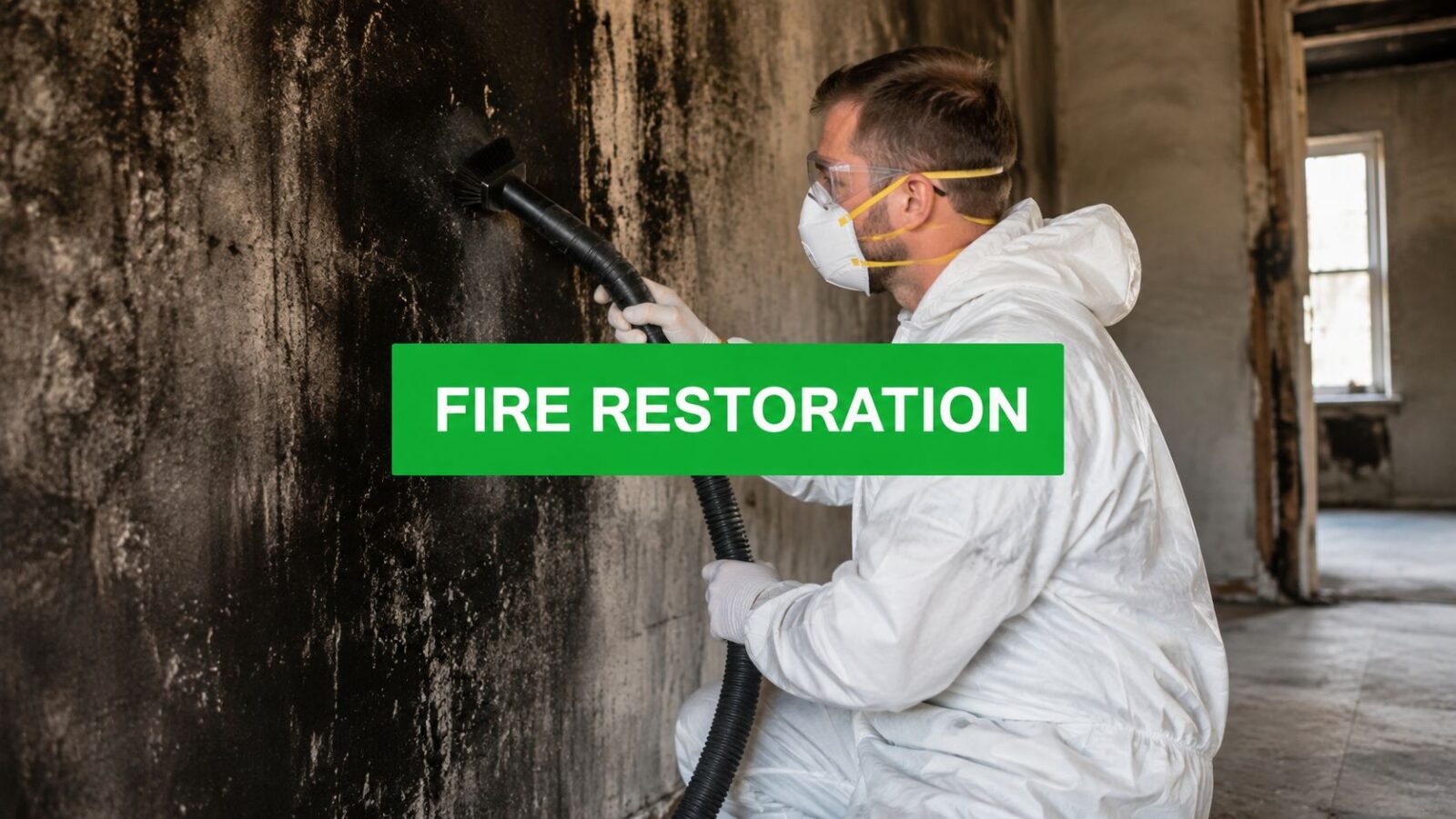
A single house fire can trigger millions of structures, injuries, and losses across the country, and the numbers show why recovery is never just about wiping soot off a wall. The U.S. Fire Administration reported 1,414,191 fires in 2024, with 3,881 deaths, 13,027 injuries, and $21.3 billion in direct loss, while insurance data shows fire remains one of the most expensive types of homeowner claims, with an average claim of $88,170 from 2019 to 2023 U.S. Fire Administration statistics. For Arizona homeowners, especially in Flagstaff, Munds Park, and the cabin communities around Northern Arizona, the hard part is often what you can't see, smoke inside cavities, soot in HVAC runs, residue in window tracks, and water damage from the firefighters who saved the structure.
Understanding the Scale and Reality of Fire Damage
Fire loss looks simple from the street. A homeowner sees blackened framing, a damaged roofline, or a room that needs to be gutted, and assumes the work stops where the burned material stops. That's not how fire damage restoration works in practice.
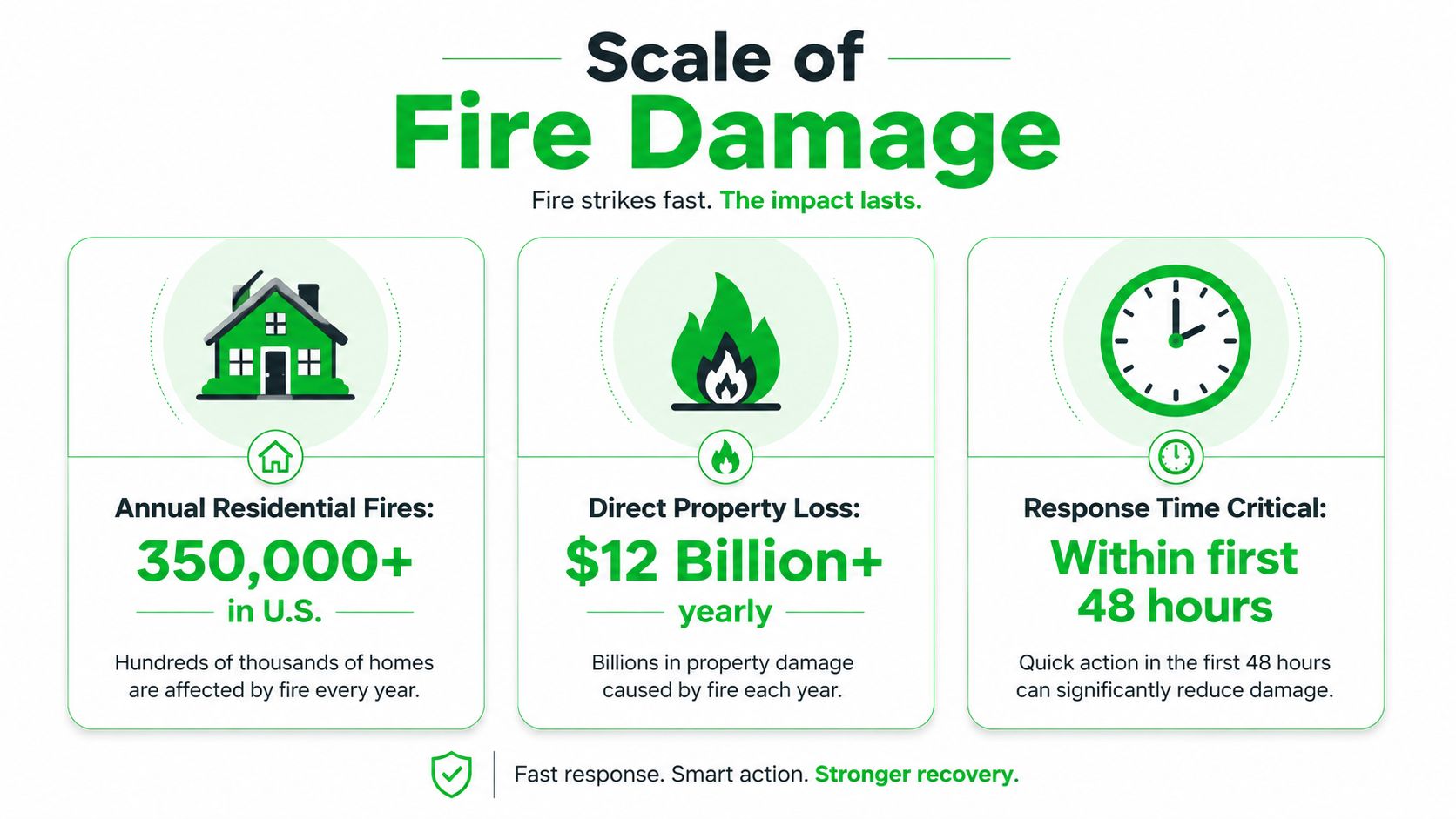
The restoration workload is tied to the scale of residential fire loss. The U.S. Fire Administration's 1,414,191 fires in 2024 produced massive human and property impacts, and the same reporting period showed $21.3 billion in direct loss U.S. Fire Administration statistics. Insurance signals point in the same direction, about 1 in 430 insured homes files a fire and lightning claim each year, and the average claim from 2019 to 2023 was $88,170 U.S. Fire Administration statistics.
That kind of loss profile explains why the trade treats fire as a specialty. A competent restoration job usually has to combine smoke odor removal, soot cleaning, structural repair, and water mitigation from firefighting efforts, sometimes all in the same room. In homes with open floor plans or attic access, smoke can move farther than the flames, which means the visual burn pattern rarely tells the whole story.
Practical rule: if the smoke traveled through the HVAC system, the job is bigger than the room that burned.
The market has matured around that reality. The U.S. damage restoration services industry is estimated at $7.1 billion in 2026 with 60,020 businesses in the sector, which tells you fire recovery is now a defined technical field, not a side job for a general cleaner IBISWorld industry overview. For homeowners, that matters because the right contractor has to assess residues, structure, and moisture as one connected problem, not a set of isolated chores.
Immediate Actions After a Fire for Homeowner Safety
The first hours after a fire are about safety and stabilization, not cleanup. A building can look calm after the flames are out and still be unsafe because of weakened framing, compromised wiring, airborne residue, or hidden water saturation. Restoration teams begin with a formal safety assessment that checks structural integrity, electrical status, air quality, and hazardous materials such as asbestos or lead paint in pre-1978 structures BMS Cat fire smoke damage restoration guidance.
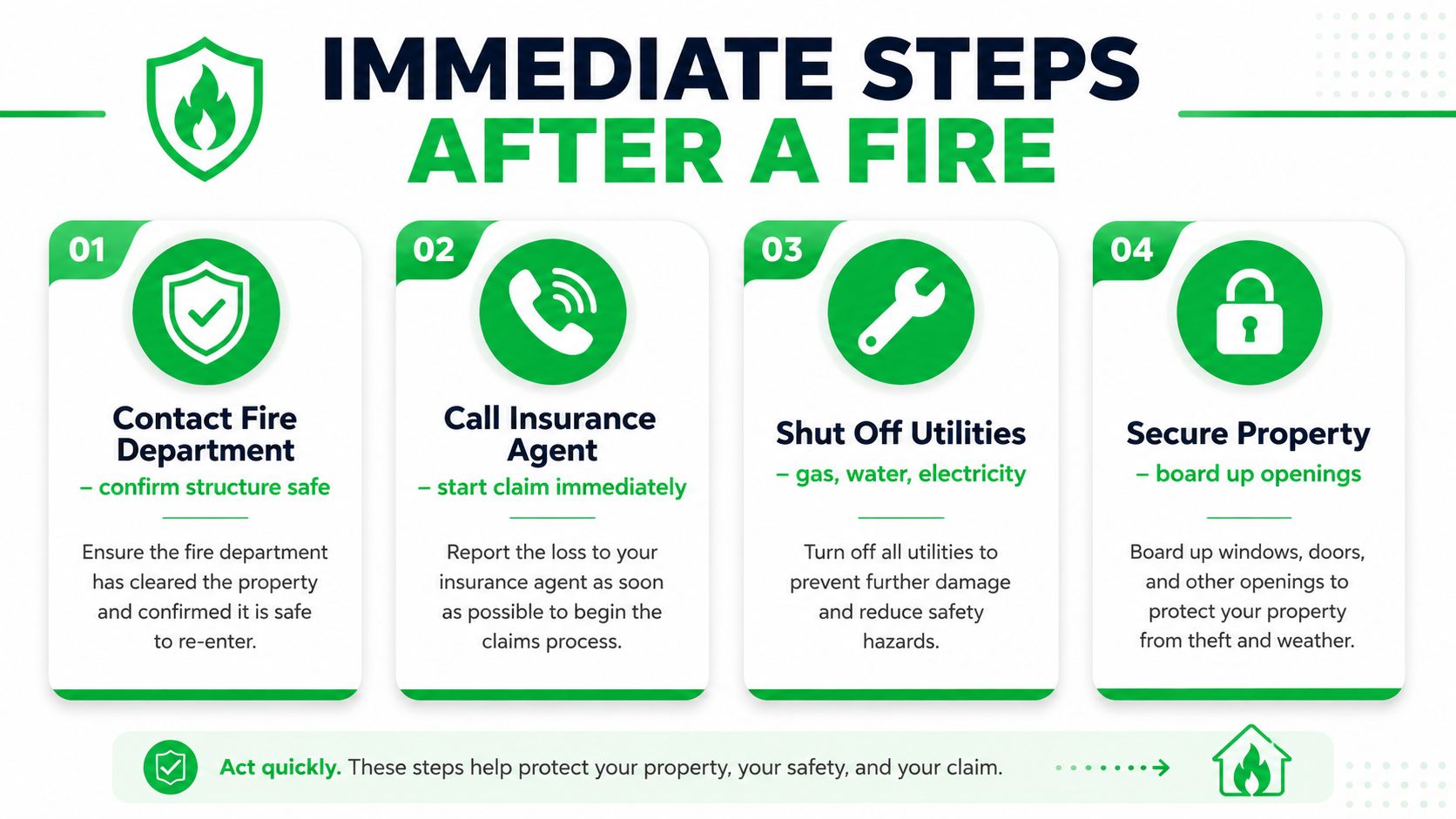
A homeowner should stay out until the fire department or a qualified professional confirms reentry is safe. That isn't just a legal formality, it's a practical one, because floors can sag, roof members can shift, and smoke contamination can linger where the eye can't see. If the structure has holes in the roof, broken windows, or an open garage door, the next job is securing the envelope before weather or trespass causes more damage.
The stabilization phase usually starts with utility shutoffs, board-up work, and roof tarping. These steps stop secondary loss, especially if Northern Arizona weather turns wet or windy while the home is exposed. They also create a safer envelope for inspectors, adjusters, and crews who need to document the damage before demolition starts.
The other urgent issue is moisture. Fire suppression often leaves wet or damp items in place, and conservation guidance says those items should reach relative humidity below 65% within 24 to 48 hours to reduce mold colonization Fire-damaged document and artwork restoration guidance. That timeline is why a fast response matters even when the fire itself was small.
For claims work, a homeowner should document what's visible, keep receipts, and get the process moving early. A practical resource on how to maximize your fire claim settlement can help you understand the insurance side while the structure is being secured, and a local service page like clean-safe services shows how exterior care often becomes part of the recovery once the property is stable.
Good first move: protect the home first, then start sorting damage by what can be salvaged and what has to come out.
The Professional Fire Damage Restoration Process
A real restoration job doesn't begin with wiping walls. It begins with a system-level assessment that checks where residue landed, how far smoke traveled, what water intrusion occurred, and which materials can still be cleaned. The current technical baseline is ANSI/IICRC S700, which defines how professionals assess the presence, intensity, and boundaries of fire residues and odors in buildings, HVAC systems, and contents, and also covers restoration cleaning, odor management, contractor qualifications, documentation, and compliance with authorities having jurisdiction IICRC S700 press release.
Here's what that looks like on site. A crew will map the damage zone, identify residue type, protect unaffected areas, and decide whether the job needs cleaning, demolition, or both. That sequence matters because residue drives the chemistry.
Light, dry soot can often be handled with HEPA vacuuming and surface cleaning, while wet or oily residue usually needs more aggressive chemical cleaning. Deep-penetrating protein or synthetic combustion residues can push the work toward deodorization, structural cleaning, or demolition when porous materials are saturated IICRC fire restoration standards guidance. The point is simple, one cleaning method doesn't fit every fire.
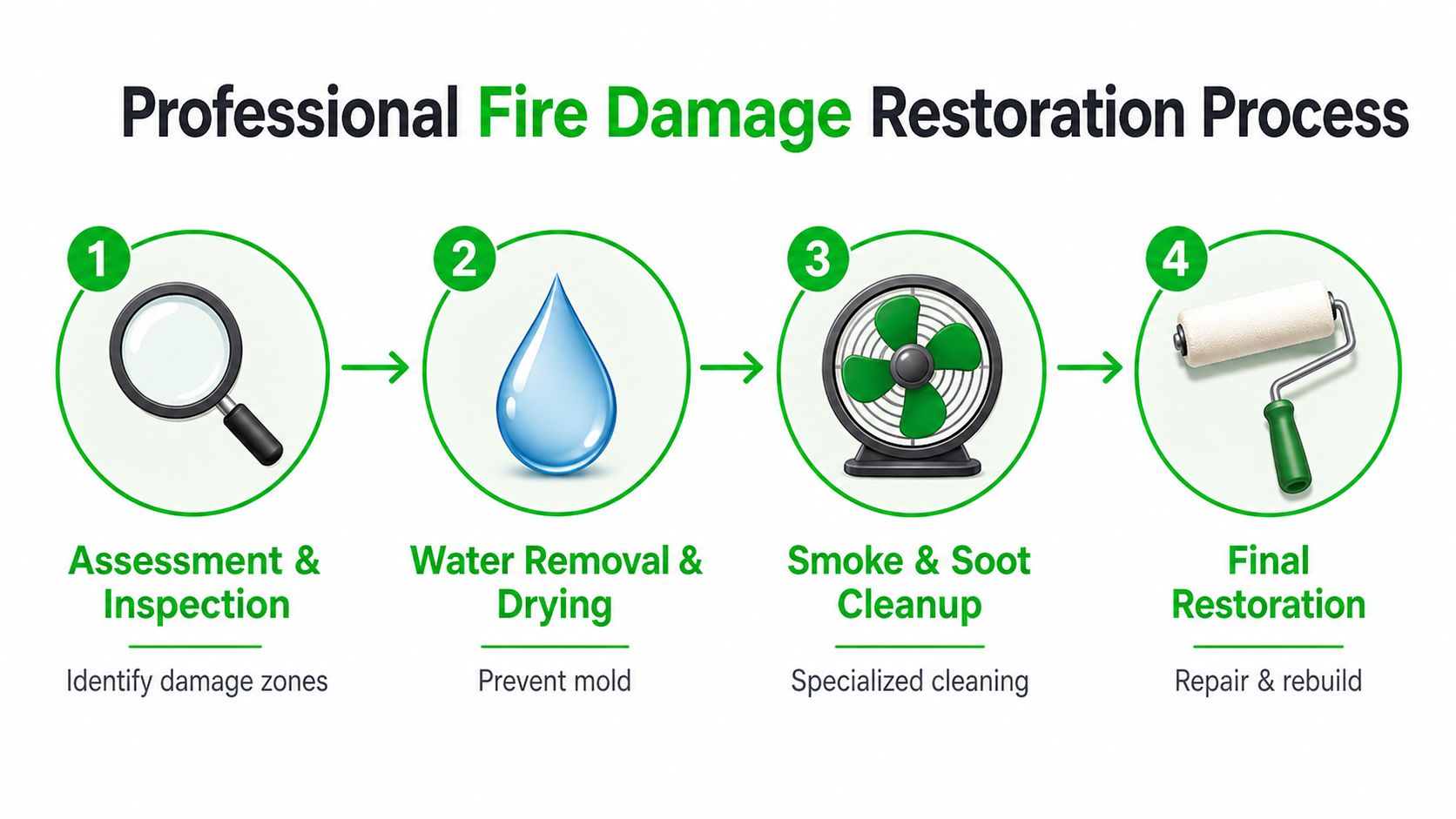
The workflow often moves from assessment to water extraction, then to smoke and soot cleanup, and finally to repair and rebuild. That's the same sequence reflected in professional guides like the Eagle Restoration fire process guide, and it lines up with what crews do when a house in Northern Arizona has both smoke damage and firefighting water in the same room.
The trade-off homeowners need to understand is time versus preservation. Rapid, targeted cleaning can save more of the structure and contents, but only if the team knows where contamination stopped and what penetrated the building materials. If that judgment is rushed, the house can look clean while odor and residue keep coming back.
Hidden Smoke Contamination in Near-Field Properties
Most fire articles treat the world as burned or not burned. That misses a major category of loss, the near-field property that never caught fire but still picked up smoke contamination. After the Eaton Fire, evidence-based guidance recommended sorting properties into burn-zone, near-field, and far-field conditions so crews don't over-treat lightly affected homes or under-treat homes with hidden contamination Rand RM after the Eaton Fire.
Smoke doesn't respect the visible edge of the fire. It moves into attics, HVAC systems, window and door tracks, and representative contents, even when the structure looks intact from the outside. A homeowner may think the damage stopped at the fence line, then discover odor in the ductwork or residue in the insulation days later.
Smoke contamination follows air movement, not property lines.
Northern Arizona cabins create a different challenge because many are timber-heavy and older. Research on fire restoration notes that existing methods have focused mainly on mineral building materials and that practical restoration methods for timber components are still limited, including information on residual load-bearing capacity and the protective effect of cladding TUM timber fire restoration research description. That gap matters in cabins where wood finishes, exposed beams, and older assemblies can hold odor and residue differently than drywall and masonry.
The smart response is inspection before treatment. A crew needs to open access points, check hidden cavities, and evaluate the HVAC path before deciding what can be cleaned in place. In smoke-affected but unburned homes, that often saves money by limiting demolition, but only if the inspection is thorough enough to catch what the eye missed.
If you're comparing contractors, ask how they handle ductwork and hidden cavities. A local example worth reviewing is the internal page on A/C duct cleaning, because duct contamination is one of the most common places smoke lingers after the visible damage is gone.
Exterior Recovery Including Windows Gutters and Screens
Fire recovery doesn't stop at the front door. Smoke residue, ash, and firefighting water settle on the exterior envelope too, and that's where a lot of homeowners miss long-term cleanup. Window frames, tracks, screens, gutters, and downspouts all collect contamination, then spread it back toward the house when wind or rain moves through the property.
Exterior cleaning has to be done with the right tools, not just wiped down. For glass, that means squeegees, ladders, poles, and pure-water brushes, not abrasive shortcuts that smear residue or scratch surfaces. Screens need to come off, be cleaned thoroughly, and be reinstalled properly, because soot can sit in the mesh and keep shedding back onto the windows after the initial wash.
Gutters and downspouts matter for another reason. If they're packed with ash or debris, contaminated runoff can sit at the roofline and around the foundation, where it stains, odors linger, and moisture problems get worse. That's why exterior work should move in a deliberate sequence, clear the roof drainage, clean the glass, wash the screens, then check the surrounding surfaces for residue transfer.
A professional roofing repair resource like roof repair in Phoenix is useful context here, because fire recovery often exposes roofline issues, broken flashing, or heat-damaged areas that let weather into the structure. In Northern Arizona, that kind of secondary exposure can turn a smoke problem into a broader moisture problem fast.
The cleanest recovery also respects the home itself. Crews should protect landscaping, set ladders carefully, and leave the site as orderly as they found it. That's not cosmetic, it's part of reducing the stress on homeowners who are already dealing with insurance calls, damaged belongings, and the uncertainty that follows a fire.
A broader exterior service page like exterior building cleaning shows how envelope care fits into full property recovery, especially when soot has reached the siding, trim, and windows.
Choosing a Qualified Fire Restoration Contractor
A good contractor doesn't just promise to “clean it up.” They explain what they found, what they're testing, and why one room gets cleaned while another gets removed. That level of clarity usually comes from teams that work to the IICRC S700 standard and document their findings before anyone starts tearing things apart IICRC S700 press release.
The first comparison is simple. One contractor walks you through residue classification, HVAC inspection, moisture readings, and contents handling. Another gives a fixed number before looking in the attic or behind the baseboards. The first approach is more trustworthy because fire loss rarely declares itself in one easy layer.
Red flags show up fast on site. If a company skips system-level HVAC assessment, ignores hidden cavities, or treats every surface with the same process, it's likely missing contamination. The same goes for crews that can't explain whether they're dealing with dry soot, oily residue, or deeper contamination on porous materials.
Practical rule: if they can't explain the residue, they probably can't explain the scope.
Local knowledge matters too. In Northern Arizona, crews see cabin construction, mixed-age housing, cold-weather swings, and wildfire exposure patterns that don't look like a generic suburban loss. A qualified contractor should know how those conditions affect drying, odor persistence, and the decision to preserve or remove materials.
Documentation is another separator. Insurance claims move better when the contractor records the condition of the structure, the equipment used, the areas cleaned, and the items removed for disposal or salvage. If a team treats paperwork as an afterthought, homeowners often pay for that later in claim friction.
One more filter helps. Ask whether they're prepared to coordinate with electrical, roofing, contents, and exterior specialists when the loss crosses disciplines. Fire recovery gets cleaner and faster when the contractor knows where their scope ends and where another trade needs to step in.
Insurance Claims and Restoration Cost Expectations
After a fire, the insurance claim is about more than replacement value. It has to show the full scope of the loss, including soot cleanup, deodorization, structural repairs, and any water mitigation tied to suppression efforts. Claims also move through a specialized restoration field with established workflows, as noted earlier in the industry overview.
The strongest claim files start early. Keep photos, item lists, contractor notes, and receipts in one place, then share updates with the adjuster as the job uncovers more damage. That matters when hidden smoke contamination shows up in wall cavities, attic spaces, or HVAC runs after the first walkthrough, because the scope often grows once demolition begins.
In Northern Arizona, I also tell homeowners to document the outside of the house before crews wash or replace anything. Soot on windows, screens, gutters, and siding can matter in a claim, especially when smoke settled across the exterior after a wildfire or structure fire. Cabins with timber details deserve the same attention, because smoke can cling to rough wood and keep odors alive long after the visible burn is gone.
Suppression water is another place where costs get underestimated. If the fire department soaked the structure, moisture removal may need to happen before smoke cleaning can start, and damp materials should not be left in place just to save time. The claim should reflect the full chain of damage, not only the burned areas.
Bottom line: the lowest estimate can leave odor, moisture, or hidden residue behind, which usually leads to more work later.
Timelines should stay realistic, and they should be tied to the actual scope in front of you. Drying, cleaning, inspections, and repairs have to happen in the right order, and near-field smoke contamination or water from suppression can slow the job more than homeowners expect. A claim moves best when the paper trail matches what the crew finds on site, because the goal is to recover the home fully, not just make it look acceptable during one inspection.