

The inspector's truck is already in the driveway, and somebody inside the house is still hunting for the HVAC receipt, the attic key, and the spare battery for the smoke alarm. That's the moment most owners realize the job isn't “getting the house ready,” it's getting the house easy to read. Around Flagstaff and Munds Park, where cabins sit vacant, rentals turn over fast, and weather leaves its own fingerprints, 5 Star Home Inspections start long before the inspector opens the front door.
A clean exterior, clear access, and a simple paper trail can change how the report reads. In the U.S. home-inspection market, annual volume is estimated at about 2.1 million inspections, while another report puts the number at 5.6 million in 2022; the average cost lands around $343 to $400, with inspections commonly running 2 to 4 hours and reports often around 25 pages (market estimates). Buyers pay for that scrutiny because it influences real decisions, and because defects show up in almost every inspection. If you want a practical refresher on the kind of roof issues buyers and inspectors notice, the roofing advice for buyers page from Four Seasons Roofing is a useful companion read.
Why Pre-Inspection Prep Matters More Than You Think
The driveway moment that changes the whole day
The inspector steps out, looks at the roofline, and starts with the easy evidence first. That's not drama, it's the normal rhythm of a professional walkthrough, and it's why a last-minute scramble can feel more expensive than it looks. Home inspection findings shape buyer decisions in a big way, with one industry summary saying 85% of buyers order an inspection before purchase and 78% say the report affects whether they buy the home (industry summary).
On a Flagstaff cabin, the first trouble spot is often not the water heater or the furnace. It's the small exterior clues, a clogged downspout, a dirty window frame, a blocked meter, or a shed side that hides a drainage problem. Another industry summary says 86% of inspected homes have at least one issue, 46% of buyers use findings to negotiate, and about 15% of deals fall through because of inspection discoveries (industry summary).
That's why prep isn't cosmetic. It's part of controlling which problems are easy to see, which problems are easy to verify, and which problems turn into report language that sounds worse than the actual issue. The goal is to make the property legible, not perfect.
Practical rule: inspectors trust what they can see, test, and document. If access is clear and the exterior is clean, they spend less time writing limitations and more time confirming condition.
A seasoned homeowner around Pine Country knows the difference. A tidy exterior doesn't hide defects, it helps the inspector separate normal wear from real maintenance. For a seasonal owner, that's the difference between a report that feels manageable and one that raises more questions than it answers. A good starting point is a seasonal checklist like the one at Pine Country's home maintenance guide, because inspection prep usually overlaps with routine upkeep anyway.
Scheduling Around Flagstaff Weather and Property Use
Flagstaff timing matters because the property changes with the season. In summer, monsoon weather can throw off exterior work, leave walkways slick, and make same-day access feel rushed. In winter, frozen downspouts, snow-packed driveways, and iced-over roof edges can make an otherwise ordinary inspection look complicated, even when the house itself is sound.
Book the cleaning before the inspection, not beside it
The cleanest inspection window usually comes a few days after professional exterior work. That gives the glass time to dry, the gutters time to show whether they're draining, and the siding time to reveal stains, leaks, or flashing issues without debris getting in the way. It also keeps the schedule from collapsing if weather forces a delay. If an exterior service and inspection happen on the same day, somebody ends up guessing.
Second-home owners need a tighter calendar. If you only come into town seasonally, coordinate with a house-sitter or property manager so doors, hatches, and utility spaces are ready before the inspector arrives. A vacant cabin in Munds Park that's been shut down all winter needs a different rhythm than a full-time home in town, because the property may not have been opened or walked in months.
Late spring and early fall usually give the best visibility on exterior condition because snow and heavy rain aren't hiding the details.
That's also why lead time matters. Local inspectors can get booked around weather breaks and closing dates, and nobody wants a same-day cancellation because the driveway iced over or a wind event made roof access unsafe. For a property owner, the cleanest plan is simple. Book the inspection after the exterior cleaning, not before it, and leave enough room for weather to shift the date without forcing shortcuts.
The Exterior Cleaning Sequence That Sets the Tone

Start at the roofline and work down
The order matters. A professional exterior prep run starts with gutter and downspout clearing, then moves to light pressure washing on siding and walkways, and finishes with a full window service using squeegees, ladders, water-fed poles, and pure-water brushes. That sequence follows gravity and exposes the property in the same direction an inspector reads it, from the top down.
Gutters are not just about looks. When debris is removed, the inspector can see whether water has had a path to move away from the structure. Clean walkways also matter because loose gravel, pine needles, ice residue, and clogged runoff can hide trip points or drainage patterns. Clear glass helps the inspector see failed seals, condensation patterns, broken hardware, and frame wear without fighting dirt first.
Avoid rag-and-Windex shortcuts. They may make a pane look passable from six feet away, but they don't give the same edge-to-edge clarity, and they don't tell the truth about screens, tracks, or exterior buildup. Trained technicians remove screens, clean screens, and reinstall them on every service, which matters because screens often trap the dust, pollen, and pine needles that end up masking window frame issues.
I'll say it plainly from working these properties. On a tall Flagstaff house, the right equipment beats improvisation every time. Pine Country Window Cleaning has been locally owned since 1999, with OSHA-trained crews and in-house access gear like boom lifts and a 95-foot atrium lift for high or awkward properties. On steep, tall, or multi-level homes, that kind of setup keeps the work controlled instead of risky.
If you're trying to improve curb appeal before the inspection, the hardscaping ideas for Prescott homes article from R.E. and Sons Landscaping is a useful side reference because clean edges, walk paths, and exterior surfaces all shape first impressions.
A clean exterior doesn't guarantee a clean report, but it does make the report easier to trust.
For owners who want a practical starting point, gutter service is one of the first places to look, and Pine Country's gutter cleaning service fits right into that preparation sequence.
Clearing Safety and Access Issues Before the Inspector Arrives
A lot of reports get dragged down by things that aren't major defects at all. They're access problems, safety obstacles, or conditions that prevent the inspector from verifying the system properly. A locked attic hatch, a crawlspace blocked by storage, overgrown shrubs around the meter, or a snow-packed driveway can turn a simple check into a limited observation.
Why limits read louder than repairs
An inspector who can't reach the attic, panel, crawlspace, or exterior utility area usually has to say so in the report. Buyers read that as uncertainty, and uncertainty gets attention. The same is true for loose deck rails, missing detector batteries, or burned-out exterior bulbs, because those items suggest the home wasn't walked with care before the visit.
A fast access check doesn't take long. Test every egress window. Make sure the attic hatch and crawlspace door open smoothly. Clear stored items away from the water heater and electrical panel. Replace any bulbs that are out near entry points, and move anything that blocks a meter, shutoff, or service path.
The point is not to hide anything. The point is to remove the reasons an inspector would have to hedge. If they can open, look, and test without fighting the house, the report reads cleaner and the findings are easier to separate from simple access limitations.
Safety first: if overhead lines or tall exterior work are involved, don't improvise with a ladder. The safer choice is to leave the high-access work to a trained crew that uses the right equipment.
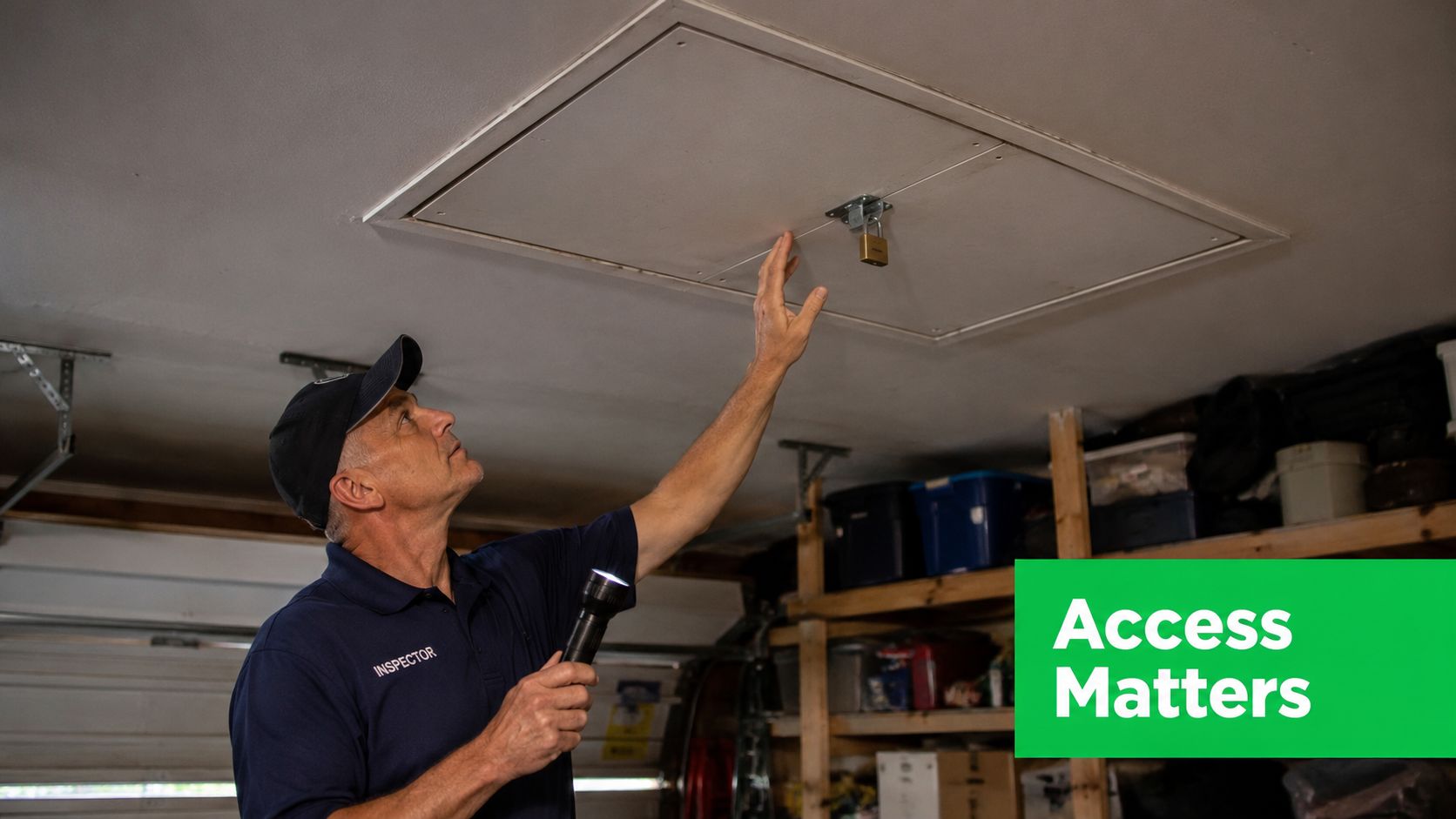
That matters even more on older cabins and second homes, where access points can be tight, frozen, or partially finished over. The cleanest prep is boring, and boring is good. Open the path, clear the space, and let the inspector do the job without workaround notes cluttering the report.
Pulling Together Systems Documentation Buyers and Inspectors Want
Paperwork doesn't fix a furnace, but it does shorten the guesswork. A tidy binder or digital folder tells the inspector when major systems were last serviced, which parts have known history, and which components deserve a closer look because nobody has a record on them. That matters because a documented system is easier to describe as maintained, while an undocumented one often gets treated as unknown.
What belongs in the folder
Put the basics together first, then leave out anything speculative. Include HVAC service records, water heater age if you know it, roof replacement invoices, recent plumbing work, and any electrical panel updates. Add warranty paperwork if you still have it, and keep a one-page property summary with square footage, year built, last service dates, and known warranties.
What doesn't belong is just as important. Skip unverified “upgrades,” vague guesses about permits, and anything you can't back up. Those details create more questions than answers, and the inspector still has to verify what's visible on site.
Here's the simple structure I'd use on any home in the area:
- Property summary page: square footage, year built, system ages, and current contact info.
- Service records section: HVAC, plumbing, roof, and electrical updates in date order.
- Warranty section: active coverage, expiration dates, and provider names.
- Notes page: unresolved issues, prior leak locations, and any seasonal shutdown details for cabins.
A well-built folder saves time because it gives the inspector a starting point instead of making them guess from labels, serial plates, and patchwork repairs. If you've got a rental or second home, it also gives the buyer or manager a cleaner maintenance trail to follow after closing. The job here is not paperwork theater. It's making the property's history visible in minutes instead of hours.
The Small Repairs That Quietly Move an Inspection Score
Small repairs don't sound dramatic, but they're the ones inspectors photograph, note, and compare against the rest of the house. A loose rail, a failing bead of caulk, or a tired outlet can make a well-kept home feel deferred in places buyers notice quickly. These are the fixes that fit into a long weekend and still change how the property reads.
A short punch list with real return
| Repair Item | Approximate Effort | Why It Matters to the Inspector |
|---|---|---|
| Re-caulk around tubs and showers | One short session | Helps reduce obvious moisture gaps and shows active maintenance |
| Replace worn weatherstripping on exterior doors | Quick DIY task | Improves closure, reduces visible light gaps, and signals the door seals properly |
| Tighten loose handrails | Short hand tool job | Handholds are a visible safety item and get noticed fast |
| Swap tired GFCI outlets | Moderate DIY or electrician visit | Electrical safety issues are easy to document and hard for buyers to ignore |
| Patch small damaged soffit areas | Short exterior repair | Prevents the inspector from noting pest or moisture entry concerns |
These fixes are surface-level, not renovation work. That's exactly why they're valuable before an inspection. They remove easy objections without dragging the owner into a larger project that doesn't need to happen yet.
One thing I see on Pine Country jobs is that homeowners often jump straight to the biggest visible problem and skip the little ones. That usually backfires. The inspector still writes the smaller items, and the report ends up looking busier than it needed to be. Fix the obvious wear first, especially on access points, wet areas, and exterior trim that sits directly in the weather.
Flagstaff, Munds Park, and Rental-Specific Wrap-Up
A Munds Park cabin that sits vacant all winter needs a different pre-inspection routine than a year-round house in Flagstaff Ranch. Freeze risk, dormant plumbing, and exterior debris build-up can all stack up while nobody's watching. Second homes in Forest Highlands and Pine Canyon usually face the same issue, just with a different ownership rhythm, and short-term rentals add turnover pressure on top of that.
For rental hosts, the recordkeeping side matters just as much as the cleaning. If you manage an Airbnb or VRBO property, keep your maintenance notes organized and make sure the property is ready for inspection or insurance review without a last-minute scramble. The guide for Airbnb hosts is a useful outside reference when you want to compare local upkeep with broader hosting practices. For a rental-specific checklist, see Pine Country's vacation rental cleaning guide.
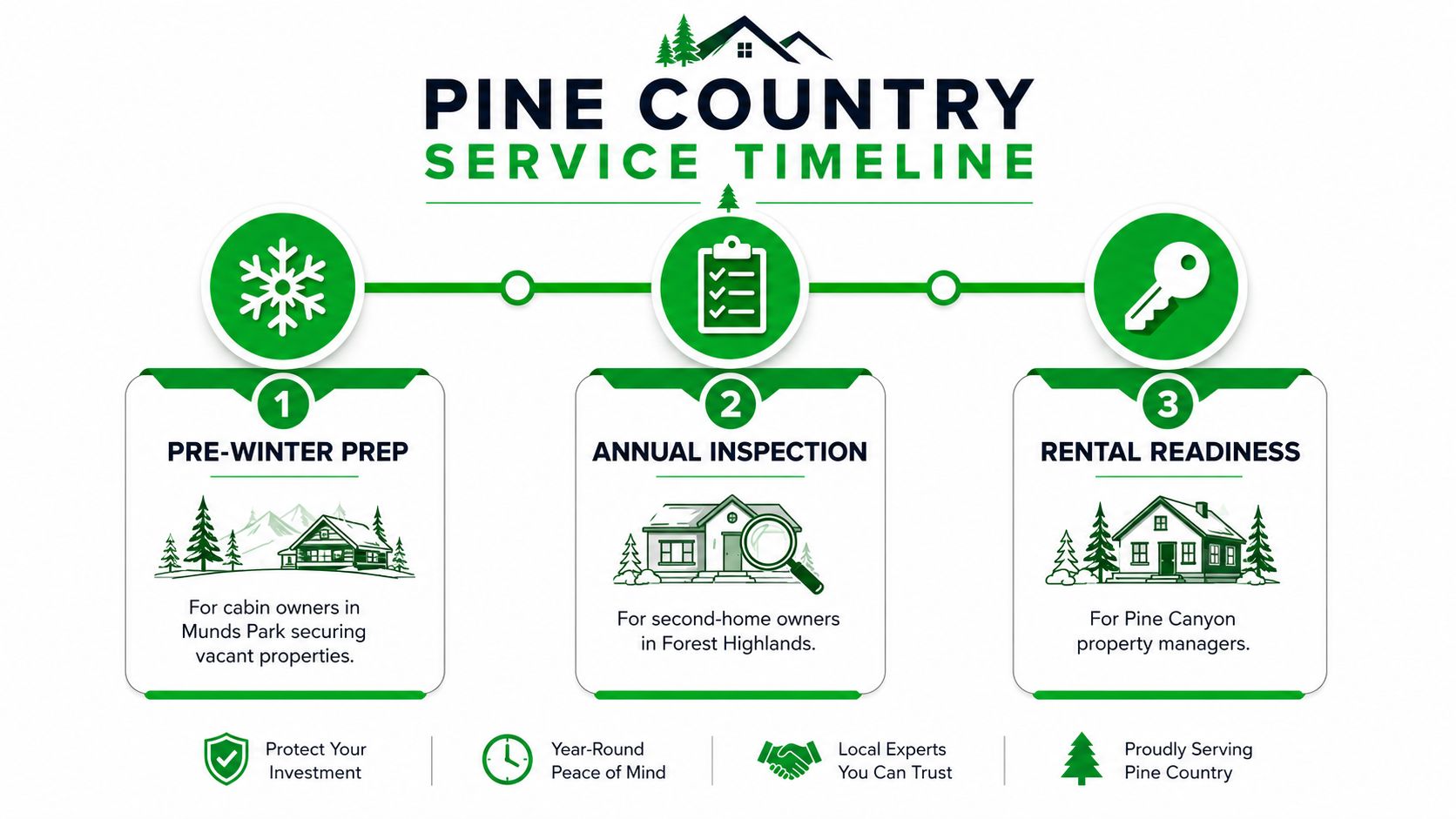
A simple timeline keeps everything sane. 10 days out handles repairs. 3 days out is for exterior cleaning. 1 day out is for the documentation binder. The morning of the inspection is for safety, access, and a final walk around the property.
Pine Country Window Cleaning has handled Northern Arizona properties since 1999, and that local history matters when the job includes windows, gutters, pressure washing, and the kind of exterior care that helps inspections go smoothly. If you want the property cleaned and inspection-ready without chasing three different vendors, start with Pine Country Window Cleaning. They can help you clear the outside, keep the process organized, and give the inspector a cleaner read on the home from the first step up the driveway.
If you're getting ready for an inspection in Flagstaff, Munds Park, or one of the nearby second-home communities, Pine Country Window Cleaning can handle the windows, gutters, and exterior prep that set the tone before the inspector arrives. Visit Pine Country Window Cleaning to request a free estimate and get the property ready with a team that respects your home and the people in it.