
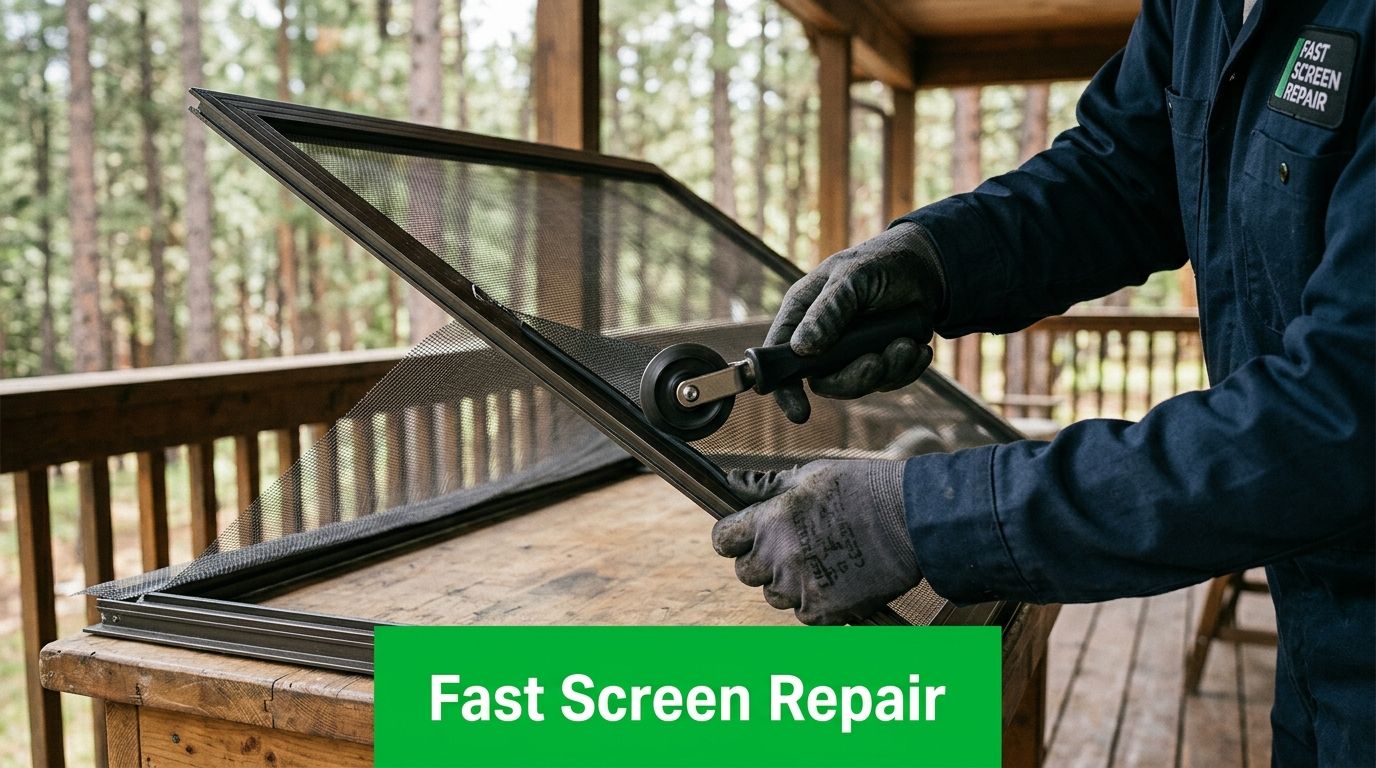
A lot of homeowners notice screen problems at the same moment. You open a window for cool air, look out at the pines or mountains, and instead of enjoying the view, your eye goes straight to a rip in the mesh, a bowed frame, or a screen that no longer sits tight in the opening.
In Flagstaff and Munds Park, that small problem rarely stays small. Dust works in, insects find the gap, and a tired screen makes the whole window line look neglected. In a high-country climate, screens take more abuse than many people expect. Sun, wind, pollen, and regular handling all add up.
Protecting Your Home from Pests and the Elements
A damaged screen usually starts as an annoyance. Then it becomes the reason moths get into the house at night, pine pollen settles on the sill, or your living room never feels quite as fresh when the windows are open.
That happens all the time in Northern Arizona homes and cabins. A screen gets nicked during spring cleaning, a pet pushes against one corner, or the mesh turns brittle after years of strong sun exposure. The damage may look minor from indoors, but from outside you can see the weak spot immediately.

Why small screen issues matter
A good screen does more than keep bugs out. It helps protect the interior from blowing debris, supports better airflow, and gives the window a finished appearance from the street. When one screen is loose, torn, or bent, it stands out.
For some homes, screen issues also show up alongside other window-area maintenance concerns. If you're dealing with moisture around frames or sills, this guide on how to clean window mold is a useful companion resource because screen condition and overall window care often go hand in hand.
A torn screen is rarely just cosmetic. It creates a direct opening where the window system should be doing its job.
Screen care is part of complete window care
In our trade, screen handling isn't an add-on. It's part of doing the work correctly. Screens need to come off carefully, be cleaned properly, inspected for damage, and go back in without scraping frames or bending corners.
That's why homeowners looking for screen installation service often benefit from working with a company that already handles screens every day as part of professional window care. The same habits matter every time: label the screens if needed, protect the frame, watch the tabs and corners, and reinstall them so they fit securely and look right.
Respect for the home matters just as much as the repair itself. Shoes, ladders, screens, landscaping, furniture placement, and clean reinstallation all count. Customers notice when a crew treats the property carefully, and they also notice when a company rushes through screen work and leaves a frame rattling in the track.
Understanding Common Screen Damage and Repair Options
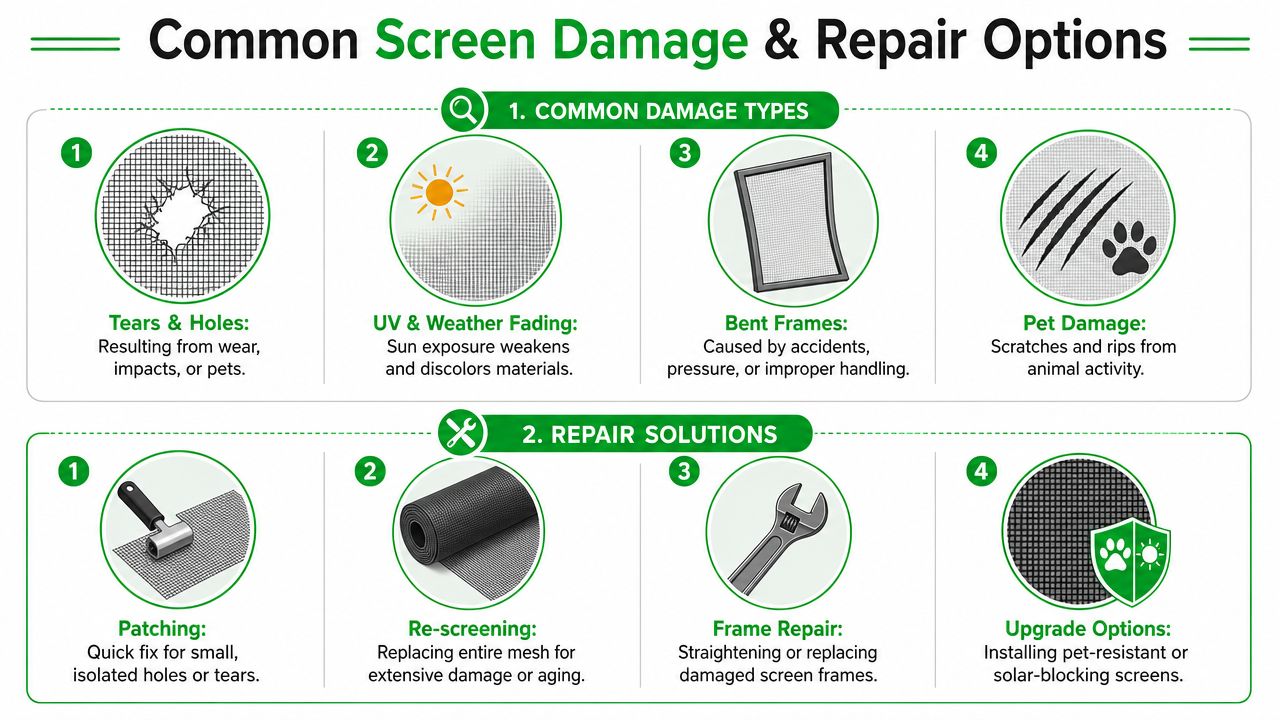
Most homeowners can spot obvious damage. The harder part is knowing whether a screen needs a quick fix, full rescreening, or frame work. In Northern Arizona, the same few problems come up again and again.
The damage patterns that show up most often
- Tears and punctures: These usually come from pets, accidental impacts, or aging mesh that gives way under light pressure.
- Sun-brittled mesh: High-elevation UV exposure dries out some materials faster, so the screen may look intact until it starts cracking at the edges.
- Bent frames: A frame can warp during storage, get stepped on, or flex too much during removal and reinstallation.
- Loose corners or poor fit: Sometimes the mesh is only part of the issue. The frame may no longer hold shape tightly in the opening.
A quick visual check tells you a lot. If the hole is isolated and the rest of the mesh is still strong, a patch may be possible. If the screen has multiple weak spots, frayed edges, or fading across the whole panel, patching usually turns into a temporary answer.
When patching works and when it doesn't
Small patches have their place. They're most useful when the rest of the screen is still in good condition and the damage is limited to one area.
Patching usually doesn't hold up well when the screen is already old, the tear is near the spline channel, or the frame is twisted. In those situations, full rescreening gives a cleaner finish and a tighter fit.
Practical rule: If the mesh feels brittle in more than one spot, replacing only the damaged section usually saves less than people expect.
Material choices matter
Not every screen should be replaced with the same mesh that came out of it. Material should match how the window is used and what the home needs most.
| Screen material | Best fit | Watch for |
|---|---|---|
| Fiberglass | Standard residential windows | Good all-around choice for many openings |
| Aluminum | Openings that need a stiffer mesh | Requires more careful handling during installation |
| Pet-resistant mesh | Homes with dogs or cats pressing on screens | Heavier material can change how the frame behaves |
| Solar screen | Windows with strong sun exposure | Changes visibility and light transmission |
Fiberglass is the common baseline because it works well for many homes and is forgiving during service. Aluminum is stiffer, but it takes more precision. Pet-resistant products make sense where claws or pushing are a regular issue. Solar screens can be a good answer on sun-heavy exposures when the homeowner wants more heat and glare control.
The frame decides the repair
Even the right mesh won't solve a bad frame. If the corners are spread, the channel is damaged, or the frame has lost its shape, the repair has to address that first. Otherwise the screen may look acceptable for a few days and then loosen, bow, or pop free.
A solid screen repair service starts with diagnosis, not just replacing mesh. That's what separates a durable repair from a temporary one.
The Pine Country Screen Repair and Cleaning Process
A screen repair call usually starts the same way. A homeowner opens a window for cool air, notices a torn corner or a loose frame, and realizes the screen is also carrying a season of dust, pollen, and pine debris. In Northern Arizona, those problems travel together, which is why we treat screen work as part of proper window care, not as a separate add-on.
What happens at the property
The first job is to identify what failed. We check the mesh, frame corners, spline, pull tabs, and how the screen seats in the opening. A screen can look like it only needs new mesh, then show a twisted frame or worn corner once it is out and on the bench.
Removal matters more than many homeowners realize.
Older frames can bend during rough handling, especially after years of sun, winter swings, and repeated seasonal use. We remove screens carefully, keep track of placement, and protect the surrounding window area so the service improves the opening instead of creating new damage.
For homeowners who want upkeep along with repairs, professional residential screen cleaning helps the whole window system work better. Clean screens fit better, show damage more clearly, and put less dirt back onto freshly cleaned glass during reinstall.
How the work is done
Once the screens are off, the work gets more precise. Some screens only need cleaning and a fit check. Others need new mesh, new spline, corner repair, frame adjustment, or replacement parts if the original hardware is failing.
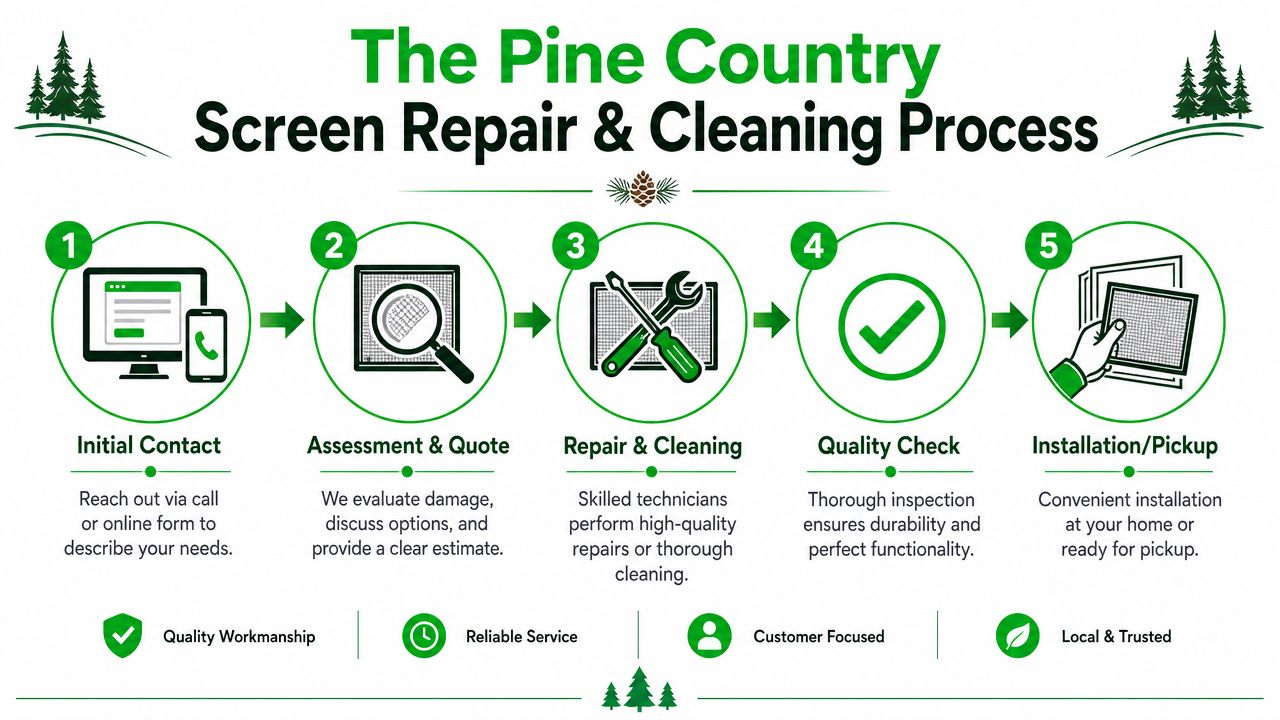
Our process usually follows four steps:
Inspect each screen up close
We look for tears, stretched mesh, bent rails, cracked corners, weak tabs, and frame spread that can keep the screen from sitting securely.Clean before final repair or reinstall
Dust, pollen, cobwebs, and fine pine material can hide small defects and interfere with a proper fit. Cleaning also lets us see whether the frame channel is still sound.Make the repair that fits the actual condition
If the frame is solid, a rescreen may be the right answer. If the frame has lost shape, we address that first so the finished screen holds tension and stays square.Test the fit before the job is finished
The screen needs to sit firmly, line up cleanly, and come back out without binding. That final check prevents rattles, loose corners, and callbacks.
A good repair is supposed to disappear into the window. The screen should sit flat, the frame should feel secure, and the opening should look cared for when the work is done.
Why local experience changes the result
Northern Arizona screens age differently than screens in milder climates. High UV exposure, dry air, spring pollen, monsoon dust, and winter temperature swings all affect mesh tension and frame condition. Cabin properties and second homes add another variable because screens may sit closed up for stretches, then get used hard during peak season.
Pine Country Window Cleaning has been locally owned since 1999, and that long run shows up in the small decisions that protect a home. Crews learn which exposures fail first, how to handle delicate older frames, and how to work around decks, planters, uneven grades, and tight access without making the visit harder on the owner. That local repetition is one reason screen handling remains a natural part of our core window cleaning service across Flagstaff and the surrounding mountain communities.
How We Price Our Screen Repair Services
Screen repair pricing gets confusing when people expect one flat number for every job. The actual cost depends on the screen itself, the material selected, and whether the frame is still usable.
Nationally, professional window screen repair in the United States typically costs between $142 and $522, with basic rescreening of a standard window using fiberglass ranging from $30 to $75 per window, according to this window screen repair cost guide. Those numbers are useful as a general benchmark, but they don't replace an on-site look at the actual screens.
What changes the price
Three factors usually drive the quote more than anything else:
- Screen size: Larger screens take more material and more time to tension cleanly.
- Material type: Standard fiberglass prices differently than heavier specialty mesh.
- Frame condition: If the frame is bent, spread, or no longer holds shape, the labor changes.
The same logic shows up in other window-related services too. Homeowners who want a broader view of service pricing often find it helpful to review factors affecting residential window cleaning cost, because access, size, condition, and material choices influence both kinds of work.
Why quotes vary from one home to another
A straightforward rescreen on a standard frame isn't priced the same way as a custom patio screen, a pet-damaged screen that needs stronger material, or a frame that has to be rebuilt to sit square again. The labor can be very different even when two screens look similar from across the room.
A careful estimate should answer practical questions, not just provide a number. Is the old frame worth saving? Does the new mesh need to match other screens on the house? Will a heavier material affect the fit? Those are the details that keep a quote honest.
What transparent pricing looks like
A good screen repair service should make the pricing understandable before the work starts. Customers shouldn't have to guess what part of the bill comes from mesh, frame work, specialty material, or access.
That matters because screen repairs often happen alongside broader home maintenance. Clear pricing reduces surprises and lets the homeowner decide whether to repair, replace, or upgrade selected screens instead of making a rushed decision on the spot.
DIY Screen Repair vs Professional Service
DIY screen repair looks simple until the mesh starts bunching in one corner, the spline jumps the channel, or the frame bows while you're trying to tension it. That's when the project stops being a quick fix and turns into a workbench problem.
Where DIY often goes wrong
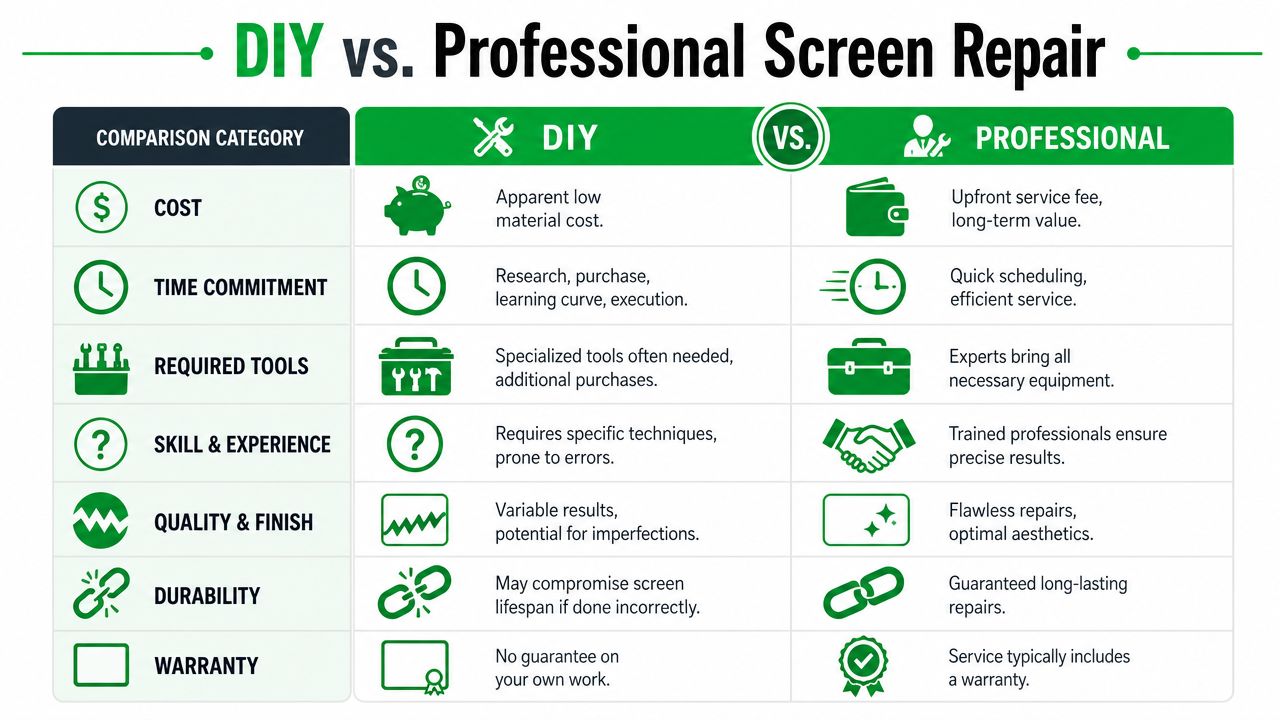
The hardest part isn't cutting the mesh. It's keeping the panel square and applying even tension. The technical process of professional screen repair relies on precise spline tensioning using a dual-action roller tool, and the concave side locks the spline securely, ensuring uniform tension across the entire mesh to prevent sagging and pest infiltration, as explained in Lowe's replacement window screen buying guide.
Homeowners usually run into a few predictable problems:
- Uneven tension: One side goes tight while the opposite edge waves.
- Frame distortion: Press too hard in the wrong sequence and the frame can bow.
- Wrong material match: Heavy mesh on a light frame can create fit issues.
- Ragged finish: Excess mesh, poor corners, and loose spline make the repair look amateur.
What professional service buys you
A professional brings the tools, the sequence, and the hand skill to do the job cleanly. That includes knowing when aluminum needs different handling than fiberglass, when a frame should be abandoned instead of forced back into shape, and when a patch will fail no matter how careful the install looks.
One option for homeowners who want that handled as part of broader window care is Pine Country Window Cleaning, which offers screen-related services within its residential window maintenance work. In practical terms, that means the same crew mindset applies to removal, cleaning, repair, and reinstallation.
If the screen has to come out twice because the first repair sags, the cheaper option wasn't actually cheaper.
The time trade-off is real
DIY also has a hidden cost in time. You have to buy the right spline, match the mesh, set up a clean work area, learn the roller sequence, and hope the frame stays square through the process.
Professional service removes that trial-and-error cycle. For many homeowners, that's the deciding factor, especially when several screens need attention at once or when the home is a second property with limited owner time on site.
If you're weighing where to spend your own effort on home maintenance, The Green Advantage's pest control advice offers a useful parallel. The same logic applies here. Work that affects exclusion, fit, and long-term performance often pays off when it's handled correctly the first time.
Flagstaff's Most Trusted Name in Window and Screen Care
A crew pulls a screen from a second-story window in Flagstaff, and the frame is already brittle from years of sun and dry air. That is the kind of moment when experience shows. The work has to stay controlled, the window has to be protected, and the screen has to go back in without creating a new problem.
Pine Country Window Cleaning has been serving Flagstaff since 1999. The company was founded by Flagstaff native David Kaminski. That history matters because screen repair here is tied to the way homes age in Northern Arizona, not to a generic service model copied from another market.
Why local roots matter for screen work
Homes around Flagstaff and Munds Park deal with strong UV, windblown dust, pine pollen, and seasonal debris. Add in cabins, second homes, custom windows, and aging frames, and screen work becomes more than a quick mesh swap.
Local crews learn those conditions over time. They know which frames will tolerate repair and which ones are likely to twist, crack, or refuse to seat correctly after removal. They also know how to work carefully around stained wood trim, decks, planters, and narrow side yards where a careless move can mark up the property.
That practical judgment is part of window care, not separate from it.
What customers tend to notice
Homeowners usually remember the details. Did the crew arrive prepared. Were the screens labeled and returned to the right openings. Did the windows look clean and complete when the job was done.
Those are small things until they are missed.
A company that has stayed in the same community for decades usually gets remembered for consistency. Clean workmanship, respectful communication, and careful handling are what keep people calling back, especially in neighborhoods where reputation still travels house to house.
For screen repair, that trust comes from doing the basics well every time. Remove screens without forcing them. Clean and inspect them while they are out. Repair what should be repaired. Recommend replacement when repair will not hold. Reinstall everything so the window, screen, and home look the way they should.
Get a Clear View with a Free Screen Repair Estimate
A damaged screen changes more than the look of a window. It affects airflow, comfort, insect control, and the overall feel of the home. When the repair is done correctly, the improvement is immediate. The window looks finished again, the screen sits tight, and the view stops competing with a tear or bent corner.
In a place like Flagstaff or Munds Park, screen service works best when it's tied to complete window care. Screens need to be removed carefully, cleaned properly, repaired with the right material, and reinstalled so they fit the opening the way they should. That kind of work protects both the house and the homeowner's time.
If you've got one damaged screen or several, the right next step is simple. Get the condition assessed in person, ask clear questions about the mesh and frame, and choose the repair that makes sense for how the home is used. A good estimate should leave you knowing exactly what needs to be done and why.
If you're ready to restore your screens and get your windows cared for properly, contact Pine Country Window Cleaning for a free estimate and straightforward scheduling.