
A lot of commercial property owners in Flagstaff don't feel behind on maintenance until the weather exposes it for them. A gutter packed with pine needles looks minor in October. Then a snowstorm hits, meltwater backs up, ice forms where it shouldn't, and now you're dealing with leaks, slippery entryways, and a repair call that could have been avoided.
That's how commercial property maintenance works in Northern Arizona. Small issues stay quiet until a hard freeze, heavy snow, or intense summer sun turns them into expensive problems. If you manage office space, retail frontage, a hotel, a dealership, a campus building, or a mixed-use property, the climate here doesn't give you much margin for delay.
The Case for Proactive Property Maintenance
A commercial building in Flagstaff can look fine on Tuesday and turn into an expensive problem by Friday. A minor roof opening, failing sealant at storefront glass, or a drain that is only half-clearing often holds together until a storm, a hard freeze, or a fast warm-up exposes it.
That is why planned maintenance matters here. At this elevation, weather finds weak spots quickly. Good maintenance protects the building envelope, stretches equipment life, keeps tenants operating normally, and cuts down on after-hours emergency calls that cost far more than scheduled service.
Waiting also costs more than it used to. In 2025, an industry analysis reported that operating expenses had increased for 93% of property management companies, with material costs remaining over 30% above pre-pandemic levels and aggregate costs expected to rise another 8% in 2026 according to Oxmaint's commercial property maintenance cost analysis. When replacement parts, labor, and lift access all cost more, preventable failures hit the budget harder.
The local climate changes the math. In Flagstaff and Munds Park, snow load, freeze-thaw movement, pine debris, and high-altitude UV all work on the property at the same time. A national maintenance template will not catch that. The order and timing of the work matter just as much as the work itself.
What proactive work prevents
A solid maintenance plan catches issues while they are still small enough to schedule instead of scramble around:
- Drainage failures: Gutters, roof drains, and downspouts that are restricted enough to push water back toward the structure during snowmelt or monsoon runoff.
- Exterior deterioration: Cracked sealant, dried caulking, sun-baked finishes, loose flashing, and glazing details that fail early under strong UV and repeated temperature swings.
- Safety problems: Ice-prone walkways, dirty entry glass, weak exterior lighting, and railings or access points that need attention before a tenant or customer notices.
- Mechanical wear: Dirty filters, blocked vents, and deferred seasonal service that force systems to run longer in thin, dry mountain air.
I have seen owners treat exterior work as appearance-only maintenance. That is a mistake. Clean glass improves presentation, but it also helps crews spot failed seals, damaged frames, and water paths early. The same goes for high access inspections. With boom lifts and pure-water window cleaning systems, crews can reach and inspect upper elevations safely without turning a routine service visit into a separate mobilization.
Technology plays a role too. Access control, vendor entry, and after-hours service are easier to manage when building systems are organized. For properties using Smartphone controlled building entry, planned maintenance visits can be coordinated with less friction and better documentation.
What routinely goes wrong
A few patterns show up again and again on commercial sites in Northern Arizona:
- Waiting for visible damage: Stains, drips, and ice buildup usually show up late.
- Using the same checklist in every season: What matters in October is different from what matters in January or June.
- Splitting tasks between too many vendors with no clear schedule: Small gaps in responsibility become missed drains, missed sealant failures, and missed roof edge issues.
- Deferring high-access work: Upper glass, fascia, and roof-adjacent details often get skipped because access takes planning. Those are often the first places weather gets in.
Maintenance is not overhead in the usual sense. It is part of operating the asset correctly. If the property generates revenue, supports staff, or shapes how tenants and customers judge the business, planned upkeep is one of the clearest ways to control risk and protect value.
Understanding the Pillars of Commercial Maintenance
In Flagstaff and Munds Park, a building can look fine at 8 a.m. and have a significant problem by afternoon. A sunny winter morning turns into meltwater at the roof edge. Then temperatures drop, the runoff refreezes, and the next call is about ice at the entry, a leaking fascia line, or a door that will not close right. That is the difference between planned maintenance and reactive maintenance in practice.
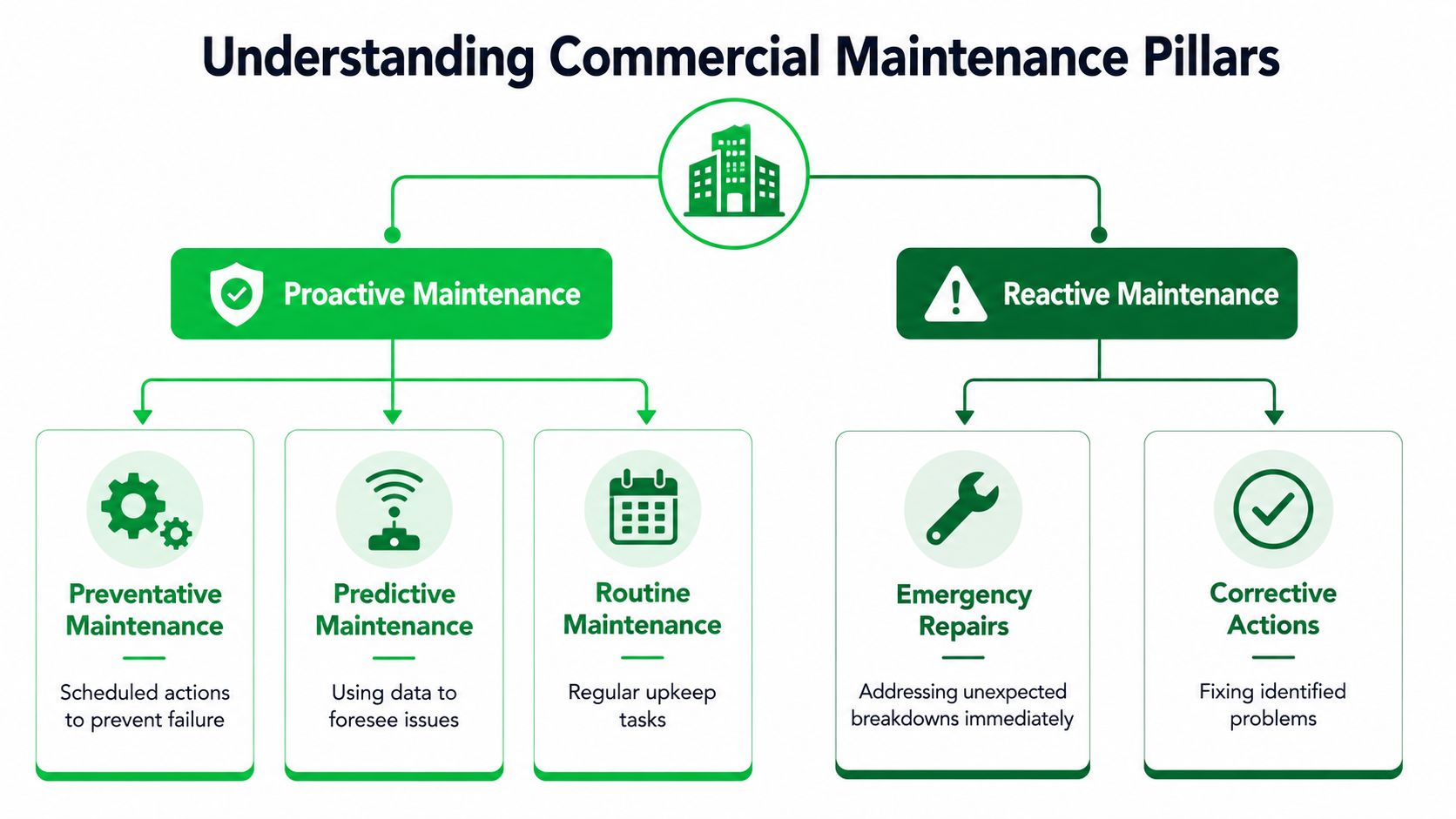
Commercial maintenance is easier to control when you separate it into two categories. Proactive maintenance is scheduled work that reduces failures, catches wear early, and keeps the property presentable and safe. Reactive maintenance is the work you do after something breaks, leaks, jams, or creates an immediate hazard.
Proactive maintenance
Proactive maintenance works like preventive healthcare, but the better comparison for owners is simple risk control. You inspect, clean, document, and service systems while they are still doing their job. In Northern Arizona, that matters because small exterior failures do not stay small for long. Freeze-thaw movement opens sealant joints. Snow loads expose drainage problems. High-altitude UV shortens the life of caulks, paint, and exposed finishes faster than many out-of-area vendors expect.
This usually includes:
- Preventive maintenance: Scheduled checks of HVAC, plumbing, electrical, roofing, drainage, glazing, and life-safety systems.
- Routine maintenance: Recurring work such as exterior glass cleaning, gutter clearing, drain checks, and keeping entries and walkways safe.
- Predictive maintenance: Using service records, inspection notes, and recurring problem areas to spot patterns before they turn into failures.
On mountain properties, exterior condition is not cosmetic only. Dirty upper glass can hide failed seals and drainage marks. Debris at roof edges can hold moisture where it should not sit. Hard-to-reach fascia and clerestory areas often get skipped because access takes planning, which is exactly why they deserve a set schedule. That is where commercial building exterior cleaning services and high-access equipment such as boom lifts earn their keep.
Reactive maintenance
Reactive work is still part of the job. Snow slides happen. Wind pulls flashing loose. A freeze can split a line or jam a threshold with ice. A tenant reports the problem, and the response needs to be fast, documented, and safe.
The trouble starts when reactive work becomes the default operating mode.
Buildings managed that way usually show the same patterns: repeat emergency calls, incomplete service notes, rushed vendor decisions, and repairs that cost more because the earlier warning signs were missed. I see this most often after winter storms, when a property has no clear inspection routine for roof drainage, upper elevations, and entry hardware. The building is not failing all at once. It is collecting small misses until one weather event exposes them.
A strong maintenance program does not remove reactive work. It reduces how many issues reach emergency status.
Why this matters at scale
Commercial property maintenance is a core operating function, not a side task. Analysts at IBISWorld's property management industry profile estimate the U.S. property management sector includes hundreds of thousands of businesses and generates substantial annual revenue. Owners who manage serious assets treat maintenance the same way. It gets a system, a schedule, and accountability.
That is especially true in Flagstaff, where weather swings are harder on buildings than many owners budget for at first. The properties that hold up best usually are not the ones spending the most in a panic. They are the ones inspecting the right areas at the right time, with clear scopes and reliable access for service crews.
Where access and monitoring fit in
Service coordination matters more as buildings add controlled entries, multiple tenants, and after-hours vendor visits. If your team is managing service windows, common areas, and restricted access points, tools like Smartphone controlled building entry can help reduce delays around vendor entry and keep routine work easier to document.
That matters on winter service days, when a crew may need to get in quickly, address the issue, and move on before conditions change again.
Essential Maintenance Services and Frequencies
A maintenance plan gets more effective when it's broken into service categories instead of one long to-do list. That helps you assign ownership, schedule the right vendors, and avoid the common problem of overchecking low-risk items while missing high-risk ones.
A practical benchmark used in commercial buildings is to separate tasks by frequency. Daily checks cover tenant-facing systems. Weekly checks focus on drainage and visible exterior trouble spots. Monthly work handles preventive servicing. Quarterly work prepares the property for the next season. Annual work covers inspections tied to safety and compliance. Industry guidance also notes that skipping scheduled maintenance tiers is associated with 40–60% higher emergency repair costs and can shorten the lifecycle of major equipment by 15–25%, based on Oxmaint's commercial building maintenance checklist guidance.
Exterior and grounds
Your exterior is the first place weather lands, so it needs rhythm.
| Area | Typical focus | Useful frequency |
|---|---|---|
| Parking lots and walks | Trip hazards, drainage, snow and ice planning | Daily to weekly |
| Landscape edges and debris zones | Pine needles, leaves, branch drop, irrigation overspray | Weekly |
| Entry areas | Glass, doors, hardware, lighting, slip hazards | Daily |
| Gutters and downspouts | Blockage, separation, overflow points | Weekly in debris-heavy periods, plus seasonal service |
For broader facility planning, Overton Security's management guide is a useful reference because it connects maintenance work with overall site operations and security expectations.
Building envelope
Expensive problems often begin with component failures. Roof edges, flashing, windows, sealants, siding, facade transitions, and drainage components all work together. If one part fails, water usually finds the weakness fast.
Pay close attention to:
- Roof drainage: Drains, scuppers, and valleys need regular checks, especially before storms.
- Glazing and frames: Failed seals, mineral buildup, and neglected joints can lead to leaks and deterioration.
- Facade condition: Cracks, open joints, and staining often point to moisture paths, not just appearance issues.
For properties that need recurring glass, facade, and exterior wash support, commercial building exterior cleaning services fit into this category because clean exterior surfaces make inspection easier and help crews spot developing issues sooner.
Interior systems
Mechanical spaces don't need drama. They need consistency.
- HVAC equipment: Check filters, airflow issues, unusual noise, and seasonal performance.
- Plumbing: Watch for slow leaks, drain backups, freeze risk points, and signs of mineral buildup.
- Electrical: Inspect panels, lighting, and any visible overheating or damaged components through proper qualified personnel.
Monthly servicing matters here because small mechanical problems rarely stay small for long.
Safety and compliance
Some tasks can't be treated as optional or “when there's time.”
- Fire alarms and sprinklers: Annual inspections and documented testing.
- Elevators and lift systems: Scheduled inspections and service records.
- Emergency lighting and exits: Regular checks to confirm they function as intended.
- Access points and railings: Frequent review in public-facing or high-traffic areas.
If you skip a tier, the whole plan weakens. Daily attention won't replace annual inspections. Annual inspections won't catch what weekly drainage checks would have prevented. Strong commercial property maintenance depends on the full cadence.
A Seasonal Maintenance Checklist for Northern Arizona
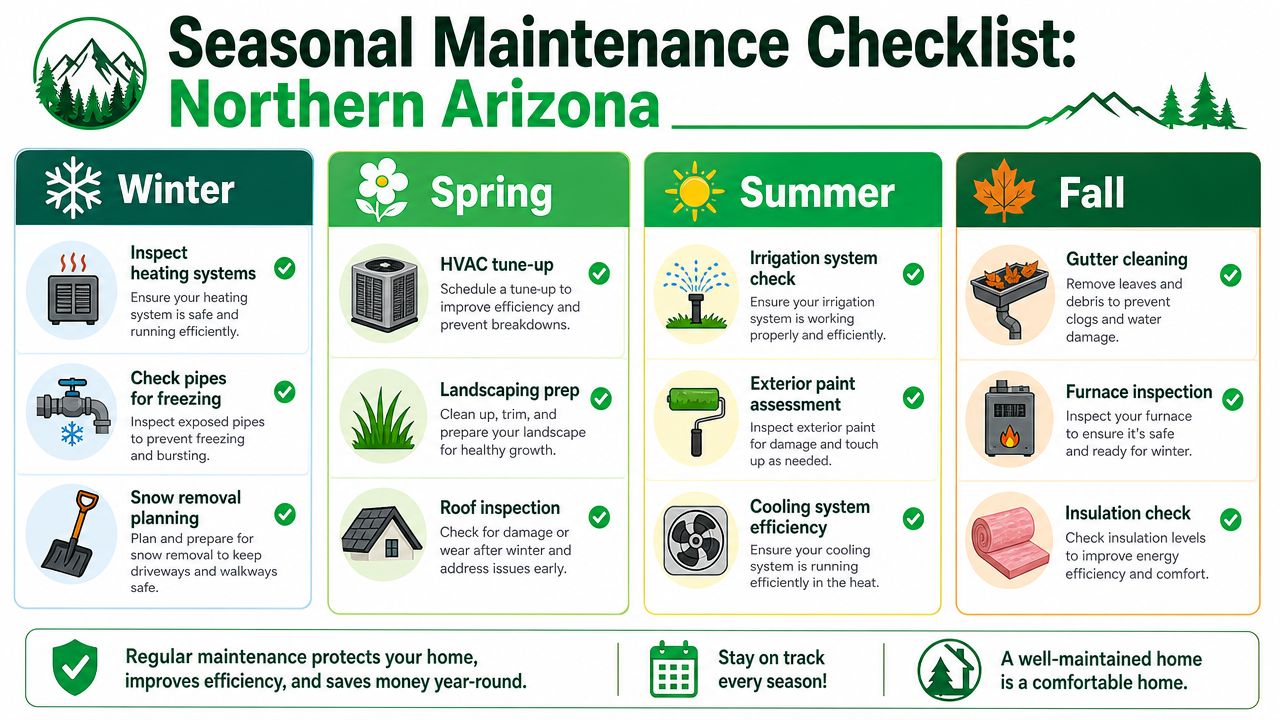
Generic maintenance calendars don't work very well in Flagstaff or Munds Park. The sequence matters as much as the task itself. A roof inspection after freeze-thaw damage is useful. The same inspection after the next storm is often late.
Industry guidance rarely puts enough emphasis on weather-driven sequencing, even though a property strategy that ignores it can turn routine tasks into safety or water-intrusion problems. That risk is amplified in Northern Arizona because of winter weather and elevation-related exposure, as noted in Atlas Facilities' discussion of commercial property maintenance priorities.
Spring recovery work
Spring in Flagstaff is when hidden winter damage finally shows itself. Snowmelt exposes drainage failures. Freeze-thaw movement shows up in joints, hardscape, and exterior finishes. Wind also starts carrying debris into places that were already stressed.
Focus on a post-winter reset:
- Inspect roof edges and drainage paths: Look for backed-up debris, loose components, and evidence of overflow.
- Review glazing and sealants: South- and west-facing exposures often take the hardest wear.
- Check pavement and entries: Cracking, heaving, and uneven transitions create trip hazards after winter.
- Clean exterior glass and frames: This isn't just appearance. It helps reveal seal failure, staining patterns, and drainage issues.
- Assess screens and vents: Remove debris and confirm they're secure and functioning.
For owners who want a broader seasonal rhythm, this seasonal home maintenance checklist for Northern Arizona is a practical companion reference.
Summer protection
Summer brings a different kind of stress. High-altitude UV is hard on sealants, finishes, and exposed materials. Monsoon moisture can also test drainage systems that looked fine in dry weather.
Key summer priorities include:
- Watch UV-sensitive materials: Caulks, painted trim, gaskets, and exposed plastics can degrade faster here than many owners expect.
- Confirm stormwater flow: Summer storms reveal poor roof and site drainage fast.
- Service cooling-related systems: Buildings under peak occupancy need reliable airflow and comfort.
- Clean high-visibility exterior surfaces: Retail, hospitality, and office properties notice the difference immediately in curb appeal and tenant perception.
In Northern Arizona, summer isn't a break from maintenance. It's inspection season for everything winter didn't destroy but may have weakened.
Fall winterization
Fall is where a lot of cost control happens. This is the season to clear, tighten, test, and prepare.
Use fall to handle:
- Gutter and downspout cleaning: Pine needles are a constant problem in this region.
- Roof and flashing checks: Don't head into snow season with known weak points.
- Door and window weatherproofing: Drafts and water intrusion often start at neglected transitions.
- Equipment prep: Heating systems, exterior faucets, and freeze-sensitive areas need attention before the first hard freeze.
Winter risk management
Winter maintenance in Flagstaff and Munds Park is about access, load, and water control. Snow doesn't just sit on roofs. It melts, refreezes, shifts, and reaches places it shouldn't.
During winter, stay on top of:
- Snow and ice removal planning: Entrances, walkways, and service routes need defined response procedures.
- Drainage monitoring during thaw periods: Midday melt followed by nighttime freeze creates repeat hazards.
- Exterior access equipment: Ladders, poles, boom access, and roof access points need careful safety review before use.
- Leak response documentation: If water appears, document the path, not just the symptom.
The best seasonal checklist isn't the longest one. It's the one timed to local weather reality.
How to Budget for Maintenance and Maximize ROI
A January ice dam at the entry canopy can wipe out months of careful budgeting. Water gets behind trim, stains interior finishes, and creates a slip risk at the front door. In Flagstaff and Munds Park, maintenance budgets work best when they are built around that kind of local reality instead of a flat annual guess.
Build the budget around systems, not guesses
Start with the parts of the property that fail differently in Northern Arizona. Snow load, freeze-thaw movement, pine debris, and high-altitude sun do not hit every system the same way. If the budget is just one general maintenance line, problem areas stay hidden until a repair bill forces the issue.
A practical budget usually breaks out like this:
| Budget bucket | What belongs there |
|---|---|
| Exterior upkeep | Glass, gutters, facade washing, pressure washing, site appearance |
| Building envelope | Roof checks, sealants, drainage corrections, weatherproofing |
| Mechanical and plumbing | Seasonal service, preventive checks, small repairs |
| Safety and compliance | Required inspections, testing, documentation |
| Contingency | Items found during inspections that should not wait |
That format gives owners and managers something useful. It shows where money is going, which items repeat every year, and which preventive services are keeping larger repairs off the board.
Where the return comes from
Return shows up in fewer emergency calls, longer material life, and less tenant disruption. It also shows up in appearance, which matters more than many owners admit. Stained stucco below an overflowing gutter or mineral buildup on a storefront sends a message before anyone walks through the door.
The best ROI usually comes from boring work done on time. Clearing drains before monsoon runoff. Washing glass before hard-water deposits bake on in the summer sun. Catching failed sealant after winter before moisture gets deeper into the wall assembly.
Water management is a good example. Budgeting for recurring commercial gutter cleaning is not about appearances. It is a control measure for runoff, fascia damage, ice formation near entries, and moisture tracking down exterior walls.
High-access work deserves its own line item on some properties. Multi-story glass, tall entry features, hotel canopies, and dealership facades often need more than ladders and hand tools. If the building requires boom lifts or pure-water systems to do the job safely and thoroughly, budget for that from the start instead of treating access as an afterthought.
Use records to justify spending
Good documentation settles a lot of budget arguments.
Keep photos by season, service dates, technician notes, and a short record of what was found versus what was deferred. After a year or two, patterns become obvious. You can show that one corner always ices first, one drainage run keeps clogging with pine needles, or one elevation takes the worst UV wear.
That record turns maintenance from a vague expense into a tracked operating decision. Owners are far more likely to approve a repeat service when they can see the condition before and after, the timing, and the repair that was avoided.
A short video overview can also help frame the value of building upkeep in practical terms:
If a line item keeps preventing water intrusion, slip hazards, tenant complaints, or premature replacement, it is earning its place in the budget.
Choosing Your Flagstaff Maintenance Partner
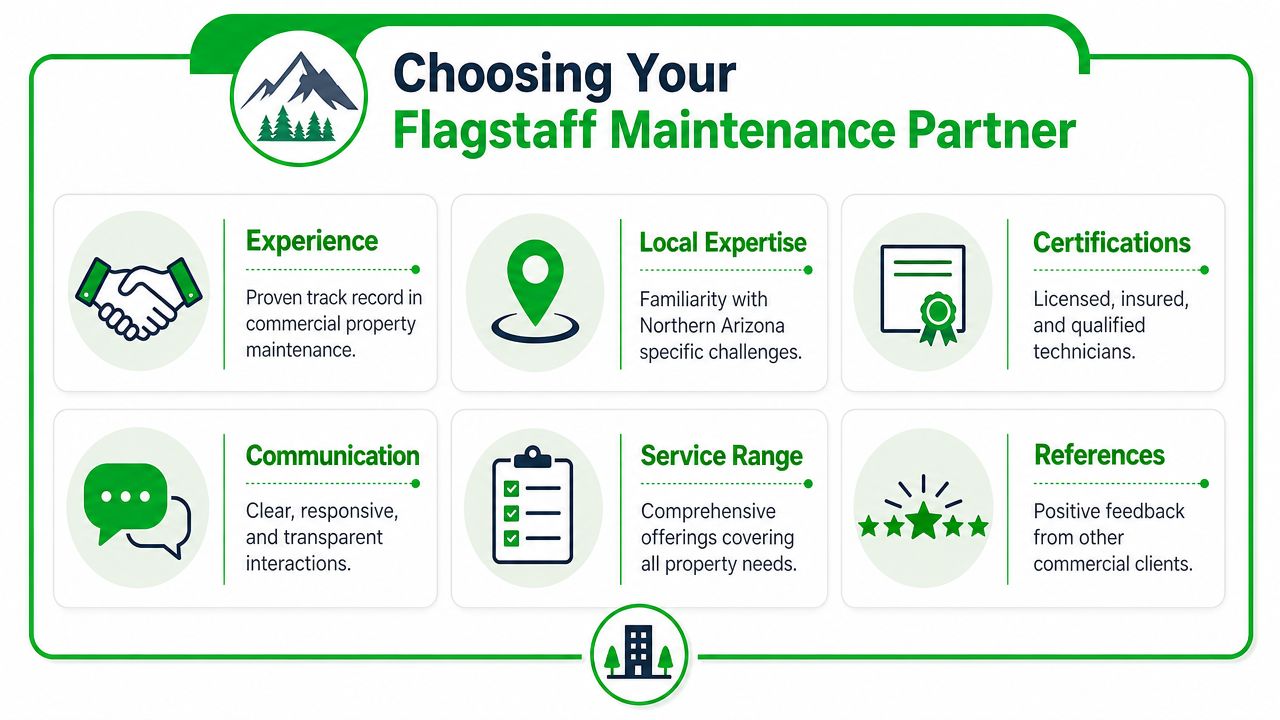
The right contractor should make your job simpler, not noisier. You want fewer missed details, fewer access problems, fewer excuses, and cleaner communication. That matters even more in Flagstaff, where snow, elevation, wind, pine debris, and UV exposure punish shortcuts quickly.
What to look for first
Start with the basics, but don't stop there.
- Licensing and insurance: Ask for proof. Don't assume.
- Local operating experience: Northern Arizona conditions are different from Phoenix, Prescott, or out-of-state markets.
- Safety training: Exterior work at height, winter access, and commercial foot traffic require disciplined crews.
- Communication: You should know when the crew is arriving, what was done, and what was found.
A contractor can have decent equipment and still be a poor fit if they don't document issues or communicate clearly with property managers.
Equipment changes what's possible
Many vendor lists prove insufficient. If a property has tall atriums, dealership glass, hotel entries, multi-story facades, or hard-to-reach glazing, the company needs proper access tools. That can mean ladders, water-fed poles, squeegees, boom lifts, scissor lifts, or a pure-water system, depending on the building and the scope.
For exterior glass and facade work, don't settle for improvised methods. Professional commercial window cleaning should not mean a rag and spray bottle. On real properties, crews need the right combination of poles, ladders, squeegees, and purified water systems to clean safely and consistently.
Clean windows are part of maintenance, not just presentation. Dirty glass hides frame issues, traps debris in corners, and keeps people from noticing failing seals and runoff patterns.
Ask how they treat the property
Good crews don't just clean the visible surface and leave. They protect landscaping, use careful ladder placement, manage runoff, and leave the building ready for the next day of business.
For window service in particular, ask direct questions:
- Do they remove, clean, and reinstall screens when the property calls for it?
- Do they have in-house high-access equipment or do they rely on rentals and subcontractors?
- Do they handle surrounding details like frames, sills, and debris control?
- Do they work with a documented safety process?
One local option that fits these standards is Pine Country Window Cleaning. The company was started in 1999 by Flagstaff native David Kaminski and handles commercial glass, gutter cleaning, pressure washing, and high-access work with in-house equipment including boom lifts, scissor lifts, pure-water tools, and a high atrium lift. For property managers, that matters because it reduces delays and keeps specialized exterior work under one roof.
Local knowledge shows up in the small decisions
A contractor who really knows Flagstaff and Munds Park won't schedule exterior work the same way they would in a mild climate. They'll think about freeze-thaw timing, snowpack, pine needle accumulation, roof runoff, and the way high-altitude sun shortens the life of exposed materials.
That local judgment often matters more than a polished sales pitch. Commercial property maintenance works best when the people touching the property understand what the next season is likely to do to it.
Start Protecting Your Commercial Asset Today
Commercial property maintenance works when it's planned around risk, weather, and the way your building is used. In Flagstaff and Munds Park, that means paying close attention to snow, freeze-thaw cycles, drainage, pine debris, and UV exposure. Generic schedules miss too much.
The smartest move is to address problems while they're still manageable. Clean drainage paths. Inspect exterior surfaces before weather changes. Keep glass, access points, and surrounding components in working order. Document what you find and act on it before a small issue becomes a service interruption.
If your property has already suffered damage, it can also help to understand how restoration firms approach larger recovery work in other markets. This Florida business restoration guide offers a useful contrast between maintenance prevention and full-scale restoration response.
If you want a practical outside-in assessment of your building, contact Pine Country Window Cleaning. They can provide a free, no-obligation estimate for commercial window cleaning, gutter cleaning, pressure washing, and other exterior maintenance services that help protect Northern Arizona properties year-round.