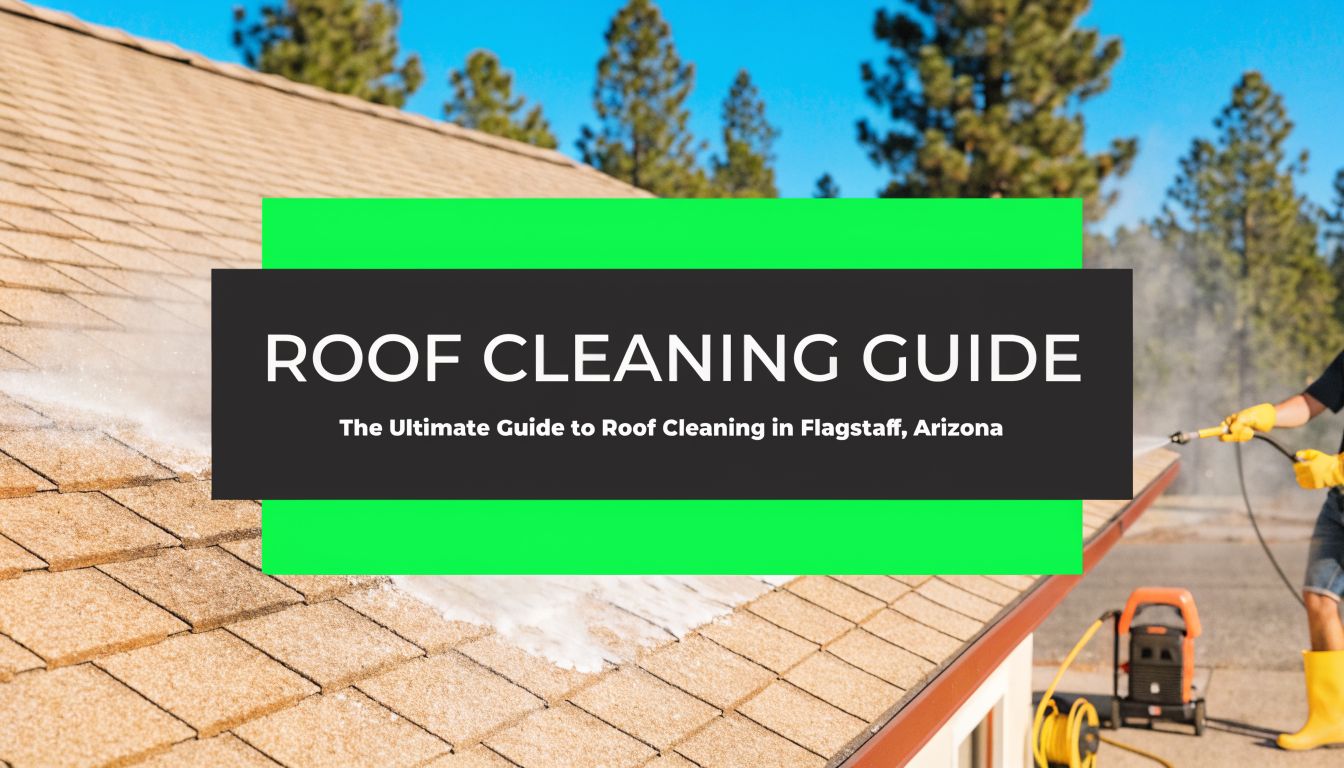
After a wet monsoon stretch, a Flagstaff roof tells on itself. Pine needles collect in the valleys, dark streaks start to show near the shaded side, and the edges around gutters and eaves hold onto debris longer than they should. Up in Munds Park, cabins deal with the same thing, plus longer periods between visits, which means buildup can sit there season after season.
That's why roof cleaning services matter here. In Northern Arizona, roof care isn't a cosmetic add-on. It's part of taking care of a home in a place with strong sun, pine debris, snow, and sudden moisture swings. Homeowners across the country are treating it that way too. The roof cleaning market is projected to grow from USD 3,343.3 million in 2025 to USD 4,500 million by 2035, reflecting a broader understanding that regular maintenance helps extend roof life and avoid repairs that average over $1,100, or full replacements that can cost over $11,500, according to Wise Guy Reports' roof cleaning services market analysis.
Your Guide to Roof Cleaning in Northern Arizona
If you're standing in your driveway looking up at a roof that seems a little darker, dirtier, or more clogged than it did last year, you're not imagining it. Flagstaff roofs work hard. They take direct high-altitude sun, pine sap, needles, dust, ash, and then monsoon moisture that can turn trapped debris into a long-term problem.
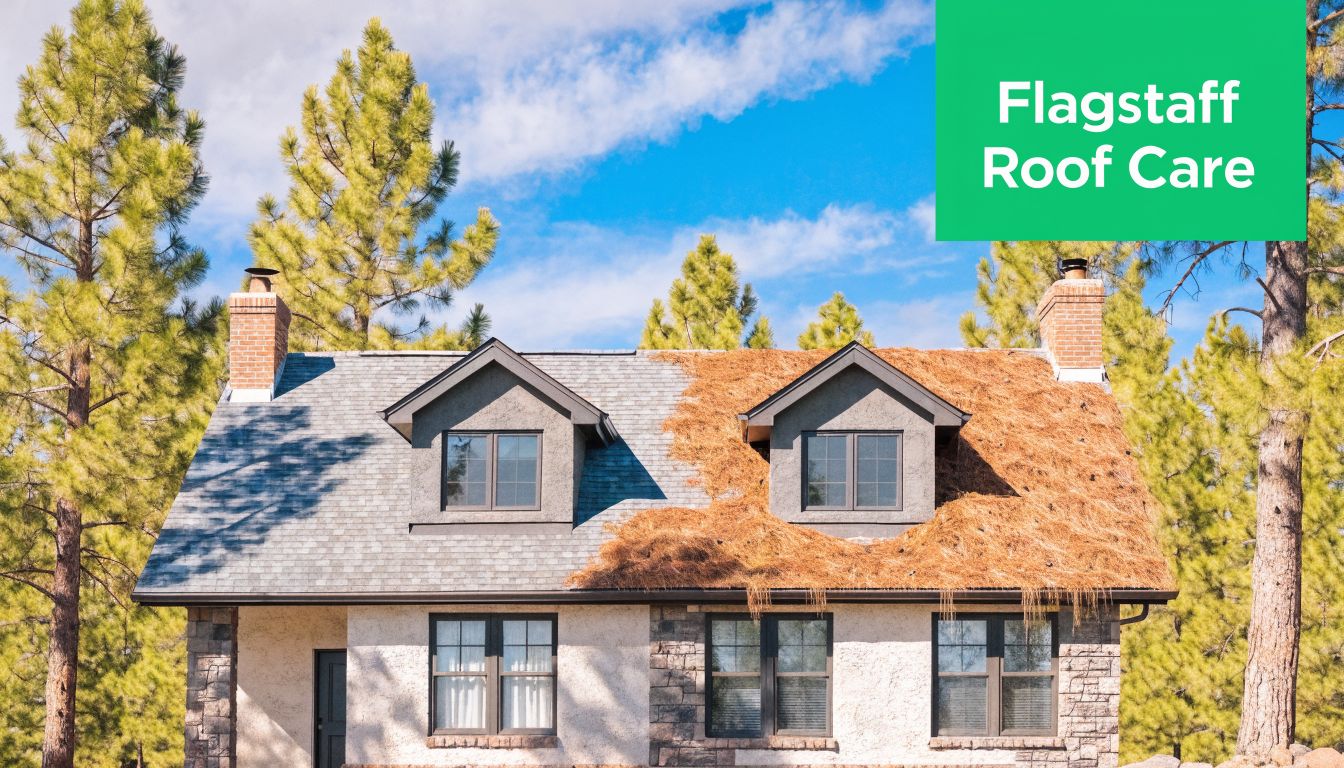
A clean roof sheds water better, shows problem areas sooner, and usually gives you a clearer picture of the actual condition of the roofing material. That matters whether you live here full time or only get up to your cabin part of the year. Deferred maintenance is easy in a mountain town. It also gets expensive fast.
What roof cleaning really means here
In Northern Arizona, roof cleaning services usually involve more than spraying off visible dirt. The work often includes:
- Debris removal: Pine needles, cones, leaves, and branches need to be cleared from valleys, transitions, and edges.
- Growth treatment: Dark staining, moss, and organic buildup need the right method, not brute force.
- Drainage protection: Gutters, downspouts, and roof edges need to stay open so water can move off the roof instead of backing up.
- Property protection: Good crews protect siding, plants, walkways, and surrounding surfaces while they work.
Local rule: A roof can look “mostly fine” from the ground and still be holding debris in exactly the places that create trouble first.
Homeowners also benefit from learning how roofers in other regions explain roof condition and system performance. If you want a broader perspective on materials and maintenance priorities, this guide to reliable roofing for Metro NY homeowners gives useful context on how professionals think about roof protection as a whole.
Why this isn't a small maintenance item
A roof is one of the most expensive parts of a home to ignore. Cleaning is often the simplest way to catch small issues before they turn into leaks, edge rot, flashing trouble, or premature wear. In a place like Flagstaff, where weather and debris work together, routine care pays off in roof life, cleaner drainage, and fewer unpleasant surprises.
Why Your Flagstaff Roof Needs Regular Cleaning
A dirty roof in Flagstaff usually isn't just dirty. It's holding material that keeps moisture where it doesn't belong, especially in shaded sections and low spots. Pine needles don't slide off neatly. They mat together, trap grit, hold water, and create a layer that blocks proper drainage.
That's the practical reason regular roof cleaning services matter. The second reason is that Northern Arizona weather exposes weak spots quickly. A roof can go from “we should probably deal with that later” to “why is there staining on the ceiling” in one season if debris sits in the wrong place long enough.
What pine debris and sun do to roofing
Ponderosa pine is beautiful. It's also rough on roofs. Needles gather under overhanging branches, around chimneys, and in valleys where water should move freely. Sap and fine organic debris cling to shingle surfaces and hold dust against them.
At the same time, Flagstaff's high-altitude sun bakes exposed roofing day after day. That cycle matters. Debris traps moisture, then the sun dries the surface rapidly. Over time, repeated wet-dry stress can shorten the service life of vulnerable areas and make roof components age unevenly.
The damage usually starts in quiet places
Most problem spots aren't obvious from the street. They tend to show up in areas like these:
- Valleys and transitions: Roof geometry concentrates runoff and catches pine litter.
- North-facing slopes: Shadier sections stay damp longer after storms.
- Around flashing: Debris collects near penetrations and can hide developing trouble.
- Along eaves: Fine material settles at the edge and interferes with clean drainage.
A roof rarely fails all at once. Homeowners usually find a small neglected area that had months, or years, to become a larger repair.
Professional cleaning also makes inspection more meaningful. Once the organic layer is gone, you can see the roof. That's when worn sealant, lifted edges, exposed fasteners, or damaged areas are easier to identify and address.
If you like seeing how inspection-focused professionals approach roof condition from another market, this overview of roofing inspections for UK homeowners is a helpful example of what a careful evaluation mindset looks like.
It protects more than curb appeal
Yes, a clean roof looks better. But the bigger value is functional. Cleaning helps water move off the roof properly, reduces places where growth can take hold, and gives homeowners a chance to deal with maintenance while it's still manageable. For second homes and short-term rentals, it also helps prevent the kind of hidden exterior neglect that gets worse between visits.
Soft Wash vs Pressure Wash The Right Method for AZ Roofs
If there's one decision that matters most with roof cleaning services, it's method. The wrong method can do damage while the roof still looks clean from the ground. The right method removes buildup without beating up the roofing material.
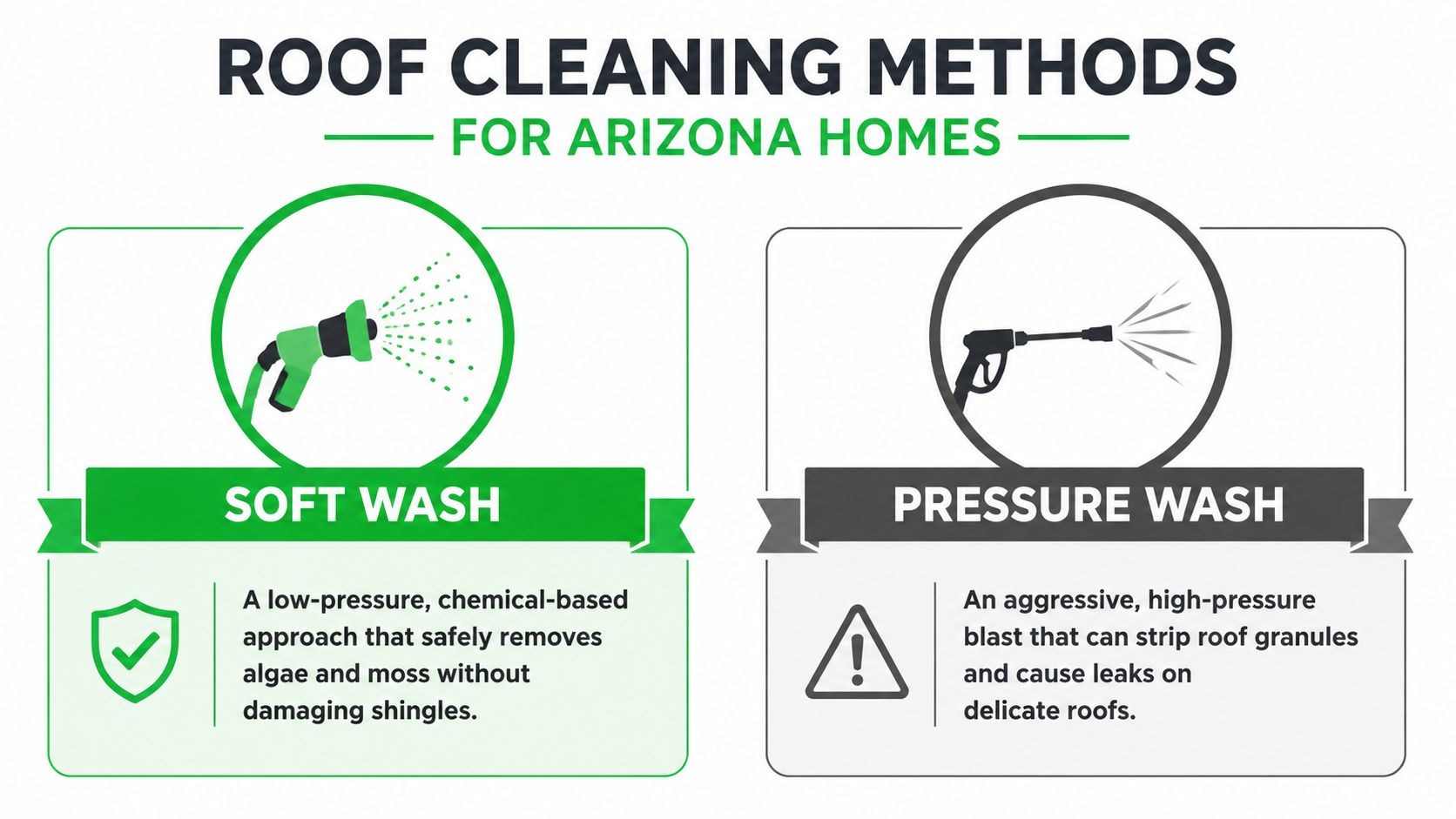
On many Northern Arizona homes, soft washing is the safer choice. It uses low-pressure water delivery and specialized treatment to break down organic growth instead of blasting it off mechanically. By contrast, high-pressure washing can be too aggressive for common residential roofing materials.
The side-by-side difference
| Method | How it works | Main advantage | Main risk |
|---|---|---|---|
| Soft wash | Low-pressure application with specialized biocides | Targets organic growth with less mechanical stress | Requires correct chemical handling and proper rinse control |
| Pressure wash | High-force water stream removes surface buildup | Fast visible cleaning on some hard surfaces | Can damage shingles, tiles, seals, and warranties on the wrong roof |
The technical case is straightforward. Soft-washing uses low-pressure delivery and specialized biocides to chemically break down growth, extending cleaning durability to 12 to 18 months. In contrast, high-pressure washers at 1,450 to 2,900 psi can cause micro-fractures in shingles, void warranties, and lead to expensive repairs, according to the vinyl roof cleaning guidelines cited here.
Why pressure is risky on many homes here
Pressure washing has its place on some exterior surfaces. Roofs are different. Asphalt shingles, composite materials, and older roof sections can react badly to concentrated force. The water stream doesn't just remove grime. It can disturb protective granules, open up tiny fractures, and push water where it shouldn't go.
That risk is even more frustrating because the damage may not show immediately. The roof looks cleaner, but the protective surface may be weaker than it was before the job started.
Practical rule: If a cleaning method depends on force to solve a roof problem, ask what that force is doing to the roof itself.
What works better in Flagstaff and Munds Park
Soft washing fits the local conditions better because the problem here is often organic buildup mixed with pine debris and staining, not just loose dirt. A lower-pressure approach lets technicians treat the growth while protecting shingles, edges, and flashing.
For homeowners comparing exterior cleaning options more broadly, Pine Country also outlines how different surface-cleaning methods are used on residential exteriors in its pressure washing services overview. The key is using the right tool on the right surface. A driveway and a shingle roof should never be treated as the same job.
The question to ask any contractor
Ask one simple question. “How are you cleaning the roof, and why is that method appropriate for my roofing material?” If the answer is vague, or if the plan sounds like blasting everything clean as quickly as possible, keep looking.
The Professional Roof Cleaning Process Explained
A careful roof cleaning job follows a sequence. Good crews don't just show up, spray solution, and leave. They inspect first, protect the property, remove the debris that would interfere with the wash, and clean with a method that fits the roof.
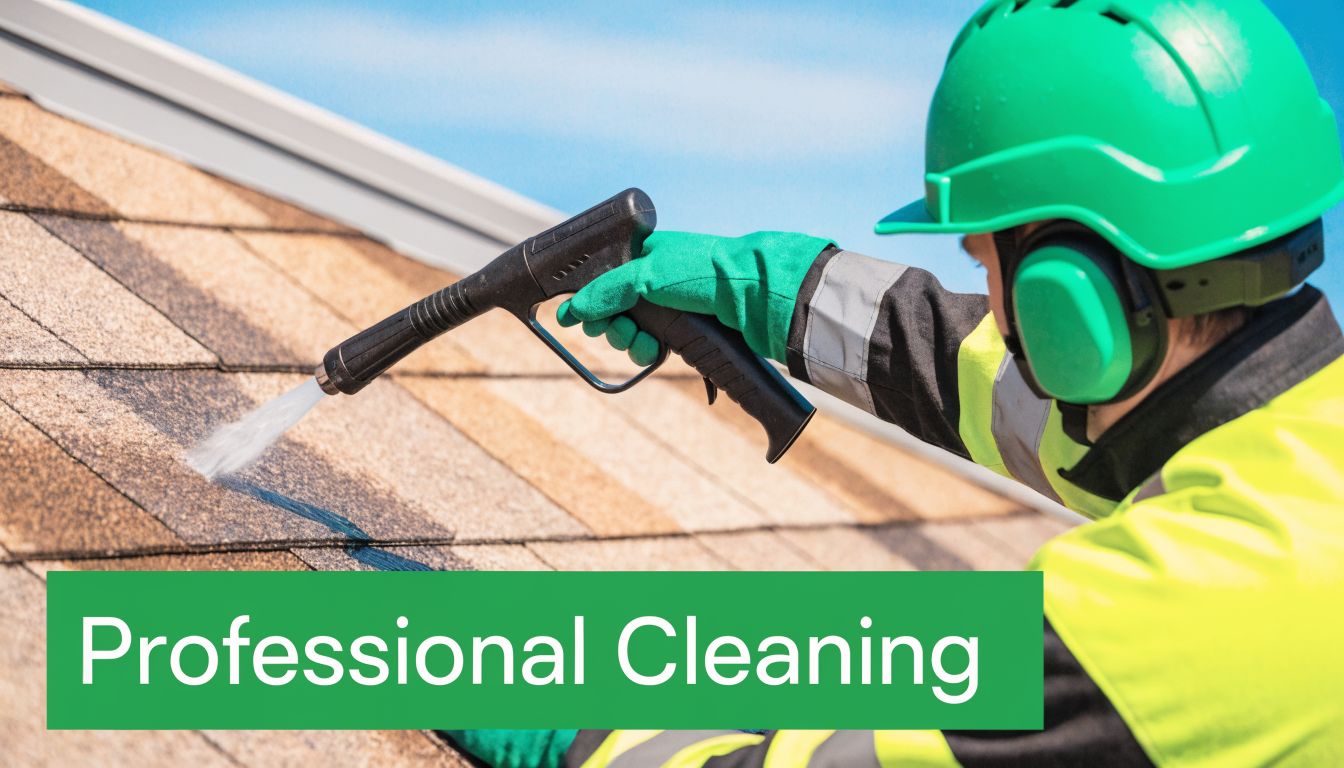
A professional protocol is more than appearance. According to this breakdown of the seven-stage roof cleaning process, dry moss removal before washing and a final biocide application are critical parts of effective cleaning. The same source notes that skipping the initial dry removal stage can reduce water infiltration prevention by up to 40% and lead to faster regrowth.
The sequence that protects the roof
A proper roof cleaning process usually includes these stages:
Inspection first
The crew checks roof condition, identifies fragile areas, and looks at how debris is collecting. On some properties, a visual inspection is enough. On others, a more detailed view helps spot problem zones before work begins.Site protection
Tarps, controlled runoff practices, and careful setup protect landscaping, siding, walkways, and entry points. These measures indicate whether a company respects the home or just wants to finish quickly.Dry debris and moss removal
Heavy organic material gets removed before the wash stage. That keeps gutters from clogging during the cleaning and prevents matted material from being pushed deeper into the roof surface.Active cleaning
The crew applies the chosen method, often a soft wash on residential roofs in this area, to break down staining and growth.
Why prep and cleanup matter
The prep work is what homeowners don't always see, but it often determines whether the job is clean, safe, and effective. Protecting plants, controlling where runoff goes, and avoiding damage to roof edges or fixtures is part of professional workmanship.
This walkthrough gives a useful visual of safe exterior cleaning technique and setup:
The final stages separate pros from splash-and-dash crews
After the main cleaning, the roof should be rinsed appropriately for the material, treated for lingering organic growth if needed, and checked again. The surrounding property should also be cleaned up so the home doesn't look like the roof job ended halfway through.
- Low-pressure rinse: Used where appropriate to avoid damaging the roofing surface.
- Biocide follow-up: Helps slow regrowth after visible buildup is gone.
- Final review: Confirms that debris is cleared and no area was missed.
- Ground cleanup: Needles, sludge, and runoff residue shouldn't be left around the house.
A reliable crew works in an order that protects the roof first, then the property, then the long-term result.
Special Considerations for Flagstaff and Munds Park Homes
Generic roof cleaning advice misses the reasons roofs get dirty here in the first place. A Flagstaff roof isn't dealing with the same environment as one in a humid lowland suburb. High altitude, pine cover, snow, monsoon moisture, and ash all affect how buildup forms and how it should be removed.
That's especially true for cabins and second homes in Munds Park, Pine Canyon, Forest Highlands, and similar neighborhoods where roofs may go longer between full checkups. What sits on the roof has more time to settle in.

Pine needles, shade, and monsoon moisture
The most common local pattern is straightforward. Pine needles gather first. Then fine dust and pollen settle into that layer. Then monsoon moisture or snowmelt gives that material time to stay damp.
That combination creates several practical problems:
- Blocked drainage paths: Valleys and lower roof sections stop shedding water cleanly.
- Persistent staining: Organic matter leaves discoloration that gets harder to remove later.
- Localized wear: Areas under debris age differently from exposed parts of the roof.
- Gutter stress: Roof debris rarely stays on the roof. It moves into the drainage system next.
That's why roof care and gutter care often need to be handled together. If debris is removed from the roof but the drainage line stays packed, the problem moves downhill. For homes that need both addressed, gutter cleaning services in Flagstaff are part of the same property-protection conversation.
High-altitude exposure changes the cleaning approach
Flagstaff roofs dry fast. That sounds good until you consider what rapid drying can do after a roof has already been stressed by debris, UV exposure, and temperature swings. A method that's too aggressive can turn a maintenance job into surface damage.
Local roof cleaning services need to account for roofing material, slope, access, surrounding trees, and how much debris has built up in concentrated spots. A one-method-fits-all approach doesn't hold up well here.
Roofs in mountain communities need cleaning plans built around exposure, access, and debris type, not just around what equipment a contractor already has on the truck.
Wildfire ash needs a different mindset
Ash and soot are not the same as pine needles or ordinary dust. They spread differently, settle into roof texture, and can move into gutters and downspouts fast. On cabins and second homes, that can leave residue sitting for long stretches if nobody is there to spot it.
The correct approach involves careful removal, controlled handling, and attention to the entire roof-and-drainage system. Forcing ash around with a high-pressure stream can create a mess on siding, decks, and ground-level surfaces below.
Homes here need a local eye
Experience in Northern Arizona matters for these reasons. A crew that understands local roofs knows to look at tree cover, prevailing exposure, cabin access, snow patterns, and whether the owner is on site regularly. That's different from working in neighborhoods where roofs have simpler conditions and easy year-round visibility.
Pine Country Window Cleaning is one local option that handles exterior property care with in-house access equipment, including lifts for hard-to-reach areas, which can matter on taller homes and complex rooflines.
How to Choose a Roof Cleaning Contractor in Northern Arizona
Homeowners usually ask the wrong first question. They ask, “What do you charge?” before they ask, “How are you going to do the work safely?” Price matters, but roof cleaning services should be screened for method, insurance, local experience, and property protection first.
A lower bid can get expensive if the contractor uses too much pressure, doesn't protect landscaping, or leaves you with roof damage and no clear accountability.
Questions worth asking before you hire
Use a simple checklist when you talk to any contractor:
- Are you insured for this type of work? Ask about liability coverage and workers' compensation.
- What cleaning method do you use on my roofing material? The answer should be specific, not generic.
- How do you protect plants, siding, and walkways? Good contractors can explain their process clearly.
- Do you have experience with Flagstaff and Munds Park homes? Tree cover, steep access, snow exposure, and second-home conditions all matter here.
- Who is doing the work? Trained technicians and safe access practices matter on high-level jobs.
Look for signs of a real operation
A dependable contractor usually has more than a truck and a pressure washer. They have a repeatable process, professional equipment, clear communication, and enough local familiarity to recognize when a roof should be cleaned differently.
That's also true when you're hiring for broader exterior maintenance. If you want to compare companies that handle multiple property-care tasks, reviewing a provider's full list of cleaning services in Flagstaff can help you see whether they operate like a professional service company or a one-off gig crew.
Ask contractors to explain what they won't do. The answer tells you a lot. Good companies know which roofs shouldn't be hit with high pressure, which conditions require extra caution, and when a repair issue should be flagged before cleaning starts.
Local experience should sound local
If a company talks only in generic terms, be careful. Northern Arizona jobs often involve pine litter, cold-weather access, complex slopes, and homes that sit vacant part of the year. A contractor who knows the area should talk about those realities naturally, because they've seen them repeatedly.
Frequently Asked Questions About Roof Cleaning
How often should a roof be cleaned in Flagstaff?
Flagstaff roofs do not follow a one-size-fits-all schedule. A home tucked under ponderosa pines usually needs more frequent attention than a roof out in full sun, and a shaded north-facing section often holds needles, ash, and damp debris longer after monsoon weather or snow.
For many local properties, an annual inspection is the right baseline. In Munds Park, heavily wooded lots and part-time cabins often need closer watch because buildup can sit for months before anyone notices it.
Is soft washing safe for plants and pets?
Yes, if the crew handles the job correctly.
Safe roof cleaning depends on prep and control. That means wetting and protecting landscaping, applying cleaning solution carefully, managing runoff, and rinsing surrounding areas thoroughly. Around Flagstaff homes, I also pay attention to downhill beds, wood decks, and needle-filled gutters because runoff tends to collect there first.
What does roof cleaning usually cost?
Roof cleaning prices vary with roof size, slope, material, access, and the amount of debris or staining present. A simple single-story roof with light buildup costs less than a steep roof under dense pine cover with thick needle piles, ash residue, and limited access around the house.
National price ranges can give a rough starting point, but they do not capture a lot of Northern Arizona conditions. Snow exposure, second-story access, fragile areas around skylights, and heavy organic debris all affect labor and safety. The most accurate price comes from a site visit or a detailed estimate based on photos.
If your roof is holding pine needles, staining, or runoff-related debris, Pine Country Window Cleaning can help you schedule an estimate and figure out the safest next step for your home or cabin. Since 1999, the company has served Northern Arizona with practical exterior care, clear communication, and crews that respect the property while they work.