

You know the moment. Morning light hits the glass, the San Francisco Peaks are out, the pines look sharp, and then your windows ruin the whole view. What should feel bright and open looks dull behind dust, pollen, dried snowmelt, and a film of hard water spotting that seemed to appear overnight.
That’s a common problem in Flagstaff and Munds Park. A home can be beautiful, well kept, and still feel a little tired if the glass is hazy. In a mountain town, windows aren’t just functional. They frame the reason many people live here in the first place.
Homeowners also have less time to fuss with ladders, screens, and streaks. The broader residential window cleaning market is projected to reach $15.2 billion in 2025, reflecting how many homeowners now prefer professional results and time-saving service, according to Market Report Analytics. That trend makes sense in Northern Arizona, where window care is more demanding than generic advice suggests.
If you’re planning updates that bring in more light, it’s also worth looking at design ideas like garden windows over kitchen sink. Features like that make clean glass even more important because every smudge shows.
A professional window cleaning service residential homeowners can rely on does more than make panes look better for a few days. It protects the glass, keeps tracks and screens cleaner, reduces the grime that gets blown back inside, and helps the whole house feel cared for. That matters in a place with four real seasons and plenty of airborne debris.
Pine Country Window Cleaning was started in Flagstaff by David Kaminski in 1999, and that local history matters because window care here is local work. Cleaning glass in a high-altitude pine forest is different from cleaning glass in a flat, humid city. The tools are different. The timing is different. The problems are different.
Enjoying Your Flagstaff View Through Crystal-Clear Windows
A lot of homeowners call when the view starts disappearing in layers. First it’s a little dust. Then spring pollen sticks to it. Then summer storms leave spotting. By winter, the sun sits low enough to show every streak and every missed edge.
That cycle is why a proper window cleaning service residential homeowners use regularly makes such a visible difference. Clean glass changes the room. More light gets in, wood finishes look warmer, and your eye goes to the view instead of the haze on the pane.
Why mountain homes show dirt faster
Flagstaff homes have big visual assets. Picture windows, tall great-room glass, kitchen windows facing the trees, and sliders out to decks all pull the outdoors in. Those same windows also expose every bit of buildup.
In town and in the surrounding neighborhoods, the usual culprits are easy to recognize:
- Pine pollen: It clings to damp glass and screens, then bakes on.
- Dust and windblown grit: It leaves a fine film that makes windows look gray.
- Sprinkler overspray and snowmelt minerals: They leave white spotting and sometimes stain frames.
- Smoke and ash: After wildfire season, even light residue can dull the glass.
Clean windows don’t just look better. They let the house work the way it was designed to work, with light, views, and openness.
Why quick DIY results rarely last
Most homeowners can improve a window for a few minutes. Very few can restore the whole window system properly with household tools. The trouble isn’t effort. It’s the combination of residue, access, and detail work around screens, tracks, edges, and frames.
That’s where experience shows. A seasoned cleaner doesn’t just wash the center of the pane. The work includes reading the glass, spotting mineral staining early, protecting surrounding surfaces, and using the right method for the type of dirt that’s there.
In Northern Arizona, that local judgment matters as much as the equipment.
The Professional Difference Why Squeegees Beat Windex

The biggest difference between DIY cleaning and professional work is simple. Professionals clean glass with systems, not just products. The goal isn’t to make a window look better for an hour. The goal is a clear, even finish without residue, drips, disturbed screens, or damage to surrounding materials.
A spray bottle and paper towels leave a lot behind. They move dirt around, create static, smear oils, and miss the edges where streaks start. A professional squeegee, scrubber, detailing cloth, extension pole, ladder setup, and pure-water equipment are built for a different result.
Squeegee work is a skill, not a prop
A squeegee isn’t just a tool you buy. It’s a technique. Rubber condition matters. Angle matters. Pressure matters. So does the path across the glass. Good squeegee work removes the water cleanly instead of spreading a dirty film into corners and edges.
For many residential windows, especially where there’s pollen, sap mist, bug residue, or grime from weather exposure, a traditional hand-cleaning method is still the right call. According to Valcourt’s guide to professional window cleaning, water-fed pole systems use purified water to achieve a spot-free finish by eliminating mineral deposits, while traditional squeegee methods excel on heavy grime and can deliver 99% streak-free results when handled properly.
That trade-off matters. Pure water is excellent for many exteriors. It isn’t the answer for every stain.
Pure water works, but only when it fits the job
On higher exterior glass, a water-fed pole system lets crews work safely from the ground in many cases. Purified water rinses clean because it doesn’t leave mineral residue behind. That’s a huge advantage on routine maintenance cleaning.
If you’re curious how professionals think through exterior methods, this breakdown of the best outside window cleaner is useful because it explains why the “best” choice depends on the window condition, not just the product name.
For homeowners dealing with mineral spotting, it also helps to understand what causes the issue in the first place. This guide on how to remove hard water stains gives good background on why deposits bond to glass and why improper scrubbing can make things worse.
Practical rule: If the glass has bonded mineral stains, sap residue, paint specks, or post-season grime, the answer usually isn’t “more spray.” It’s a different method.
A professional crew also protects the house while cleaning. Towels are placed where they need to be. Interior floors and sills are respected. Furniture, blinds, and wood trim are worked around carefully. Good window cleaning should leave cleaner glass, not a wet mess below it.
Here’s a short look at professional technique in action:
What works and what doesn’t
A quick comparison makes the point:
| Method | Works well for | Usually falls short on |
|---|---|---|
| Spray bottle and household towels | Small touch-ups on light interior smudges | Residue, lint, edge streaks, larger panes |
| Professional squeegee and scrubber | Interior glass, detailed exterior work, heavy grime | Requires training to avoid lines and drips |
| Pure-water pole system | Routine exterior cleaning, higher accessible windows, spot-free rinsing | Bonded debris and heavy contamination |
| Improvised ladder cleaning | Very little, beyond giving access | Safety, consistency, and quality |
Pine Country Window Cleaning uses the professional-grade approach homeowners usually expect but rarely get with DIY tools: squeegees, poles, ladders, microfiber detailing, and pure-water brushes selected for the condition of the glass. That’s what separates a polished finish from a temporary wipe-down.
A Complete Service Checklist From Screens to Sills
When homeowners say they want their windows cleaned, they usually mean the glass. A real window cleaning service residential crews provide should cover much more than that. The window is a system, not a pane. If the screens are dusty, the tracks are packed, and the sill corners are full of debris, the job isn’t finished.
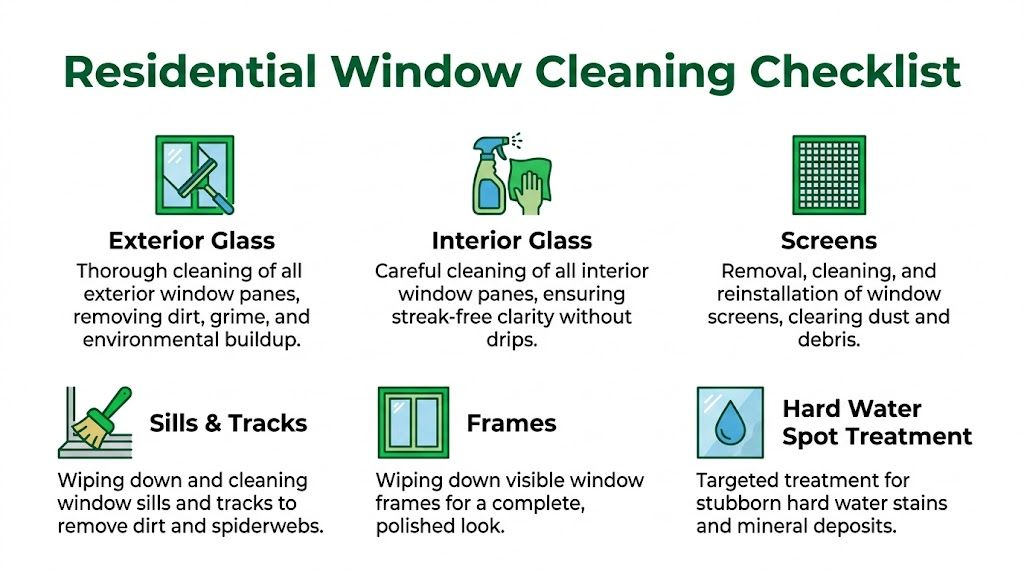
What a complete residential service should include
A professional service goes beyond glass and addresses the broader window assembly. According to Prime Time Window Cleaning’s breakdown of the 12 core services, tracks and sills can trap up to 60% more debris, which contributes to corrosion and wear if it’s ignored.
That’s especially relevant in Flagstaff, where snow, dust, and organic debris collect in places homeowners don’t always notice until a window sticks or a sill starts looking rough.
A thorough service checklist looks like this:
- Exterior glass cleaning: This removes dust, pollen, bug marks, water spotting, and environmental film from the outside panes.
- Interior glass cleaning: Interior panes are cleaned carefully with attention to drips, floors, furniture, and trim.
- Screen removal and cleaning: Screens come out, get cleaned properly, and go back in correctly.
- Track and sill cleaning: Loose dirt, cobwebs, debris, and grime are removed from the channels and ledges.
- Frame wipe-down: Visible frame surfaces are cleaned so the window looks finished, not half-done.
- Spot treatment where needed: Mineral staining and other stubborn residue may need targeted treatment, not standard washing.
For homeowners who want a closer look at one often-overlooked part of the job, this page on residential screen cleaning is useful because it shows why dirty screens can make clean glass still look dull.
Screens matter more than most homeowners think
In Northern Arizona, screens catch an enormous amount of fine material. Pine pollen, dust, ash, and cobwebs build up gradually, then blow back toward the house when windows are opened. Even when the glass is clean, a dirty screen makes the whole opening look hazy.
A good crew removes screens carefully, cleans them, checks fit, and reinstalls them the way they came out. That sounds basic, but it takes attention. Bent frames, mismatched placements, and loose tabs are all signs of rushed work.
A spotless pane behind a dirty screen still looks dirty from inside the room.
The overlooked details that separate average from professional
Tracks and sills tell you a lot about the standard of service. They also tell you a lot about how the home is affected by its environment. Mountain homes collect insect debris, plant matter, and fine grit in corners and channels. If those areas are skipped repeatedly, windows operate less smoothly and the entire opening looks neglected.
The same goes for frames. Overspray, oxidation, and grime around the perimeter can make freshly washed glass look unfinished. A professional cleans the visual field around the pane so the result looks complete.
Here’s a homeowner-focused checklist you can use when evaluating any company:
| Area | What to expect |
|---|---|
| Glass | Interior, exterior, or both, cleaned without residue |
| Screens | Removed, cleaned, and reinstalled |
| Tracks and sills | Debris removed and surfaces wiped down |
| Frames | Visible frame surfaces detailed |
| Access care | Ladders, poles, and tools used without damaging home surfaces |
| Problem spots | Honest discussion of what can be cleaned versus restored |
Why this protects the home, not just the view
Routine service isn’t only cosmetic. Dirt holds moisture. Mineral deposits get harder over time. Debris in tracks adds wear. In a climate with snow, wind, and tree debris, those little issues stack up if nobody handles them properly.
That’s why experienced crews look at the whole opening every time. They’re not just trying to make the sunlight hit the pane nicely. They’re helping the window stay cleaner, function better, and age more gracefully.
Decoding the Price of Professional Window Cleaning
Homeowners usually ask the right first question. “What does it cost?” The better question is, “What determines the estimate?” Window cleaning prices vary because homes vary. A small single-story ranch with standard panes is a very different job from a mountain home with divided lights, high glass, and tight access around landscaping.
The cleanest way to understand pricing is to look at the factors that change labor, time, setup, and difficulty.
What drives the estimate
The biggest pricing variables are usually the number of windows, the style of those windows, how accessible they are, and how much work the condition requires. Interior and exterior service takes longer than exterior only. First-time cleaning often takes longer than maintenance cleaning. Post-construction debris is more demanding than seasonal dust.
Here’s a practical breakdown:
| Cost Factor | Description | Impact on Price |
|---|---|---|
| Window count | More panes, sliders, doors, and specialty windows increase labor time | Higher count usually means a higher estimate |
| Window type | French panes, divided lights, storm panels, and specialty shapes take more detail work | Complex windows raise labor time |
| Access | Second-story glass, steep grades, decks, landscaping, and narrow paths affect setup | Difficult access raises price |
| Service scope | Exterior only, interior only, or full interior and exterior cleaning | More scope increases total |
| Condition | Routine dust is easier than sap, paint specks, heavy water spotting, or post-construction residue | Heavier buildup increases labor |
| Screens and tracks | Full service with screens, sills, and tracks adds time but improves results | More complete service costs more |
| Frequency | Maintenance cleanings are often simpler than neglected glass | Routine care can keep future work more manageable |
Why cheap bids often cost more later
The lowest estimate on paper can hide a lot. Some companies price only the glass center and skip screens. Some don’t include tracks. Some count windows differently. Some won’t touch difficult panes or stain treatment until they’re on site and adding charges.
That’s why homeowners should compare scope, not just price. Ask whether the quote includes screen removal and reinstallation, whether tracks are touched, whether both sides of the glass are included, and how the company handles difficult access.
If one estimate is much lower than the others, ask what’s been left out. The answer is often where the real price difference lives.
Complexity matters more than square footage
People sometimes assume a larger house always costs more. Not necessarily. A straightforward home with standard windows may be easier than a smaller custom home with divided panes, high foyer glass, and narrow stair access.
In Flagstaff, terrain also affects cost. Sloped lots, cabin roofs, retaining walls, and tight deck clearances can change how a crew safely reaches the glass. Those factors don’t always show up in a simple online price chart.
For a clearer sense of how residential pricing is evaluated, this guide to residential window cleaning cost helps homeowners understand what companies are measuring during an estimate.
What a fair estimate should feel like
A good estimate should be clear, calm, and specific. You should know what areas are included, what problem spots may need extra attention, and whether there are access limitations. You shouldn’t feel like you’re buying a mystery service.
Homeowners usually do best when they choose the provider who explains the work plainly, identifies the tricky parts up front, and prices the actual job instead of guessing low to get in the door.
How to Hire the Right Window Cleaner in Flagstaff
Hiring a window cleaner shouldn’t feel like a gamble. But homeowners still get stuck choosing between polished companies, one-person operators, and very cheap offers that sound fine until something goes wrong. In Flagstaff, that decision matters more because mountain homes often involve ladders, steep lots, second-story glass, and weather-sensitive scheduling.
The right company doesn’t just clean well. It works safely, communicates clearly, and treats your home like it matters.

The questions worth asking before you book
A reputable residential window cleaner should answer basic questions easily. If the answers are vague, that’s useful information.
Ask things like:
- Are you insured? You want a direct answer, not a dodge.
- Is your team safety-trained? Ladder work, roof work, and high glass all require process.
- Do you background-check employees? That matters anytime people may access interiors or second homes.
- What’s included in the service? Screens, tracks, sills, and interior glass should be clearly defined.
- How do you handle hard water stains or post-construction debris? Good companies know the difference between maintenance cleaning and restoration-type issues.
- What equipment do you use for high or difficult windows? The answer should sound professional, not improvised.
Red flags homeowners should take seriously
A few warning signs show up again and again:
- Cash-only urgency: Pressure to book immediately with no written scope.
- No clear process: They “just wash windows” but can’t explain screens, interiors, or safety.
- Suspiciously low pricing: It often means corners will be cut.
- No local track record: In a climate like this, experience with local conditions matters.
- Household-tool language: If someone talks like they’re doing basic wipe-downs, expect basic results.
The quality of a company usually shows before the first window is touched. It shows in how they answer questions, confirm details, and prepare for the job.
Why trust matters even more for rentals and second homes
This is especially important for Airbnb, VRBO, and second-home owners. Access may be coordinated remotely. Interior entry may be needed. Timing may have to line up with guest turns or caretaker schedules.
According to PureView Home, 25% of negative reviews cite cleanliness issues, which is why property managers increasingly want reliable service tied to booking calendars. The same source notes the importance of background-checked technicians for properties where secure interior access is part of the job.
That’s not just a vacation-rental issue. It’s a homeowner issue too. If someone is entering your home, moving screens, working around furniture, and accessing upper areas, trust and professionalism aren’t optional.
What local history tells you
A company that’s been working in one place for a long time has already answered the hard questions through its day-to-day work. Can it handle snow-season scheduling? Does it know how pine pollen behaves? Does it understand steep-driveway homes, deck access, and cabin layouts? Has it built a team that can work consistently instead of sending whoever is available?
David Kaminski started his company in Flagstaff in 1999, and that kind of local continuity matters because mountain service work depends on practical knowledge. Homeowners aren’t just buying cleaner glass. They’re buying judgment, safety, and consistency.
Window Care for Flagstaffs Unique Four-Season Climate
Generic window cleaning advice usually comes from places that don’t deal with mountain weather. That’s why it often falls short here. Flagstaff sits at 7,000 ft, and homes in high-altitude climates like this need 20-30% more frequent window cleaning to help prevent mineral etching from melting snow, according to Clean Window Cleaning LLC. The same source notes a 15% higher rate of seal failure in these conditions when proper post-winter maintenance is neglected.

That tracks with what local homeowners see every year. The dirt isn’t the same in every season, and the cleaning method shouldn’t be either.
Spring and summer bring more than dust
Spring in Northern Arizona doesn’t just mean light soil. It often means heavy pollen on exteriors and screens, plus tree residue and windblown grit. Then summer can add storm spotting and dirt carried by runoff or splashback.
In those months, the main issue is often accumulation. The windows lose brightness gradually. Homeowners notice the room feels dimmer before they notice exactly why.
What works well in this part of the year:
- Routine exterior maintenance before buildup hardens
- Screen cleaning so pollen doesn’t keep dulling the view
- Targeted treatment for hard water spotting before it bonds more strongly
- Safe high-access methods for large view windows and upper glass
Fall and winter create different risks
Cold-season problems are more damaging. Snowmelt can leave mineral residue on lower panes and frames. Freeze-thaw cycles stress seals. Debris settles into tracks, then gets damp and sits there. On cabins and wooded properties, rooflines and runoff patterns can make certain windows much worse than others.
That’s why winter and post-winter cleaning isn’t just appearance work. It’s inspection work too. An experienced crew notices where runoff hits, where spotting is starting, and where frames or seals may need closer attention by the homeowner or window contractor.
In Flagstaff, the right cleaning schedule follows the seasons. It doesn’t follow a generic reminder from a national blog.
Why local equipment and local judgment matter
Some homes in this area have high foyer glass, steep rooflines, or cabin angles that make ordinary ladder work inefficient or unsafe. Those properties need crews who know when to use poles, when to hand-clean, and when specialized lift access is the better choice.
That’s one reason local capability matters. High-altitude homes aren’t a side case here. They’re normal. A company serving this area needs methods that fit sloped ground, tree cover, weather shifts, and architecture built to capture views.
A practical maintenance rhythm for Northern Arizona homes
There isn’t one perfect schedule for every property, but there is a useful way to determine its ideal frequency.
- Wooded lots: Expect more screen and pollen buildup.
- Homes with sprinkler exposure or snowmelt runoff: Watch for recurring mineral spotting.
- Second homes and rentals: Plan around occupancy so grime doesn’t sit too long.
- Large view-window homes: Don’t wait until haze is obvious. By then, buildup is usually well established.
A window cleaning service residential homeowners choose in Flagstaff should understand that timing is part of the craft. The work isn’t just cleaning what’s dirty today. It’s preventing today’s residue from turning into tomorrow’s damage.
Your Residential Window Cleaning Questions Answered
Do I need to be home during the service
Not always. For exterior-only cleaning, many homeowners arrange service while they’re away, as long as access is clear and details are confirmed in advance. If interior glass is included, someone usually needs to provide access unless another arrangement has been made.
For second homes and rentals, clear communication matters even more. Entry instructions, alarm details, pets, and locked gates should all be handled before the appointment.
Are your cleaning solutions safe around kids, pets, and landscaping
Professional window cleaning should be done with methods appropriate for the surface and surroundings. On many exterior windows, purified water systems reduce the need for residues that homeowners worry about. On interiors and detail work, crews should use products and procedures that protect flooring, trim, furniture, and nearby surfaces.
If you have sensitive landscaping, freshly sealed wood, or specialty glass, say so before the work starts. A good company adjusts the approach.
What if it rains after my windows are cleaned
Rain by itself usually isn’t what makes windows look dirty. Existing dust, pollen, and residue are the bigger problem. When glass is cleaned properly, ordinary rain often dries more cleanly than homeowners expect.
The better question is whether the company stands behind the result. Ask about its service guarantee and what counts as a callback issue.
How often should I schedule residential window cleaning
That depends on exposure. Homes near pines, dusty roads, or heavy runoff usually need more attention than sheltered properties. In Flagstaff, homes often need more frequent care than generic schedules suggest because of altitude, pollen, ash, snowmelt minerals, and freeze-thaw stress.
If you’re unsure, start with a full cleaning and then judge how quickly your glass and screens lose clarity. That gives you a real schedule based on your property, not someone else’s.
Is screen cleaning included
It should be. Screens affect the look of the glass and the air moving through the home. If a company doesn’t remove, clean, and reinstall screens carefully, you’re not getting a full residential window service in any meaningful sense.
Can you remove hard water stains completely
Sometimes yes, sometimes partly, and sometimes the glass is already etched. A reputable cleaner will tell you the difference. Mineral deposits can often be treated, but true glass damage doesn’t wash away.
If you want a clear, practical estimate for your home, cabin, or rental property, contact Pine Country Window Cleaning. They serve Northern Arizona with residential window cleaning, screen cleaning, gutter cleaning, pressure washing, and seasonal exterior services, with scheduling and scope suited to Flagstaff’s climate and home styles.