

A summer storm rolls across Flagstaff fast. The sky darkens, the wind picks up, and then the roof starts shedding water all at once. When gutters are clear, that runoff moves where it should. When they are packed with pine needles, mud, and roof grit, the water jumps the gutter edge and dumps straight against siding, walkways, flower beds, and foundations.
That is usually when people search for rain gutter cleaning near me. Not when the system is working, but when it is already spilling over.
Up here, gutters do more than carry rain. They manage snowmelt, monsoon runoff, and the constant debris load that comes with living under pines. A generic maintenance schedule written for another climate does not always fit a home in Flagstaff, Munds Park, Forest Highlands, or Pine Canyon. Our weather swings harder, our tree cover is denser, and small drainage problems turn into expensive building problems faster than many owners expect.
Your Northern Arizona Home's First Line of Defense
A clogged gutter in Northern Arizona rarely stays a small problem.
In winter, snow settles on the roof and starts to melt during the day. At night, temperatures drop again. If the gutter channel is packed with needles and sediment, that meltwater has nowhere to go. In monsoon season, the pattern changes, but the result is similar. Water pours off the roofline faster than the gutter can carry it away.
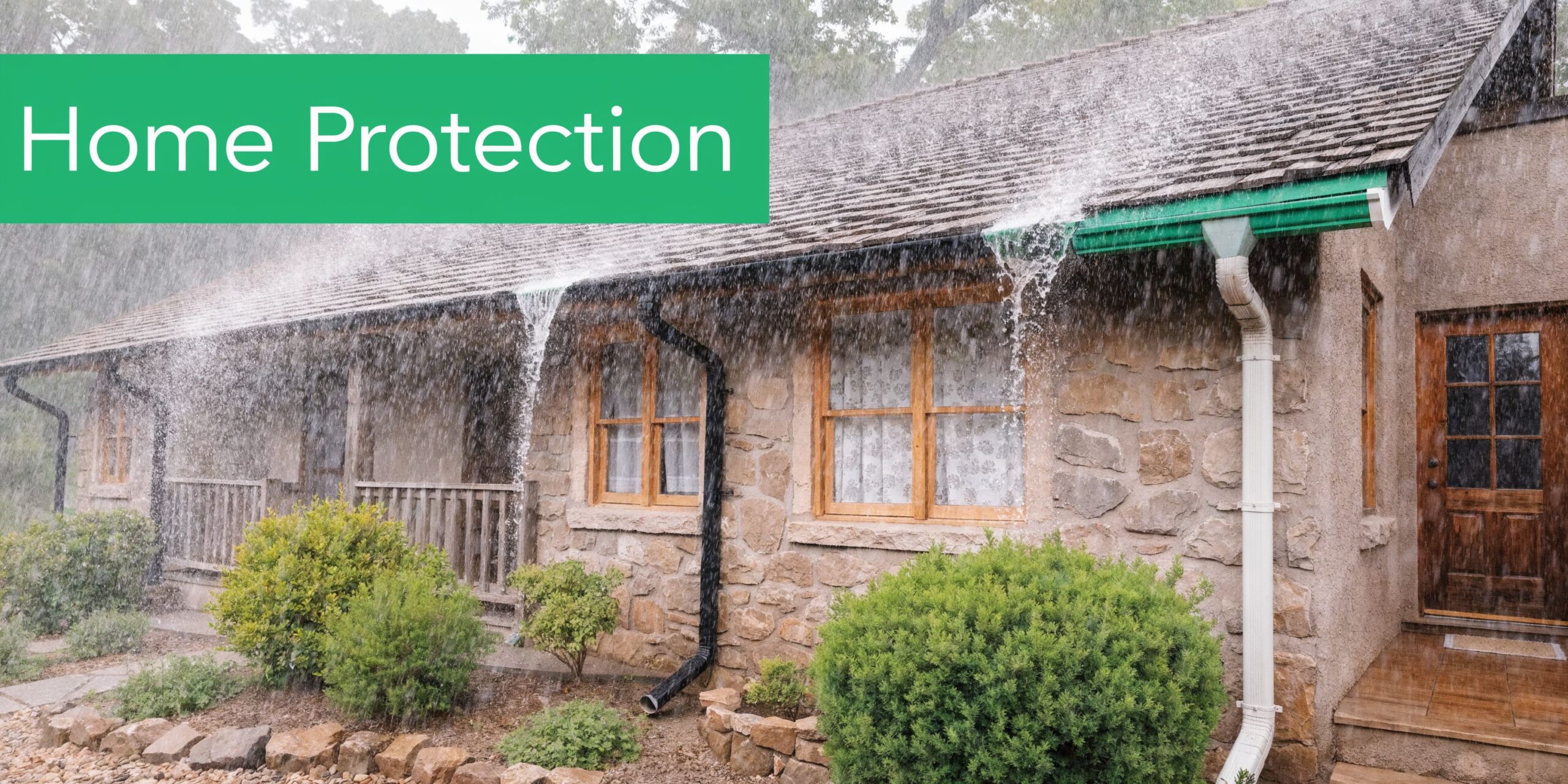
The gutter system is your home’s first control point for roof runoff. When it works, it protects the fascia, siding, foundation, and entry areas. When it fails, water starts finding its own route. That route is usually the one you least want.
Why this matters more in Flagstaff
Most national advice treats gutters like a simple leaf-removal chore. That misses what happens in mountain communities. Pine needles knit together into a dense mat. Fine roof sediment settles underneath. Then water rides over the top instead of through the system.
That overflow does not just make a mess. It can stain exterior surfaces, saturate soil near the home, and send water toward places that were never meant to handle concentrated runoff.
Tip: If water is spilling over the front edge during a storm, the issue is often not “too much rain.” It is usually restricted flow, clogged downspouts, or a gutter line that is no longer draining correctly.
A smart property owner looks at the whole drainage path, not just the gutter trough itself. If runoff is already affecting the ground around the home, these expert tips on yard drainage and home protection offer useful context on how exterior water movement can affect long-term property condition.
Local knowledge changes the maintenance plan
A cabin tucked into pines in Munds Park does not collect debris the same way a house in a more open subdivision does. A steep roof in Flagstaff Ranch behaves differently than a single-story ranch home with easy access. The right cleaning schedule depends on tree cover, roof pitch, sun exposure, and how the downspouts discharge around the lot.
Since 1999, local crews working on Northern Arizona properties have seen the same pattern repeatedly. Owners wait until they notice visible overflow, then discover the gutter problem has already spread to trim, soil washout, or staining below the roofline. The better approach is earlier service, before the next storm or melt cycle tests the system.
Risks of Clogged Gutters in Our Climate
A Flagstaff gutter can look only partly filled from the ground and still be close to failure in the next hard storm. That is the local problem many national articles miss. In pine-heavy neighborhoods, debris is not just loose leaf litter. It is a wet, compact mix of needles, grit, seed pods, and roof sediment that packs into outlets and downspouts long before the gutter trough looks full.
Leaves usually scoop out cleanly. Pine needles behave differently. They knit together, hold moisture, and form a mat that slows flow across the entire run. On homes in Flagstaff, Munds Park, and Forest Highlands, that packed layer often sits in the system through dry periods, then turns into a drainage problem the moment monsoon rain hits.
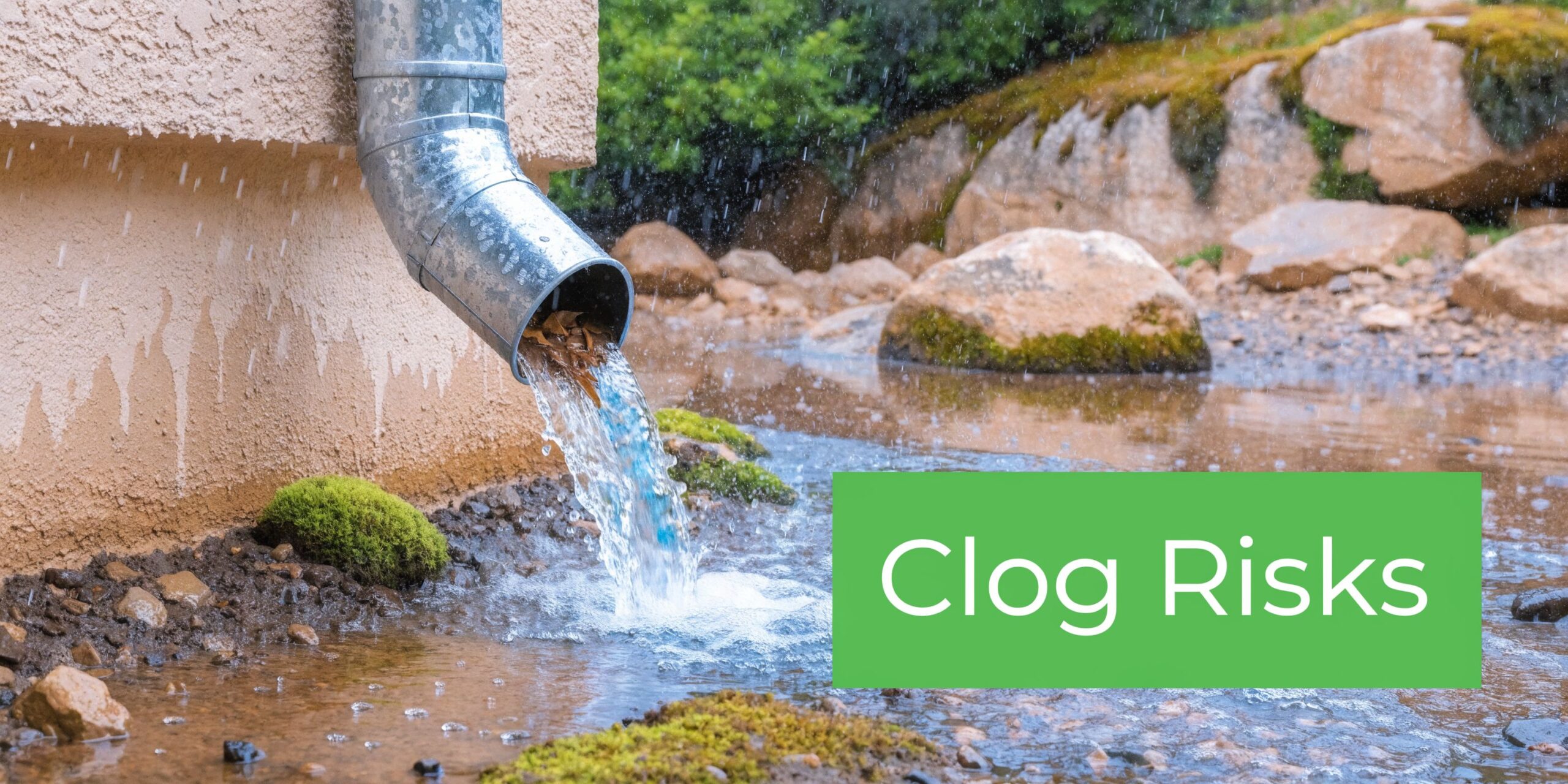
One review of competitor-style gutter service pages found that seasonal debris management and climate-specific gutter challenges are rarely addressed in local gutter cleaning marketing (gutter-cleaning-indianapolis.com). That gap shows up here all the time. A generic twice-a-year recommendation may be enough in other regions, but a pine-covered lot in Northern Arizona often needs timing based on needle drop, monsoon exposure, and winter drainage performance.
Monsoon season exposes weak flow fast
During a summer storm, a clogged gutter acts like a backed-up channel at the roof edge. Water should move to the outlet and downspout quickly. When needles and grit choke that opening, runoff stacks up, spills over, and drops in concentrated sheets right where the house is least prepared to take it.
The usual trouble spots are familiar on local homes:
- Front entries: Overflow creates slick concrete, splashback, and staining around the door area.
- Foundation corners: Water dumping in one place can saturate soil and increase movement around the base of the home.
- Roof intersections: Backed-up water can collect around transition points where flashing and drainage already work harder.
- Decks and patios: Repeated overflow leaves dirt streaks and premature wear on finished surfaces.
One bad storm can reveal a problem. A full season of overflow is where repair bills start.
Freeze-thaw turns drainage problems into hardware problems
Winter changes the failure pattern. A gutter that drains slowly in October may sag, separate, or ice up by January.
Lowe's notes that gutters should slope 1/4-inch to 1/2-inch for every 20 feet of run toward the downspout, and hangers should be spaced every 2 feet (Lowe’s gutter cleaning and repair guidance). Those details matter more in Flagstaff than they do in milder climates because standing water does not just sit there. It freezes, expands, adds weight, and stresses the exact sections already burdened by debris.
In the field, the first clue is often subtle. A line of icicles in one section, a drip after melt, or a corner that keeps holding water usually points to a pitch problem, a partial blockage, or both. By the time the gutter visibly pulls away, the issue has usually been building through more than one weather cycle.
A related concern for many mountain properties is snow buildup along access areas and roof-adjacent zones. If winter conditions are part of your maintenance planning, this local page on Flagstaff snow removal services is relevant because roof runoff, walkway safety, and drainage all interact during freeze events.
Downspouts are where a lot of “clean” gutters still fail
A gutter can be cleared across the top and still drain poorly if the downspout elbow is packed.
That is one of the biggest differences between quick rinse work and actual service. If water is sprayed into a gutter before the heavier debris is removed by hand or blower, the slurry often gets pushed straight into the tight turns. From the ground, the system looks better. In the next storm, it overflows again.
Local crews see this on pine properties all the time. The trough may be half clear, but the outlet is reduced to a narrow opening by needles and roof grit. Once that bottleneck forms, the whole run slows down.
Here is a short visual on why the drainage path matters in real conditions:
The right timing depends on the property
Northern Arizona homes do not all follow the same schedule. A single-story home in an open subdivision may go longer between cleanings than a steep-roof home under dense pines. The maintenance trigger is not the calendar alone. It is how the property sheds debris and how exposed it is to summer storms and winter freeze cycles.
The times that usually matter most are:
- After heavy needle drop: Remove buildup before it mats down and blocks outlets.
- Before monsoon season: Capacity matters most when roof runoff arrives fast.
- After major wind or storm events: Valleys and gutters can load up in a single week.
- After winter weather: Ice, standing water, and hanger stress often reveal drainage defects.
Key takeaway: In Flagstaff, clogged gutters are not just a cleanup issue. They increase the odds of overflow during monsoons, ice-related stress in winter, and drainage problems that spread from the roofline to the ground around the home.
Weighing the Risks and Rewards of Gutter Maintenance
A lot of Flagstaff homeowners start with the same assumption. If the gutters are low enough to reach and the clog looks minor from the ground, the job should be simple.
Sometimes that is true. Often, on pine-heavy properties, it is not.
The practical question is not whether a homeowner can clean gutters. It is whether the house, site, and debris load make that a reasonable choice. A single-story home on flat ground with open access is very different from a steep driveway lot with dense pines, second-story sections, and downspouts packed with wet needles after a storm.
What DIY gets right
DIY gutter cleaning can make sense on the right property.
For a low home with stable ladder footing, light debris, and easy access, a careful homeowner may be able to remove loose buildup safely. That hands-on look can also reveal obvious trouble like a loose spike, a separated seam, or a splash pattern under one problem corner.
It also gives the owner control over timing. If one section loads up after wind, the cleanup can happen before the next rain.
Where DIY usually breaks down
The trade-off to weigh carefully is not effort alone. It is safety, process, and what gets missed.
On Northern Arizona homes, the job often becomes harder once dry pine needles mix with roof grit and moisture. What looked like a quick scoop-out turns into compacted debris in outlets and elbows. If the trough is cleared but the downspout is still restricted, the gutter may look better and still fail in the next monsoon.
Sequence matters. Experienced crews remove dry material first, clear the outlet path, then test water flow and confirm the downspout carries runoff away from the structure. Starting with a hose too early usually creates a heavy slurry that packs tighter inside the system.
Other common DIY problems show up again and again on mountain properties:
- Unstable ladder setup: Gravel, slope, rock beds, and uneven soil make safe footing harder than it looks.
- Overreaching from one position: That is a common cause of falls and bent gutter edges.
- Wrong tools: Metal scrapers and aggressive pressure can damage seams, finishes, and roof-edge components.
- Partial cleaning: Homeowners often clear what they can see and leave outlet restrictions behind.
- Missed warning signs: Sagging runs, loose hangers, poor pitch, and spill marks are easy to overlook without experience.
One local pattern matters here. Freeze-thaw wear often shows up as subtle separation or stress at joints and hangers. A homeowner focused on debris removal may not notice those early signs.
Tip: If the plan is to blast packed needles through a downspout with a hose, stop there. That method often turns a manageable cleaning into a blockage that needs disassembly.
A realistic side-by-side comparison
| Factor | DIY Approach | Professional Service (Pine Country) |
|---|---|---|
| Safety | Depends on ladder condition, footing, comfort with height, and access | Trained crews use proper access equipment and established safety practices |
| Debris removal | Usually limited by reach and time | Full-system cleaning is more consistent, especially on pine-heavy homes |
| Downspout verification | Easy to skip once water starts moving | Downspouts are checked as part of the job, not assumed clear |
| Problem spotting | Obvious clogs stand out, subtle drainage issues may not | Crews can identify sagging sections, loose hardware, and poor runoff patterns |
| Time | Can take several hours or most of a day | Usually faster because the team arrives with the right tools and workflow |
| Property protection | Cleanup quality varies around landscaping and walkways | Debris collection and site cleanup are handled as part of the service |
| Best fit | Low, simple homes with easy access and light buildup | Multi-story homes, steep roofs, pine-heavy lots, and commercial properties |
What professional service changes
Professional gutter cleaning changes the odds of the job going well.
The value is not just labor. It is the combination of safe access, a method that fits the debris, and trained observation while the crew is already at the roofline. That matters in Flagstaff, where pine needles, sudden summer runoff, and winter stress create a different set of problems than a generic leaf-cleaning guide assumes.
Pine Country crews clean for drainage, not appearance alone. That means clearing the system in the right order, checking flow, and watching for signs that the gutter is not carrying water the way it should. On taller homes, steep rooflines, and properties with complicated access, that difference is hard to overstate.
Homeowners who already compare service pricing across exterior maintenance jobs usually notice the same pattern. Access difficulty, height, setup time, and site conditions affect the work itself, which is similar to the factors outlined in Pine Country’s guide to what affects residential exterior service pricing.
If you are searching for rain gutter cleaning near me after seeing overflow at one corner, water near the foundation, or staining below the fascia, the choice comes down to risk tolerance and property type. DIY can be reasonable on the right house. On a typical Northern Arizona property with pines, slope, weather exposure, and hard-to-see drainage issues, professional service usually protects more than it costs.
What to Budget for Professional Gutter Cleaning
Most homeowners want the same thing from pricing. They want it to be clear, fair, and tied to the actual difficulty of the job.
A professional gutter cleaning quote is not built from one factor. It depends on the house and the access conditions.
The baseline numbers
The national average cost for professional rain gutter cleaning in the United States ranges from $100 to $130 per service, with factors such as gutter length, home size, story height, and accessibility driving the final price. A cleaning for 200 linear feet on a standard single-story ranch-style home averages $125, while second- or third-story gutters or steep roofs can add at least $100 because of added safety requirements like ladders or harnesses (Thumbtack’s gutter cleaning pricing overview).
Those figures are a useful starting point. They are not a substitute for an on-site estimate on a pine-heavy property in Flagstaff.
What changes your quote locally
Northern Arizona homes often move out of the “basic” category for practical reasons.
- Tree load: Pine needles, cones, and gritty sediment take longer to remove than light seasonal leaves.
- Height: Second-story work changes both access and safety setup.
- Roof pitch: Steeper lines slow the job and increase caution requirements.
- Layout complexity: Returns, upper roof sections, detached garages, and tight side yards add time.
- Debris condition: Dry buildup removes differently than wet, compacted material.
- Drainage issues: A system that needs downspout clearing or closer inspection is not the same as a quick cleanout.
What a quality estimate should include
Price matters, but so does scope.
A cut-rate quote may only cover scooping out visible debris. A more complete service should account for whether downspouts are checked, whether water flow is verified, and whether debris is cleaned up from the ground after the work is done.
That is one reason broad home service pricing is rarely one-size-fits-all. The same idea shows up in other exterior maintenance categories too, including property access, height, and condition. This article on factors affecting the cost of residential window cleaning services gives a useful parallel for how professionals build estimates around real site conditions rather than flat assumptions.
Budgeting advice: The cheapest quote is not always the lowest-cost outcome. If a low bid skips downspout testing or leaves heavy debris behind, the next storm may expose that shortcut immediately.
The best way to compare bids
Ask simple, practical questions:
- Does the quote include downspout clearing and testing?
- Is debris removed from the property afterward?
- Are height and roof access already accounted for?
- Will the crew note visible drainage or slope concerns?
Those answers usually tell you more than the number alone.
The Pine Country Process What to Expect When You Hire Us
A Flagstaff gutter job can look simple from the driveway and turn complicated once you get to the back side of the house. Pine needles pack tight in shaded runs. Downspouts clog at elbows. Multi-level homes near trees often have sections that need different tools and a different approach.
That is why our process starts with the property itself.
For most customers, the first step is a call or online request, followed by a site-specific assessment. We look at roofline height, access, tree cover, debris type, and whether the system shows signs of backup or poor drainage. A home tucked under ponderosas does not need the same plan as a single-story house with light leaf buildup, and a commercial property often has scheduling and access concerns that matter just as much as the cleaning.
The service path from first contact to follow-up

Step one starts with the property, not a script
A useful estimate comes from conditions on site.
Crews need to know whether they are working on a cabin under dense pines, a custom home with steep rear access, or a building where foot traffic and business hours affect the work plan. That early review shapes equipment, timing, and safety decisions. It also helps set clear expectations before anyone climbs a ladder.
On straightforward homes, hand tools, buckets, poles, and blowers usually handle the job well. On taller or more complex buildings, lift access may be the safer and cleaner choice. Homeowners comparing providers should look for companies that explain those decisions clearly, which is part of what matters when choosing cleaning services in Flagstaff for your home.
The work sequence matters
Order matters in gutter cleaning, especially in Northern Arizona.
We remove dry debris first. Then we check flow and clear downspouts as needed. Flushing too early can push pine needles, grit, and roof sediment into a tight blockage, especially where a downspout turns. In Flagstaff neighborhoods with heavy needle drop, that mistake is common. Needles knit together, hold mud, and create a mat that will not move cleanly once it is soaked.
A disciplined sequence avoids that problem. It also gives the crew a better chance to spot loose hangers, separated joints, or runs that are holding water longer than they should.
What customers usually notice during the visit
Good service shows up in the small things.
- Care around the home: Ladders, hoses, and tools should be handled without scraping siding, crushing plants, or blocking entries longer than needed.
- Clean debris control: Gutter waste should be collected and removed, not blown into beds, gravel, or walkways.
- Verified drainage: A clean-looking gutter is not enough. Downspouts need to be checked so water can leave the system.
- Direct communication: If we see sagging sections, loose hardware, or runoff concerns, we say so plainly.
That kind of communication matters on older homes and second homes in particular. Owners are often trying to prevent the next problem, not just clean up the current one.
Why equipment and training matter on challenging homes
Some properties punish shortcuts.
A single-story ranch with open perimeter access is usually straightforward. A hillside home with retaining walls, upper roof sections, delicate landscaping, and hard surfaces below requires more control. The crew has to protect the property while still reaching the areas where debris collects.
Pine Country Window Cleaning handles gutter and downspout cleaning as part of its exterior maintenance services for homes and commercial buildings in Northern Arizona. We use trained crews and in-house equipment because improvised access tends to create either safety problems or incomplete work. On houses where gutter wear overlaps with roof concerns, it also helps to understand how companies offering both gutter and roof services may coordinate repairs more efficiently.
What to expect at the end: The job is complete when the debris is out, drainage has been checked, the cleanup is done, and you know about any visible issues that should be addressed before the next monsoon or freeze.
Choosing a Partner for Your Property's Year-Round Health
Some homeowners call for gutter service once the overflow starts. Others build it into a broader maintenance plan. The second group usually has fewer surprises.
That is especially true in Northern Arizona, where the same property may deal with spring winds, monsoon runoff, pine debris, snow load, and freeze-thaw stress within one year. Gutters sit right in the middle of that cycle, but they are not isolated from the rest of the building. Roof condition, exterior drainage, surface cleaning, and visibility around entries all connect.

Why one-time service is not always enough
A house in a pine-heavy neighborhood does not face the same maintenance reality as a house with minimal overhead debris.
Second-home owners often run into this problem first. They arrive after a stretch away from the property and find roof runoff stains, packed gutters, dusty windows, or debris concentrated in the corners of the lot. Commercial managers face a different version of the same issue. They need scheduled, reliable exterior upkeep because waiting for a visible problem creates tenant complaints, safety concerns, and avoidable wear on the building.
The strongest maintenance relationships are built around familiarity with the property. A crew that knows which elevations collect needles, which downspouts are prone to slow flow, and which access points require extra care can work more thoughtfully than a company seeing the site for the first time during an emergency.
What a real service partner should bring
Not every contractor fits every property. The right fit usually comes down to a few practical traits.
- Local pattern recognition: They should understand what monsoon runoff, snowmelt, and pine debris do to buildings in this region.
- Range of services: Exterior maintenance rarely stops at one task.
- Reliable access capability: Some homes and commercial buildings require more than a ladder and a pickup.
- Respect for the property: This includes communication, cleanup, and how crews move through the site.
For homeowners comparing providers, it also helps to understand how companies think about service quality, scheduling, and trust. This homeowner-focused guide on choosing cleaning services in Flagstaff is useful because it frames the decision around reliability and property care, not just price.
Gutter care fits into a larger exterior plan
The most practical reason to choose an ongoing partner is convenience backed by consistency.
If the same company can handle gutter cleaning, professional window cleaning, pressure washing, and seasonal snow-related work, the property gets a more coordinated level of care. That matters for full-time residents, but it matters even more for:
- Second-home owners who cannot inspect conditions week to week
- Short-term rental operators who need clean, safe exteriors before guest arrivals
- Commercial facility managers who want dependable scheduling and professional communication
- Real estate professionals and builders preparing properties for listing or turnover
A good example outside this market is the value many owners see in companies offering both gutter and roof services when one exterior system affects another. The same logic applies here. The more connected the maintenance view, the easier it is to catch issues before they spread.
Why local roots matter
Flagstaff properties are not generic, and service should not be generic either.
A company that has worked here for years understands the difference between a downtown commercial building, a lodge-style home in Forest Highlands, a student-oriented property near campus, and a cabin in Munds Park surrounded by pines. Those sites collect debris differently, drain differently, and require different scheduling habits.
That local familiarity also affects how crews show up. Good exterior service is not only technical. It is personal. People notice whether the team communicates clearly, protects landscaping, closes gates, works carefully around entries, and leaves the site cleaner than they found it.
The author’s brief behind this piece points to something many customers value but do not always articulate well. They want professionals who care for the home. That shows up in the small things. During window cleaning, careful screen removal, screen cleaning, and proper reinstallation are part of that standard. During gutter cleaning, the parallel is disciplined debris handling, careful ladder use, and a final result that protects the property instead of merely checking a box.
The long view is cheaper than the scramble
When owners search for rain gutter cleaning near me, they are often looking for immediate relief from an obvious problem. That is understandable.
But the most effective move is to shift from reactive cleanup to planned care. If the property is surrounded by pines, exposed to monsoon storms, or subject to winter freeze-thaw cycles, regular exterior maintenance is part of preserving the building, not an optional extra.
Since 1999, Flagstaff native David Kaminski has built a local company around that year-round reality. For many owners, that kind of continuity matters as much as the service itself. They want one dependable call for exterior upkeep, not a new search every season.
If your gutters are overflowing, your downspouts are slow, or you want a practical maintenance plan for a home, cabin, or commercial property in Northern Arizona, contact Pine Country Window Cleaning for a free estimate and clear guidance on what your property needs.